
Peruvian Cave Roaches for Sale
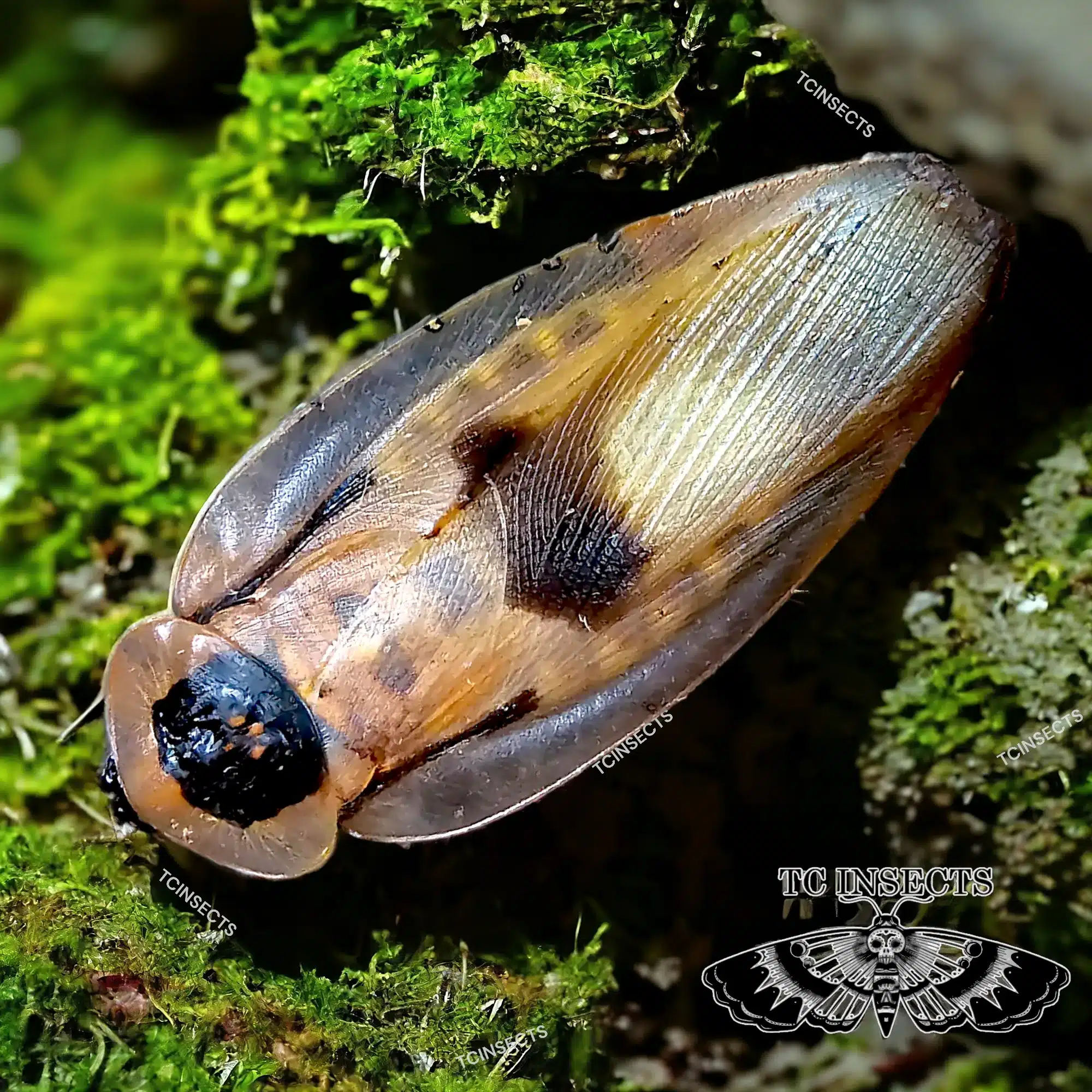
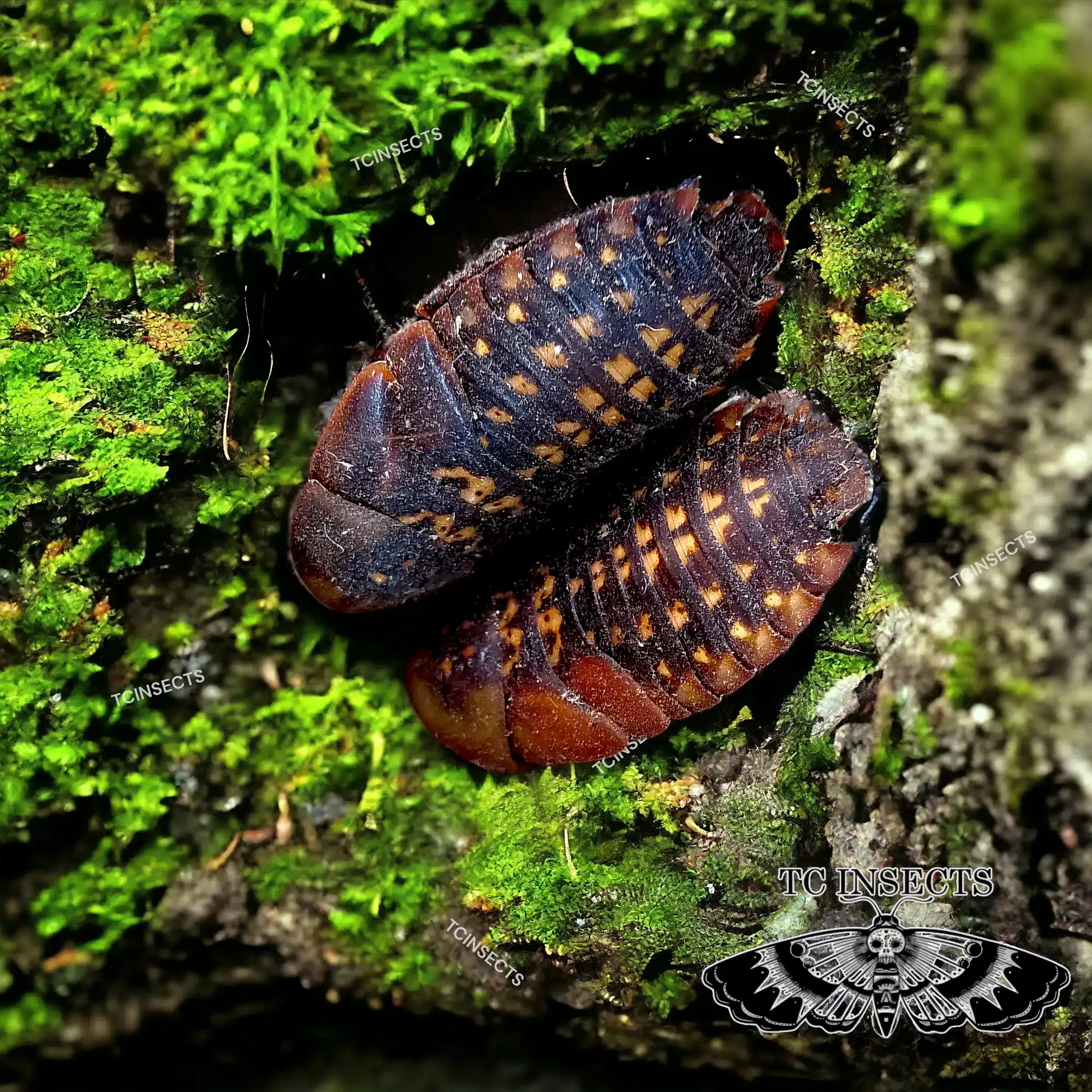
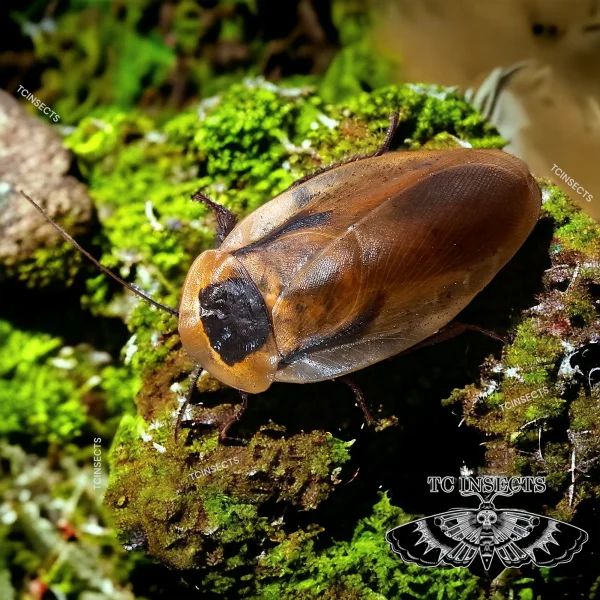
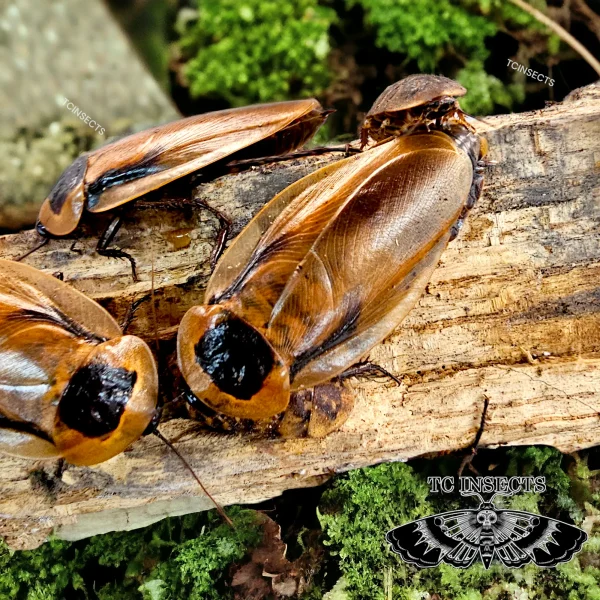
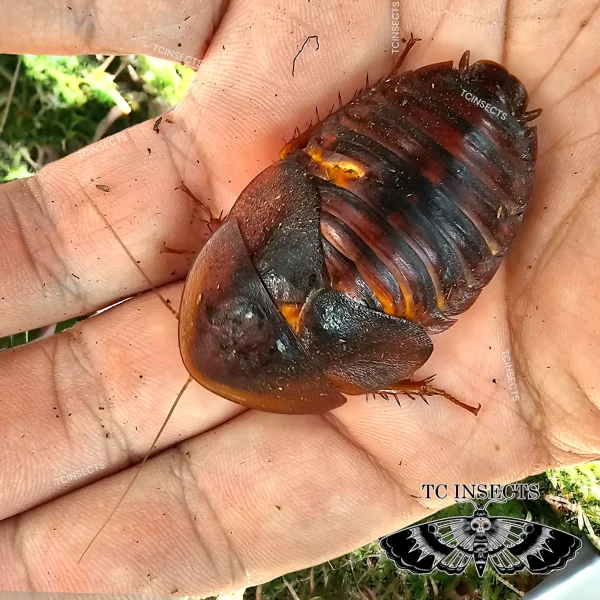
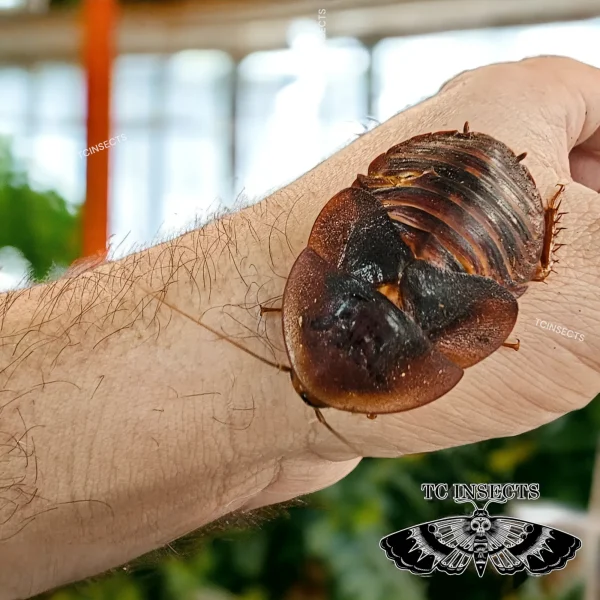
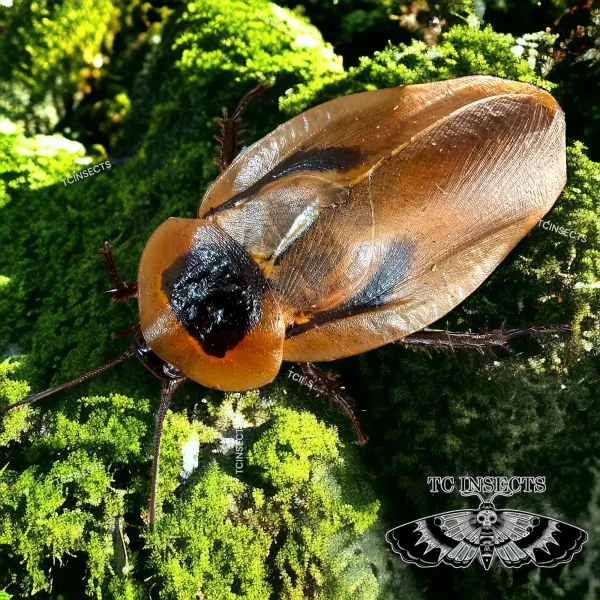
The Peruvian Cave Roach is the hobby trade name for Blaberus cf. peruvianus, the smallest of the four Blaberus in our catalog. Adults reach roughly 57 to 65 mm, with males slightly smaller than females. This is the most
accessible entry into the Blaberus genus we offer, both in size and in price point. They cannot climb smooth surfaces, and adults have wings but do not actively fly in captivity. The “cf.” in the scientific name marks a
specific kind of taxonomic uncertainty explained below. Sold to collectors in small counts of 1 or 5 mixed nymphs.
Overview
This is a small-to-mid sized blaberid roach native to South America. Like other Blaberus, it has a flat body that helps it shelter in tight cracks and cave crevices, gives birth to live nymphs rather than laying egg cases, and
cannot climb smooth surfaces. At about 65 mm for adult females, it sits well below our larger catalog Blaberus like the B. giganteus (75-84 mm), B. sp. “Honduras” (67-75 mm), and B. atropos “Florida” (50-54 mm) but is
close in size to the B. parabolicus “Colombia” Peruvian Black-Head (59-63 mm). For collectors building out the full Blaberus lineup, this line fills the smaller end of the range.
Honest Note on “cf.” vs “sp.” in Scientific Names
This is a worthwhile distinction for anyone collecting uncertain-identification roach species. Both “cf.” and “sp.” indicate uncertainty, but they mean different things.
- “cf.” (confer): Latin for “compare with.” Used when the specimens look like a formally described species but the identification cannot be confirmed without further study. Blaberus peruvianus is a real formally described species (Jurberg, Albuquerque, Rebordoes, Goncalves and Felippe, 1977), and this captive line tentatively matches it. So “Blaberus cf. peruvianus” means “this looks like B. peruvianus, pending confirmation.”
- “sp.” (species): Used when the species itself is unknown, unconfirmed, or possibly undescribed. Our Blaberus sp. “Honduras” uses this designation because the species there may be undescribed entirely.
Practical takeaway: cf. is the more confident uncertainty marker. The species exists in formal taxonomy and the captive stock likely matches it. By contrast, sp. indicates the species itself has not been settled.
Honest Note on Historical Hybridization
This species has a specific role in the hybridization history of captive Blaberus. Documented hobby breeders identify Blaberus cf. peruvianus (along with B. fusca, now B. atropos) as one of the species responsible for the
“fusca x giganteus,” “craniifer x giganteus,” and “fusca hybrid” cross-bred lines that have circulated in the hobby for decades. Two takeaways:
First, house this line strictly on its own and never with other Blaberus species. The hybridization risk is well-documented for exactly this combination. Second, source-stock provenance matters: if a “Peruvian Cave Roach”
you encounter elsewhere shows traits inconsistent with the documented species description, it may be a historic hybrid rather than pure stock. Our captive line is maintained separately from other Blaberus to preserve line
purity.
Taxonomic Placement
The formally described Blaberus peruvianus sits in the Blaberus superspecies atropos group per the 2013 taxonomic revision by Lopes and Oliveira, which puts it in the same broad species group as our Blaberus atropos
“Florida”. Collectors who keep both lines (in separate enclosures, given the hybridization concern) are essentially keeping sister species from the same superspecies grouping. This is a useful collector framing that the
broader genus offers fewer opportunities to explore.
Why Keep Peruvian Cave Roaches?
- Most accessible Blaberus in the catalog. Smallest size and lowest price point of the four, ideal for collectors trying the genus for the first time.
- Atropos-group representative. Pair with B. atropos “Florida” in separate enclosures for a sister-species collector setup.
- Calm and easy to contain. Non-climbing, with adults that have wings but do not actively fly in captivity.
- Forgiving husbandry. Tolerant of a wide humidity range and not picky about substrate or food.
- Documented uncertainty handled honestly. The cf. designation is transparent about what is and isn’t confirmed.
Care and Setup
Husbandry is straightforward, which is part of why this is the catalog’s accessible Blaberus entry point.
Temperature
70 to 85°F is the active range. Reproduction speeds up at the warmer end (around 80 to 85°F); the colony persists at cooler temperatures with reduced output. A heat mat on the side of the enclosure works well in a cool room.
Humidity and Substrate
This line tolerates a wide humidity range, which makes setup forgiving. A mix of coco fiber and leaf litter works well, kept slightly damp. Two to three inches of substrate depth gives nymphs cover and supports natural behavior. Avoid waterlogged substrate, which causes molt problems across the genus.
Habitat Structure
Add cork bark, hollow wood pieces, or stacked egg flats for cover. Smooth-walled enclosures hold them reliably since they cannot climb. The smaller adult size means a 5 to 10 gallon tank suits a modest breeding group.
Food
They are omnivorous and not picky. Quality dry feed such as Supreme Feed Premium Roach Formula or Supreme Feed Dubia, plus fresh fruits and vegetables for variety. A little higher-protein food supports growing nymphs.
Hydration
Use water crystals such as Hydro-Thirst Insect Water Crystals rather than open water dishes or cotton balls, both of which drown nymphs or grow mold. This applies to every Blaberus we sell.
Ventilation
Use a vented or mesh lid. Steady airflow keeps the bin healthy and prevents mold even with slightly moist substrate.
Breeding Notes
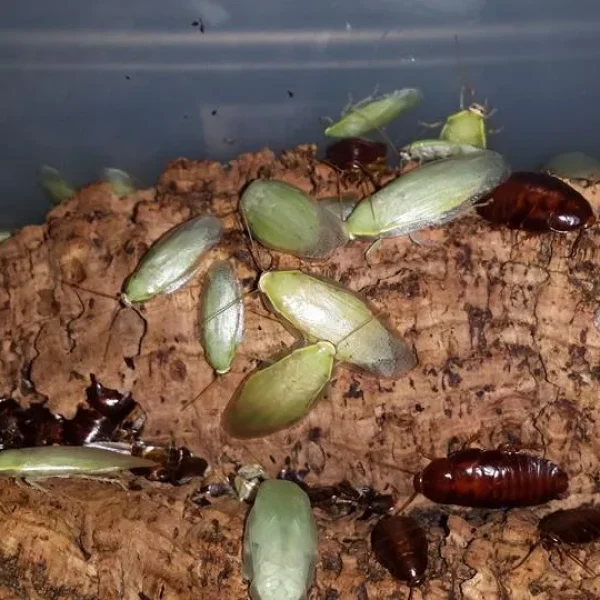
Females give birth to live nymphs rather than laying egg cases. Broods of around 20 to 30 nymphs are typical for a *Blaberus* of this size. Nymphs take several months to reach adulthood under warm conditions. A starter
group of 5 mixed nymphs develops into a small breeding cluster over many months. Because this is a smaller species than our other *Blaberus*, the overall colony footprint stays modest compared with a *B. giganteus*
colony reaching the same population.
Best For
- Collectors starting a Blaberus lineup with the smallest, most accessible member
- Keepers who want a manageable cave roach without the *B. giganteus* footprint
- Hobbyists building the catalog’s atropos superspecies group (paired with B. atropos “Florida” in separate enclosures)
- Collectors comfortable with documented `cf.` taxonomic uncertainty
- Bioactive terrarium keepers wanting a smaller blaberid composter
Not Best For
- Keepers wanting maximum body size, where B. giganteus or B. sp. “Honduras” are better choices
- Volume reptile feeding, where Dubia and Orange Heads are far more efficient
- Keepers planning to house multiple Blaberus species in one bin, given this species’ specific hybridization history
- Buyers requiring 100% confirmed species identification
- Customers in jurisdictions that restrict non-native cockroach species; check local rules
- Anyone planning to release roaches outdoors under any circumstances
Origin and Locality Notes
The formally described Blaberus peruvianus is native to South America. The “Peruvian” common name reflects the species name and likely original collection range. Our captive line is bred separately from our other
Blaberus species to preserve line purity and to avoid the genus’ well-documented hybridization potential. The cf. designation reflects that our stock has not been formally confirmed against type specimens but matches the
species description.
Receiving and Acclimation
Your order ships with ventilation and bedding suited to transit. On arrival, open the package in a clean, contained area and transfer the nymphs into a prepared enclosure with slightly damp substrate, leaf litter, hides, and
a safe hydration source. Give them a day to settle before disturbing them. As with every live insect we sell, do not release them into the wild, especially important for a species whose identification is still pending.
Recommended Add-Ons
- Hydro-Thirst Insect Water Crystals for safe hydration without drowning hazards.
- Supreme Feed Premium Roach Formula for a quality dry diet for the colony.
- Blaberus atropos “Florida” for the atropos-superspecies sister line in a separate enclosure.
- Paraplecta cf. minutissima “Kenya” for collectors who enjoy cf.-designated lines; pairs thematically.
- Eublaberus distanti “Ivory” for collectors adding a non-hybridizing species from a different genus.
Frequently Asked Questions
What does the “cf.” in the name actually mean?
It is Latin shorthand for “compare with.” It means our captive stock looks like the formally described Blaberus peruvianus (Jurberg et al. 1977) but the identification has not been definitively confirmed against type specimens. The species exists in formal taxonomy; the uncertainty is whether our line matches it.
How is this different from your other Blaberus uncertain line?
Our B. sp. “Honduras” uses sp. because the species itself may be undescribed. This cf. peruvianus line uses cf. because the species exists and the stock likely matches it, pending confirmation. Two different kinds of uncertainty.
Why is this the smallest Blaberus in your catalog?
At 57 to 65 mm, this species is naturally smaller than the larger members of the genus. B. giganteus and the Honduras line both exceed 67 mm at maturity. The smaller size makes this line more manageable in tight enclosures and at lower price points.
What’s the historical hybrid concern about?
Documented hobby breeders identify B. cf. peruvianus as one of the species responsible for the “fusca x giganteus” hybrid lines that have muddied Blaberus stocks for decades. The fix is straightforward: never house this line with any other Blaberus, and source stock from breeders who keep their lines separated.
Why are the count options only 1 or 5 nymphs?
This is a collector species, not a bulk feeder, and at the smaller adult size most buyers want a modest starter group rather than volume. 1 suits a single display addition; 5 is a sensible starter group for a small breeding setup.
Is the formally described Blaberus peruvianus a real species?
Yes. It was described by Jurberg, Albuquerque, Rebordoes, Goncalves, and Felippe in 1977 and is recorded in the Cockroach Species File. Lopes and Oliveira’s 2013 taxonomic revision placed it in the Blaberus superspecies atropos group, which makes it a sister species to B. atropos in formal taxonomy.
Learn More About Blaberus cf. peruvianus
These references give keepers background on the formally described species this line tentatively matches and on broader Blaberus taxonomy.
- Cockroach Species File: Blaberus peruvianus (Jurberg et al. 1977). The authoritative taxonomic record for the formally described target species, including its placement in the atropos superspecies group per Lopes and Oliveira’s 2013 revision.
- Wikipedia: Blaberus (genus profile). A general overview of the genus, including the 31 formally valid species and the husbandry baseline that B. cf. peruvianus shares with its relatives.


Reviews
There are no reviews yet.