
Chrome Roaches for Sale
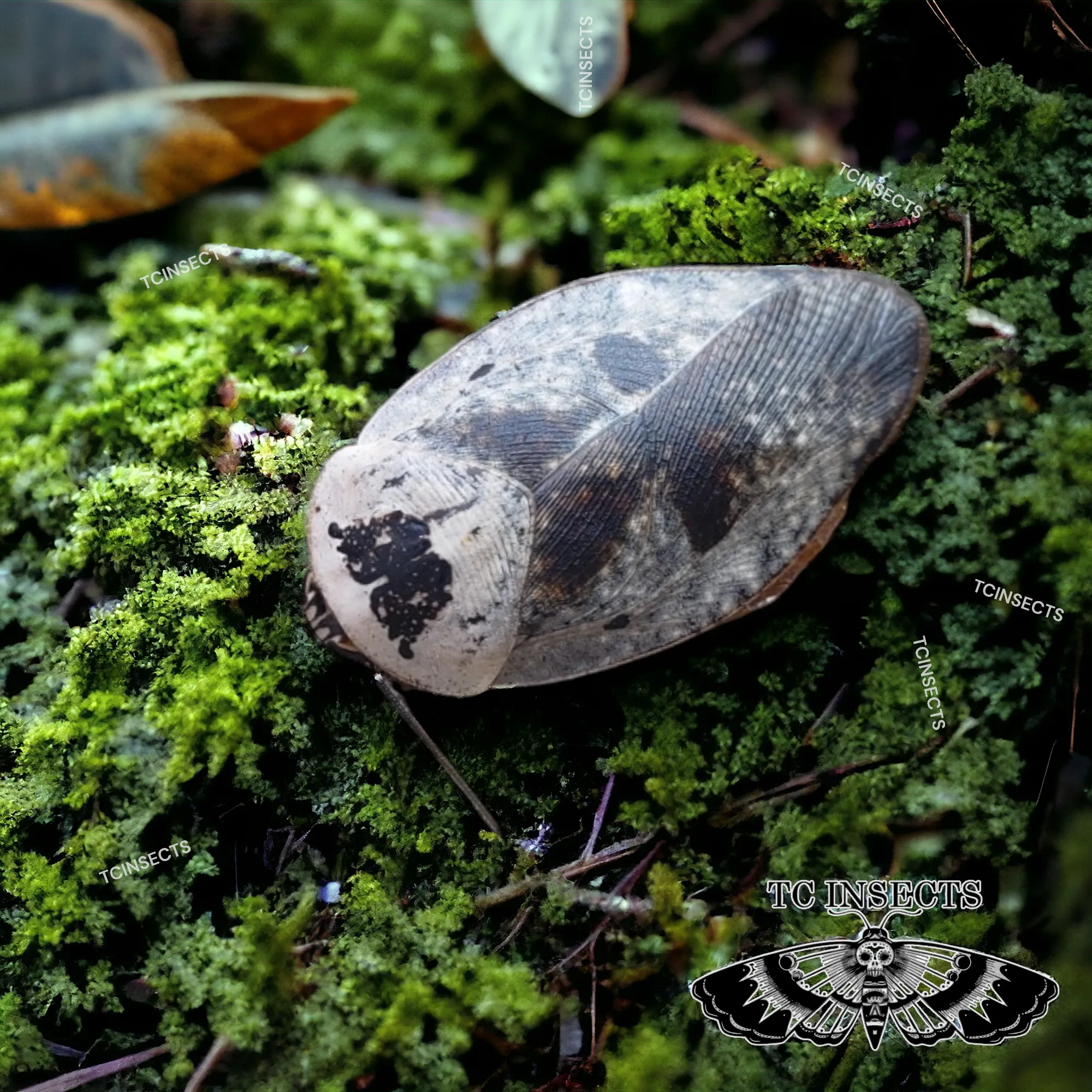
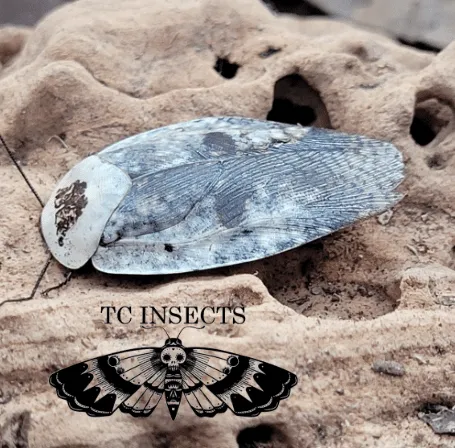
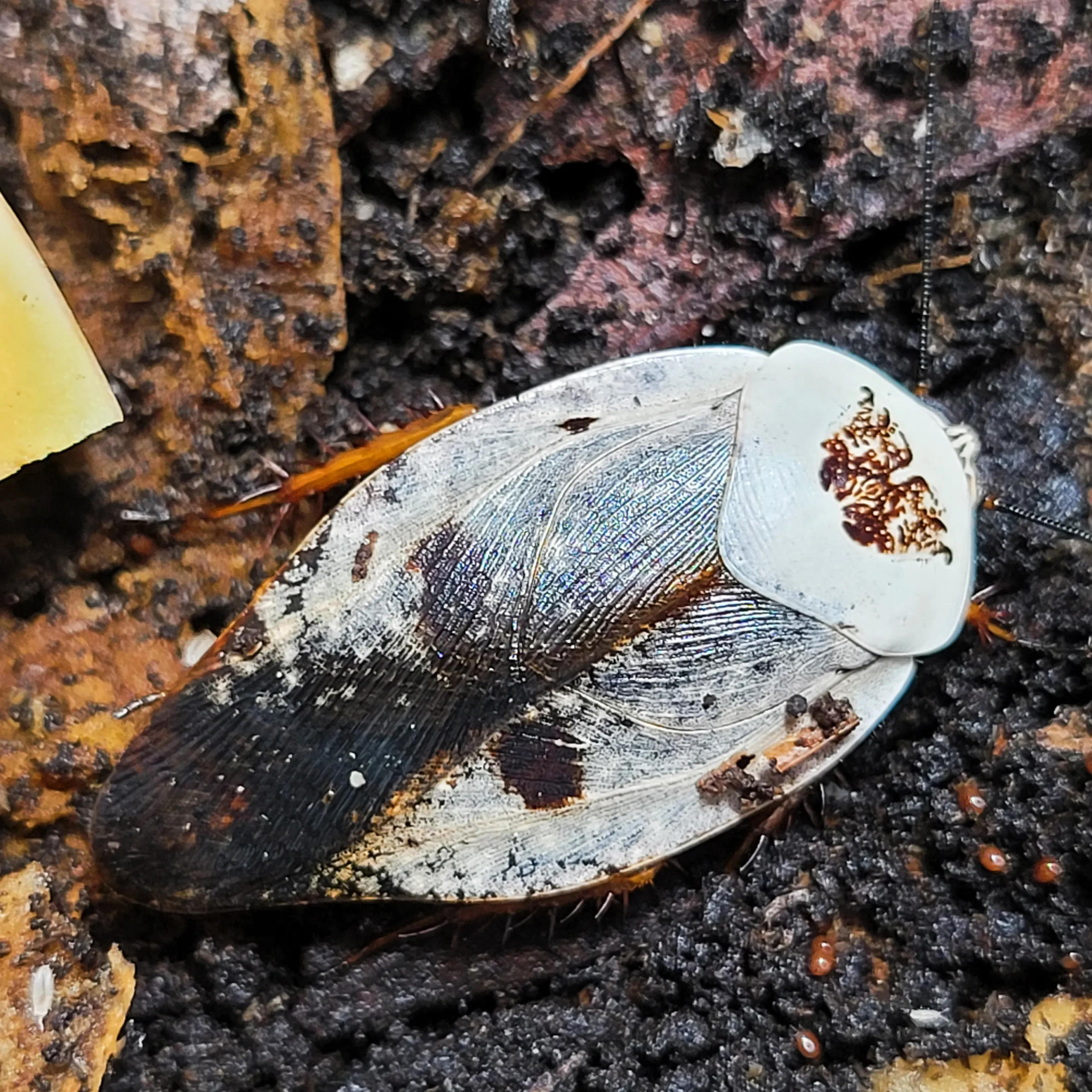
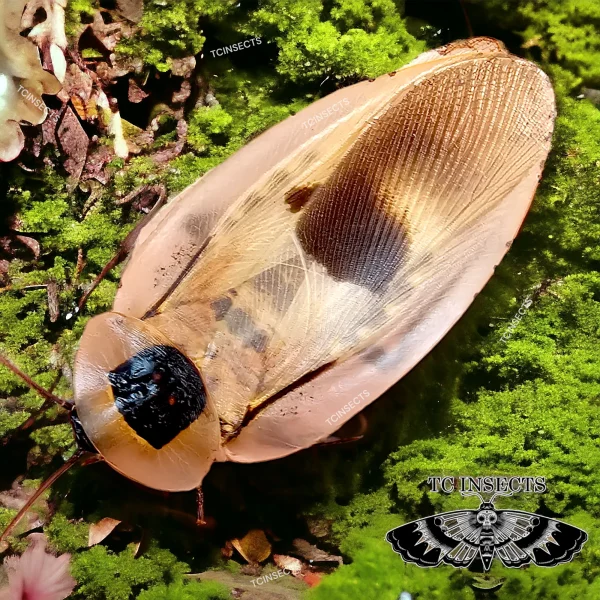
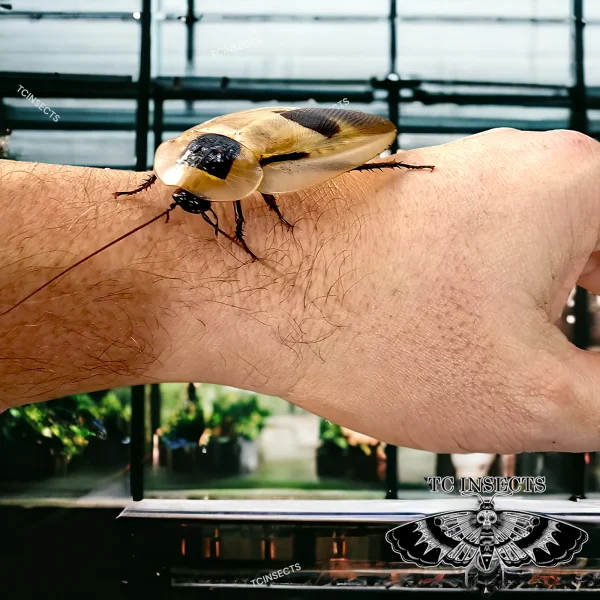
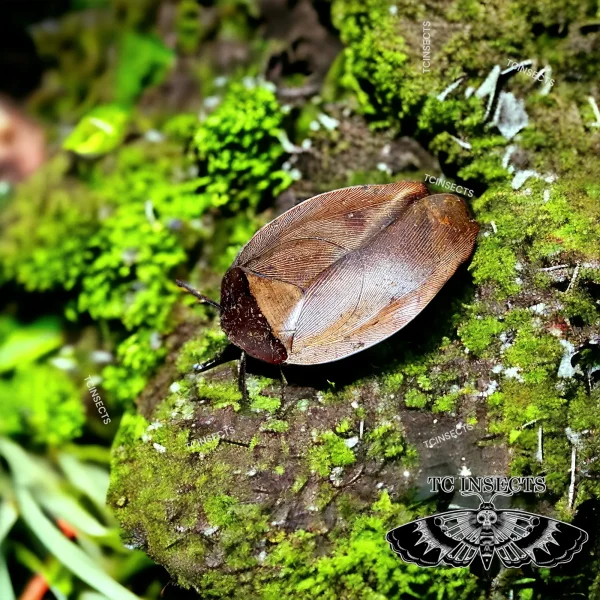
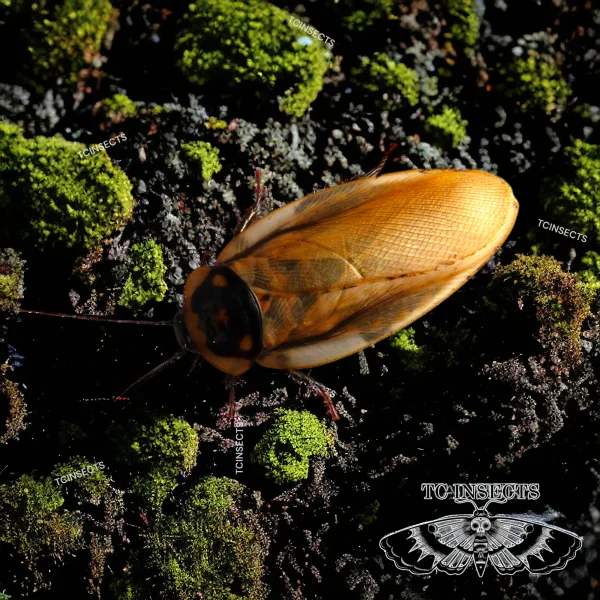
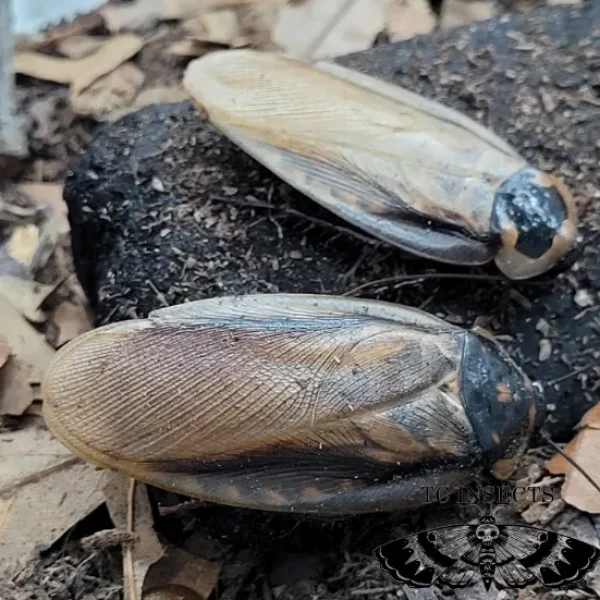
The Chrome Roach is the hobby name for Gyna caffrorum, the third porcelain roach species in our catalog and the easiest one to keep. Adults reach about 29 to 34 mm and have a shiny silver-gray body with mottled wings
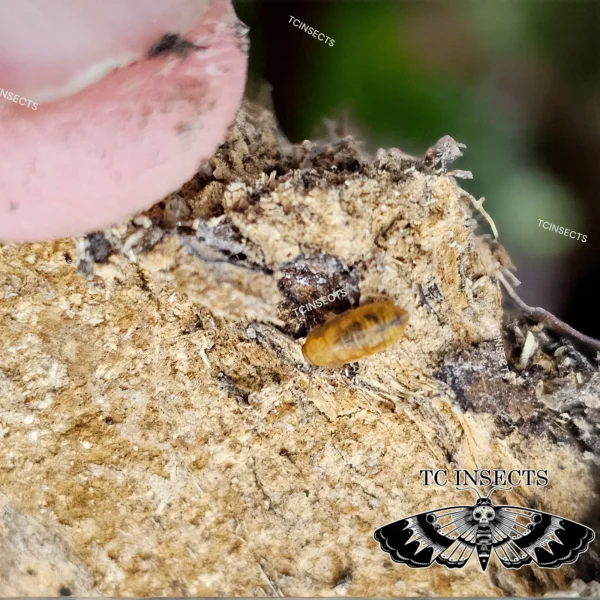
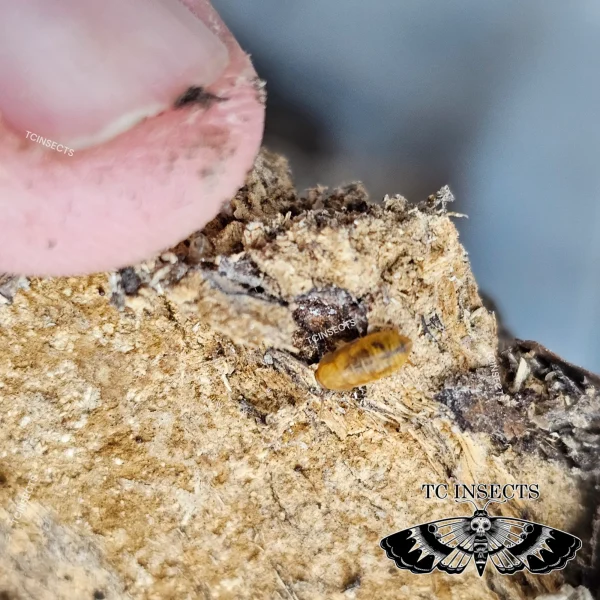
and bright orange accents on their legs and undersides, which is where the “Chrome” trade name comes from. Nymphs look totally different from the adults: they have a black-and-white peppered pattern, the same as the
babies of our Gyna lurida “Yellow”. The color change as they grow is part of the appeal. Sold to collectors and feeder keepers in counts of 1 or 5 mixed nymphs.
Overview
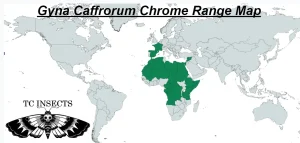
Chrome Roaches come from southern Africa: South Africa, Mozambique, and Zimbabwe. Like the other porcelain roaches in the genus Gyna, they burrow in substrate and forage mostly at night. They give birth to live
babies rather than laying eggs, and the hobby community describes them as highly prolific, with documented broods of up to about 200 nymphs per female. That high output is why this species works as both a display
roach and a feeder for reptiles, amphibians, and other insectivores, which makes it different from our other two porcelain roach products.
Honest Note: This Is the Easy One in the Genus
If you have looked at our other porcelain roaches and worried about how hard they are to keep, here is the simple version:
- Chrome Roach (this product): the easy one. Forgiving, very prolific, beginner-friendly.
- Yellow Roach (G. lurida): the middle one. Doable but a bit pickier.
- Pink Roach (G. capucina): the hard one. Long-time keepers only.
If this is your first porcelain roach, you are in the right place. The hobby community is consistent on this point: G. caffrorum tolerates a wider range of conditions, breeds fast, and doesn’t need the careful setup the harder porcelain roaches do.
Honest Note: Adults Are Fast and Flighty
The easy husbandry comes with one trade-off. Adult Chrome Roaches of both sexes can climb up glass and fly, and breeders describe them as “hyper” and “very flighty” — they are quicker to escape than most of the other roaches we sell. The good news is that a snug lid handles it. You don’t need anything fancy, just a lid that actually fits the container without gaps. Here’s what to watch for:
- Babies are not the problem. Nymphs don’t have wings yet and can’t climb smooth surfaces. The escape risk is the adults only.
- Open the lid carefully. Adults can startle and fly when you reach in for feeding or cleaning. Do it slowly, in a closed room, with no open doors.
- A vented bin with a clamp-down lid works. Mesh tops without a positive seal can be pushed past by a determined flying adult.
Honest Note: They Work as Both Pets and Feeders
This is the only porcelain roach in our catalog that the hobby community routinely recommends as a feeder, not just a display animal. Three reasons:
- They breed fast. A productive colony has surplus nymphs you can harvest while the colony keeps growing.
- Soft bodies and good size. The nymphs are easy for reptiles and amphibians to eat and digest, and adults are a reasonable size for larger insectivores.
- Clean and odor-free. Multiple breeders describe Chrome Roach colonies as one of the less-smelly options.
If you want pure display, that works too. If you want both, this is the species that does both at the same time.
Care and Setup
Husbandry is genuinely simple, which is why this is our beginner porcelain roach.
Enclosure
A snug-fitting lid is essential because of the flighty adults. A 5 to 10 gallon enclosure handles a small starter group, and you can scale up as the colony grows. Vented sides or a vented top give the airflow they like.
Temperature
70 to 85°F is the active range. Warmer (around 80°F) drives faster breeding. Cooler keeps the colony alive with reduced output. A heat mat on the side of the enclosure works well in cool rooms.
Humidity
Moderate, around 60 to 70%. Lightly damp substrate with good airflow is what they want. Avoid soggy waterlogged dirt, which causes molt problems in any porcelain roach.
Substrate
Two to four inches of coco fiber, peat, or organic potting soil works well. They burrow extensively when not foraging, so depth matters more than width. Add a layer of leaf litter on top, which doubles as cover and as one of their main natural foods.
Habitat Structure
Cork bark, hollow wood, or charcoal pieces give the adults something to climb and perch on. They use vertical structures for foraging at night, so the texture of the wood matters more than the height.
Food
They are not picky. Leaf litter is the staple. Supplement with fresh fruit (apples, bananas, mango), small amounts of dog food or fish flakes for protein, and a quality dry feed like Supreme Feed Premium Roach Formula. They handle a varied diet well, which is part of why they breed so reliably.
Hydration
The moist substrate provides most of the water they need. Hydro-Thirst Insect Water Crystals work as a backup spill-proof source.
Ventilation
Good airflow through vented sides or top is non-negotiable for this genus. Stagnant air does more harm than slight dryness.
Breeding Notes
Females give birth to live babies, like other porcelain roaches. Broods can be substantial: documented hobby observations note that adult females are capable of producing around 200 nymphs per clutch, with multiple
clutches over an adult lifetime. This is why Chrome Roaches scale up faster than most other exotic roaches in our catalog. A starter group of 5 mixed nymphs reaches productive output within several months under warm
conditions. The newborn nymphs are very small and dark and will take several molts to start showing adult coloration.
Best For
- First-time porcelain roach buyers wanting an easy Gyna entry
- Keepers wanting a productive colony that doubles as a feeder source
- Display hobbyists drawn to the silvery-gray and orange adult coloration
- Bioactive terrarium keepers wanting a small African detritivore
- Anyone who likes watching colorful nymph development from black-and-white peppered to silvery adult
Not Best For
- Keepers without a snug-fitting lid on hand, given the flighty adults
- Anyone wanting roaches that stay constantly visible, since they burrow when not foraging
- Setups in open rooms where an escaped adult could fly away unnoticed
- Customers in jurisdictions that restrict non-native cockroach species; check local rules
- Anyone planning to release roaches outdoors under any circumstances, especially important for a flying species
Origin and Locality Notes
Gyna caffrorum is native to southern Africa, with documented populations in South Africa, Mozambique, and Zimbabwe. The species shares the African origin of the rest of the genus Gyna; despite occasional older
sources placing porcelain roaches in other regions, the entire genus is exclusively African. Our captive stock is captive-bred and maintained separately from our G. lurida “Yellow” and G. capucina “Pink” lines.
Receiving and Acclimation
Your order ships with ventilation and bedding suited to transit. On arrival, open the package inside a closed room rather than in an open one, because adults can fly if startled. Transfer the nymphs into a prepared
enclosure with substrate, leaf litter, hides, and a hydration source. Give them a day to settle and burrow before disturbing them. As with every live insect we sell, do not release them into the wild.
Recommended Add-Ons
- Hydro-Thirst Insect Water Crystals for safe supplemental hydration without spillage.
- Supreme Feed Premium Roach Formula for a quality dry diet alongside leaf litter and fruit.
- Gyna lurida “Yellow” for collectors building out the porcelain roach genus, in a separate enclosure.
- Ergaula pilosa “Big Black Beetle Mimic Roach” for collectors wanting to expand into another exotic genus.
- Blaberus atropos “Florida” for a non-climbing contrast species to balance the climbing-and-flying Gyna.
Frequently Asked Questions
Is this really the easiest porcelain roach to keep?
Yes, and the hobby breeder community is consistent on this. Multiple long-term keepers describe Chrome Roaches as the most forgiving and prolific member of the genus, suited to first-time porcelain keepers and to anyone who wants a colony that builds up fast.
What does “Chrome” actually mean?
It refers to the shiny silver-gray adult coloration. Adults have a glossy silvery-white body with mottled silver patterns on the wings and orange accents on their legs and undersides. The look is metallic enough that the “Chrome” name fits naturally.
How prolific are they really?
Very. Adult females can produce up to about 200 nymphs per clutch, and they have multiple clutches across their adult lifetime. A starter group of 5 mixed nymphs typically becomes a productive small colony within several months.
Can I really use them as feeders for my reptile?
Yes, and breeders explicitly recommend them for this. The nymphs have soft bodies that reptiles and amphibians eat and digest easily, and the colony’s high output gives you surplus to harvest. They are odorless and clean compared to crickets, which is a bonus.
How do they differ from your Yellow and Pink porcelain roaches?
Three ways. Chrome Roaches are silvery-gray with orange accents; Yellow Roaches (G. lurida) have yellow wings; Pink Roaches (G. capucina) have pink wings on a white body. Chrome is the easiest to keep; Yellow is medium; Pink is the hardest. And Chrome is the only one of the three commonly used as a feeder.
Why do nymphs and adults look so different?
Like a lot of roaches, the babies (nymphs) and adults don’t look alike. Chrome Roach nymphs are black-and-white peppered, while adults are silvery-gray with orange accents. The color change happens gradually over multiple molts as the nymphs grow. This is normal, not a sign of anything wrong.
Learn More About Gyna caffrorum
These references give keepers background on the species and the broader porcelain roach genus.
-
Wikipedia: Gyna (genus profile). A general overview of the porcelain roach genus, including the 31 accepted species and the African native range that G. caffrorum shares with its relatives.
-
iNaturalist: Bright Porcelain Roach (Gyna lurida). Visual reference for the most closely related species in our catalog, helpful for spotting the family resemblance in nymph and adult appearance between Yellow and Chrome.
-
Amateur Entomologists’ Society: Blattodea (Cockroaches). An overview of cockroach order biology, including the live-bearing reproductive strategy shared by Gyna and other blaberid roaches.
Origins: Gyna originates in the more humid areas of Africa, settling near wooded areas near rivers to make their homes under leaf piles and rotting stumps, only coming out to hunt for nutrient rich food sources (dead animals and fruit for example).
Reviews
There are no reviews yet.