
Honduran Cave Roaches for Sale
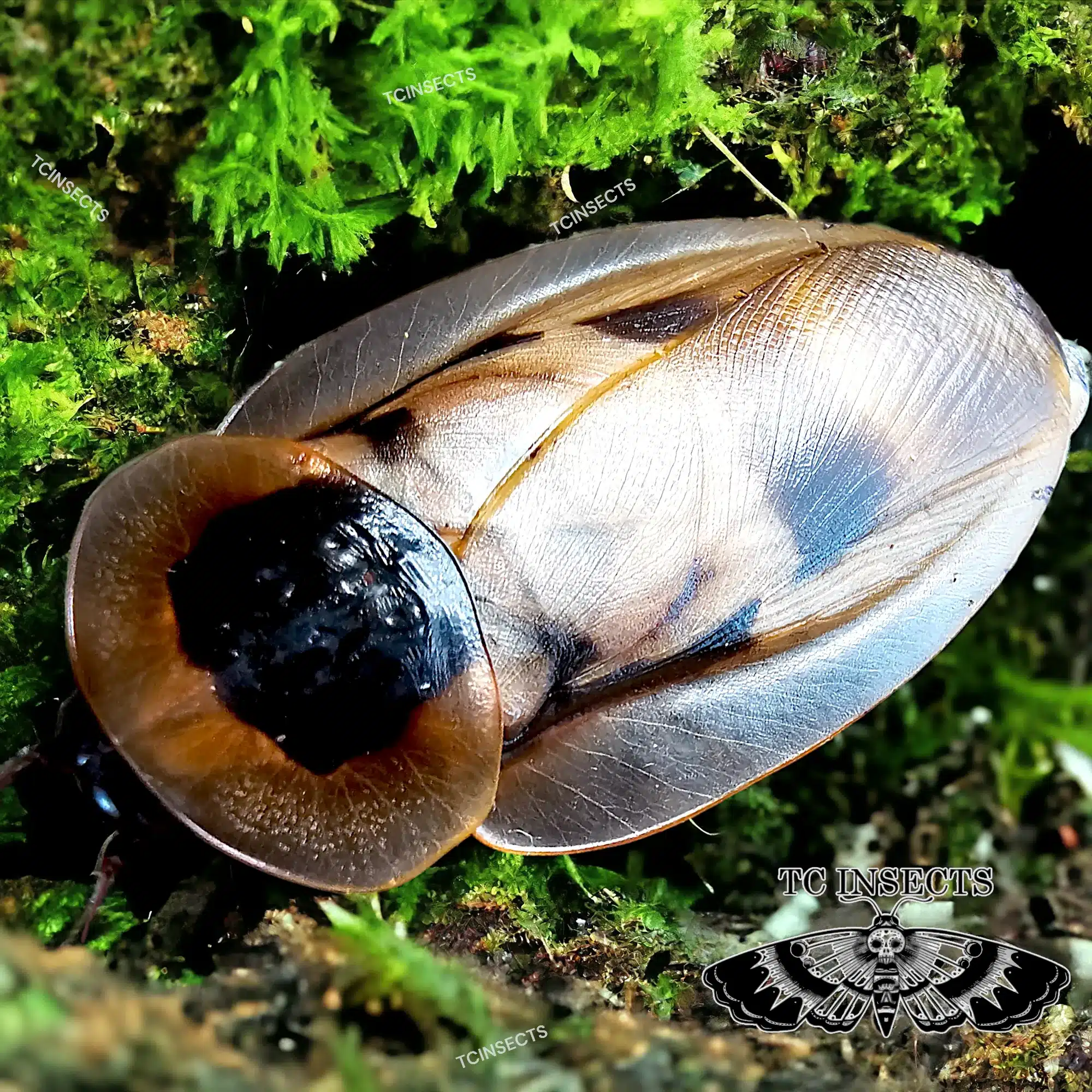
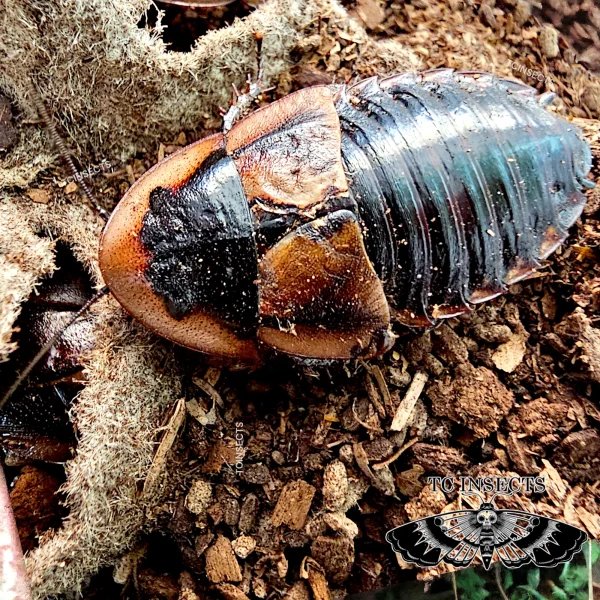
The Honduran Cave Roach is the hobby trade name for Blaberus sp. “Honduras,” a collector-tier large blaberid whose exact species identity is genuinely contested. The line was originally collected and first cultured by
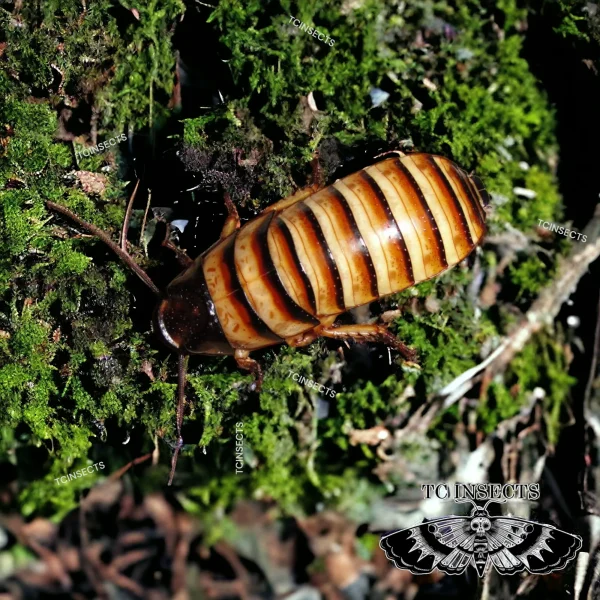
entomologist Gil Wizen and was initially identified as Blaberus giganteus. That identification has since been called into question, and the species may actually be undescribed. Adults reach roughly 67 to 75 mm and loo
k extremely similar to B. giganteus at first glance, but differ in several documented ways. This is a serious collector species, sold in small counts of 1 or 5 mixed nymphs.
Overview
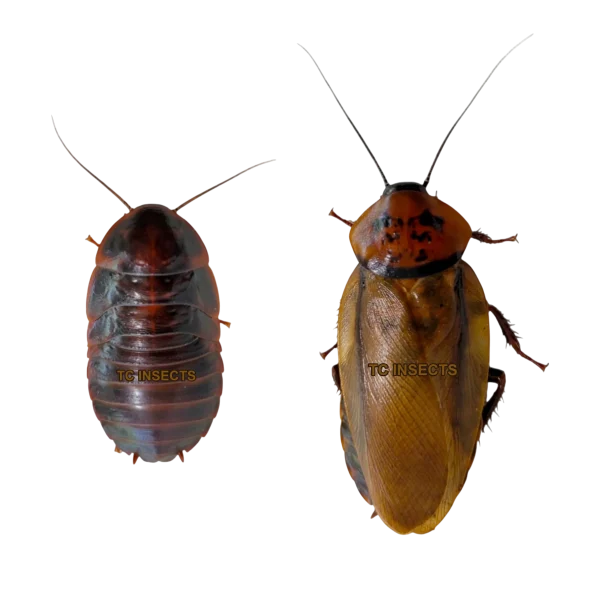
Like other large Blaberus, this species is a flat-bodied, calm cave-associated roach native to Central America. Adults have wings, and unlike some other Blaberus in the hobby, adults of both sexes may be able to fly, though
flight is rare in captivity. They cannot climb smooth surfaces. Females give birth to live nymphs rather than laying egg cases. The species sits in the same size range as a slightly-smaller B. giganteus, which is part of why
the two have been historically confused.
Honest Note on Species Identification
This is the most important thing to understand before buying. The “sp.” in the scientific name signals an unconfirmed species, and that is genuinely the case here. When this Honduras line entered the hobby, keepers
assumed it was Blaberus giganteus based on size and general appearance. Closer examination by experienced hobby breeders has since shown that the wing patterning is more variable than in confirmed B. giganteus
stocks, the ventral coloration differs, adult size runs slightly smaller, and the nymph behavior is distinct. As a result, the wider community now treats it as either an unconfirmed or possibly undescribed Blaberus species,
with the locality “currently being researched.”
If you want a confirmed-species line, the catalog’s Blaberus giganteus, B. parabolicus “Colombia”, and B. atropos “Florida” are all formally described species. This Honduras line is for collectors who specifically value the
founder-line provenance and the open identity question.
What Distinguishes This Line from Blaberus giganteus
- Variable wing patterning. Adults do not show the more uniform wing markings of captive B. giganteus stocks.
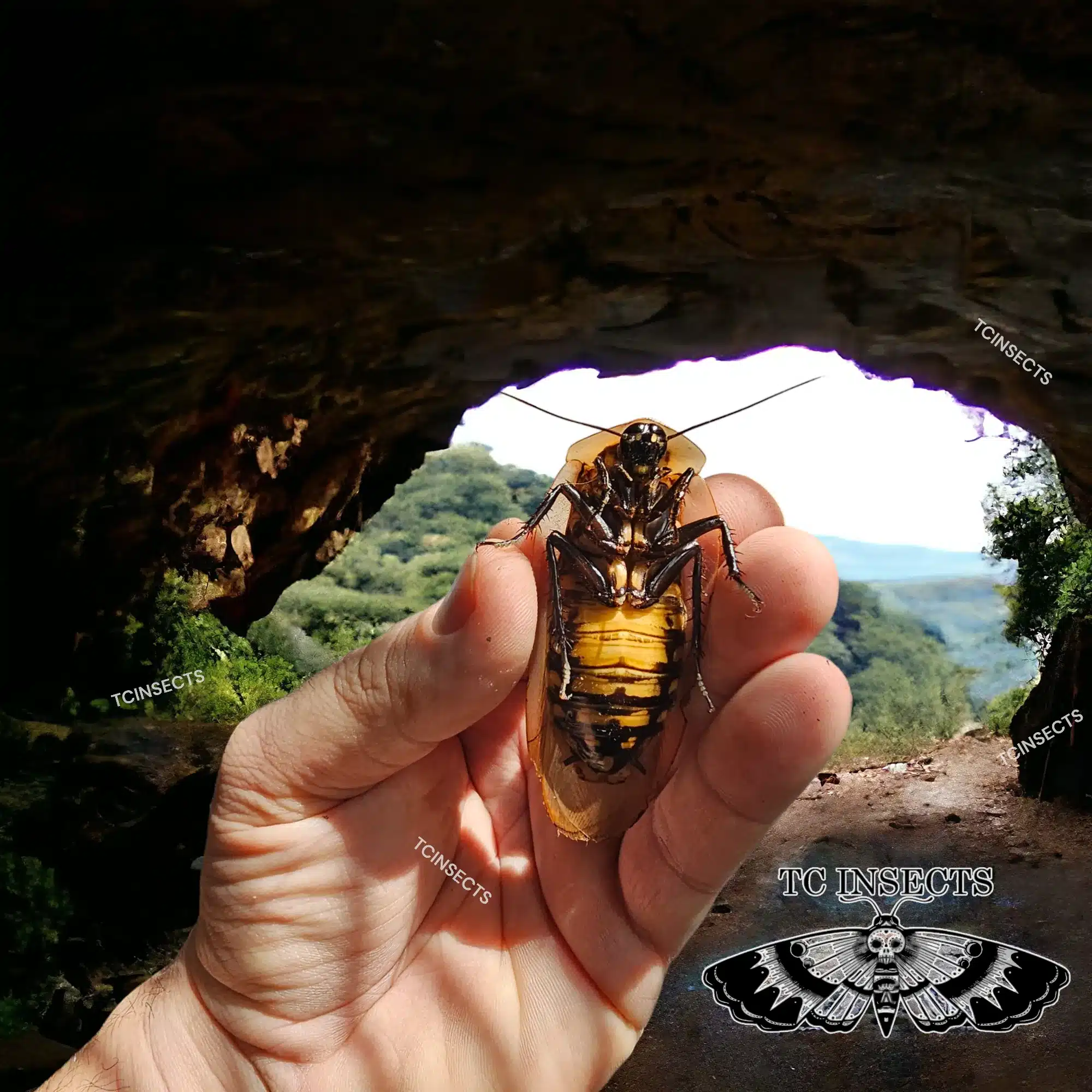
- Different ventral coloration. Underside coloration differs from confirmed B. giganteus.
- Slightly smaller adult size. Adults run 67 to 75 mm versus the 75 to 84 mm typical for our B. giganteus stock.
- Run-when-provoked nymph behavior. Nymphs prefer to run rather than flatten out when disturbed, which is the opposite of typical B. giganteus defensive behavior.
- Different defensive odor. Hobby observers report a defensive scent closer to B. atropos (older synonym B. fusca) than to B. giganteus.
Honest Note on Male Territoriality
One captive concern is unique to this line. Adult males can be territorial and may damage each other in male-heavy or crowded colonies, sometimes tearing wings or causing serious injuries. The fix is straightforward: give
the colony enough floor space, plenty of vertical hides like cork bark and stacked egg flats, and keep the sex ratio weighted toward females rather than males. A well-spaced colony with ample cover does not show
meaningful male aggression. If you see fighting or wing damage, the colony is signaling that something needs to change. This is not a concern on our other Blaberus pages.
Honest Note on Hybridization
Carries over from the rest of the Blaberus lineup but matters extra here. Because this line was originally misidentified as B. giganteus, and because Blaberus species cross-breed readily, mixing this line with any other
Blaberus species in the same enclosure produces hybrid offspring that complicate an already debated identification. House this line strictly on its own to preserve the founder-line stock for future identification work.
Housing alongside Eublaberus species in separate enclosures is fine, since those are a different genus and do not hybridize with Blaberus.
Why Keep Honduran Cave Roaches?
- Documented founder-line provenance. Originally collected and first cultured by entomologist Gil Wizen, with a traceable hobby history.
- The open identity question is the collector hook. A possibly undescribed Blaberus appeals to serious enthusiasts who value taxonomic interest.
- Large display species. Adults are substantial enough to be a real centerpiece in an enclosure.
- Distinctive behavior. The run-when-provoked nymph response sets this line apart from other large Blaberus.
- Calm and contained. No climbing on smooth surfaces, and flight is rare in captivity despite the wings.
Care and Setup
Husbandry is forgiving overall, with three things that matter: warmth, moisture with airflow, and enough room to prevent male aggression.
Temperature
70 to 85°F is the active range. Warmer (around 80 to 85°F) drives faster growth and reproduction; cooler slows the colony without harming it.
Humidity and Substrate
Moist substrate with a tolerant air humidity range. A mix of coco fiber, peat, and leaf litter works well, kept damp but not waterlogged. The combination experienced keepers describe as “humid but well-ventilated” is exactly right for this line.
Habitat Structure
This is where male territoriality enters the conversation. Give the colony plenty of floor space and vertical hides: cork bark, hollow wood, and stacked egg flats. Cramped enclosures with limited cover trigger male aggression. Plan more vertical space than you think a similar-sized roach colony needs.
Food
Omnivorous and not picky. Quality dry feed such as Supreme Feed Premium Roach Formula or Supreme Feed Dubia, plus fresh fruits and vegetables. Hobby breeders note that fresh fruits and a steady protein source help support reproduction in this line specifically.
Hydration
Use water crystals such as Hydro-Thirst Insect Water Crystals rather than open water dishes or cotton balls, which drown nymphs or grow mold. Misting alone is not enough for a long-term setup.
Ventilation
Use a vented or mesh lid. Good airflow lets you keep substrate moist without growing mold, which matters more in a humidity-tolerant species than keepers expect.
Breeding Notes
Females give birth to live nymphs, like other blaberid roaches. Broods of around 20 to 30 nymphs are typical, and nymphs take several months to reach adulthood under warm conditions. When kept in adequate space
with female-weighted sex ratios, this line can be quite productive. The male-territoriality concern means that overcrowded or male-heavy colonies underperform, so the practical breeding rule is to give them more room
and skew the ratio toward females.
Best For
- Serious Blaberus collectors who specifically want unconfirmed-species lines
- Keepers already maintaining B. giganteus who want a sibling-like line for comparison
- Hobbyists who value documented founder-line provenance
- Display keepers who want a substantial cave-roach with distinct behavior
- Bioactive enclosure keepers who want a large composter species
Not Best For
- Keepers wanting a formally confirmed species, where B. giganteus, B. parabolicus, or B. atropos are better choices
- Volume reptile feeding, where Dubia and Orange Heads are far more efficient
- Cramped enclosures, which trigger male aggression in this line
- Keepers planning to house multiple Blaberus species in one bin
- Customers in jurisdictions that restrict non-native cockroach species; check local rules
- Anyone planning to release roaches outdoors under any circumstances
Origin and Locality Notes
This line was originally collected from Honduras, hence the locality tag, and was first brought into captive culture by entomologist Gil Wizen. The exact wild collection site within Honduras is described in the wider hobby
as “currently being researched.” The species itself sits in the broader Neotropical *Blaberus* radiation, with closest morphological similarity to *Blaberus giganteus* but documented differences in wing patterning, ventral
coloration, adult size, and nymph behavior. Until a formal taxonomic study resolves the identification, this line is best handled as a documented locality-tagged Blaberus sp. with collector value tied to its unsettled identity.
Receiving and Acclimation
Your order ships with ventilation and bedding suited to transit. On arrival, open the package in a clean, contained area and transfer the nymphs into a prepared enclosure with moist substrate, leaf litter, plenty of cork bark
or hollow wood hides, and a safe hydration source. Give the nymphs a day to settle before disturbing them. As with every live insect we sell, do not release them into the wild, especially important for a line whose identity is
still being settled.
Recommended Add-Ons
- Hydro-Thirst Insect Water Crystals for safe hydration without an open dish or cotton balls.
- Supreme Feed Premium Roach Formula for a quality dry diet for the colony.
- Blaberus giganteus “Giant Cave Roach” for collectors who want the confirmed-species sibling line in a separate enclosure for direct comparison.
- Blaberus atropos “Florida” for collectors building a multi-species Blaberus lineup.
- Eublaberus distanti “Ivory” for collectors adding a non-hybridizing species from a different genus.
Frequently Asked Questions
What does the “sp.” in the name mean?
It means “species” in scientific shorthand and indicates that the formal species identity is unconfirmed. Unlike Blaberus giganteus or Blaberus atropos, where the scientific name reflects a formally described species,
“Blaberus sp. Honduras” indicates a locality-tagged line whose exact species identification is still open in the wider hobby and taxonomic literature.
How does this differ from Blaberus giganteus?
At first glance they look similar enough that this Honduras line was originally sold as B. giganteus. Closer comparison shows differences in wing patterning (more variable here), ventral coloration, adult size (slightly
smaller in the Honduras line), and notably in nymph behavior (this line runs when provoked while B. giganteus tends to flatten out). The defensive odor also differs.
Who is Gil Wizen and why does the provenance matter?
Gil Wizen is a published entomologist, photographer, and arachnologist whose work on Neotropical invertebrates has appeared in scientific journals and natural history publications. He collected the original Honduras stock and brought it into captive culture, giving this line a documented provenance that most hobby roach lines lack. For collectors who care about origin, that traceability adds value.
Why can adult males be a problem?
Adult males in this line can be territorial and damage each other in crowded enclosures or male-heavy colonies, sometimes tearing wings or causing injuries. Give the colony enough room, plenty of vertical hides, and a female-weighted sex ratio. A well-spaced colony does not show meaningful male fighting.
How can I tell my stock is pure?
Source-stock from established documented breeders, never house with other Blaberus species, and watch for the distinguishing features (variable wing patterning, slightly smaller adult size, run-when-provoked nymph behavior). Hybrids with B. giganteus tend to show intermediate traits that lose the line’s specific differences over generations.
Why are the count options only 1 or 5 nymphs?
This is a collector species with a premium price point reflecting its scarcity and unconfirmed identity. 1 suits a single display addition or a proof-of-life pickup; 5 is a sensible starter group for a small founder colony with enough animals to maintain the line.
Learn More About Blaberus sp. “Honduras”
These references give keepers context for the species identification question and for broader Blaberus biology.
- Wikipedia: Blaberus (genus profile). A general overview of the genus including the formally described species list and the husbandry baseline (60%+ relative humidity, warm conditions) that Blaberus sp. “Honduras” shares with its relatives.
- Cockroach Species File: Blaberus. The authoritative taxonomic database for the genus, useful for collectors checking how this Honduras line might eventually be placed once formal study is completed.

Reviews
There are no reviews yet.