
Cuban Burrowing Roaches for Sale
The Cuban Burrowing Roach (Byrsotria fumigata) is a Cuban endemic cockroach with one of the most genuinely interesting documented biologies in the entire exotic roach hobby. Females exhibit documented maternal
care: they stay with their newborn nymphs, physically raise their bodies to allow the babies to aggregate underneath them, and release aggregation pheromones (extractable from their feces) that keep the nymphs gathered
safely until they reach the second instar. This isn’t a hobby claim — it’s documented in peer-reviewed scientific literature dating back to Barth’s 1964 mating behavior research and the Bell, Parsons & Martinko 1981 paper
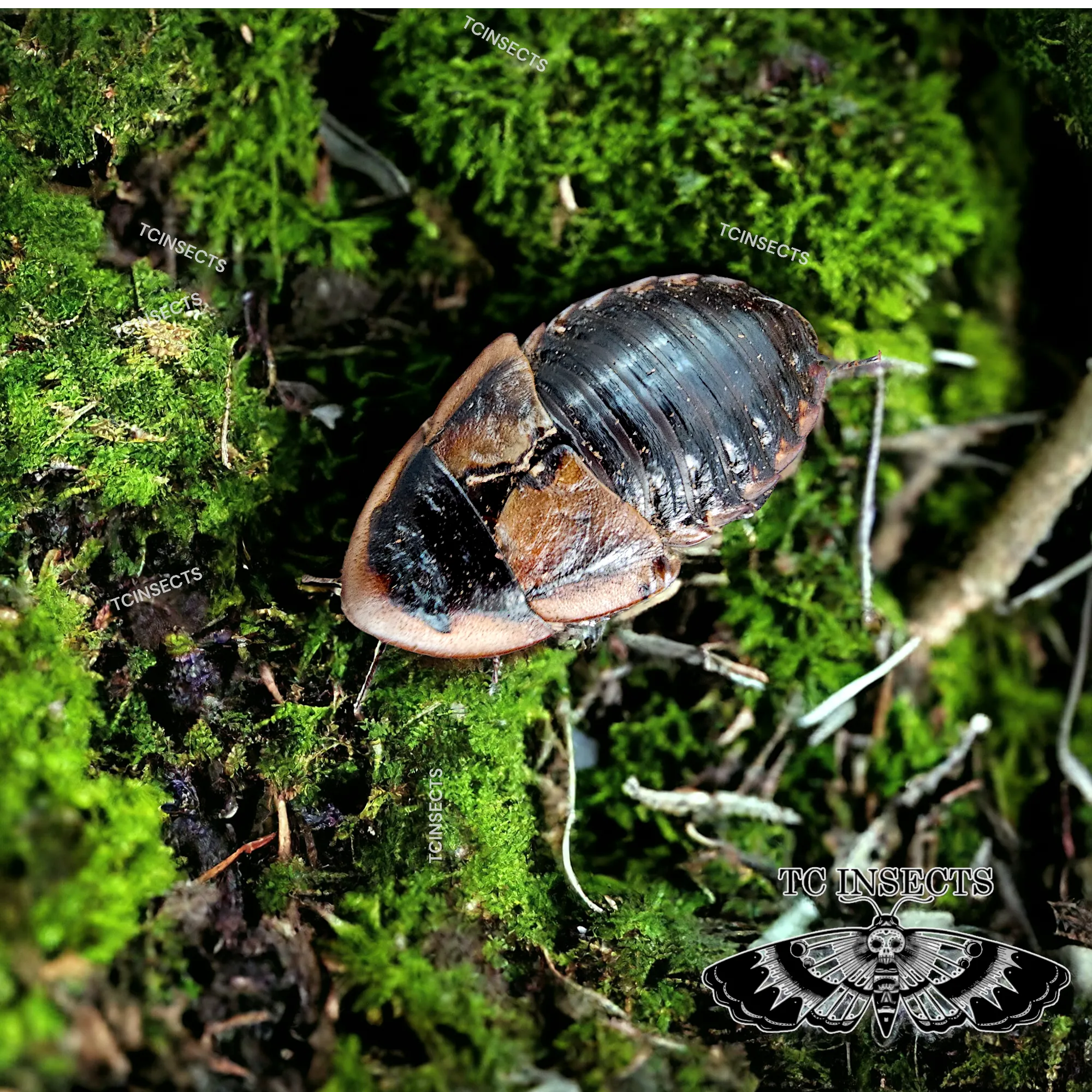
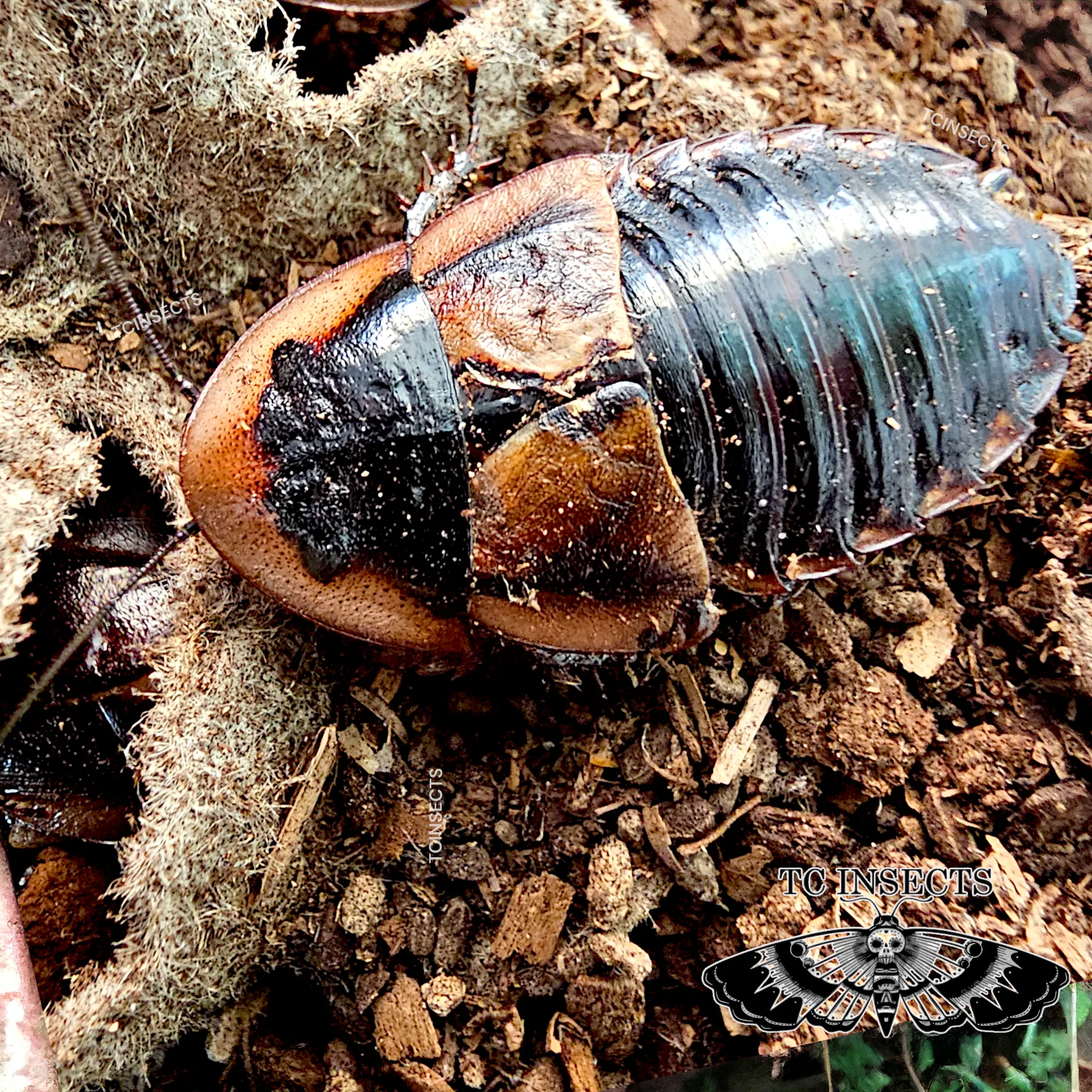
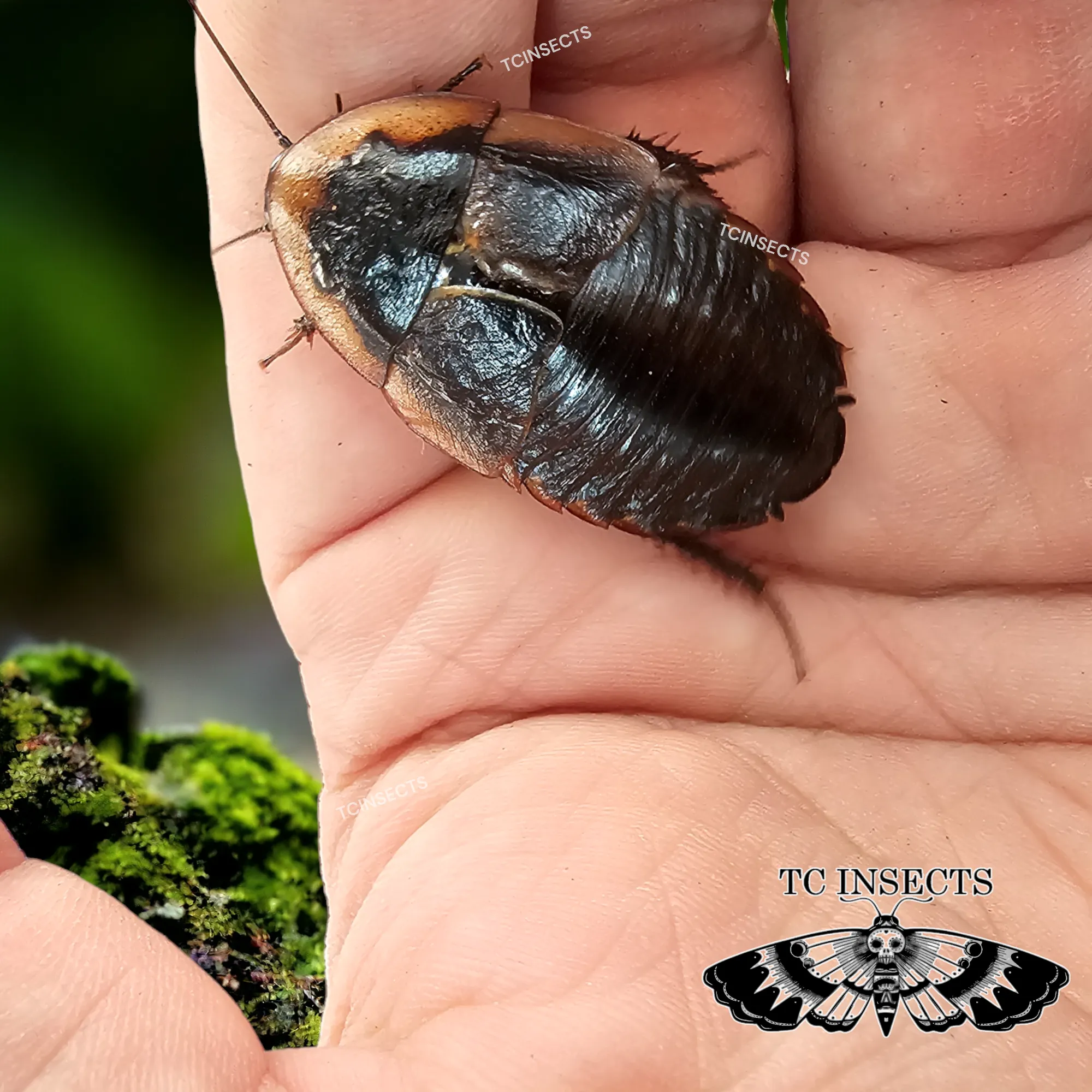
specifically on the aggregation behavior. Adults reach 40 to 52 mm with dark black (“smoky”) coloration that gives the species its scientific name. Sold to display keepers, educators, and roach collectors in counts of 1 or 5
mixed nymphs.
Overview
Cuban Burrowing Roaches are in family Blaberidae, the giant cockroach family that includes most of our catalog. Like other blaberids, females give birth to live nymphs rather than laying eggs. What sets this species apart
is what happens AFTER birth: documented maternal care that keeps newborn nymphs aggregated under the mother for protection, with chemical signaling (pheromones) reinforcing the bond. This makes Cuban
Burrowing Roaches one of the few roach species that practice meaningful parental behavior, comparable in some ways to social insects like ants and termites though not as developed. The species is also non-climbing and
non-flying (males form wings but don’t use them), making this one of the easiest exotic display species to contain. Per documented hobby breeders, the species is prolific enough that some keepers report it “breeds better
than Dubia.”
Honest Note: The Maternal Care Is Real Documented Science
This is the genuinely unique selling proposition of this product. Most cockroach species give birth (or lay eggs) and walk away — the offspring are entirely on their own. Cuban Burrowing Roaches do something different, documented in peer-reviewed scientific literature:
- After live birth, the mother stays with her babies. Not for hours — for weeks. Until the nymphs reach the second instar (their second molt).
- She physically protects them by raising her body. The mother lifts her abdomen and thorax slightly off the substrate, creating a sheltered space underneath where the nymphs gather.
- She uses chemical signals to keep them close. Aggregation pheromones (released from her feces, per the documented research) signal “stay near mom” to the nymphs. The nymphs orient to the pheromone via contact chemoreception (their antennae touching surfaces marked with the pheromone).
- The nymphs also eat with mom present. They feed on adult feces (which contains beneficial bacteria they need for gut development) and on food the mother accesses.
This behavior pattern was first described in Barth (1964) and refined in Bell, Parsons & Martinko (1981). The species has been used as a research model for cockroach parental behavior, aggregation pheromone chemistry, and brood care evolution ever since.
For keepers, this means you can actually observe parental behavior in this species — something almost no other catalog roach offers. Watching a female protect her newborn nymphs is a documented educational and aesthetic feature unique to this product.
Honest Note on the Aggregation Pheromones
The “pheromones from feces” detail can sound strange but it’s documented biology. Here’s the plain English explanation:
- Many social and pre-social insects use chemical signaling. Honey bees use queen pheromones; ants use trail pheromones; termites use food-finding pheromones.
- Cuban Burrowing Roaches use feces-based aggregation pheromones. The mother’s frass (waste) contains chemical compounds that attract her own nymphs.
- Why feces specifically? The nymphs eat the feces anyway (for the beneficial gut bacteria), so co-opting feces as a chemical signal makes evolutionary sense. The pheromone gets distributed wherever the mother eats, walks, and rests.
- The pheromone is species-specific. Cuban Burrowing Roach nymphs respond to their mother’s pheromone but not to similar pheromones from other roach species (per Bell et al. 1981). This prevents cross-species adoption.
Practical takeaway: if you keep this species, don’t aggressively clean out all the substrate at once. Some of the established substrate carries the aggregation pheromone signal and helps maintain colony cohesion. Replace substrate gradually rather than all at once.
Honest Note: It’s a Cuban Endemic
The species is documented as native to Cuba specifically (sometimes called a Cuban endemic, meaning it’s found in Cuba and nowhere else in the wild). The genus *Byrsotria* includes a few other Caribbean species, but *B. fumigata* is the one in the hobby and the one documented in scientific research.
Some older hobby sources state the species occurs “in Cuba and other tropical regions.” This is loose phrasing — accurate native range is Cuba specifically, though the species may have been introduced or established as captive populations in other tropical regions through the hobby trade.
What this means practically:
- Husbandry mimics Cuban tropical conditions. Warm temperatures (75-82°F), moderate to high humidity (60-70%), moist substrate, and access to a moderate variety of foods all match the Cuban natural habitat.
- The species is well-adapted to year-round warm conditions. Unlike temperate species that need temperature variation, Cuban Burrowing Roaches breed continuously under stable warm conditions.
- Caribbean buyer note: Florida residents and other tropical-climate keepers may find this species particularly easy because the room temperatures match the species’ natural conditions.
Honest Note on the “Smoky” Name
The species name “fumigata” comes from the Latin “fumus” meaning smoke — describing the dark, smoky-black coloration of the adults. This is a literal description that’s helpful for identification:
- Adults are dark. Black or very dark brown body, sometimes described as “smoky” because the surface can have a slight matte or dust-like appearance rather than glossy.
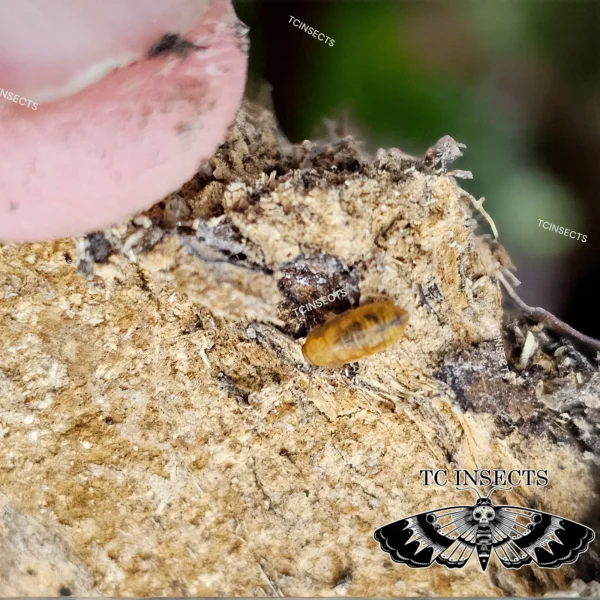
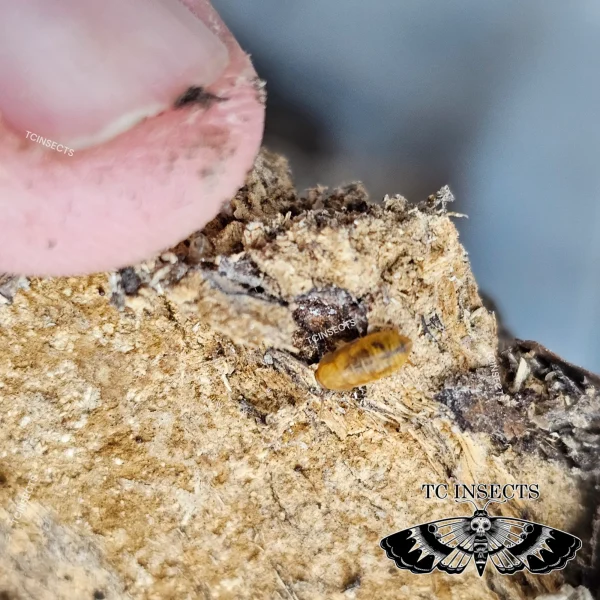
- Nymphs are lighter. Newborn nymphs are paler and become darker as they grow through their molts.
- No distinctive markings. Unlike many blaberids that have stripes, spots, or patterns, Cuban Burrowing Roaches are uniformly dark with no contrasting marks.
This uniformly dark coloration is part of what makes the maternal care behavior so visible — you can clearly see the nymphs aggregated under the mother because they’re paler than her dark body. The visual contrast helps when observing the parental behavior.
How It Compares to Our Other Caribbean Species
This is the third Caribbean-region cockroach in our catalog. For collectors deciding among them:
- Cuban Burrowing Roach (B. fumigata, this product): Cuban endemic, 40-52 mm, dark black, documented maternal care, non-climbing, non-flying. Best for display, education, and prolific feeder use.
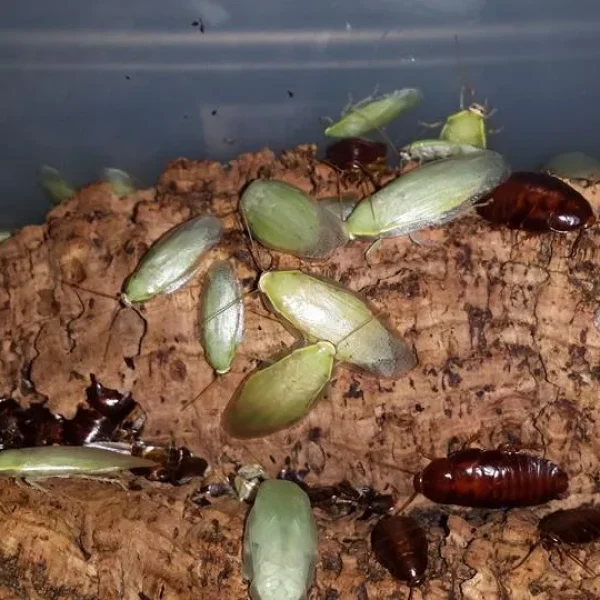
- Green Banana Roach (Panchlora nivea): Cuban native that spread to US Gulf Coast, 12-24 mm, bright green adults, climbing and flying, lays oothecae. Best for small soft-bodied feeder use.
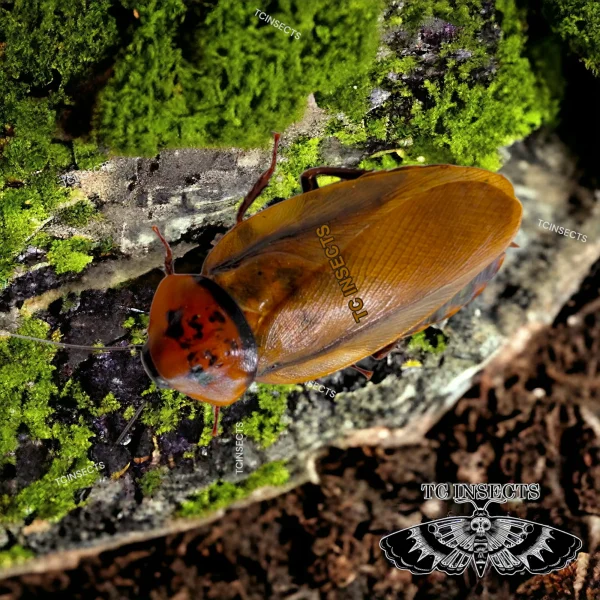
- Horseshoe Crab Roach (Hemiblabera tenebricosa): Florida Keys + West Indies including Cuba, 40-53 mm, light brown, distinctive flattened body, non-climbing, non-flying. Best for display with the unusual body shape.
All three are family Blaberidae. The Cuban Burrowing Roach uniquely offers the documented maternal care biology. The Green Banana Roach uniquely offers the bright green color. The Horseshoe Crab Roach uniquely offers the flattened body shape. For collectors completing a Caribbean-region collection, all three are worth keeping.
How It Compares to Dubia
This is the natural feeder comparison since both species are non-climbing and non-flying in the same size class:
- Size: Cuban Burrowing Roach 40-52 mm; Dubia adults ~45 mm. Very similar size class.
- Care: Both species are easy and forgiving. Cuban Burrowing Roach prefers slightly more moisture; Dubia tolerates drier conditions.
- Breeding rate: Per documented hobby breeders, Cuban Burrowing Roach is reported to breed faster than Dubia. The maternal care also means higher nymph survival rates.
- Climbing/flying: Both non-climbing and non-flying. Equally easy to contain.
- Color and display value: Cuban Burrowing Roach dark black with visible maternal care behavior; Dubia brown with no special behavior. Cuban wins on display value.
- Cost and availability: Dubia is the standard, cheaper, more widely available; Cuban Burrowing Roach is the premium alternative with the unique biology.
For pure feeder economics, Dubia wins. For feeder use plus interesting biology to observe, Cuban Burrowing Roach is the better all-around choice.
Care and Setup
Husbandry is straightforward and broadly similar to Dubia care, with slightly higher humidity preference and the recommended substrate management to preserve maternal pheromones.
Enclosure
A secure plastic or glass container with a tight-fitting lid. Provide at least one square inch of floor space per roach. Add hides — cork bark, leaf litter, or cardboard tubes — to provide burrowing and resting sites.
Substrate
At least 2 inches of moist organic substrate: coconut fiber, peat moss, or potting soil. The species burrows during the day and emerges at night to forage. Keep substrate consistently damp but not soaked. As mentioned in
the pheromone note above, replace substrate gradually rather than all at once to preserve colony aggregation chemistry.
Temperature and Humidity
78 to 82°F (26 to 28°C) is the breeding sweet spot, with 70 to 85°F as the tolerated range. Moderate to high humidity (around 60-70%) maintained by misting the enclosure once or twice a week. Avoid over-misting which causes mold.
Food
Omnivorous and not picky. Offer fruits, vegetables, grains, nuts, seeds, dry dog food, fish flakes, or Supreme Feed Premium Roach Formula. Provide fresh food every 2-3 days and remove uneaten food to prevent mold.
Calcium supplementation with TC Calcium Ultra Fine or cuttlebone is helpful, especially if you’ll feed the roaches to reptiles.
Hydration
A shallow water dish with a sponge or cotton balls (to prevent nymph drowning), or Hydro-Thirst Insect Water Crystals as a spill-proof safe option.
Breeding Notes
Per the live page and documented sources, females reach sexual maturity at 5 to 7 months. Mating involves antennal contact, head rocking, wing raising (males), and mounting. The female carries fertilized eggs in an
internal brood sac for about a month before giving birth to 20 to 40 first-instar nymphs. From here the maternal care kicks in: the mother stays with her nymphs, raises her body to shelter them, and uses aggregation
pheromones to keep them together for several weeks until they reach the second instar. Nymphs molt 6 to 8 times before reaching adulthood at about 6 months. Adult lifespan is 1 to 2 years. The maternal care plus rapid
breeding means colonies become productive faster than many other catalog species.
Best For
- Display keepers interested in observing documented maternal care behavior
- Educational keepers running entomology displays or classroom invertebrate setups
- Dubia keepers wanting a better-breeding alternative with display interest
- Caribbean species collectors completing a regional collection
- Roach taxonomy collectors building Blaberidae representation
- First-time exotic roach keepers wanting an easy, forgiving species with bonus biology
- Researchers and amateur scientists interested in cockroach parental behavior
Not Best For
- Keepers wanting bright or unusual coloration; these are uniformly dark
- Keepers wanting climbing or flying display action; these are ground-dwellers only
- Setups that periodically dry out completely
- Customers in jurisdictions that restrict non-native cockroach species; check local rules
- Anyone planning to release roaches outdoors under any circumstances
Origin and Locality Notes
Byrsotria fumigata is a Cuban endemic cockroach, native to Cuba and not naturally occurring in other tropical regions. The species was first formally described by Guérin and has been the subject of significant scientific
research since the 1960s, with key publications by Barth (1964) on mating behavior and Bell, Parsons & Martinko (1981) on aggregation pheromones. The genus Byrsotria includes a few other Caribbean species but *B.
fumigata* is the dominant species in the modern hobby. Family Blaberidae places this species alongside most of our other exotic catalog roaches.
Receiving and Acclimation
Your order ships with ventilation and bedding suited to transit. On arrival, transfer the nymphs into a prepared enclosure with moist substrate, hides, and food. Because the nymphs are small at first and may hide in the
substrate for the first few days, don’t worry if you don’t see them initially. Give them several days to settle before disturbing them. As with every live insect we sell, do not release them into the wild.
Recommended Add-Ons
- Dubia Roaches for keepers wanting both the standard feeder (Dubia) and the better-breeding display feeder (Cuban Burrowing Roach) in separate enclosures.
- Horseshoe Crab Roach (Hemiblabera tenebricosa) for the natural Caribbean-region pairing, both non-climbing and non-flying in similar size class.
- Supreme Feed Premium Roach Formula for a quality dry diet alongside fresh produce.
- Hydro-Thirst Insect Water Crystals for safe spill-proof hydration that won’t drown nymphs.
- TC Calcium Ultra Fine for calcium supplementation, especially if feeding the roaches to reptiles.
Frequently Asked Questions
What does the maternal care actually look like?
After a female gives birth to 20-40 nymphs, she stays with them for several weeks. She slightly raises her body off the substrate, allowing the small pale nymphs to gather and shelter underneath her dark body. She releases
aggregation pheromones from her feces that keep the nymphs oriented toward her. The nymphs feed on her frass (which contains beneficial gut bacteria they need) and stay close until they reach the second instar (after
their first molt). This behavior continues for roughly 2-4 weeks.
Why is this species famous in research?
Cuban Burrowing Roaches were among the first cockroaches to have their maternal care behavior formally documented in scientific literature. The 1964 Barth paper on mating behavior and the 1981 Bell, Parsons &
Martinko paper on aggregation pheromones established this species as a research model for cockroach parental behavior. The species has been studied for decades since, making it one of the most thoroughly documented
cockroaches in scientific literature.
The native range claim seems wrong — what’s correct?
The species is a Cuban endemic, meaning it’s native to Cuba specifically and not naturally found in other regions. Some older hobby sources state “Cuba and other tropical regions” which is loose phrasing. Husbandry
should match Cuban tropical conditions (warm, moist, moderate humidity), not generic “tropical” guidance.
How does this compare to Dubia for feeder use?
Similar size (40-52 mm vs Dubia ~45 mm), similar care, both non-climbing and non-flying. Per documented hobby breeders, Cuban Burrowing Roaches breed faster than Dubia, partially because the maternal care results
in higher nymph survival. The main differences: Cuban Burrowing Roaches prefer slightly more moisture, are more visually interesting (dark black with maternal behavior), and cost more per nymph. For pure feeder
economics, Dubia wins. For better-breeding feeder plus display interest, Cuban Burrowing Roach is the better choice.
What’s the “brood sac” thing in the breeding section?
It’s the same biology as all blaberid live-birth — the female carries developing eggs in an internal brood sac (essentially a uterus-like internal chamber) for about a month, then gives birth to live first-instar nymphs. Unlike
most blaberids that walk away after birth, the Cuban Burrowing Roach mother then exhibits the documented brooding behavior described above.
Why is this listed as one of the easier exotics to keep?
Three reasons. First, non-climbing and non-flying means simple containment — a plastic bin with a tight lid handles them. Second, hardy and tolerant of wide temperature and humidity ranges within the warm/moist
envelope. Third, the maternal care results in high nymph survival, so colonies build up faster and recover from setbacks better than colonies without parental care.
Learn More About Byrsotria fumigata
These references give keepers background on the species, the documented maternal care research, and the broader Blaberidae family context.
-
Insectes Sociaux: Brooding behavior of the Cuban Burrowing Cockroach. The peer-reviewed scientific paper documenting the maternal care behavior, aggregation pheromones, and parental brooding in this species — the primary research reference for the unique biology that distinguishes this product.
-
iNaturalist: Byrsotria fumigata. A community-sourced biodiversity platform with verified observations of the species, useful for buyers wanting to see the species in natural context.
-
Wikipedia: Blaberidae (giant cockroach family). A general overview of the family this species belongs to, including the shared live-bearing biology that the Cuban Burrowing Roach extends into the documented maternal care behavior.




Reviews
There are no reviews yet.