

Pink Roaches for Sale
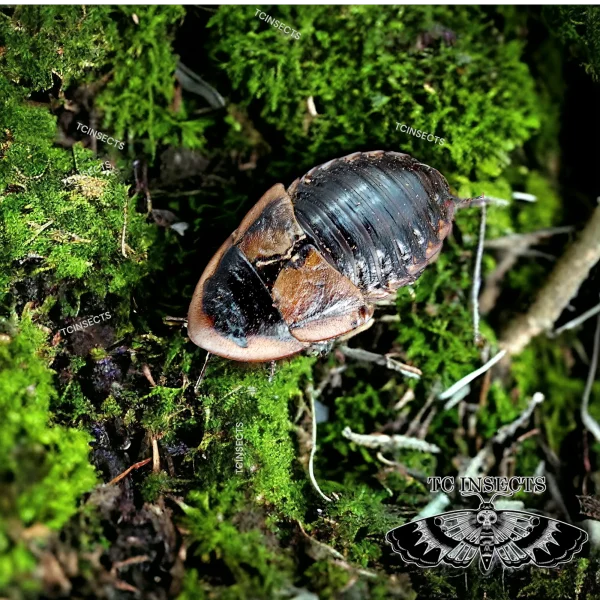
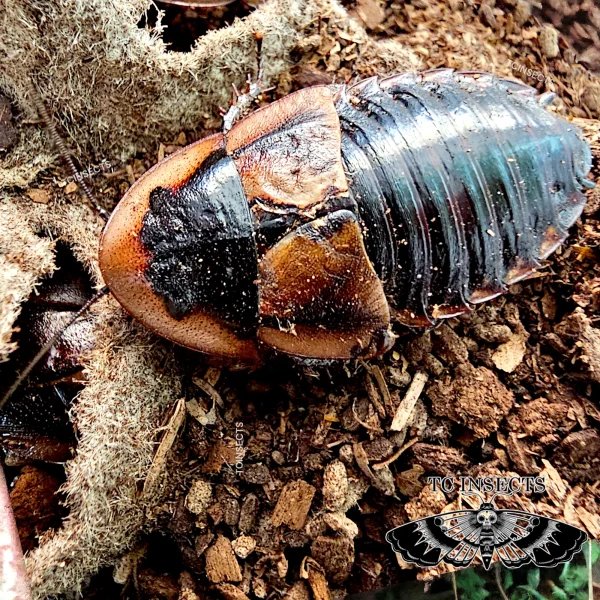
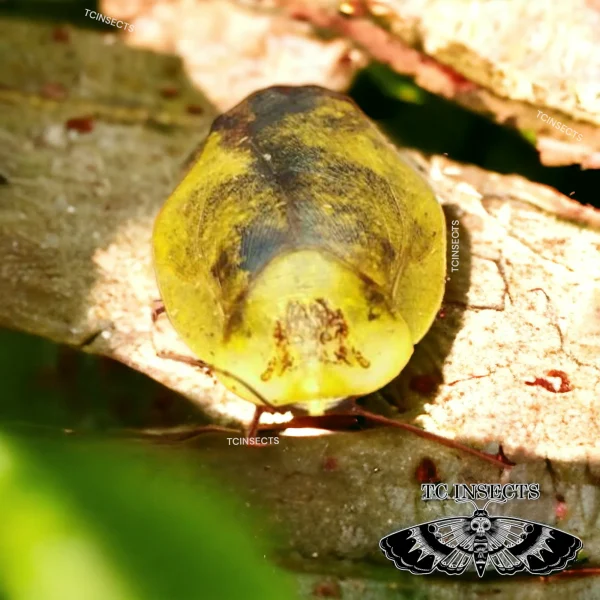
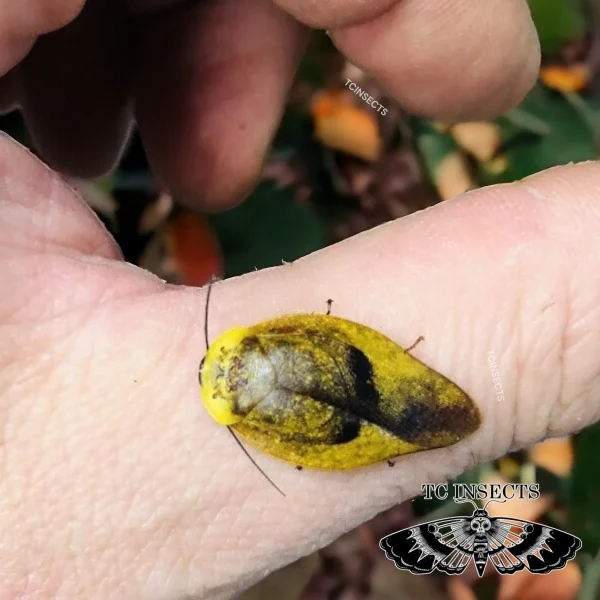
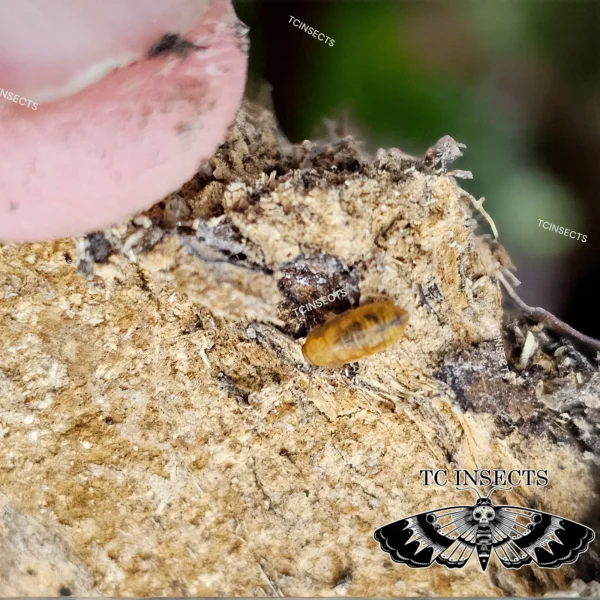
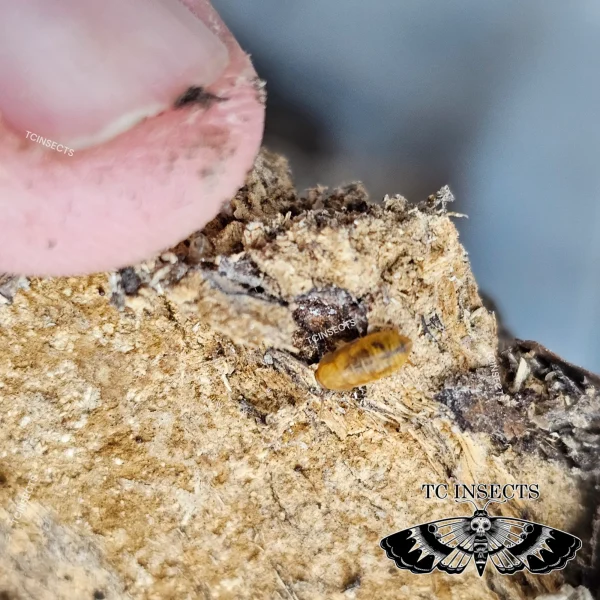
This is the larger sub-adult tier of Gyna capucina, the Pink Roach, sometimes called the Pink Porcelain Cockroach. The animal you receive here is a more developed nymph, roughly 30 to 40 mm, closer to showing the
famous pink wing coloration than the small trial nymphs on our other Pink Roach listing at $3. Same species, different developmental stage, different price. Pink Roaches are widely described in the US exotic-roach hobby
as a “holy grail” species: stunning pink wings on a glossy white body, but genuinely demanding to keep. Sold as a single sub-adult nymph at $20.
Overview
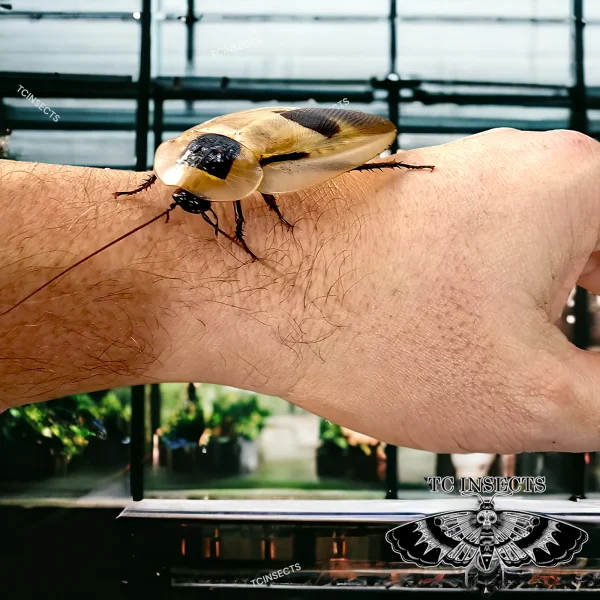
Pink Roaches are African forest detritivores in the genus Gyna (porcelain roaches). Females give birth to live babies rather than laying eggs. Adults reach about 30 mm and live up to about 2 years. The species spends most
of its time burrowed in damp substrate and only emerges to forage at night. The pink coloration is what draws people to this species, and it develops gradually over multiple molts as nymphs mature, which is why the larger
sub-adult tier on this page is closer to the visible color phase than the smaller trial nymphs.
Honest Note: We Have Two Pink Roach Listings, Here’s the Difference
You may have noticed we sell Pink Roaches at two different prices. Same species (Gyna capucina), different developmental stages:
- This listing, $20: a larger, more developed sub-adult nymph (about 30 to 40 mm). Closer to showing the adult pink color. Closer to breeding age. A head start.
- Our $3 listing: a small, young nymph (about 27 to 31 mm). A trial purchase so you can try the species before committing.
Pick the $3 listing if you want to test your setup before buying more. Pick this $20 listing if you’ve already kept Pink Roaches or want to skip the long wait for nymphs to grow into color.
Honest Note: When Does the Pink Color Show Up?
This matters for anyone choosing between the two listings. Pink Roach nymphs start out small, dark, and not pink at all. The color develops slowly over multiple molts. Here’s the rough timeline:
- Tiny new nymphs: dark, no pink. Several months from any color.
- Mid-size nymphs (around 27 to 31 mm, the $3 tier): starting to lighten. Pink is not visible yet.
- Larger sub-adult nymphs (around 30 to 40 mm, this $20 tier): closer to color phase, but still mostly pale. The full pink doesn’t appear until the final molt.
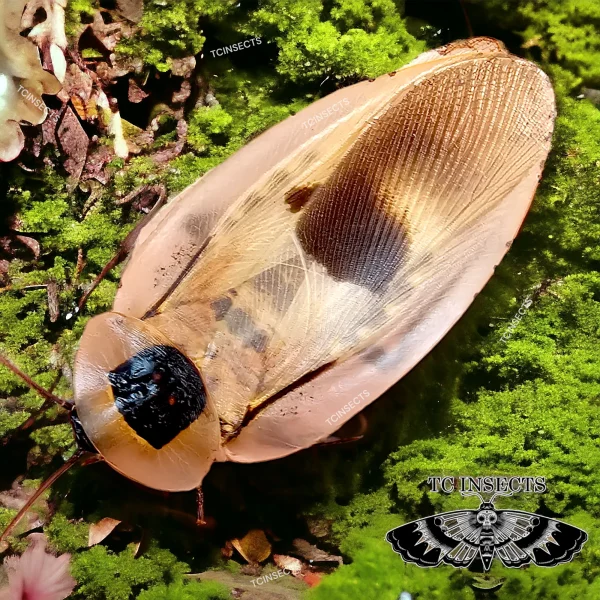
- Adults: the pink wings show up after the final molt. This is the photograph-worthy phase.
So buying the larger tier gives you a shorter wait, but not an instant pink roach. If you want to see pink right away, you would need to source confirmed adults from a separate breeder, which is rare in the US hobby.
Honest Note: This Species Is Demanding to Keep
This is the most important thing to know before buying, and it applies to both Pink Roach listings on our site:
- They don’t like being crowded. Too many in one container and babies start dying. Plan for more space than seems necessary.
- They are picky about wet and dry. They want the bottom of the dirt damp and the top of the dirt dry, both at the same time. We explain this below.
- They are sensitive to mites and other tiny pests. Keep things clean. Remove uneaten food fast.
- Pregnant females need quiet. If they get bumped or stressed, they can lose pregnancies.
If this is your first porcelain roach, our Chrome Roach is much more forgiving. If you’ve kept Gyna before, you know the drill. Either way, the sub-adult tier on this page lets experienced keepers skip the slow early nymph stage where most failures happen.
Honest Note: The Native Range Is Africa, Not South America
Older versions of our pages have said this species comes from South America. That is wrong. All the porcelain roaches in the genus Gyna come from Africa. If you see “South American” listed somewhere for this roach, it was a mistake.
Honest Note: Climbing and Flying
Only adult males climb up smooth surfaces and fly. Adult females stay grounded. Nymphs (including the larger sub-adult nymph you receive in this listing) cannot climb smooth surfaces and have no wings yet. So the actual escape risk comes from mature males only.
A snug-fitting lid handles it. Doesn’t have to be airtight, just snug enough that a flying male can’t push past. Some keepers add a thin smear of petroleum jelly around the inside rim of the enclosure as backup. That’s optional.
Why Keep Pink Roaches?
- The pink color. Adult females show a glossy white body with pink-to-orange-pink wings, one of the most striking color combinations in the roach hobby.
- “Holy grail” status. Hobby breeders use that phrase because the species is genuinely sought-after and not easy to find or keep.
- Type species of the porcelain roach genus. This is the species the whole Gyna group was named after.
- Calm and contained. Females and nymphs don’t climb or fly; only adult males do.
- Pairs well with other porcelain roaches. Build out the genus alongside our G. caffrorum and G. lurida in separate enclosures.
Care and Setup
Most failures with Pink Roaches come from crowding, wrong humidity, or pest exposure. Get those three things right and the species is much more manageable.
Enclosure
A 1 to 2 gallon container suits a single sub-adult nymph like the one in this listing. Upgrade to 5 gallons or more before any breeding begins. Use a tight-fitting lid (not airtight, just snug). Ventilation should come through vented sides or a vented top — moderate to high airflow.
Temperature
80 to 85°F is the sweet spot for this species, with 80 to 88°F driving the best breeding. Cooler than the mid-60s for long periods is risky. A heat mat on the side of the enclosure works well in a cool room.
The Wet-Bottom Dry-Top Trick
This is the husbandry move that makes or breaks a Pink Roach colony. Most roaches want their dirt uniformly damp; this one is different. Keep the bottom inch of substrate damp and the upper layers dry. The nymphs
pick the depth that suits them, and adults move between layers as needed. Don’t soak the whole thing. Breeders have tried both horizontal gradients (one side wet, other side dry) and vertical gradients (wet bottom, dry
top), and the vertical setup works better for this species.
Substrate
Two to four inches of organic substrate with good airflow. Coconut fiber, sphagnum peat, potting soil, or a mix with some rotten wood or compost. This species burrows extensively, and depth equals usable living area for them.
Habitat Structure
Above-ground hides matter less here than for surface-active species, because Pink Roaches burrow most of the time. A piece of cork bark or two gives the males something to climb on while foraging. Leaf litter is useful but the species doesn’t eat it as much as other porcelain roaches.
Food
They are omnivorous but prefer fruits and proteins over dry leaves. Scatter food directly on the substrate (no food bowls — the nymphs can’t reach raised dishes and may starve). Apples, bananas, peaches, berries, and
small amounts of dog food or fish flakes work well. Avoid citrus. Supreme Feed Premium Roach Formula works as a supplemental dry option. Remove uneaten food within a day or two to avoid mold and mites.
Hydration
The damp lower substrate provides most water. Hydro-Thirst Insect Water Crystals work as a backup spill-proof source.
Pest Prevention
Pink Roaches are more sensitive to mites and small pest bugs than most other roaches. Keep the enclosure clean, remove uneaten food promptly, and quarantine any new roach additions before mixing them in.
Breeding Notes
Pink Roaches give birth to live babies. Sub-adult nymphs in this listing are closer to reproductive age than the small trial nymphs on the other listing. Once they reach adulthood, males mature one or two months earlier
than females, which can leave you with mature males and no available mates if you start with same-age stock. Buying a sub-adult nymph here and pairing it with a similar nymph from the trial listing (kept in the same
enclosure once both reach a manageable size) is one way to get a mixed-age starter group. Adults live up to about 2 years. Females may abort pregnancies if disturbed, so keep things calm.
Best For
- Experienced Gyna keepers wanting reproductive-aged stock without the long nymph wait
- Breeders building a starter group across multiple orders
- Collectors who already keep G. caffrorum “Chrome” or G. lurida “Yellow” and are ready for the harder species
- Hobbyists who specifically want to skip the small-trial-nymph stage
- Keepers comfortable with the documented crowding and humidity sensitivities
Not Best For
- First-time exotic roach buyers; start with our Chrome Roach instead
- Anyone who wants an instantly pink-colored adult — the color develops gradually, even from a sub-adult
- Keepers without prior Gyna experience trying to scale up from a single $20 purchase
- Setups vulnerable to mite or pest infestations
- Customers in jurisdictions that restrict non-native cockroach species; check local rules
- Anyone planning to release roaches outdoors under any circumstances
Origin and Locality Notes
Gyna capucina is native to forested regions of equatorial Africa. The species was first formally described by Gerstaecker in 1883 and is the type species of the genus Gyna, meaning the porcelain roach group is anchored to
this species’ original description. The “Pink Roach” and “Pink Porcelain Roach” trade names both refer to the same animal. Our captive line is bred separately from our G. caffrorum “Chrome” and G. lurida “Yellow” lines.
Receiving and Acclimation
Your order ships with ventilation and bedding suited to transit. Open the package inside a closed room, not in an open one, since male adults can fly if startled (your sub-adult nymph cannot, but get into the habit
anyway). Transfer the nymph into a prepared enclosure with the wet-bottom-dry-top substrate setup, leaf litter, and minimal disturbance. Give it several days to settle and burrow before any further attention. As with
every live insect we sell, do not release them into the wild.
Recommended Add-Ons
- Our smaller Pink Roach trial nymph at $3 if you want to build a mixed-age starter group across both tiers.
- Gyna caffrorum “Chrome” for an easier porcelain roach in a separate enclosure, also great for genus completion.
- Gyna lurida “Yellow” for the middle-difficulty porcelain roach in the genus.
- Hydro-Thirst Insect Water Crystals for safe supplemental hydration.
- Supreme Feed Premium Roach Formula for a quality dry supplement alongside fruit.
Frequently Asked Questions
Why do you have two Pink Roach listings at different prices?
Same species (Gyna capucina), different developmental stages. The $3 listing is a small trial nymph. This $20 listing is a larger sub-adult nymph closer to showing adult color and breeding age. Pick based on whether you want to test the species cheap or skip ahead.
What do I actually get for $20 vs $3?
A more grown-up nymph, several molts further along. The animal will reach adult color faster (probably weeks-to-months rather than many months), and it’s closer to reproductive maturity if you plan to breed. You are paying for the time and care already invested in growing the nymph.
When will my nymph start showing the pink color?
Not immediately. Even at sub-adult size, the famous pink doesn’t appear until the final molt to adulthood. The sub-adult tier shortens the wait significantly compared to a tiny trial nymph, but you are not getting an instant pink roach. Adults take several more weeks to months to develop from a 30-40mm sub-adult, depending on temperature.
Can I keep both tiers in the same enclosure?
Yes, once the smaller nymph grows up a bit. They are the same species, so there is no cross-breeding concern. In fact, buying both tiers together is one way to start a mixed-age colony with overlapping generations, which is more stable than starting from same-age stock.
Do I need a sub-adult to start a colony?
Not strictly, but it helps. A single sub-adult plus one or two smaller trial nymphs from our other listing gives you animals at different ages, increasing your chances that you’ll have mature males and females ready at the same time once they reach adulthood.
How is this different from your Chrome and Yellow porcelain roaches?
Different species, different difficulty, different colors. Chrome Roaches are silvery, easy to keep, and prolific. Yellow Roaches are yellow, medium difficulty. Pink Roaches (this product) are pink, hardest to keep, most sought-after. All three are African porcelain roaches in the same genus.
Learn More About Gyna capucina
These references give keepers background on the species and the genus.
-
iNaturalist: Pink Porcelain Roach (Gyna capucina). A community-sourced species page with verified observation photos showing the pink adult coloration in wild specimens.
-
Wikipedia: Gyna (genus profile). A general overview of the porcelain roach genus. G. capucina is listed as the type species, meaning the genus is anchored to this species’ formal description.
-
Amateur Entomologists’ Society: Blattodea (Cockroaches). An overview of cockroach order biology, including the live-bearing reproductive strategy shared by Gyna and other blaberid roaches.
Reviews
There are no reviews yet.