


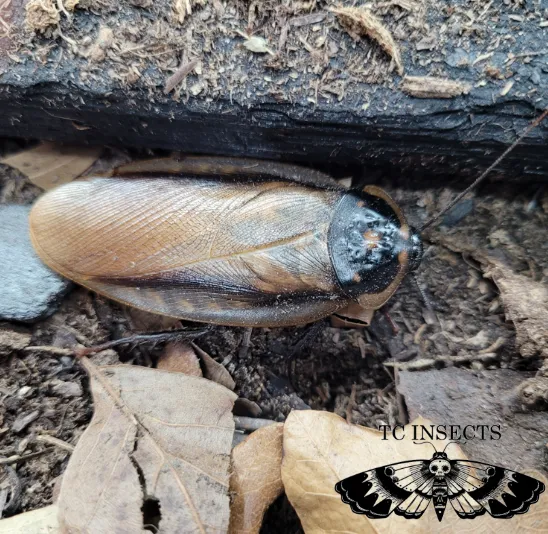
Headlamp Roaches for Sale
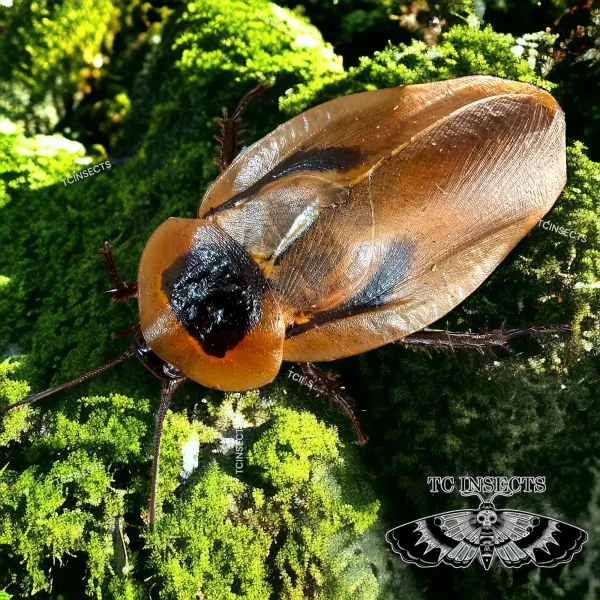
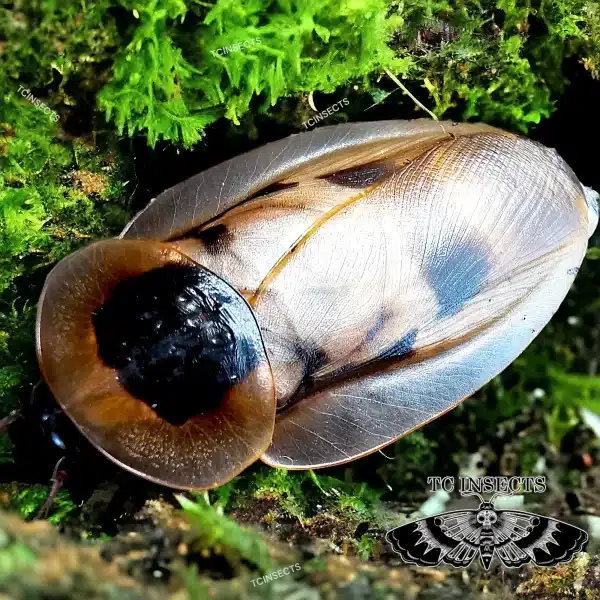
The Headlamp Roach is a hobby name for Eublaberus serranus, a moisture-loving display species native to the Pantanal wetlands of southern Brazil. Adults often carry two pale spots on a dark pronotum, the “headlamps” that give the species its trade name. The pattern is variable, ranging from an upside-down T-shape to a darker filled-in blob with just the two pale spots showing through. Unlike its drier-loving cousin Ivory, this species needs damp substrate to thrive. They are calm, non-climbing, and non-flying. We sell them in small mixed-nymph counts of 1 or 12, which suits collectors and small starter groups.
Overview
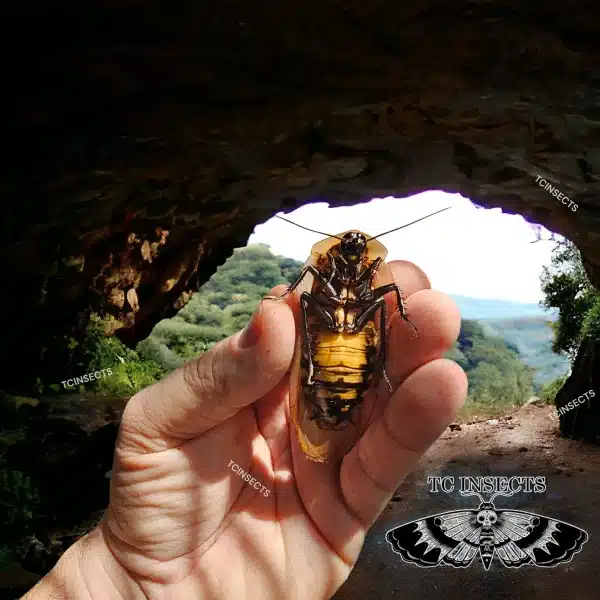
This is a mid-to-large display roach reaching roughly 48 to 54 mm at maturity. Adults have wings but do not fly, and no life stage can climb smooth surfaces, so containment is straightforward. The species is formally described relatively recently (Lopes, Oliveira and Khouri, 2015), so it is newer to the hobby than older catalog staples like Dubia or Ivory. Collectors are drawn to the variable headlamp markings and the moisture-loving husbandry, which makes this species fit a different enclosure style than other Eublaberus.
Why Keep Headlamp Roaches?
- Distinctive pronotum pattern. The variable dark-with-pale-spots markings make individual adults visually interesting to display keepers.
- Calm, easy containment. No climbing on smooth surfaces and no adult flight, so a basic vented enclosure holds them.
- Moisture-loving counterpart to Ivory. If you already keep a drier Eublaberus, this species rounds out a small collection with a different husbandry.
- Bioactive composter. Processes organic waste, leaf litter, and fruit and vegetable scraps in a humid setup.
- Productive breeder. A small starter group establishes a colony in stable warm, moist conditions.
Honest Note on the “Headlamp” Name and Pattern
“Headlamp” is a hobby trade name based on a visual feature, not a separate species. Eublaberus serranus adults often show two pale or gold spots on a darker pronotum, which look a bit like a pair of small headlights. The pattern is not identical on every individual: some look more like an upside-down T, others show a heavier dark blob with only the two pale spots breaking through, and intermediates exist. This species is also sometimes called the Pantanal Cockroach after its native range. All of those names refer to the same animal.
Honest Note on the Pantanal Origin and Moisture Needs
This is the key difference from Ivory. Eublaberus serranus comes from the Pantanal, one of the largest tropical wetland systems in the world, so the species is adapted to consistent humidity and damp substrate. In captivity, that means substrate kept damp but not waterlogged, not the drier setup that suits Ivory. Dry conditions stress this species and contribute to molting and wing-nipping problems. If you cannot maintain a moist enclosure, Ivory is the more forgiving choice.
Honest Note on Use as a Feeder
The live page mentions feeder use. They can be offered, but be honest about the trade-off. Like other Eublaberus, published feeder-roach comparisons have noted higher fat content than several common alternatives, so they are not the most efficient protein-per-bite feeder. If you want a moisture-loving display species that occasionally feeds out, this works. For high-volume feeding, Dubia Roaches are a better staple.
Care and Setup
Husbandry is forgiving on most fronts, with one firm requirement: keep it moist.
Temperature
75 to 85°F is the active range. They tolerate brief cooler periods but reproduce best in the warmer half of that window. A heat mat on the side of the enclosure works well in a cool room.
Humidity and Substrate
Damp substrate is non-negotiable. A mix of coco fiber, peat, or potting soil works well, kept slightly damp but not soaked. Adding leaf litter and sphagnum moss helps hold moisture and gives the roaches additional cover and food sources. Two to three inches of depth is usually enough.
Habitat Structure
Add cork bark, hollow wood pieces, or stacked egg flats so they have hides and natural-feeling cover. Smooth-walled enclosures are fine, since this species cannot climb smooth surfaces.
Food
They are not picky. Fresh fruit and vegetables, leafy greens, and a quality dry feed such as Supreme Feed Dubia all work. A small amount of higher-protein food (dry dog food, beans) supports growing nymphs. Remove uneaten produce before it spoils, which is more important in a humid enclosure.
Hydration
Skip open water dishes, which drown nymphs. Use water crystals such as Hydro-Thirst Insect Water Crystals or soak produce so hydration is safe.
Ventilation
Use a vented or mesh lid. Good airflow is what lets you keep the substrate damp without growing mold. A wet, stagnant enclosure crashes faster than a dry one.
Honest Note on Wing Nipping
Some keepers see adults nipping each other’s wings, particularly when conditions are too dry or too crowded. The fix is not chemical: provide damp substrate, enough hides, enough floor space, and adequate food. A properly moist enclosure with reasonable density rarely shows this behavior. If wing nipping appears, the enclosure is signaling that something needs to change.
Breeding Notes
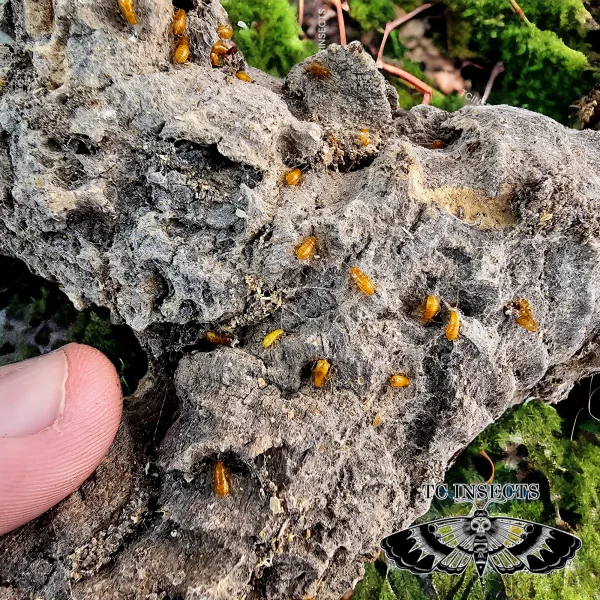
Like other blaberid roaches, this species gives birth to live nymphs rather than laying egg cases. A warm, consistently moist enclosure with steady food produces offspring without intervention. A starter group of 12 mixed nymphs generally develops into a small breeding colony within several months. Stable conditions matter more than enclosure size for early establishment.
Best For
- Collectors who want a moisture-loving exotic display roach
- Bioactive terrarium keepers running humid setups
- Hobbyists building a small Eublaberus group alongside Ivory
- Keepers interested in variable pronotum patterns across individuals
- Buyers stepping up from Dubia into more visually distinctive species
Not Best For
- Dry setups, where Ivory is the more forgiving choice
- High-volume reptile feeding, where Dubia are more efficient nutritionally
- Keepers who cannot maintain consistent humidity
- Customers in jurisdictions that restrict non-native cockroach species; check local rules
- Anyone planning to release roaches outdoors under any circumstances
Origin and Locality Notes
Eublaberus serranus is native to the Pantanal wetlands of southern Brazil, one of the world’s largest tropical wetland systems. The species was formally described in 2015 (Lopes, Oliveira and Khouri), making it a relatively new addition to the captive hobby compared with other Eublaberus. The “Headlamp” trade name describes the pale paired spots on the pronotum; “Pantanal Cockroach” is the locality-based common name you may see used for the same species elsewhere.
Receiving and Acclimation
Your order ships with ventilation and bedding suited to transit. On arrival, open the package in a clean, contained area and transfer the nymphs into a prepared enclosure with damp substrate, leaf litter, hides, and a safe hydration source. Give them a day to settle before disturbing them, since they are calmer once they have hidden in moist substrate. As with every live insect we sell, do not release them into the wild.
Recommended Add-Ons
- Eublaberus distanti “Ivory” for collectors keeping the drier-loving sibling species alongside this one.
- Orange Head Roaches (Eublaberus posticus) for a third Eublaberus species in the same display lineup.
- Hydro-Thirst Insect Water Crystals for safe hydration in a humid enclosure.
- Supreme Feed Dubia 5lb as a quality dry feed that this species accepts.
- Panchlora nivea “Green Banana Roach” for an arboreal, flying contrast species in a humid collection.
Frequently Asked Questions
What does the “headlamp” marking actually look like?
Two pale or gold spots on a darker pronotum, which look a little like a pair of small headlights. The pattern varies between individuals, from an upside-down T-shape to a heavier dark blob with just the two pale spots breaking through. Variation is normal.
Why does this species need moist substrate when other roaches don’t?
It is from the Pantanal wetlands of Brazil, so it evolved with consistent humidity. Dry conditions stress this species and contribute to molting issues and wing nipping. If you already keep a drier-loving species, set this one up with damp substrate separately rather than mixing.
How is this different from Ivory?
Same genus, different husbandry and look. Ivory tolerates a wider humidity range and prefers drier substrate; Headlamps need consistent moisture. The pronotum patterns and adult coloration are also different, so a collector can easily distinguish the two.
Is “Pantanal Cockroach” the same animal?
Yes. “Pantanal Cockroach” is a locality-based common name for the same species. “Headlamp Roach” describes the markings. Both refer to Eublaberus serranus.
Why are the count options only 1 or 12?
This species is sold in smaller starter counts because most buyers are collectors or display keepers, not bulk feeder buyers. 1 suits a single specimen or sample; 12 is a sensible starter group for a small breeding setup.
Do they really have six yellow spots on the pronotum?
No, that is the *E. distanti* (six-spotted cockroach) trait. *E. serranus* is named for two pale “headlamp” spots, set in a variable dark pronotum pattern. The two species are sometimes confused in older sources.
Learn More About Eublaberus serranus
These references give keepers background on the species behind the Headlamp trade name and the wetland ecosystem it comes from.
- Wikipedia: Eublaberus (genus profile). A general overview of the genus, including the formally described species list with E. serranus (Lopes, Oliveira and Khouri, 2015). Useful for collectors mapping the genus.
- Britannica: Pantanal. An encyclopedia entry on the Pantanal wetland system of Brazil, the native range of this species. Background on the climate and habitat that explains the moisture-loving husbandry.
- Amateur Entomologists’ Society: Blattodea (Cockroaches). An overview of cockroach order biology, including the live-bearing reproductive strategy shared by blaberid roaches like E. serranus.


Reviews
There are no reviews yet.