
Orange Head Roaches for Sale
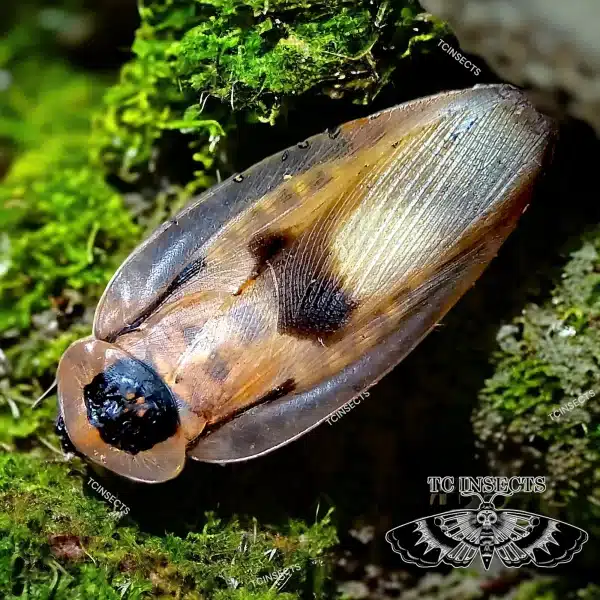
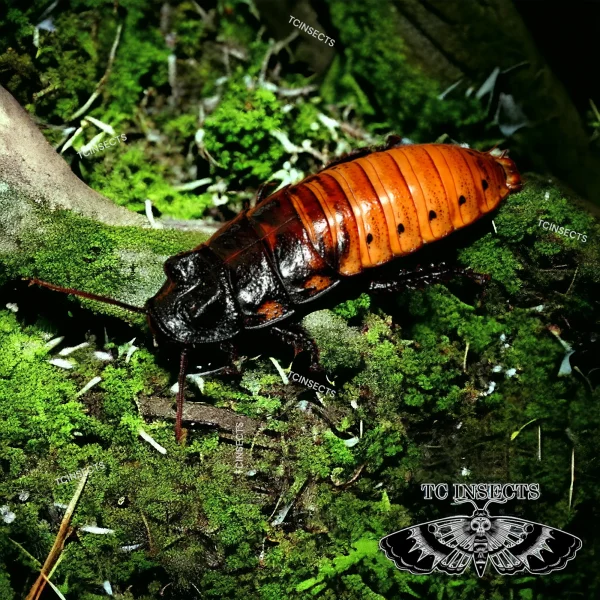
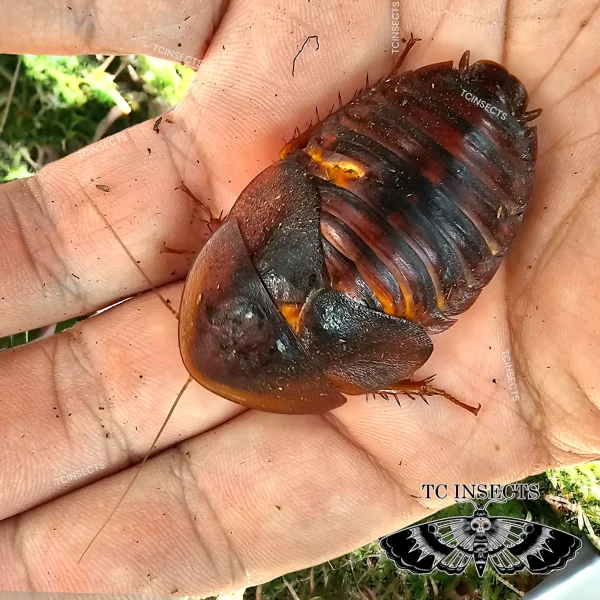
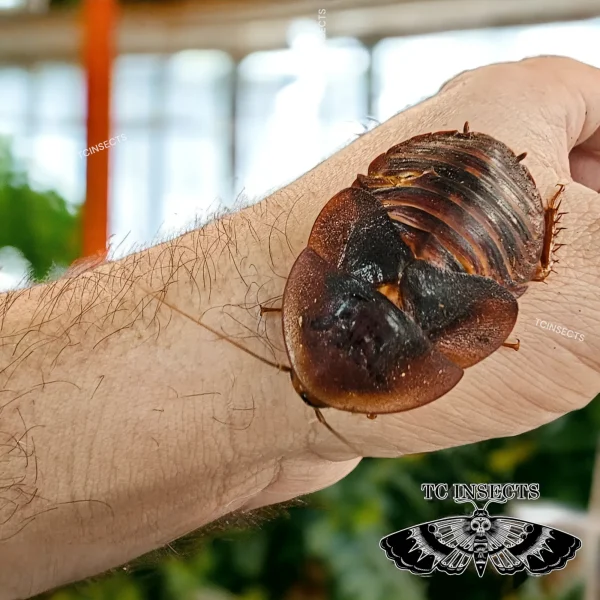
The Orange Head Roach is Eublaberus posticus, named for the bright orange head and pronotum that contrast sharply with the glossy dark body. This is the only roach in our exotic lineup that functions as a true working
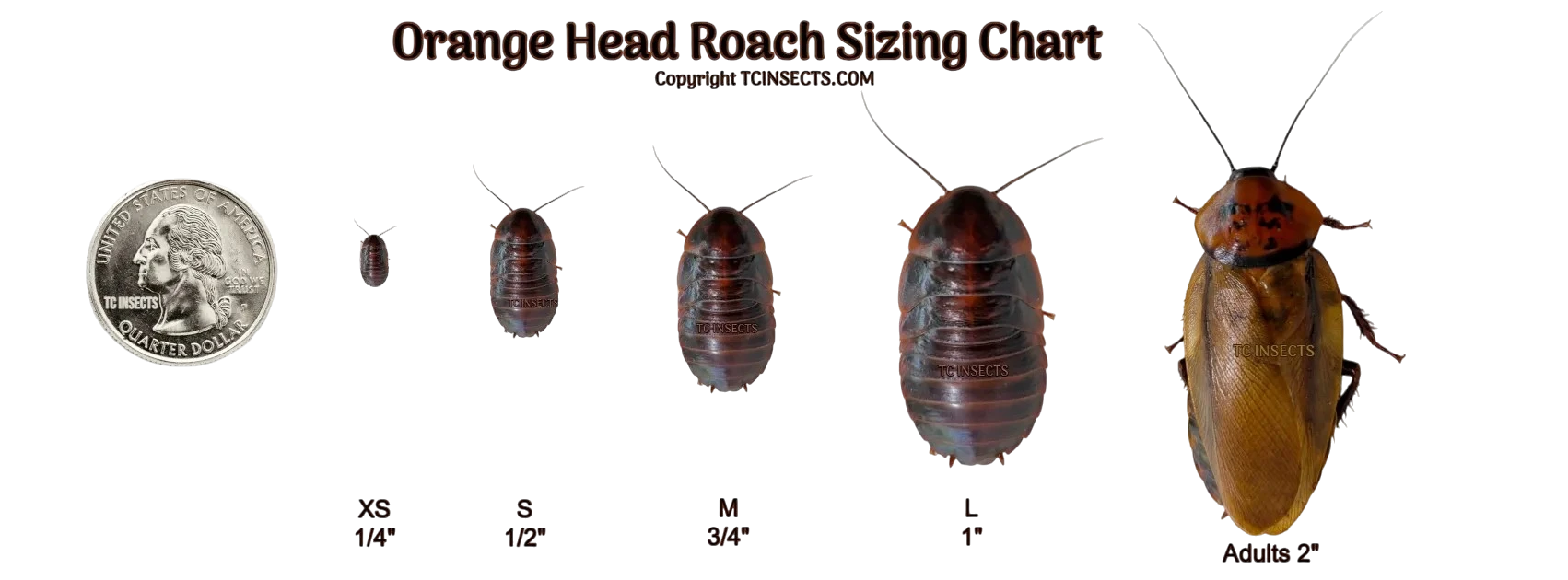
feeder. We ship it by size grade (Small, Medium, Large) and by sex (Adult Male, Adult Female), with counts from 1 up to 1000. Adults reach roughly 46 to 52 mm, with some hitting 2 inches under good conditions, and they
live 2 to 5 years. That long, productive adult life is why many keepers run Orange Head colonies as a Dubia alternative. Unlike Ivory and Headlamp, this species is sold first as feeder and colony stock, with display value as
a bonus.
Overview
Orange Heads are calm, slow-moving, non-climbing, and non-flying. The species was specifically cited in published behavioral research as “extremely unlikely to escape or infest a human environment,” which is exactly the
property keepers want in a feeder. Females give birth to live nymphs, like other blaberid roaches. Sexual maturity arrives in roughly 3 to 4 months, which is fast for a roach of this size, and a healthy colony produces broods
on a recurring cycle. In our experience, given warmth and consistent food, this species can match or exceed Dubia for colony output.
Size Grades and Quantity
This page works like our Dubia size lineup. Pick a size grade and a count.
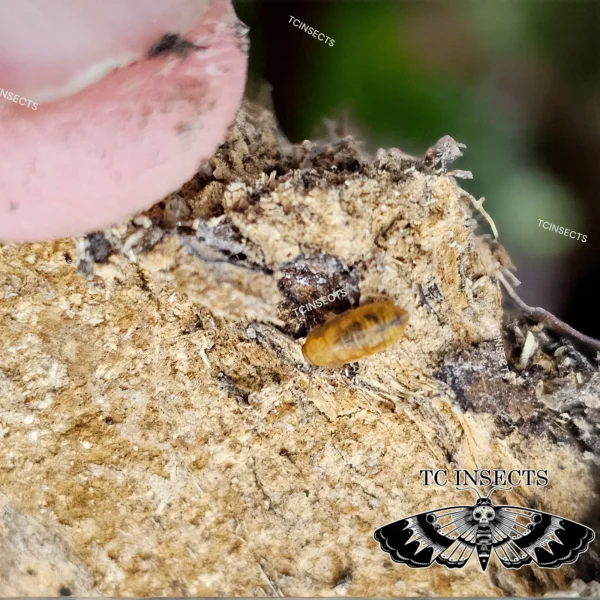
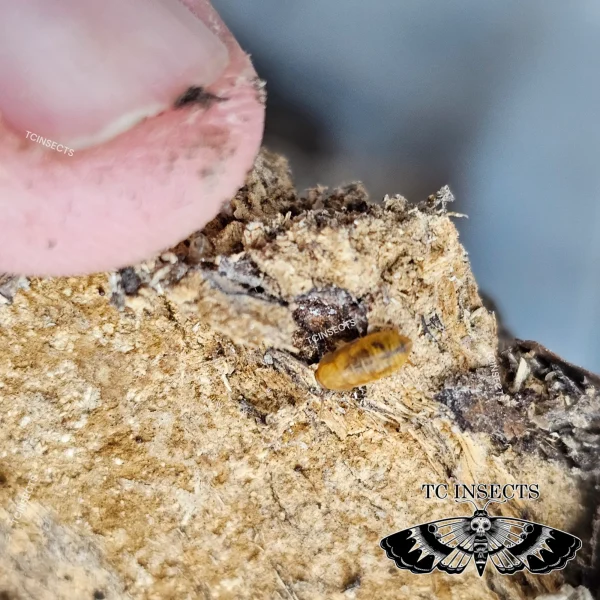
- Small (1/4 to 1/2 inch): Young nymphs sized for juvenile insectivores, similar to small Dubia.
- Medium (1/2 to 3/4 inch): The everyday feeder size for most growing animals.
- Large (1 inch): Near-adult feeders for larger insectivores and for adult-staple feeding.
- Adult Male: Mature breeding males, sold individually for colony building.
- Adult Female: Mature breeding females, the reproductive engine of any colony.
Counts run 1, 10, 25, 50, 100, 200, 500, and 1000, so you can buy a single specimen, a small starter group, a bulk feeder order, or seed a full colony.
Why Keep Orange Head Roaches?
- Larger adult size than Dubia. A meatier feeder for big reptiles like adult bearded dragons, tegus, and monitors.
- Long lifespan and steady production. 2 to 5 years per adult gives a colony longer productive output than Dubia.
- Bright orange head triggers feeder response. The vivid coloration can prompt strikes from picky reptiles.
- Calm and easy to contain. No climbing on smooth surfaces, no flight, and no chirping like crickets.
- Sold by size and sex. The same selector flexibility as Dubia, useful for matching feeder size to animal or building colonies deliberately.
Honest Note: Orange Heads vs Dubia
This is the comparison everyone asks about. The honest version is that each species has trade-offs.
Where Orange Heads win: larger adult size, longer adult lifespan (2 to 5 years vs Dubia’s ~2), faster sexual maturity (3 to 4 months vs longer in Dubia), and a more visually striking appearance that can help with picky feeders.
Where Dubia win: they tolerate drier conditions, do not have a notable cannibalism risk, and have a more documented feeder math (predictable count-per-bug weight and well-mapped size grades that match common reptile prey-size rules). Dubia are also legal to ship in more states.
Both species are productive captive feeders. In our experience, Orange Head colonies can match or exceed Dubia output in the right conditions, but they need a bit more attention to substrate moisture and to protein levels. For volume reptile feeding by a first-time keeper, Dubia remain the simpler default. For keepers who want larger feeders and longer-lived breeders, Orange Heads are a strong choice.
Honest Note on Cannibalism Risk
Orange Heads will sometimes cannibalize nymphs if colony protein is too low. This is the most common captive issue keepers run into. The fix is straightforward: provide a quality dry feed with adequate protein, give the
nymphs cover to hide in (egg flats, leaf litter, cork bark), and keep colony density reasonable. A properly fed, well-furnished colony does not show meaningful cannibalism. If you see it, the colony is telling you something
needs to change rather than that the species is flawed.
Care and Setup
Husbandry is forgiving overall, with two firm requirements: warmth and consistent food.
Temperature
75 to 85°F is the active range. Warmer drives faster reproduction. Cooler slows the colony but does not harm it. A heat mat on the side of the bin works well in a cool room.
Humidity and Substrate
Slightly moist works better than fully dry, though Orange Heads tolerate a wider range than Headlamp Roaches. A few inches of coco fiber or a similar substrate gives nymphs cover and supports the burrowing behavior they show as juveniles.
Habitat Structure
Stacked vertical egg flats in a smooth-walled bin give a colony the surface area and harborage it needs. Add cork bark or hollow wood for additional hides if you want a more naturalistic setup.
Food
Feed a quality dry diet such as Supreme Feed Premium Roach Formula or Supreme Feed Dubia 5lb, plus fresh fruit and vegetables for moisture and variety. Adequate protein is especially important here because of the cannibalism risk discussed above.
Hydration
Use water crystals such as Hydro-Thirst Insect Water Crystals rather than open water dishes. A clean, spill-proof hydration source supports breeding females.
Ventilation
Use a vented or mesh lid. As the colony grows, frass and humidity build, so steady airflow keeps the bin healthy.
Breeding Notes
Females give birth to live nymphs and reach sexual maturity in about 3 to 4 months, which is fast for a roach this size. A colony seeded with breeding adults reaches productive output quickly compared with most other
feeder species. To start a colony from this listing, buy a balanced group of adult males and adult females, weighted toward more females than males, then add mixed nymphs to build a next-generation base. Keep the colony
warm, fed, and lightly moist, and it produces steadily.
Best For
- Keepers wanting a Dubia alternative with larger adult feeders
- Owners of large insectivores: adult bearded dragons, tegus, monitors, large chameleons
- Hobbyists building a long-lived, fast-maturing breeding colony
- Keepers with picky reptiles who may respond to the bright orange coloration
- Collectors who want a feeder species that doubles as a display roach
Not Best For
- First-time feeder buyers who want the simplest possible husbandry; Dubia are more forgiving
- Keepers are unwilling to maintain protein levels in a colony, given the cannibalism risk
- Very small hatchling animals that need 1/4 inch or smaller feeders, where Dubia’s finer size ladder fits better
- Customers in jurisdictions that restrict non-native cockroach species; check local rules
- Anyone planning to release roaches outdoors under any circumstances
Origin and Locality Notes
Eublaberus posticus is native to Central and South America. Wild populations are commonly cave-dwelling, with adults and older nymphs found on lower cave walls, and the species is also reported under leaves and
decomposing wood on the forest floor. Our stock is captive-bred and maintained as an established feeder and breeder line.
Receiving and Acclimation
Your order ships with ventilation and bedding suited to transit. On arrival, open the package in a clean, contained area. Transfer the roaches into a prepared bin with stacked egg flats, dry feed, and water crystals. Let them
settle for several hours before feeding any out or merging them into an existing colony. As with every live insect we sell, do not release them into the wild.
Recommended Add-Ons
- Supreme Feed Premium Roach Formula for a higher-protein roach diet that supports colony output and reduces cannibalism risk.
- Hydro-Thirst Insect Water Crystals for safe, spill-proof hydration in a producing colony.
- TC Calcium Ultra Fine for dusting harvested feeders before offering them to your reptile.
- Eublaberus distanti “Ivory” for collectors building a sibling-species display lineup.
- Eublaberus serranus “Headlamp Roach” for the moisture-loving third member of the genus.
Frequently Asked Questions
What size should I order?
Match feeder size to the space between your animal’s eyes. Small (1/4 to 1/2 inch) suits juveniles, Medium (1/2 to 3/4 inch) is the everyday size for most growing animals, and Large (1 inch) suits larger adults. Adult Male and Adult Female are colony-building options rather than feeders.
Are Orange Heads really better than Dubia?
It depends on what you weight. Orange Heads grow larger, live longer, and mature faster. Dubia tolerate drier conditions, lack the cannibalism risk, and have a more established feeder math. Both are productive captive feeders; neither is universally better.
How fast does a colony start producing?
Sexual maturity arrives in about 3 to 4 months, fast for a roach this size. A starter group of Adult Females, Adult Males, and mixed nymphs reaches productive output more quickly than most other feeder species.
Why is the head bright orange?
That coloration is natural to Eublaberus posticus and contrasts with the glossy dark body. Some keepers find that the vivid orange triggers a feeder response in picky reptiles that ignore drabber feeders.
Do they really live 2 to 5 years?
Yes. Adults under good conditions reach the upper end of that range, while colony stress, poor diet, or cold conditions shorten it. The long adult life is part of why Orange Heads make efficient long-term breeders.
Is the cannibalism risk a dealbreaker?
No, but it is the one thing you have to manage. Provide adequate protein, give nymphs cover to hide in, and keep colony density reasonable, and the issue stays minor. A poorly fed or overcrowded colony will show it; a well-managed one will not.
Learn More About Eublaberus posticus
These references give keepers background on the species, including peer-reviewed research and broader cockroach biology.
-
PLOS ONE: Learning and memory in the orange head cockroach (Varnon et al., 2022). A peer-reviewed study that chose E. posticus as a research subject specifically because it is unlikely to escape or infest a human environment, useful confirmation of containment safety.
-
Wikipedia: Eublaberus (genus profile). A general overview of the genus, including the formally described species list. Useful for collectors mapping the three Eublaberus species in our catalog.
-
Amateur Entomologists’ Society: Blattodea (Cockroaches). An overview of cockroach order biology, including the live-bearing reproductive strategy shared by all blaberid roaches.