

Shiro Utsuri Isopods for Sale
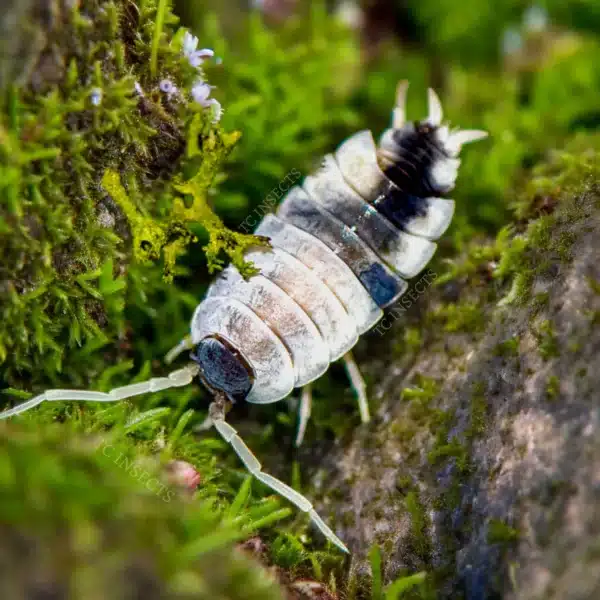
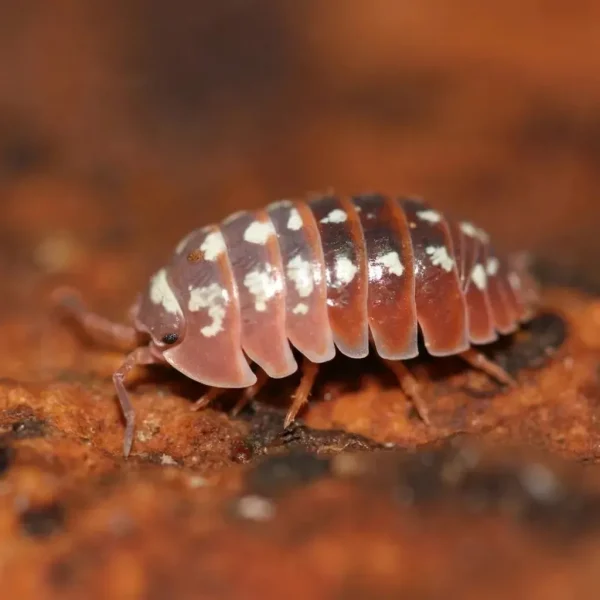
Shiro Utsuri is the trade name for a Japanese-isolated morph of Nesodillo arcangelii, previously sold in the hobby as Cubaris sp. “Shiro Utsuri.” The name comes from the Shiro Utsuri variety of Japanese koi, which carries the same bold black-on-white contrast. This morph was isolated from a “Silver Ghost” culture in Japan and has since become one of the more recognizable mid-tier collector pods in the Armadillidae trade.
Overview
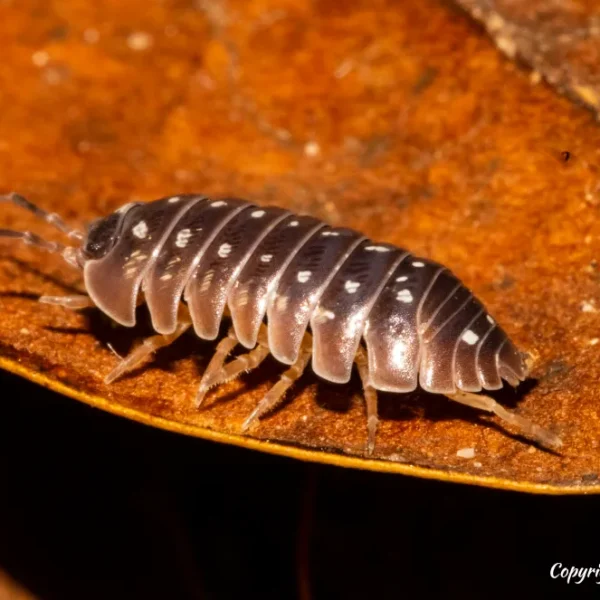
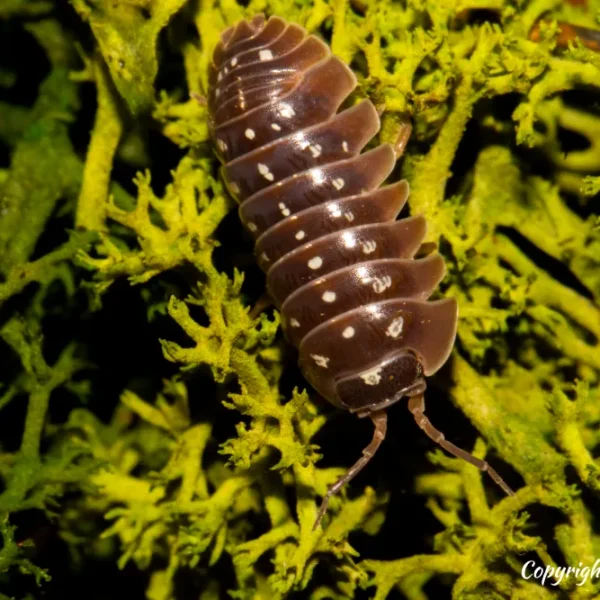
Shiro Utsuri Isopods sit in the middle of the hobby pricing curve. They are more forgiving than many true Cubaris collector species, yet slower and more humidity-dependent than common workhorses like Powder Orange or Dwarf Whites. Adults reach roughly 2 cm, with a broad flatter body shape that some keepers compare to Dairy Cow Isopods. However, the white base is brighter, the contrast is sharper, and the temperament tends to be more surface-active.
This species earns its place as a display animal first. As a result, most buyers pair it with a humid bioactive setup where the koi pattern reads clearly against dark substrate and leaf litter.
Why Keep Shiro Utsuri Isopods?
- Strong visual contrast. The white skirt and black blotches stand out against dark substrate, especially under top-down lighting.
- Active above the substrate. Unlike many burrowing morphs, Shiro Utsuri often forage on the surface, which makes them rewarding to watch.
- Mid-tier collector status. They fit naturally between common Porcellionides morphs and harder true Cubaris species, so they suit keepers stepping up the collector ladder.
- Reasonable forgiveness. While they prefer high humidity, they tolerate a wider range than several specialty Cubaris, which makes them a fair first Armadillidae project.
- Pairs cleanly with springtails. Many keepers run them alongside Springtails in a shared humid bin to help manage mold while the isopod colony builds.
Honest Note on Species Identification
The taxonomy of this morph is still settling. In the hobby it has moved from Cubaris sp. to Nesodillo arcangelii, and some researchers note that animals in the hobby may not be true Nesodillo arcangelii sensu stricto. As a result, you will see this isopod labeled as Nesodillo arcangelii, Nesodillo sp., or even cf. Nesodillo arcangelii across different sellers. We use the most widely recognized hobby name for clarity. The care profile on this page reflects practical captive results rather than a precise wild-locality claim.
Care and Setup
Shiro Utsuri respond well to a standard humid Armadillidae setup. Specifically, the goal is stable moisture, a soft substrate, and steady access to calcium and leaf litter.
Temperature
Aim for roughly 70 to 80 F. Room temperature in most homes is fine. However, avoid sustained cold below the mid-60s or sustained heat above the low 80s.
Humidity
Keep humidity high overall, with at least one zone of the bin that stays consistently moist. A dry pocket on the opposite side is helpful because it gives the colony a thermal and moisture gradient to choose from.
Substrate
Use a coconut fiber or soil base mixed with flake soil, sphagnum moss, and a generous layer of leaf litter. Additionally, a few pieces of soft rotting hardwood help with both grazing and breeding.
Food
Offer a balanced isopod feed in small amounts a few times a week. TC INSECTS Isopod Food covers plant matter, grains, mushrooms, complex proteins, and added calcium in one mix. Supplement with occasional vegetable scraps and protein items such as fish flake or dried shrimp.
Ventilation
Moderate ventilation is the goal. Too much airflow dries the bin and slows the colony. Too little airflow encourages mites and stagnant pockets.
Bioactive Use
Shiro Utsuri work better as a display population in a humid bioactive enclosure than as a heavy-duty cleanup crew. For high-traffic cleanup, pair them with a faster workhorse species such as Powder Orange or Dwarf Whites and keep the Shiro Utsuri colony as the visible display layer.
Breeding Notes
Establishment is moderate rather than fast. A new bin usually goes through a quiet phase of several weeks while the founder group settles. After that, you should see manca and small juveniles appearing along the leaf litter and in moist substrate pockets. Consistent moisture, a stable temperature, calcium access, and a low-disturbance shelf usually do more for production than any single dietary tweak. A pinch of TC Calcium Ultra Fine dusted over the substrate every couple of weeks can support molting and exoskeletal development.
Best For
- Display vivariums where the koi pattern is meant to be visible.
- Collectors filling out the Armadillidae shelf alongside other Nesodillo and true Cubaris projects.
- Intermediate keepers stepping up from Powder series and Dwarf series pods.
- Humid bioactive enclosures for tropical geckos, dart frogs, and similar setups, used as a display population rather than a primary cleanup crew.
Not Best For
- Arid or desert setups. They will not thrive without a reliable humid zone.
- Keepers expecting fast colony explosion. The breeding pace is moderate, not workhorse-level.
- Heavy-duty cleanup in large reptile enclosures. Use a Powder series or Dwarf series pod for that workload.
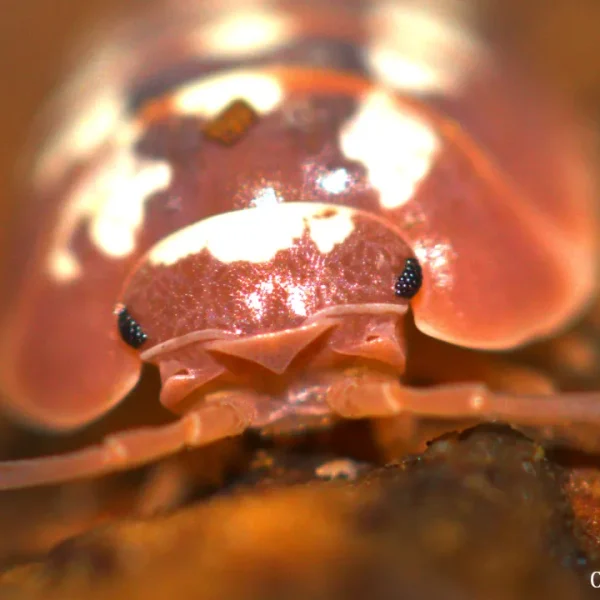
- Buyers expecting pure white animals. The base color is white to off-white with bold black blotches, not solid white.
Origin and Locality Notes
This morph was isolated in Japan from a “Silver Ghost” hobby line. As a result, the trade name and culture history are documented, but the precise wild origin of the founder stock is not confirmed in the hobby record. Nesodillo arcangelii was originally described from Taiwan, although the relationship between hobby animals and the species described in the scientific literature is still being clarified. We treat this page as a captive-care guide for the established hobby line, not as a claim about a specific wild locality.
Receiving and Acclimation
Open the package indoors in a temperature-stable area. Move the animals, substrate, and any included moisture material straight into a pre-prepared humid bin with leaf litter already in place. Mist lightly if the substrate looks dry on top, but avoid soaking the bin. Additionally, leave the colony undisturbed for the first several days so the founder group can settle and begin grazing. New cultures often look quiet for the first week or two before activity picks up.
Recommended Add-Ons
- TC INSECTS Isopod Food for a balanced staple diet that supports molting and brood development.
- TC INSECTS Ultra Isopod Habitat Kit for a vented 6 quart starter setup with substrate, flake soil, sphagnum, leaf litter, and feed in one bundle.
- TC INSECTS Assorted Hardwood Leaf Litter for grazing surface, cover, and slow-release organic matter.
- TC Calcium Ultra Fine for an easy calcium dust to support exoskeletal molts.
- Springtails to share the bin during the slow startup phase and help control surface mold.
Frequently Asked Questions
Are Shiro Utsuri Isopods beginner-friendly?
They sit at the intermediate level. They are more forgiving than many true Cubaris collector species, but they still need stable humidity and patience during the establishment phase. For a true beginner project, Powder Orange or Dwarf White Isopods are an easier first colony.
Do Shiro Utsuri Isopods breed quickly?
Production is moderate rather than fast. As a result, you should plan to leave the founder culture undisturbed for several weeks before expecting visible juveniles. Once established, a stable bin usually produces a steady but unhurried supply of new pods.
Can I use them in a bioactive vivarium with frogs or geckos?
Yes, in humid setups they work well as a display population. However, they are not the right choice as the primary cleanup crew in a heavy-traffic enclosure. For that role, pair them with a faster workhorse species and keep the Shiro Utsuri colony as the visible accent layer.
How do Shiro Utsuri compare to Dairy Cow Isopods?
The pattern can look similar at first glance, since both carry black-on-white blotches. However, Shiro Utsuri tend to be brighter white, slightly larger in body width, and they often have a cleaner white skirt along the edge. Dairy Cow Isopods breed faster and are easier as a cleanup crew, while Shiro Utsuri lean toward display use.
How moist should the culture be?
Keep most of the substrate damp but not waterlogged. A useful test is to squeeze a small handful of substrate. If a few drops come out, you are in the right range. Additionally, keep one corner slightly drier so the colony can choose its preferred moisture level.
Are they good as a feeder species?
They are not a practical feeder. The colony grows too slowly and the unit cost is too high to use as routine reptile food. Keep them as a display and collector species, and run a feeder culture such as Dubia Roaches separately if you need feeders.
Learn More About Terrestrial Isopods
For keepers who want to read further on isopod taxonomy and biology, the following references are useful background.
- World Register of Marine Species: Nesodillo arcangelii Verhoeff, 1928. The accepted taxonomic record for the species, including original description and type locality. This helps buyers understand where the current scientific name comes from and why the hobby name has shifted away from Cubaris.
- British Myriapod and Isopod Group: An Introduction to Woodlice. A clear primer on isopod anatomy, breathing through pleopods, and the need for stable moisture. As a result, it explains why humidity management is the single biggest care variable for any Armadillidae morph.
- UF/IFAS Extension: Pillbugs, Sowbugs, Centipedes, Millipedes, and Earwigs. A university extension overview of terrestrial isopod biology, diet, and habitat needs that translates well into bioactive vivarium husbandry.
Reviews
There are no reviews yet.