
Bold Jumping Spiders for Sale
The Bold Jumping Spider (Phidippus audax) is one of the most popular pet arachnids in the hobby and one of the best beginner-friendly options for keepers new to spider keeping. The species is native across most of
North America — found in gardens, fences, and building exteriors throughout the eastern and central United States with extensions into Mexico and Central America. The scientific name “audax” is Latin for “daring” or
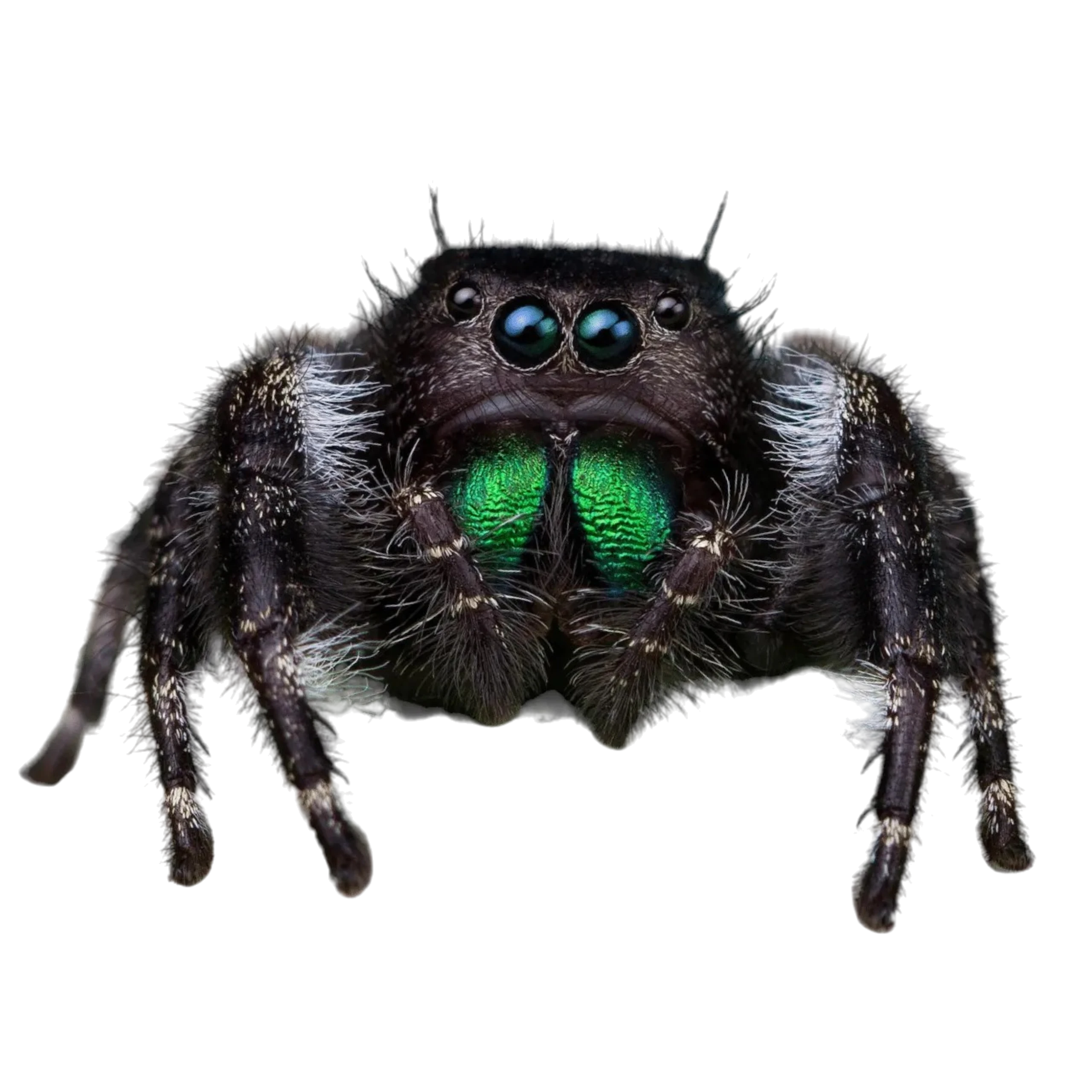
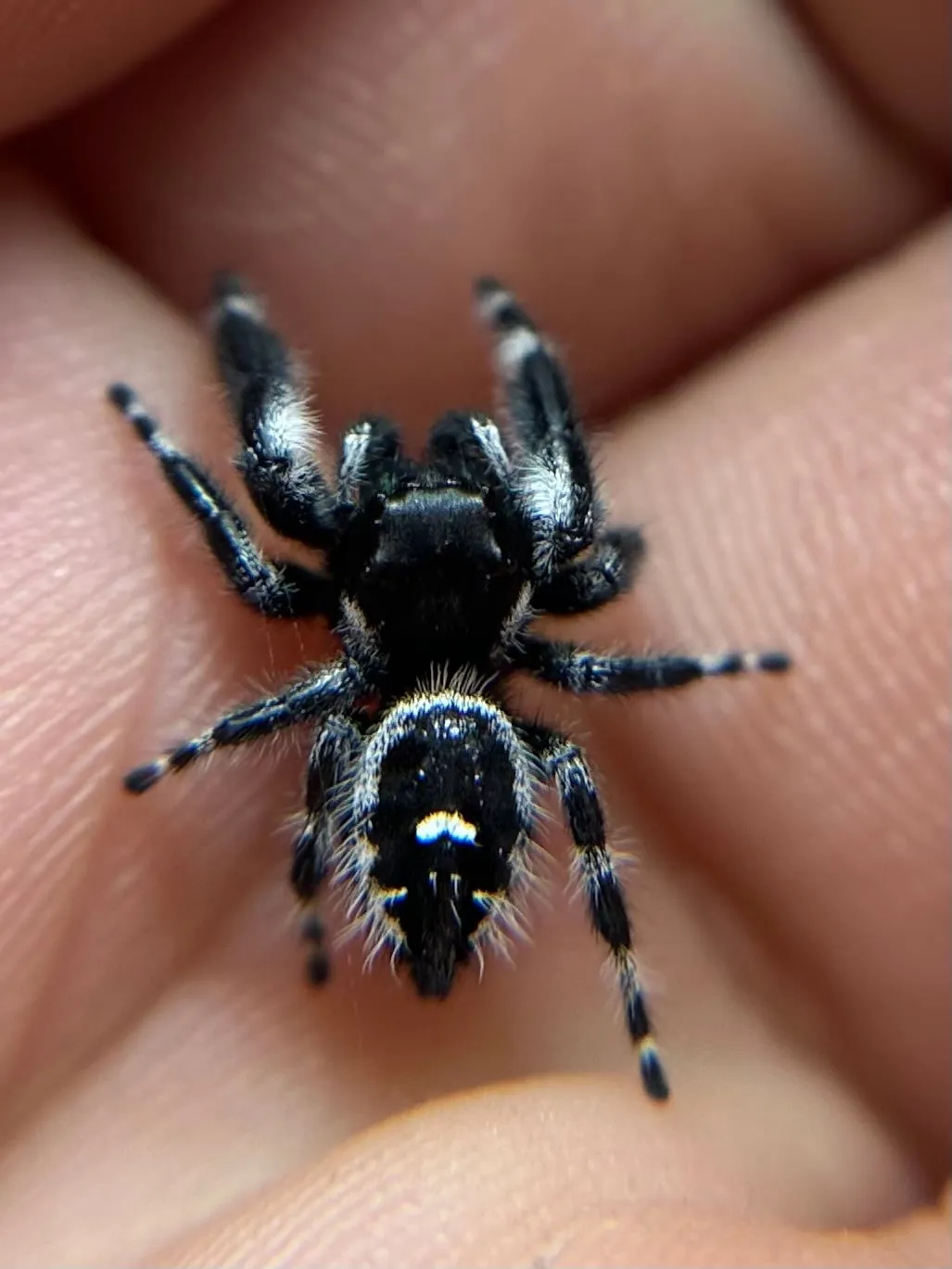
“bold,” directly describing the confident, curious personality that makes this species so engaging as a pet. Adults reach 8 to 19 mm body length (females larger than males) with the famous iridescent green-blue chelicerae
(fangs) and bold black-and-white striped markings. Sold as single specimens. Ships FedEx only because USPS does not accept live spider shipments.
Overview
Bold Jumping Spiders belong to family Salticidae, the largest spider family worldwide. The genus Phidippus includes about 60 North and Central American species, all with relatively large body size (for jumping spiders),
iridescent fangs, and bold coloration. Unlike most spiders, jumping spiders are diurnal (active during the day) and hunt by excellent vision rather than webs. They build only small silk retreats for resting and molting. The
species’ “bold” reputation isn’t marketing — documented hobby keepers describe them as curious, willing to engage with keepers, and one of the very few spider species where careful gentle handling is documented as
practical and safe.
Important: The Live Page Care Advice Has Major Errors
The existing care advice on the source page contains several significant errors that could harm spiders if followed. We’re updating the care information here and recommend the source page be updated to match. The specific issues:
- Enclosure size is wrong. The live page suggests “10-12 gallon terrarium.” Correct enclosure for adults is 4x4x7 inches to about 1 cubic foot maximum — far smaller. Oversized enclosures cause stress and make prey hard to find.
- Feeding frequency is wrong. The live page suggests “2-3 small insects per day.” Adult jumping spiders eat 1-2 prey items PER WEEK, not per day. Daily overfeeding causes obesity, mismolt problems, and death.
- Recommended prey items are partly wrong. Mealworms have chitin too hard for jumping spider digestion; waxworms are too fatty. Correct prey: small crickets, flies, fruit flies, small roach nymphs, BSF larvae.
- Calcium supplementation isn’t needed. Spiders are arachnids, not reptiles. The calcium-dusting practice doesn’t apply to arachnid keeping.
If you’ve already been keeping a jumping spider based on the original advice, the most urgent corrections are: reduce feeding to 1-2 prey items per week and switch to appropriate prey types.
Honest Note on the “Bold” Personality
The species name “audax” comes from the Latin meaning “daring” or “bold.” This isn’t a marketing label — it reflects documented behavior:
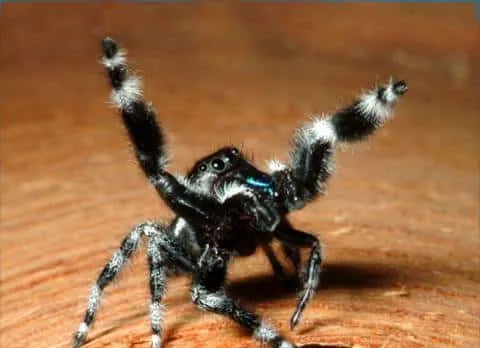
- They approach instead of running away. When something interesting moves nearby (you, your finger, a feeder insect), Bold Jumping Spiders typically turn toward it rather than flee. Unusual for spiders, most of which run for cover.
- They use vision, not just touch. Eight eyes including two big forward-facing eyes give them excellent color vision and depth perception. They can see and recognize you from across the room.
- They’re curious about novel objects. Many keepers report their spider examining new items, watching activity outside the enclosure, and approaching the keeper’s hand voluntarily.
- They can be carefully handled. One of the very few spider species where slow gentle handling is documented as practical.
Honest Note on Correct Enclosure Size
Bigger is NOT better for jumping spiders. This goes against keeper intuition from reptile keeping. Jumping spiders hunt by sight, so in oversized enclosures they can’t find their prey and feeder insects hide somewhere the
spider can’t track. Documented welfare problems with oversized enclosures include reduced feeding, weight loss, and stress-related death.
Correct enclosure sizing by life stage:
- Slings (smaller than 4-5 mm): 8-20 oz deli cup with tight lid and small ventilation holes.
- Juveniles (5-10 mm): 32 oz container or 4x4x4 inch enclosure.
- Adults (10+ mm): 4x4x7 inch vertical enclosure minimum, up to about 1 cubic foot maximum.
Orient enclosures VERTICALLY (taller than wide). Jumping spiders are arboreal and need vertical climbing space, not horizontal floor space.
Honest Note on Correct Feeding
Jumping spiders need much less food than most keepers expect. The documented schedule:
- Slings: 2-3 fruit flies or pinhead crickets every 2-3 days.
- Juveniles: 2-3 appropriately-sized prey items every 3-5 days.
- Adults: 1-2 prey items per WEEK.
Appropriate prey: small crickets (pinhead to 1/4 inch), flies (house, blue bottle), fruit flies (for slings), small Dubia or red runner roach nymphs, BSF larvae. Avoid: mealworms (chitin too hard), superworms (can bite back), waxworms (too fatty), and any prey larger than the spider’s body. Calcium supplementation IS NOT needed for jumping spiders.
Honest Note on FedEx Shipping
This product ships via FedEx only. USPS does not accept live spider shipments per their hazardous materials policies. If you select USPS shipping at checkout, this product will be removed from your order. FedEx
provides faster transit (1-2 day delivery), temperature management with heat or ice packs as needed, and supports our live arrival guarantee.
Why Jumping Spiders Are the Best Beginner Arachnid
- Diurnal activity. Active during the day, so you can actually watch them hunt and explore. Most spiders are nocturnal.
- Excellent vision. The famous big eyes give them color vision and depth perception. They see and recognize you.
- Bold personality. Approach rather than flee. Engage with keeper interactions.
- Handleable. One of the very few spider species where careful handling is documented as practical.
- Small enclosure footprint and low feeding requirements. Fits any apartment with minimal feeder maintenance.
- Short manageable lifespan. 1-2 years bonds you with the animal without being a multi-decade commitment.
Care and Setup
Husbandry is genuinely simple once you understand the small-enclosure-and-infrequent-feeding framework.
Enclosure
For an adult, use a 4x4x7 inch vertical enclosure with secure ventilation. Modified deli cups, mini terrariums, or purpose-built jumping spider enclosures all work. Orientation MUST be vertical. Add cork bark or silk plants for climbing surfaces. Include a small cardboard or leaf retreat at the top where the spider can build its silk hammock.
Substrate
Coco coir, sphagnum moss, or sterile paper towel. Depth about 1 inch — the species doesn’t burrow.
Temperature and Humidity
72 to 80°F is ideal — most US households at room temperature are fine year-round. Avoid placing near heating vents or in direct sunlight. Humidity 50 to 60% ambient; most households fall in this range naturally. Mist lightly once a week and the spider will drink the droplets. Do NOT keep the substrate constantly wet.
Lighting
Natural ambient room light is fine. Position where some daylight reaches it but NOT in direct sunlight. No special UVB or heat lamps needed.
Hydration
A weekly light mist provides drinking water. Optional small water dish with cotton ball to prevent drowning. No deep water dishes — small spiders drown in surprisingly little water.
Feeding
1-2 appropriately-sized prey items per week for adults. Skip a week occasionally — this mimics the species’ natural feast-or-famine eating pattern.
Handling Notes
Bold Jumping Spiders are documented as handleable with appropriate care. Best practices:
- Let them come to you. Place your hand at the enclosure opening; let the spider step onto you voluntarily.
- Handle over a soft surface. Couch, bed, or your lap — somewhere a fall won’t injure them.
- Move slowly. Sudden motions trigger the flight response and may cause unexpected leaps.
- Don’t handle frequently or during molting. Once every few days at most; wait 3-5 days after a molt for the new exoskeleton to harden.
Best For
- First-time spider keepers wanting a beginner-friendly arachnid
- Kids and families seeking an interactive pet (with adult supervision)
- Apartment-dwellers needing a small-footprint exotic pet
- Photographers drawn to the famous big-eyes jumping spider face
- Educational keepers running classroom or display setups
- US native species enthusiasts
- Hobbyists upgrading from beetles, roaches, or isopods to a more interactive pet
Not Best For
- Keepers wanting a long-lived pet (1-2 year lifespan is short by exotic standards)
- Setups with extreme temperatures (below 65°F or above 85°F)
- Keepers wanting a colony; this is a solitary species housed individually
- Anyone wanting frequent handling (occasional only)
- Customers who can’t ship FedEx
- Anyone planning to release the spider outdoors
Origin and Locality Notes
Phidippus audax is native across most of North America, with the species particularly abundant in the eastern and central United States and extensions into Mexico and parts of Central America. Wild populations are
found in gardens, on fences, around building exteriors, in wood piles, leaf litter, and grassy meadows. The genus *Phidippus* includes about 60 species across North and Central America, with this species being the most
widely distributed. Our captive-bred specimens come from documented breeder lines with known parentage and parasite-free history.
Receiving and Acclimation
Your spider ships in a small ventilated container suited to transit. On arrival, open the package in a closed room. Carefully transfer the spider into a prepared small vertical enclosure with retreat space, light moisture, and
food appropriate to its life stage. Give the spider 24-48 hours to settle before attempting handling or interaction. Do NOT feed immediately on arrival — wait 1-2 days for the spider to settle. As with every live animal we
sell, do not release the spider outdoors even though this is a US native species.
Recommended Add-Ons
- Fruit Fly Cultures for feeding slings and juveniles.
- Black Soldier Fly Larvae (BSFL) as a soft, nutritious prey alternative.
- Live Crickets for adult feeding — pinhead to 1/4-inch sizes only.
- Red Runner Roaches as a softer-bodied feeder alternative.
- Small Dubia Roach Nymphs for occasional variety.
Frequently Asked Questions
What size enclosure should I actually use?
Much smaller than reptile-style terrariums. For an adult Bold Jumping Spider, 4x4x7 inches (vertical orientation) up to about 1 cubic foot is appropriate. For slings, an 8-20 oz deli cup is fine. Bigger is NOT better — they get lost in large enclosures and can’t find their prey.
How often should I feed?
Adults eat 1-2 appropriately-sized prey items per WEEK, not per day. Slings eat more frequently (every 2-3 days). Overfeeding is the most common cause of jumping spider deaths in captivity.
Can I handle my Bold Jumping Spider?
Yes, with appropriate care. Best practice: let the spider come to you voluntarily, handle over a soft surface, move slowly, and handle infrequently. Never handle during molting periods.
What’s the “bold” in the name about?
The Latin “audax” means “daring.” This refers to documented behavior: instead of running away when something approaches, Bold Jumping Spiders typically turn toward the disturbance and watch. Unusual for spiders, most of which flee at any disturbance.
How does this compare to the Regal Jumping Spider (P. regius)?
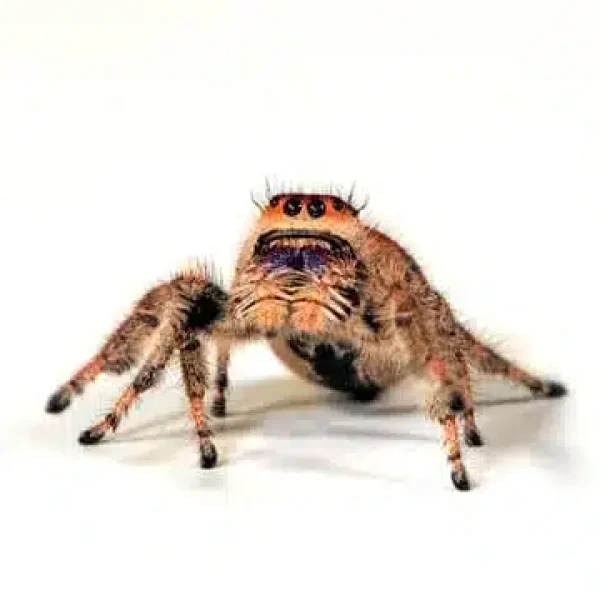
Same genus, similar care. Key differences: *P. regius* is larger (12-22 mm vs 8-19 mm), has more color morph variety, lives slightly longer (1.5-3 years vs 1-2 years), and is restricted to Florida and the Bahamas. *P. audax* is more widely distributed, slightly smaller, and documented as having even bolder personality. Both are excellent beginner choices.
Why FedEx only?
USPS doesn’t accept live spider shipments per their hazmat policies. FedEx provides faster transit (1-2 days), temperature management capability, and supports the live arrival guarantee.
Learn More About Phidippus audax
These references give keepers background on the species, the family, and authoritative care information.
-
Wikipedia: Phidippus audax (Bold Jumping Spider). The species profile with documented North American range, biology, and natural history.
-
Wikipedia: Salticidae (jumping spider family). A general overview of the largest spider family in the world.

Reviews
There are no reviews yet.