
Purple Ghost Isopods for Sale
Purple Ghost isopods are sold in the hobby as Nesodillo arcangelii sp. “Purple Ghost,” a subtly colored tropical morph that keepers buy for collector shelves, breeder cultures, and humid display setups. They are not the
fastest breeders, not the showiest cleanup crew, and not the brightest purple animal in the hobby. However, for keepers who appreciate a soft ghost-toned isopod that holds up well in a planted, leaf-litter-rich enclosure, this
morph earns its spot.
Overview
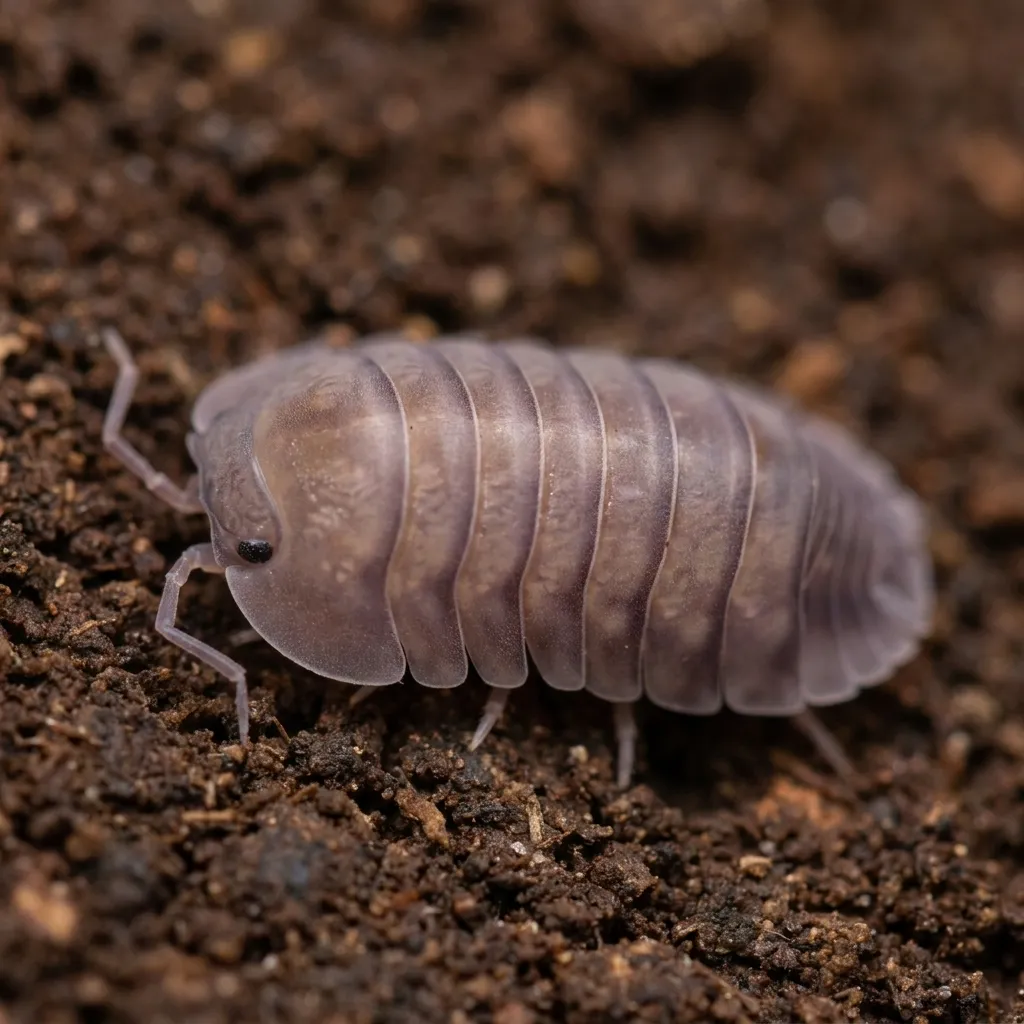
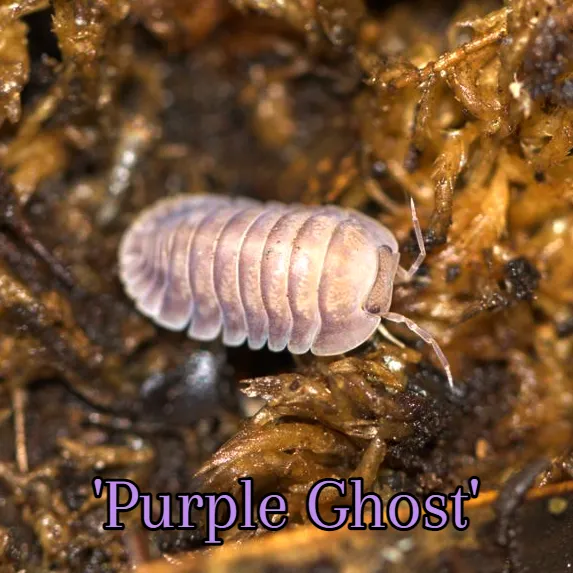
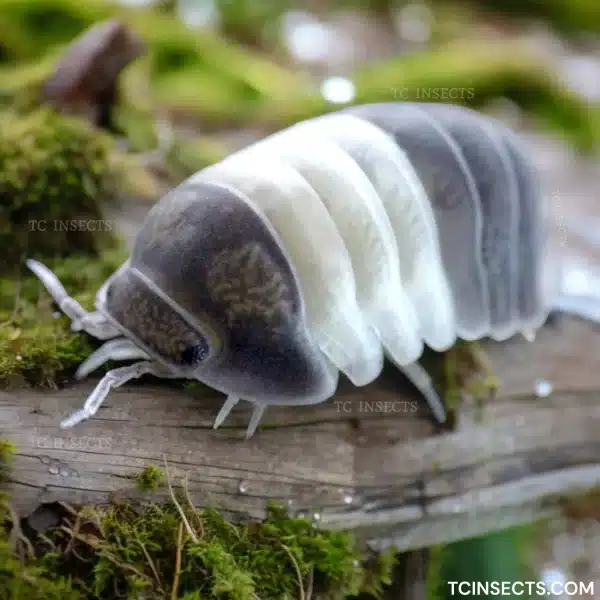
This is a tropical morph with a pale lavender-gray, almost ghost-like body color. The tone reads more like a muted dusty purple than a saturated color, and it shifts depending on lighting, substrate, and moisture. Against
dark bark and damp moss, the contrast becomes easier to see. On lighter substrate, the color can wash out.
Purple Ghost is best understood as a collector and display morph first, and a working bioactive species second. It can help break down leaf litter and small organic debris, but it does not move through waste at the pace of
Dairy Cow, Powder Orange, or Dwarf White Isopods. As a result, most keepers use it as a long-term breeder culture before seeding any larger enclosure.
Why Keep Purple Ghost Isopods?
- Collector appeal: The soft lavender-gray tone is uncommon in the hobby, which makes this morph a useful shelf piece for keepers building a varied collection.
- Display value in humid setups: Against dark hardwood, sphagnum moss, and decaying leaf litter, the pale body shows up cleanly.
- Quiet, naturalistic behavior: They are calm surface grazers when settled, which suits planted vivariums and tropical bioactive enclosures.
- Long-term culture potential: Once a colony is established with stable humidity and consistent leaf litter, it produces steadily without aggressive feeding.
- Pairs with springtails: They share humidity preferences with Springtails, so most keepers run both in the same enclosure.
Honest Note on the “Purple” Color
Buyers expecting a vivid purple animal will likely be disappointed. Purple Ghost reads as a soft lavender, dusty mauve, or gray-purple, and the tone is most visible on adults under decent lighting against a dark background.
Juveniles often look pale gray or off-white before the adult color settles in. Additionally, hydration, substrate color, and recent molt timing all affect how the color presents on any given day. For a more saturated isopod
morph, a different species is generally a better fit.
Honest Note on Species Identification
This morph is sold under the trade name Nesodillo arcangelii sp. “Purple Ghost.” The genus assignment is debated. Many specialists note that hobby specimens labeled Nesodillo arcangelii may not be true Nesodillo, and
some references use cf. Nesodillo arcangelii instead. Earlier in the hobby trade, the same morph circulated as Cubaris sp. As a result, this page focuses on practical captive care under the name buyers actually search for,
rather than claiming a settled taxonomy.
Care and Setup
Purple Ghost isopods do best in a stable tropical-style setup with a clear moisture gradient, good leaf litter coverage, and steady airflow. The goal is balance, not soaking the enclosure or letting it dry out.
Temperature
Aim for 72 to 78°F. Normal room temperatures usually work as long as the room stays stable. Avoid placing the culture near heat lamps, direct sun, drafty windows, or cold floors.
Humidity
Keep one side moist with sphagnum moss or damp substrate, and let the other side stay slightly drier with bark and leaf litter. Isopods need access to humidity, but stagnant wet conditions cause mold and culture decline. As a result, ventilation matters as much as moisture.
Substrate
Use an organic, pesticide-free substrate with a mix of decaying hardwood, flake soil, and a moisture-holding base. Plain coco fiber alone is too thin for long-term colony stability. For a stronger base, the TC INSECTS Premium Isopod Substrate or Ultra Isopod Substrate work well.
Food
Leaf litter and decaying wood form the base of the diet. Supplement lightly with TC INSECTS Isopod Food, small vegetable pieces, and occasional protein during active breeding. Calcium should stay available at all times, typically as TC Calcium Ultra Fine, cuttlebone, or crushed oyster shell.
Ventilation
A row of small vent holes or mesh-covered side vents helps move stale air without drying out the enclosure. Closed bins with no airflow tend to mold quickly, especially in the moist zone.
Bioactive Use
Purple Ghost can work in humid bioactive vivariums with stable temperature and good cover. However, build a strong breeder culture first before seeding a larger enclosure. Dropping a small starter count straight into a
planted tank with active reptiles or amphibians often ends with the colony eaten or stressed out before it establishes.
Breeding Notes
Breeding pace is moderate once the culture settles. Females carry developing young in a brood pouch before releasing tiny mancae into the substrate, where they hide under bark, moss, and leaf litter. Stable humidity,
consistent calcium, and minimal disturbance help support steady reproduction. Avoid heavy digging and frequent substrate changes, since young isopods are easy to crush or disrupt. As the colony matures, populations
build under bark pieces and along the moisture gradient.
Best For
- Collector isopod shelves and species-specific cultures
- Tropical bioactive terrariums with stable humidity
- Planted vivariums with leaf litter and shaded hides
- Long-term breeder colonies built before enclosure seeding
- Intermediate keepers who can hold a steady moisture gradient
Not Best For
- Buyers expecting a vivid, saturated purple animal
- Heavy cleanup crew duty in high-waste reptile enclosures
- Feeder use, since this is a collector morph priced for display, not feeding
- Dry desert-style setups without a stable humid zone
- Keepers who plan to dig through the culture often or refresh substrate frequently
Origin and Locality Notes
Purple Ghost is commonly associated with Taiwan in the hobby trade, but the exact wild collection locality is not consistently documented. Additionally, because the genus assignment itself is debated, claiming a precise
wild origin would overstate what is actually confirmed. For practical purposes, treat this as a tropical to subtropical morph that does best in a humid, forest-floor-style captive setup with damp moss, decaying leaves, rotten
wood, and shaded hides.
Receiving and Acclimation
Bring the package indoors as soon as it arrives and open it in a calm, well-lit area. Isopods often hide in the moss, paper, and packing material, so inspect everything slowly before discarding anything. Then place the
shipping contents gently into a prepared enclosure that already has a moist side, a slightly drier side, bark hides, leaf litter, and a calcium source available. Let the isopods move out on their own when possible, and keep the
enclosure quiet for the first several days. Hiding for a week or more after shipping is normal. Feed lightly during this period, since overfeeding stresses a settling culture and invites mold.
Recommended Add-Ons
- TC INSECTS Ultra Isopod Habitat Kit: A more complete starter setup with substrate, leaf litter, and hides, which suits collector morphs like Purple Ghost better than a bare bin.
- TC INSECTS Assorted Hardwood Leaf Litter: The single most important culture material for this morph, since it provides food, cover, and humidity buffering.
- TC INSECTS Isopod Food: A balanced supplemental food for breeding and active growth, used sparingly to avoid mold.
- TC Calcium Ultra Fine: Supports molting and reproduction; offer a small amount, keep it available, and refresh if it gets dirty.
- Springtails: A natural humidity-loving pairing that helps process mold and biofilm in the same enclosure.
Frequently Asked Questions
Are Purple Ghost isopods beginner-friendly?
They sit at an intermediate level. Specifically, they are not the most difficult collector isopod, but they do need a stable moisture gradient and a leaf-litter-rich setup to settle in. First-time isopod keepers usually have an easier time starting with Dwarf White Isopods or Dairy Cow Isopods before moving into morphs like this one.
Are these isopods actually purple?
The color is a soft lavender, dusty mauve, or gray-purple rather than a bright saturated purple. As a result, the morph reads best against dark bark, damp moss, and leaf litter under decent lighting. Juveniles often look pale gray before the adult tone develops.
How fast will the colony grow?
Breeding pace is moderate once the culture is established, which is slower than common beginner species but steady over time. For faster colony growth, stable humidity, consistent calcium, leaf litter, and minimal disturbance matter more than heavy feeding.
Can Purple Ghost isopods be used in a bioactive terrarium?
Yes, in humid, planted, naturalistic setups with stable temperatures. However, build a strong breeder culture in a dedicated bin first, then seed the vivarium once the colony is producing. Dropping a small starter count directly into a large enclosure with active animals usually fails.
How does Purple Ghost compare to Shiro Utsuri?
Both circulate under the Nesodillo arcangelii trade umbrella with disputed taxonomy. Shiro Utsuri tends to be more boldly patterned in black and white and grows slightly larger, while Purple Ghost stays smaller, calmer in color, and a touch more reserved in behavior. As a result, Shiro Utsuri usually reads as the bolder display animal, and Purple Ghost as the subtler collector piece.
Is this a good cleanup crew species for a high-waste reptile enclosure?
No. For heavy cleanup duty in enclosures with larger reptiles or significant waste output, faster species like Powder Orange, Dairy Cow, or Dwarf White Isopods handle the workload more practically. Purple Ghost is better treated as a display and breeder species.
Learn More About Tropical Isopod Care and Taxonomy
The following references give helpful background for keepers who want to understand isopod biology, naming, and humid culture conditions beyond what one product page can cover.
-
British Myriapod and Isopod Group: Identification of Woodlice. A practical introduction to isopod anatomy and identification features, helpful for keepers who want to understand why color and shape alone can mislead on species ID.
-
University of Florida IFAS: Terrestrial Isopods (Pillbugs, Sowbugs, and Woodlice). A university extension page covering isopod biology, moisture needs, and respiration, which explains why moisture-gradient setups matter so much in captivity.


Reviews
There are no reviews yet.