
Orchesella villosa Woolly Mammoth Springtails for Sale
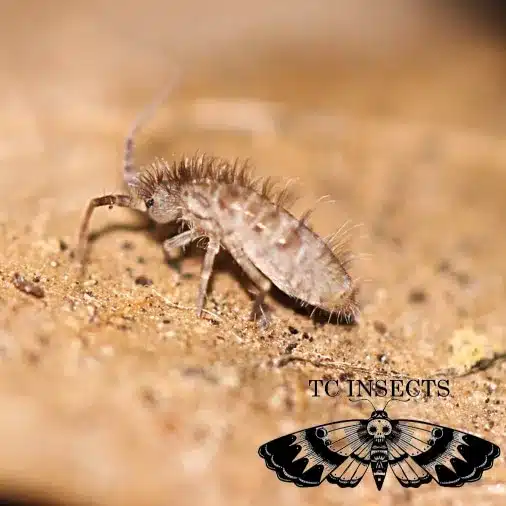
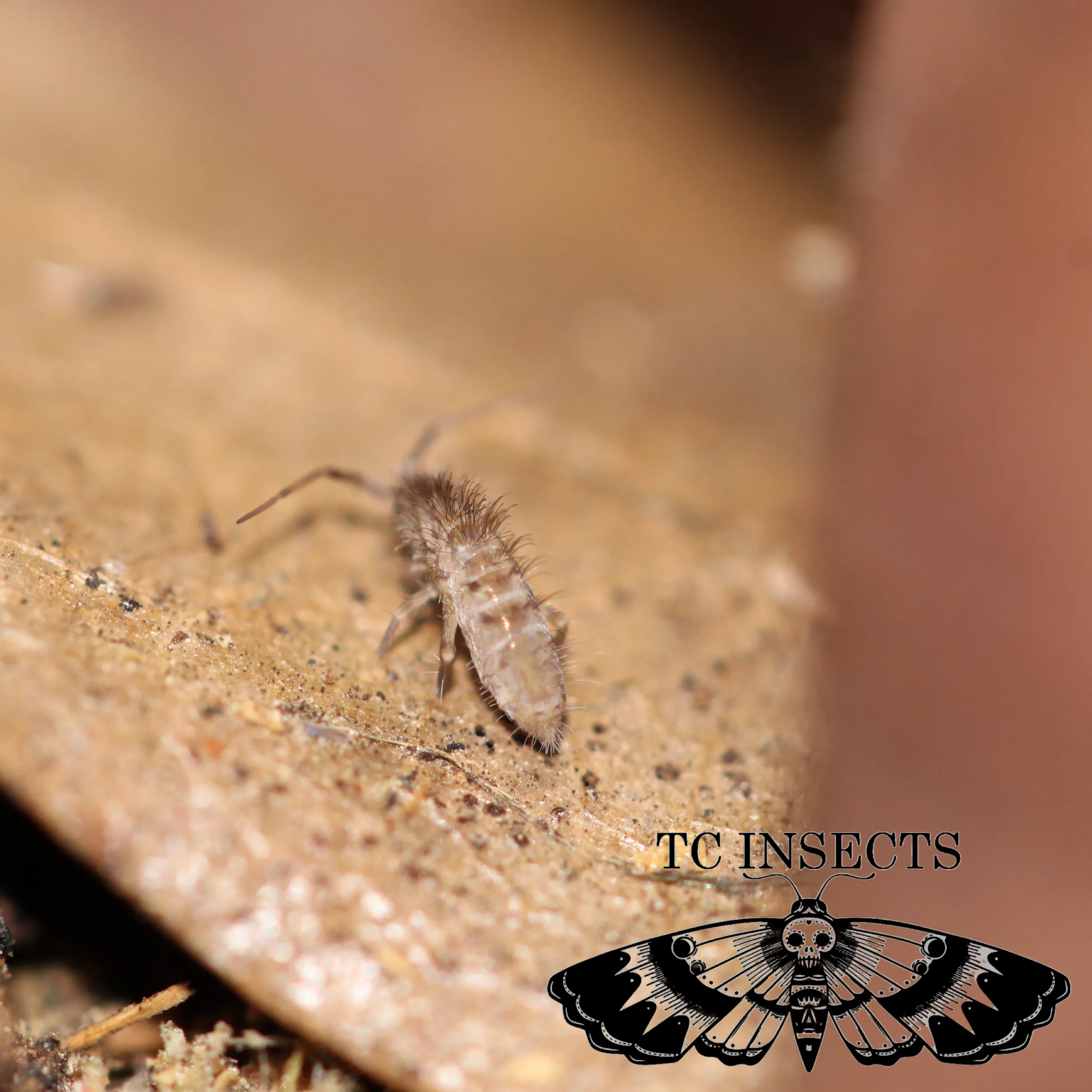
The Woolly Mammoth is the largest springtail TC INSECTS sells, and one of the largest available in the hobby trade. Orchesella villosa reaches 4 to 6 mm fully grown, which is two to four times the size of the typical white tropical springtail most keepers are used to. The body is slender, segmented, and covered in dense fine hairs, which is where both the scientific name (villosa, meaning “hairy”) and the trade name “Woolly Mammoth” come from. Customers buy this one to actually look at it. You can see the antennae, the body segments, the leg structure, and the hairy texture without a magnifier. One honest note: at this size, they are jumpers, and a pooter is the cleanest way to move them around without losing half the culture to the carpet.
Overview
Most springtails sold in the hobby are bought blind. You take it on faith that the tiny white specks in the cup are doing their job in the substrate. The Woolly Mammoth is the opposite. This is a display-grade springtail bought for visibility, anatomy, and collector value, not just cleanup volume. It still functions as a microfauna addition to bioactive enclosures, but the real reason to buy it is that you can actually see what you paid for. If you are building a varied culture rack, pair it with other live springtails for size and behavior contrast.
Pronunciation
or-keh-SELL-uh vih-LOH-suh
Care Level
Beginner to intermediate. The care itself is straightforward, but the size and jumping range mean handling takes a different approach than tiny species. New keepers should plan for a pooter or soft brush rather than scooping with a spoon.
Appearance and Size
Slender elongated body in the family Entomobryidae. Body patterning varies between individuals, but every specimen is densely hairy. Coloration ranges from pale to darker mottled tones depending on the individual. The defining feature is sheer size combined with the visible hairy texture, which is unusual for a springtail.
Adult Size
4 to 6 mm fully grown. This is large for a springtail, easily two to four times the size of typical white tropical springtails.
Reproductive Rate
Moderate in a stable culture. Slower to build mass numbers than tropical white springtails because they are larger and individual cycles take longer, but cultures grow steadily under good conditions. They reach sexual maturity after the 4th or 5th molt and continue molting up to 15 to 20 times throughout life without growing larger after reaching adulthood.
Springtail Care
Temperature
Standard room temperature works well. Growth rate is mainly driven by temperature and food availability. With food in steady supply, temperature becomes the controlling factor on culture speed. Avoid placing the culture near heat lamps, sunny windows, or cold drafts.
Humidity
Keep the culture moist with strong airflow. Woolly Mammoth springtails want a damp environment, but unlike some tropical species, they do not handle stale stagnant moisture well. Cross-ventilation matters. The substrate should stay visibly moist, never flooded. Add a couple of drops of water after each lid opening to top up humidity. As with all springtails, this species needs moisture access at all times.
Culture Setup
- Container with a tight lid and good ventilation. Mammoth-sized springtails jump farther than the small species. The lid stays closed unless you are observing or feeding.
- Substrate of moist soil, a soil and charcoal mix, or coco-based culture medium with leaf litter on top for grazing surface.
- Bark, leaf litter, or moss pieces on top to give surface area, hiding spots, and humidity refuge.
- Airflow holes or a micropore lid. This species responds better to high airflow than dead-air setups.
Diet and Feeding
Biofilm, Mold, and Organic Matter
The Woolly Mammoth helps consume mold, fungi, biofilm, and small organic debris in a bioactive enclosure. Because of their larger size, individual feeding contribution per springtail is higher than tiny species, though raw mass-production numbers stay lower. Treat them as a supporting cleanup crew, not a mold removal guarantee. Airflow and watering habits do more for mold control than any springtail can.
Supplemental Food
In a dedicated culture, feed yeast, fungi, decaying plant material, or a measured springtail food like TC INSECTS Springtail Culture Booster. A measured food keeps the culture cleaner than raw vegetable scraps and reduces smell and mite risk. Consistent food supply supports both growth and reproduction.
Feeding Notes
- Feed lightly and consistently. A steady small supply outperforms occasional big drops.
- Remove visibly moldy food. Light surface mold being worked by springtails is normal.
- Top up humidity with a few drops of water each time you open the lid.
- Do not crowd the culture with food. Uneaten food is the main cause of culture crashes.
Handling
This is the one section that matters more on Woolly Mammoths than on smaller springtails. Their size and jumping range make scooping inefficient and stressful for the springtail. A pooter, a small aspirator tube used by entomologists, is the cleanest tool for moving individuals between containers without crushing or losing them. A soft brush also works for surface collection. Avoid forceps.
Breeding and Culture Growth
Woolly Mammoths breed steadily in a stable moist culture with good airflow. Sexual maturity hits after the 4th or 5th molt, and molting continues throughout adult life. Most keepers see clear population growth within several weeks of receiving a starter culture, with juveniles becoming more visible as the colony establishes.
Culture Maintenance
- Keep at least one backup culture in a separate container. Larger species rebuild slower, so a backup matters more here than with mass-producing tropical springtails.
- Refresh substrate when it becomes packed, sour-smelling, or fouled with old food.
- Keep airflow open. Dead-air cultures crash faster than wet cultures.
- Avoid mixing with aggressive fast-breeding springtails that will outcompete this slower species.
Natural Habitat Background
The genus Orchesella is widespread in temperate environments and the broader family Entomobryidae is one of the most commonly encountered springtail families in soil and leaf litter ecosystems worldwide. Captive stock sold for the hobby is kept under standard culture conditions rather than wild-collected at a specific locality, so customers should treat this as a captive culture rather than a locality specimen.
Best Uses
- Display cultures for keepers who want a springtail they can actually observe with the naked eye.
- Collector and educational setups, including classroom and home science displays.
- Bioactive enclosures with strong airflow and consistent moisture.
- Microfauna variety for keepers who already run tropical white or other small springtails and want a larger species for contrast.
- Supplemental feeding for small insectivores that can take a 4 to 6 mm prey item, when used carefully and not as a primary feeder colony.
Not Best For
- Bone-dry desert-style enclosures. This species needs moisture access.
- Dead-air sealed setups without ventilation. Stagnant humidity stresses this species more than smaller springtails.
- Keepers who want the highest possible cleanup volume per dollar. Tropical white springtails produce more total population mass faster.
- Open-top tubs or loose-fitting lids. At this size, they jump far.
Receiving and Acclimation Guidance
Open the culture in a draft-free area, away from pets. Open over a tray in case any active springtails launch out. Let the culture sit at room temperature for a few hours before feeding or transferring. If the substrate looks shipping-dry, add a few drops of water to top up humidity, do not flood it. If seeding directly into a vivarium, confirm the enclosure animals and plants tolerate the added culture medium and that the enclosure has enough airflow to suit this species.
Frequently Asked Questions
How big do Woolly Mammoth springtails actually get?
4 to 6 mm at full adult size. That is two to four times the size of the typical white tropical springtail most keepers are used to, which is why this species is sold as a display and collector culture rather than a pure cleanup workhorse.
Why are they called Woolly Mammoths?
The body is densely covered in fine hairs. Combine that with the large size for a springtail, and the nickname writes itself. The scientific species name villosa means “hairy” in Latin, so the trade name lines up with the formal description.
Can I keep them with isopods?
Yes, in a bioactive enclosure they coexist with most common isopods. In a dedicated breeding culture, keep them separate so harvesting and counts stay clean.
Are they good feeders?
They can work as a supplemental feeder for small insectivores that can take a 4 to 6 mm prey item, but they are not a high-volume feeder species. Use them mainly as cleanup, display, and collector cultures.
What is the best way to move them?
A pooter. The size and jumping range make scooping with a spoon inefficient, and forceps risk crushing the body. A small aspirator-style pooter or soft brush is the cleanest tool.
Will they take over my vivarium?
Unlikely. They reproduce at a moderate rate, slower than tropical white springtails. They will establish a working population in a stable bioactive enclosure but rarely reach overwhelming numbers.
Learn More About Springtails and Bioactive Care
- TC INSECTS Springtail Care Guide: In-house TC INSECTS guide covering springtail care, culture setup, feeding, and troubleshooting.
- GBIF: Orchesella villosa Species Page: Biodiversity database record with global distribution, taxonomy, and occurrence data for Orchesella villosa.
Final Notes
The Woolly Mammoth earns its place on the shelf for one main reason: it is the rare springtail customers can actually see, study, and enjoy without a magnifier. Give it moisture, airflow, and a tight lid, keep a backup culture, and move individuals with a pooter, and this becomes the most visually rewarding springtail in your rack.



Reviews
There are no reviews yet.