Do Pet Millipedes Lay Eggs?
Yes, female pet millipedes lay eggs, and depending on the species she may bury a whole clutch of dozens of eggs in one hidden chamber, or lay them one at a time over several weeks, the way TC's American giant millipede (Narceus americanus) does. Either way, she disappears into the substrate to do it, which is exactly why an egg-laying female is so often mistaken for one that is simply molting and staying buried. This guide covers how eggs are laid, how long they take to hatch, what hatchlings actually look like, and how deep your substrate needs to be before any of this can happen.
Varies by species; American giant millipedes lay just one egg at a time.
Some sources report up to about three months, depending on warmth and species.
Adults grow dozens of pairs; legs and segments are added at every molt.
Do Millipedes Really Lay Eggs?
Yes, millipedes reproduce sexually, and every female that mates with a male is capable of laying fertilized eggs afterward. During mating, the male transfers a small sperm packet called a spermatophore to the female rather than fertilizing eggs directly, and in species like the American giant millipede she can store that sperm and use it later rather than right away. A millipede also needs time to grow up before any of this happens: sexual maturity typically takes about 1 to 2 years in a giant millipede, so a young or recently purchased animal will not be breeding yet.
Only females lay eggs, of course, so it helps to know which sex you actually have before you get your hopes up about a breeding project or worry unnecessarily about a male that vanishes into the substrate. See our guide to sexing a millipede for how to tell them apart without guesswork.

Where and How Does She Lay Them?
Most millipede species dig into the substrate and build a nest, then lay a full clutch there at once, anywhere from about ten to a few hundred eggs depending on species, sometimes lining the chamber with chewed leaf litter and droppings for protection. She may guard the nest for a while, but once the clutch is laid, most species leave the eggs to develop on their own.
Why the American Giant Millipede Does It Differently
TC's own American giant millipede skips the single big clutch entirely. Instead, she lays one egg at a time, each in its own small nest of chewed leaf litter and droppings, then wraps her body around that single egg until it hatches, days to weeks later, before moving off to repeat the whole process. Across a season she may produce only a few dozen eggs this way rather than the hundred-plus some other species lay in one sitting, but each egg gets individual protection the whole time.
How Long Until the Eggs Hatch?
Most reports put millipede egg incubation at a few weeks, though some sources describe it taking up to about three months depending on the species and how warm the substrate stays. Warmer, consistently moist conditions tend to move things along faster than a cool, dry setup. The honest answer is that there is no single universal number, since it depends on which species you keep and how stable its enclosure has been.
What Does a Baby Millipede Actually Look Like?
Nothing like its parent. A newly hatched millipede has roughly seven body segments and only three pairs of legs, pale and soft compared to the dozens of dark, banded segments and many dozens of leg pairs an adult carries. It grows by molting, and each molt in this process, called anamorphosis, typically adds new segments and new legs rather than just making the existing ones bigger. Depending on the species, a millipede goes through anywhere from about 6 to 20 of these molt stages before it looks like a proper adult.
Egg-Laying or Just Molting? How to Tell the Difference
From the outside, the two look almost identical: your millipede burrows down and simply disappears for a long stretch. Our millipede care guide covers why a buried millipede is usually just molting, and that is still the more common explanation day to day. The honest answer for telling them apart is that you often cannot, not with certainty, without digging her up, and digging her up is the wrong move either way.
A molt usually wraps up within a couple of weeks, and the millipede that reappears will look pale and soft at first, sometimes near the shed skin it may go on to eat. A female laying eggs the way the American giant millipede does can stay in and out of the substrate on and off for much longer, since she is tending one egg at a time across a season. Either way, the right move is the same: leave the substrate undisturbed and keep humidity steady until she resurfaces on her own.
Give Her the Substrate Depth Eggs Actually Need
Egg-laying and hatching both take real room, so build your enclosure with that in mind from the start. A good rule of thumb is substrate as deep as your longest millipede's body, deeper than the shallow layer that suits daily browsing alone, so a female has room to dig a real chamber instead of scraping the surface. See our giant millipede enclosure setup guide for full depth and humidity numbers by enclosure size.
Leaf litter matters just as much as depth, since it is both nest-building material for the female and the first food a hatchling finds once it starts moving. Keep a calcium source available too, since every one of those 6 to 20 molt stages on the way to adulthood depends on it. Browse millipedes for sale or check our millipede calcium guide for the specific sources that work.
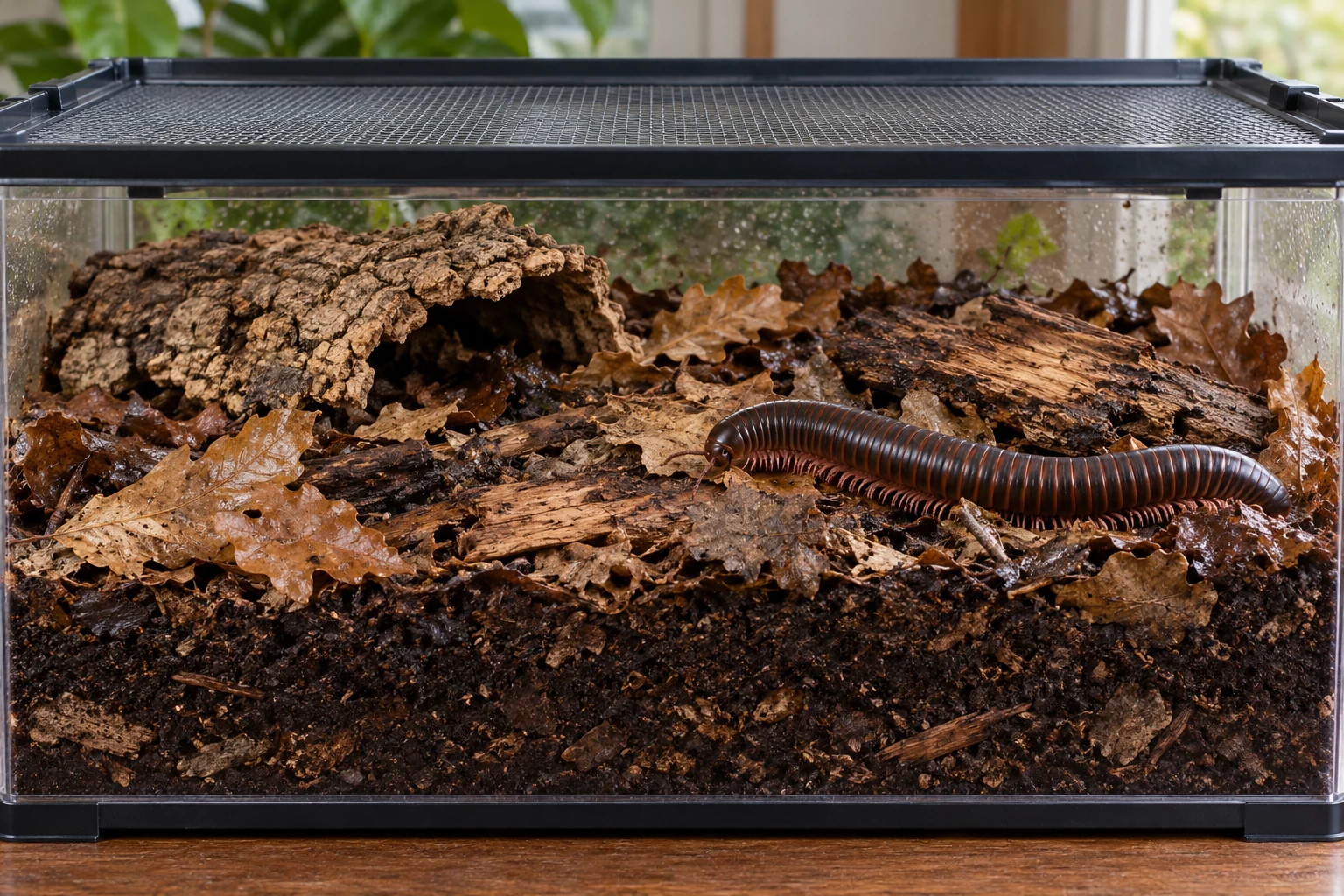
The Millipede Breeding Substrate Kit
Deep, moisture-rich substrate and litter that give a female millipede room to nest and hatchlings something to eat.
Frequently Asked Questions
Written by the TC INSECTS breeding team · Porter, Texas · Live Arrival Guarantee on every order
Have a care question? Ask our community.
Join Reptile Keepers USA, our free Facebook group for reptile, amphibian and invert keepers. Share your setups, get care help and swap feeder tips.
Join the free group