Folsomia Candida Care
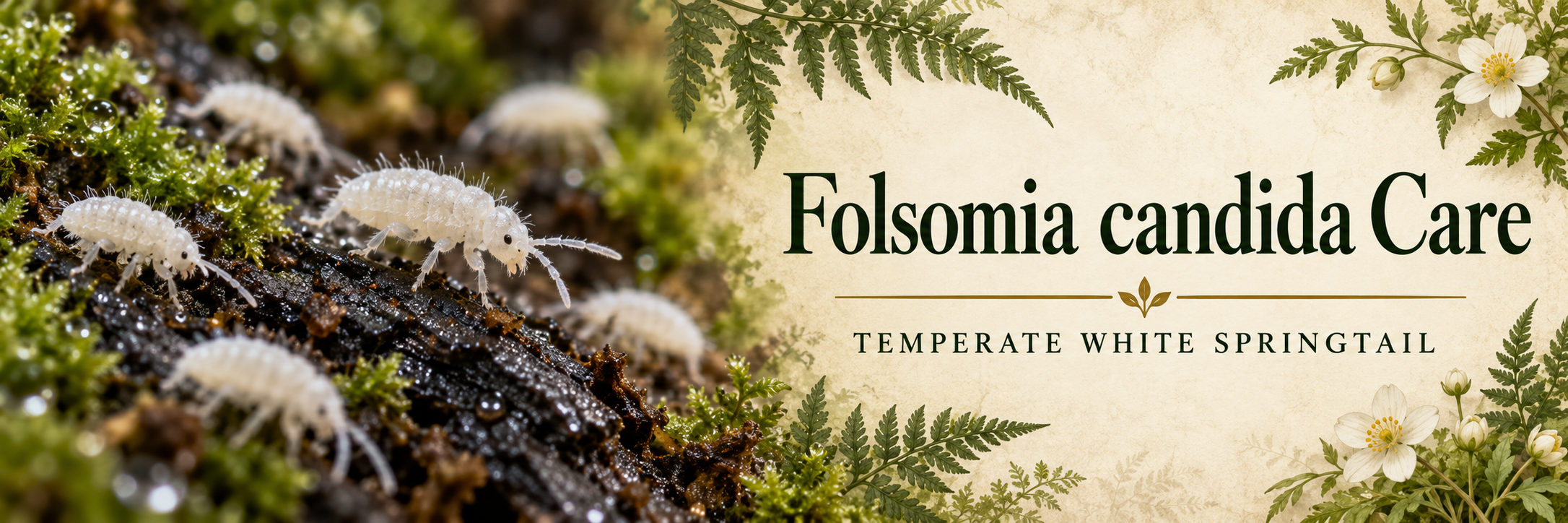
The Temperate White springtail (Folsomia candida) is TC's best-selling springtail culture, and it earns that spot with a simple deal: it reproduces without males, cultures happily at 65 to 80 F with no heat mat, and tolerates a wider temperature swing than almost anything else in the hobby. Feed it a light pinch of yeast every 2 to 4 days, keep the medium damp but never soaked, and a starter culture builds a strong population within weeks. This guide covers which culture medium actually fits this species best, the exact signs a culture is about to crash, and how to split one cup into several before that happens.
Reproduction peaks near 70 F; give it the coolest shelf in a warm room
Pale white, easy to miss until you tap the medium
Females alone build a full population, no males required
Why Folsomia Candida Is TC's Best-Selling Springtail
Folsomia candida is the springtail every bioactive keeper eventually buys, whether they know its scientific name or not. Sold as the Temperate White springtail, it is TC's most popular culture, and the reason has nothing to do with looks: this species is pale, small, and easy to overlook against light substrate. What makes it the default is reliability. It tolerates a wider swing in temperature and moisture than most tropical springtails, reproduces without needing a male in the culture, and rarely needs anything more complicated than a damp charcoal cup and a light feeding schedule to take off.
There is a second reason this species shows up everywhere, and it has nothing to do with the pet trade. Folsomia candida is the standard test animal soil scientists use worldwide to check whether a pesticide or a contaminated soil sample is safe, essentially the springtail equivalent of a lab rat. Two major testing standards, ISO 11267 and OECD Test No. 232, are both built around this exact species, precisely because it is so easy to keep alive and breeding in a small container, the same trait that makes it forgiving in a spare-room culture rack.
What Temperature and Humidity Does Folsomia Candida Actually Need?
TC lists this species at 65 to 80 F preferred, which lines up with the general springtail rule of thumb: no heat mat needed at normal room temperature. A tighter practical target is 70 to 76 F for steady, active cultures. Humidity should stay medium-high to high, meaning the medium looks and feels damp to the touch at all times, never bone dry and never standing in free water.
If you keep a whole rack of springtail cultures on the same warm shelf, put this one on the bottom shelf or the floor. Published rearing work on this species shows reproduction actually peaking around 70 F and slowing once containers sit much above the mid-70s, so the coolest spot in a warm room suits it better than the warmest. That cool tolerance is also the main reason to reach for Folsomia over a Tropical White culture when a room runs cool. See our temperate versus tropical breakdown for the full decision.
Charcoal, Clay, Coco, or Bio-Plaster: The Right Medium for This Species
TC ships Folsomia candida on five different media, and for once the choice is not just cosmetic. Every option works for this species, but each fits a different job, from a bare-bones backup cup to a culture built to drop straight into a planted bioactive tank. Our broader charcoal versus clay versus coco comparison covers the general tradeoffs across every species; this section is about what actually changes for Folsomia specifically.
Charcoal: the classic backup culture
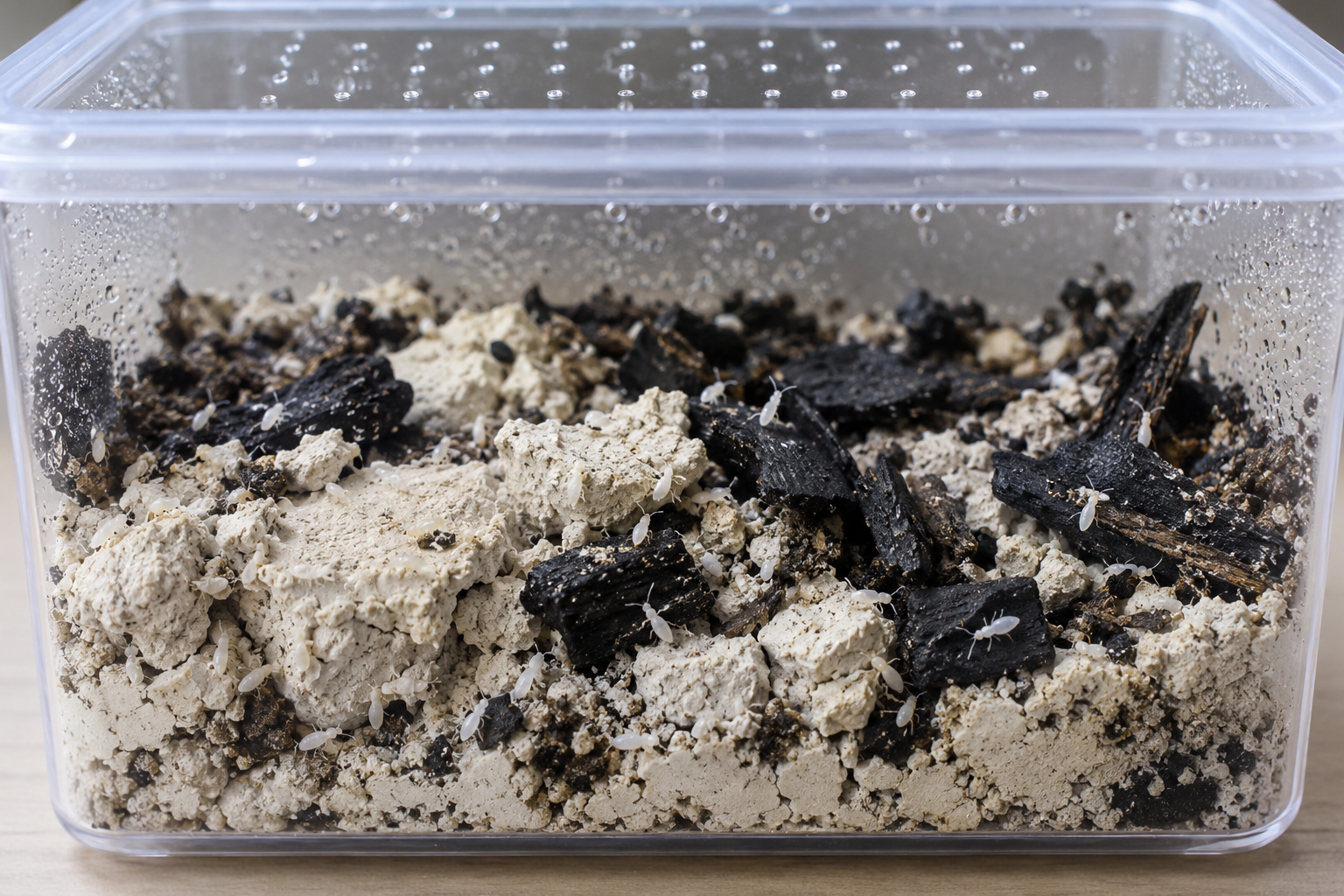
Charcoal is the traditional choice for this species for a reason: it is cheap, easy to rinse clean, and makes a springtail population easy to see and judge at a glance against the dark pieces. It is also the easiest medium to harvest from with a quick flood-and-pour, which matters for a species you will likely be splitting into multiple cups as it grows.
Euro-Clay and Bio-Plaster: the flip-and-tap option
Both clay and plaster-based media hold moisture in a stable, structured surface and harvest with a simple flip and tap of the container rather than digging through loose material. Bio-Plaster adds a bit of bio-char for extra food value and surface texture. Either is a reasonable upgrade from charcoal if you want a cleaner-looking culture cup or plan to display it.
Coco fiber and Ultra Bioactive substrate: for direct seeding
Coco fiber is a clean, low-cost, all-purpose option, but it breaks down slowly and is not the best pick to pour directly into an isopod bin or millipede enclosure, since it does not quickly become a usable food source there. If your plan is to dump a culture straight into a bioactive terrarium rather than maintain it as a standalone cup, the Ultra Bioactive Substrate version is built for that job instead, since its flake soil and rotten wood become part of the enclosure's living substrate layer.

Feeding Folsomia Candida Without Crashing the Culture
The house rule for every springtail culture applies here without exception: a very light sprinkle of brewer's or baker's yeast every 2 to 4 days, and skip the next feeding entirely if the last one is still visible on the medium. Folsomia candida is not a heavy feeder. It grazes fungi, mold, biofilm, and general decaying matter on its own inside a bioactive enclosure, and in a standalone culture cup it needs only enough prepared springtail food to keep a thin, grazed-down patch visible.
Overfeeding, not underfeeding, is the number one way keepers lose a Folsomia culture. Extra food left sitting in a damp container sours, molds heavily, and can tip a thriving population into a mite problem or a full crash within days. If you are ever unsure whether to feed, wait one more day rather than adding more food; a springtail culture that looks a little hungry recovers far faster than one that has gone sour.
Harvesting and Splitting a Folsomia Candida Culture
A culture is ready to harvest once tapping the container brings a visible cloud of springtails to the surface within a few seconds. On charcoal, flood the container with a small amount of dechlorinated water and pour the floating springtails off the top; on Euro-Clay or Bio-Plaster, a simple flip and tap of the container does the same job without adding water; on a coco or Ultra Bioactive substrate culture, scoop a portion of the medium itself directly into the target enclosure instead.
Once a culture is dense and reproducing steadily, split part of it into a fresh container with the same medium rather than letting one cup get overcrowded and crash under its own waste. That split also protects you if the original culture ever does crash, since you always have a second source to reseed from. Our general guide to breeding and harvesting springtails covers the same technique across every species, and TC's full springtail lineup is the fastest way to start a second culture from scratch instead of splitting.
Is Your Folsomia Candida Culture in Trouble?
The Folsomia Candida Culture Kit
Everything to start, feed, and split TC's most popular springtail culture.
Frequently Asked Questions
Written by the TC INSECTS breeding team · Porter, Texas · Live Arrival Guarantee on every order
Have a care question? Ask our community.
Join Reptile Keepers USA, our free Facebook group for reptile, amphibian and invert keepers. Share your setups, get care help and swap feeder tips.
Join the free group