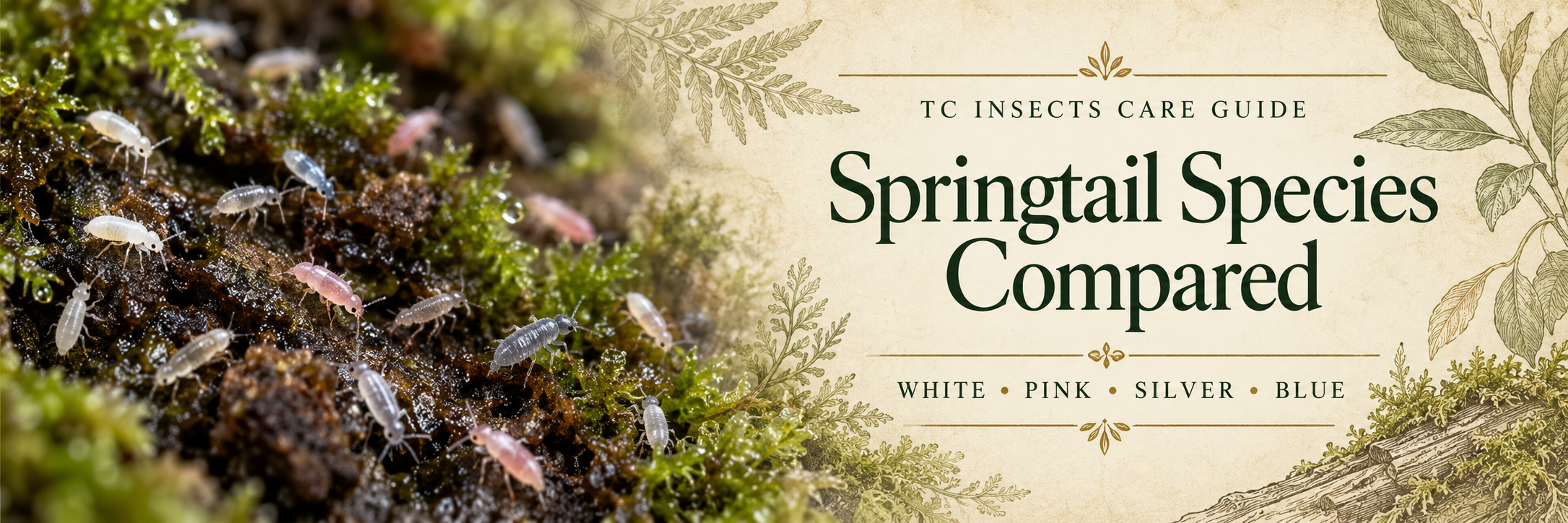
Pink vs White vs Silver vs Blue Podura Springtails: Which Should You Buy?
There is no single best springtail for every setup, only the best one for yours, and the differences between TC's cultures are real and worth knowing before you buy. Temperate white (Folsomia candida) is the fastest-breeding and most forgiving pick for a first culture. Tropical pink (Coecobrya cf. tenebricosa) runs bigger and handles a messier, more humid tank well, though it builds numbers more slowly. Silver (Seira dowlingi) adds a striking, easy-to-spot contrast color, and blue podura (Proisotoma minuta) tolerates standing water better than the rest, making it the pick for a water feature or paludarium. Below is a straight, side by side comparison so you can choose by climate, by visibility against your substrate, or simply by which one you like the look of.
Parthenogenetic and the most forgiving first culture
Bigger bodied, breeds slower than white
Tolerates standing water better than the others

The short answer: pick by climate and job, not just looks
TC carries several distinct springtail cultures, and the four most commonly compared are temperate white, tropical pink, silver, and blue podura. They all do the same basic job, grazing mold, fungus, and fine waste in a bioactive substrate, but they differ enough in speed, size, and moisture tolerance that the right pick really does depend on your setup rather than being a coin flip. If you keep isopods too, our isopod genus comparison runs the same side by side format for species instead of colors.
If you have not read our broader temperate vs tropical springtails comparison yet, that piece covers the climate side of the decision in more depth. This guide goes one level more specific, comparing the actual named colors and species TC sells side by side.
Temperate White: the fast, forgiving default
Temperate white springtails (Folsomia candida) are the standard starter culture for a reason. They reproduce parthenogenetically, meaning a culture does not need a mate to multiply, and they build numbers faster and more reliably than almost anything else in the hobby. They tolerate a wider temperature range than the tropical species too, which makes them the most forgiving choice for a first bioactive bin or a beginner isopod setup.
The tradeoff is mostly cosmetic. White springtails are small and pale, so they can be hard to actually see against a light colored substrate, and some keepers simply want more visual interest than a white culture provides. For pure function over looks, though, this is the one to start with.
Tropical Pink: bigger, better for a messy humid tank
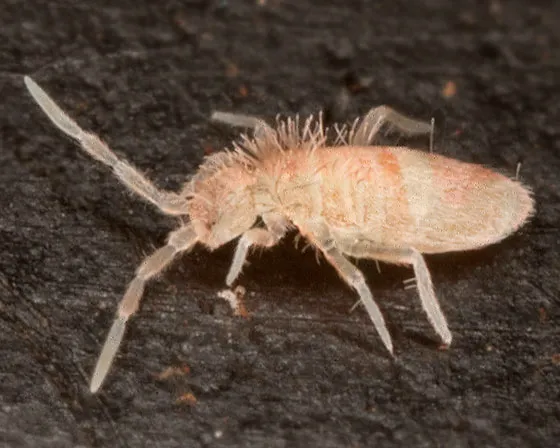
Tropical pink springtails (Coecobrya cf. tenebricosa) run noticeably larger bodied than temperate white, and that size seems to help them handle a heavier, messier waste load in a warm, humid enclosure. They are a common pick for keepers running a tropical reptile or amphibian setup where the substrate stays consistently damp and gets dirtier faster than a typical isopod-only bin.
The tradeoff here is speed. Pink springtails build numbers more slowly than temperate white, so a new pink culture needs more patience before it looks established. Many keepers solve this by starting a culture well ahead of when they actually need it, or by choosing a mixed culture that includes both colors. If a culture ever seems stuck rather than just slow, our guide on why a springtail culture isn't booming covers the common causes.
Silver and Blue Podura: color and water tolerance
Silver springtails (Seira dowlingi) do the same grazing work as the others but stand out visually against dark substrate, which makes them a popular pick for a display bin where you actually want to watch the culture work rather than just trust that it is there. Blue podura (Proisotoma minuta) covers a different niche entirely: it tolerates standing water noticeably better than white, pink, or silver springtails, which makes it the natural choice for a paludarium, a water feature, or any setup with a genuinely wet zone the others would struggle in.
Neither is a strict upgrade over temperate white, they are specialists. Reach for silver when visibility matters, and reach for blue podura specifically when part of your setup stays wet rather than just humid.
Can you mix colors in one bin?
Generally yes. Different springtail species and colors can be combined in the same culture or bioactive enclosure without the conflict you sometimes see between different isopod species, since springtails are not territorial or predatory toward each other in any meaningful way. Mixing colors is mostly a cosmetic choice rather than a husbandry risk.
The one thing to keep in mind is that a faster breeder like temperate white can eventually become the visually dominant population in a mixed culture over time, simply because it multiplies faster, so do not be surprised if your show stopping silver or pink springtails become a smaller fraction of the bin as months pass. That is normal, not a sign anything is wrong.
Quick decision table
If you want the fastest, most forgiving culture for a first bin, start with temperate white. If your setup runs warm, humid, and messy, tropical pink is built for it. If you want a culture you can actually see working against dark substrate, pick silver. If any part of your setup holds standing water, like a paludarium or a water feature, blue podura is the one built to handle it.
And if you cannot decide, a mixed culture that pairs two colors in one cup is a reasonable way to hedge, letting you see which one thrives best in your specific setup before committing further. Whichever you choose, all of TC's springtail cultures ship as living, reproducing colonies ready to seed directly into a bioactive bin.
Pick Your Springtail by Color and Climate
The cultures compared above, ready to add to your cart in one tap.
Frequently Asked Questions
Written by the TC INSECTS breeding team · Porter, Texas · Live Arrival Guarantee on every order
Have a care question? Ask our community.
Join Reptile Keepers USA, our free Facebook group for reptile, amphibian and invert keepers. Share your setups, get care help and swap feeder tips.
Join the free group