BSFL for Koi and Pond Fish
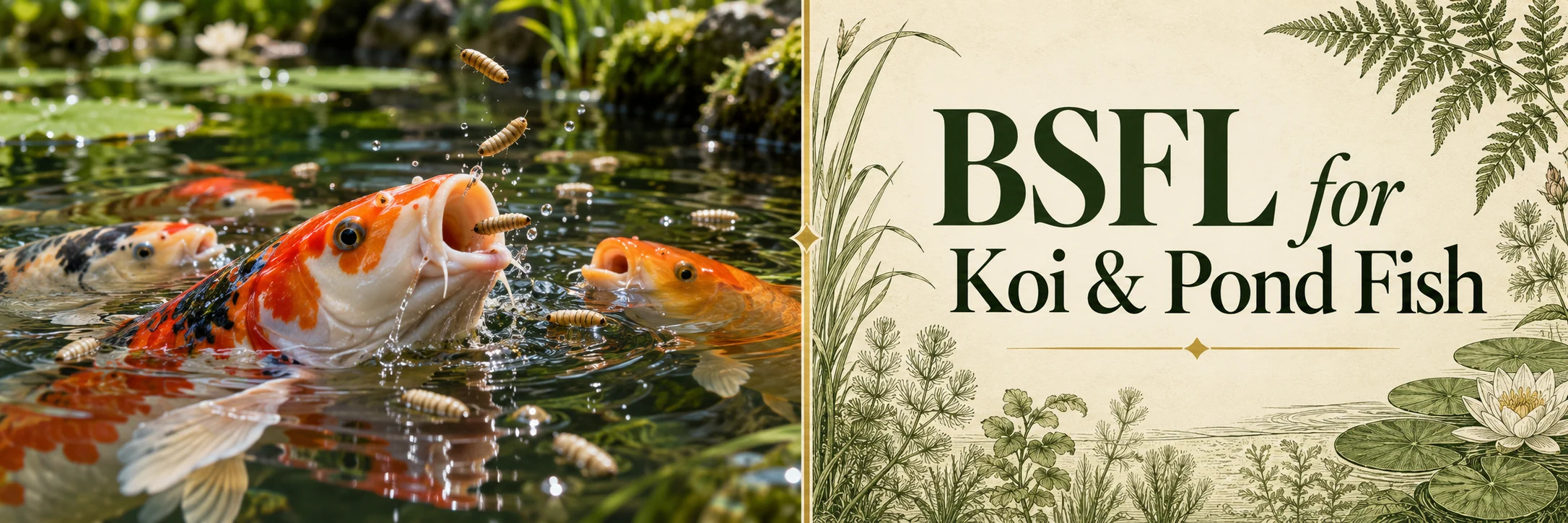
Black soldier fly larvae (Hermetia illucens) are the best live treat for koi and pond fish: they float and wriggle at the surface where koi feed, they carry far more calcium than mealworms, and a cup keeps for weeks in the refrigerator. Feed a small handful per group of adult koi two or three times a week when the water is above about 60 F, cut back as it cools, and stop live foods entirely once the pond drops near 50 F, when koi stop digesting. This guide covers why BSFL beat other live treats for ponds, how many to feed by fish size, the temperature rule, storage, and how to use them to train fish to hand-feed.
Taper below that; stop near 50 F when koi stop digesting
A small handful per group of adult koi, a few times a week
No food needed; warm and dry they pupate into flies
Why BSFL suit pond fish better than other live treats
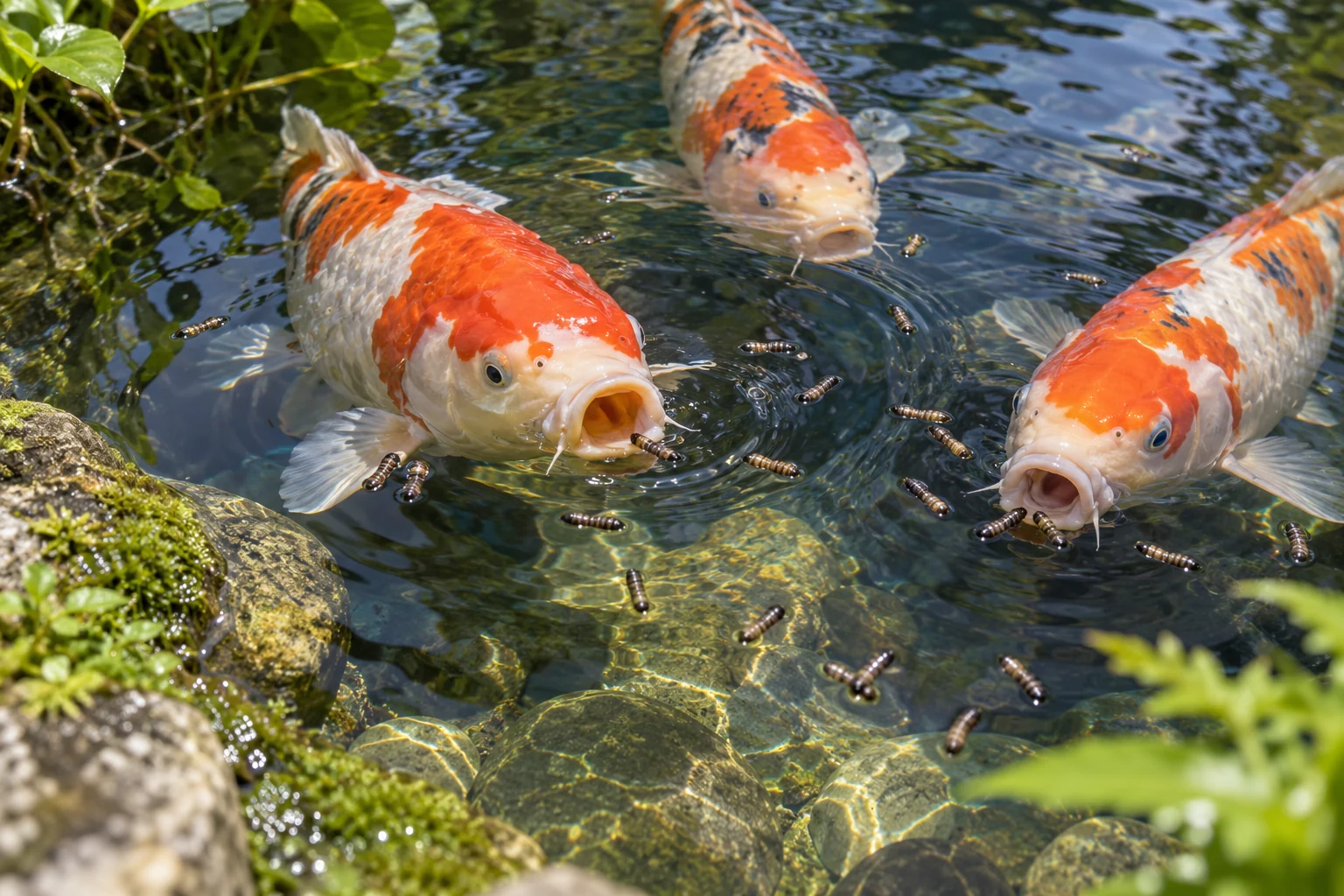
Koi, goldfish, orfe, and most pond fish are surface and mid-water feeders that hit anything moving on the water, and a BSFL floats and kicks for a minute or two before sinking slowly, which is exactly the presentation they respond to. Mealworms and superworms from the mealworm shop work too, but they sink faster, carry more fat, and have far less calcium. BSFL are naturally calcium-rich because of how the larvae store minerals, which makes them a useful supplement for growing koi and for fish recovering weight after winter, without the phosphorus load of a mealworm-heavy treat.
They are also clean to handle: no smell, no bedding, no escapes, and no need to keep them alive in water like blackworms. A cup in the refrigerator door is the whole setup. Our BSFL care guide covers what the larvae are and how they are raised; this post covers the pond.
How many to feed, by fish size
Treat BSFL as a supplement to a quality pellet, not the diet. For adult koi over 12 inches, a small handful, roughly 10 to 20 larvae, per group of three or four fish, two or three times a week, is a typical pattern, adjusted by watching what they clear in about 3 minutes. For goldfish and small koi under 6 inches, use small BSFL and feed a few per fish. For orfe, shubunkins, and other mid-size pond fish, medium larvae a few at a time.
The rule that matters is the 3-minute clear: whatever the fish have not eaten in 3 minutes, net out. Larvae that sink to the bottom and die rot in warm summer water and add to the load a pond filter is already carrying in July. Start with fewer than you think and increase; koi learn a new food in a day or two, and once they associate you with larvae the portion becomes obvious. Order BSFL by size to match the fish, small for goldfish, large for adult koi.
The water-temperature rule
Koi digestion is driven by water temperature, and live protein is the first thing to cut when it drops. Above about 60 F, koi digest protein well and BSFL are a good treat. Between about 50 and 60 F, feed lightly and less often, favoring easily digested foods. Near 50 F and below, stop feeding live foods and follow the standard cold-water pellet rules; food a cold koi cannot digest sits in the gut and causes problems. Use a pond thermometer, not the air temperature, and go by a few days of readings rather than one warm afternoon.
That makes BSFL a late-spring-through-early-fall treat in most of the country, with the heaviest use in early summer when koi are putting weight back on and again in late summer before the water cools. They are also a good spring conditioning food once the pond has been reliably above 60 F for a couple of weeks. Skip them entirely in the weeks around spawning if you prefer to keep the diet simple, and resume after.
Storing a cup for the season
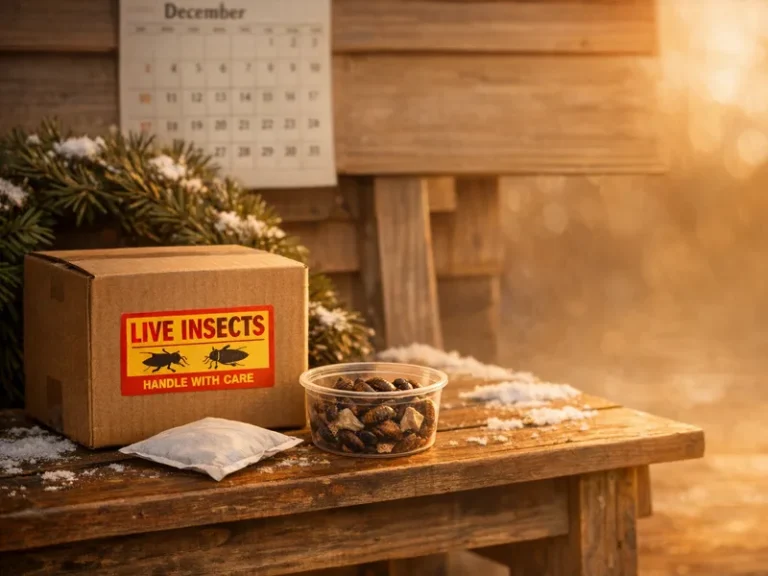
BSFL need no food. Keep the cup in the refrigerator at about 40 to 45 F and they stay dormant and alive for a few weeks; take out only what you will feed and let it warm for a few minutes so the larvae wriggle. Do not leave the cup in a warm shed or on a sunny deck: at 75 F and above, larvae darken, stop moving, and pupate into black soldier flies within a couple of weeks. The flies are harmless, but they are not fish food.
For a pond with a few koi, a cup of large larvae on a biweekly order covers the season. For a larger pond or several fish, a standing order timed to the warm months keeps the refrigerator stocked without a dead cup in August. Larvae that have darkened but still move are fine to feed; larvae that have gone hard and still are pupae and should be discarded or, if you like, left outside to become flies.
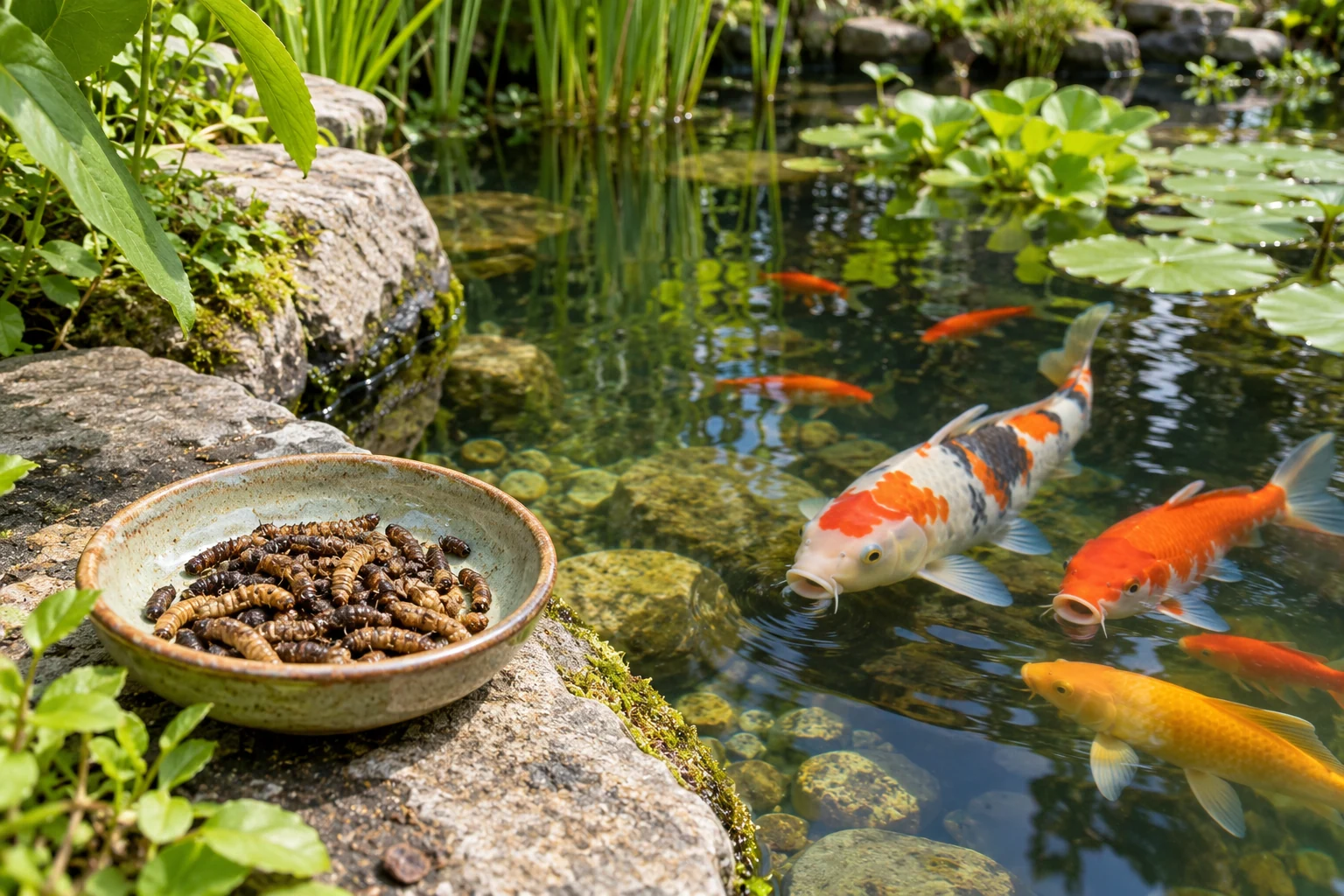
Training koi to hand-feed with BSFL
Nothing trains a koi to come to your hand faster than a live larva. Stand in the same spot at the same time each day, drop two or three BSFL at the edge nearest you, and step back. Within a few days the fish arrive when you do. Then hold a larva at the surface between finger and thumb and let the boldest fish take it; the rest follow within a week. Once fish hand-feed, health checks, treatments mixed into food, and simply enjoying the pond all get easier.
Keep the sessions short and the portions small so the training treat does not become the diet, and always finish with the pellet ration so the fish learn that your hand means the whole meal, not only the larvae. A koi that hand-feeds is also a koi you can inspect closely for parasites, wounds, and weight, which is worth more than the treat itself.
Other pond animals that take BSFL
Pond turtles take BSFL readily and benefit from the calcium; feed them separately from the fish so the turtles get their share. Frogs and toads around a pond will take larvae offered on a shallow ledge in the evening. A pond with catfish or sturgeon sees the larvae sink to them once the surface feeders are done. Every one of these animals follows the same temperature logic as koi: live protein when the water is warm, lighter feeding as it cools, and nothing once it is cold.
The same cup works indoors too. Aquarium cichlids, gouramis, and large barbs take BSFL exactly as pond fish do, at aquarium temperatures year-round, and the portion rules scale down; see live foods for aquarium fish for the tank version. For the fish room and the pond, one refrigerator cup of BSFL is the simplest live food there is, and the pond fish will tell you within a week that it was the right one.
Keep reading: BSFL and Mealworms for Ducks and Quail: How Many, How to Feed Them and Raising Black Soldier Fly Larvae at Home: Start From a Cup, Not From Flies
The Pond Treat Kit
BSFL in the two sizes ponds use most, with mealworms for variety and a calcium powder for the pellet side of the diet.
Frequently Asked Questions
Written by the TC INSECTS breeding team · Porter, Texas · Live Arrival Guarantee on every order
Have a care question? Ask our community.
Join Reptile Keepers USA, our free Facebook group for reptile, amphibian and invert keepers. Share your setups, get care help and swap feeder tips.
Join the free group