Raising Black Soldier Fly Larvae at Home
Larvae stall below 70 F and die above 100 F
From 1/4 inch larvae to prepupae crawling up the ramp
Adults need bright light and space to mate; larvae need neither
Grow Larvae, Harvest Feeders, and Restart
Black soldier fly larvae (Hermetia illucens) are easy to grow at home from a purchased cup and hard to breed at home from flies, and knowing which half you are signing up for saves a lot of frustration. A bin of larvae kept at 80 to 90 F eats kitchen scraps and chicken feed, grows from a quarter inch to three quarters of an inch in 2 to 3 weeks, and crawls out on its own up a ramp when it is ready to pupate, which is the harvest. Getting the adult flies to mate and lay indoors takes bright light, warmth, and a flight space most homes do not have, so most keepers run a grow-out bin and buy larvae to restart it. This guide covers the bin, the feeding, the ramp, the harvest, and an honest look at the breeding step.
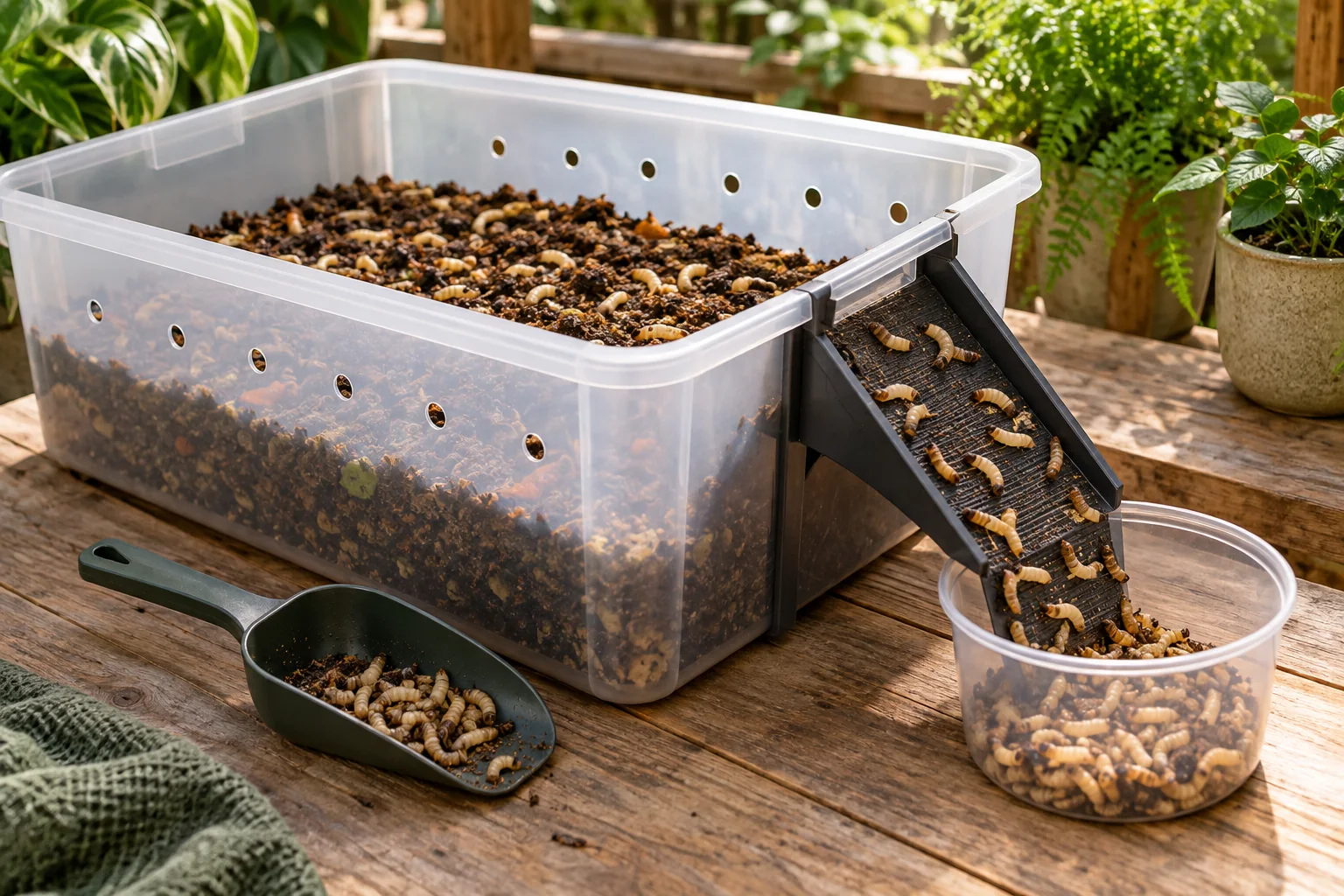
Warm, Moist, and Built to Self-Harvest
Keep the larvae warm, feed manageable portions, and use a ramp that lets mature prepupae collect themselves.
Grow-out versus breeding: pick one
A black soldier fly's life runs eggs, larvae, prepupae, pupae, adult, and the larva is the only stage that eats. Larvae are what you feed to reptiles and chickens, and larvae are what a cup from a farm contains. Growing that cup to full size, and fattening it on scraps, is a grow-out bin, and it works on a shelf in a warm garage. Turning the prepupae into flies that mate and lay the next generation is breeding, and it needs a warm, brightly lit flight cage, which is why commercial farms use greenhouses.
Most home keepers are best served by a grow-out bin restarted every few weeks with a fresh cup of small larvae from the BSFL shop. It turns kitchen scraps into calcium-rich feeders and compost with almost no effort. The breeding step is covered at the end for anyone in a warm climate with an outdoor bin, where wild soldier flies often do the laying for you.
The grow-out bin
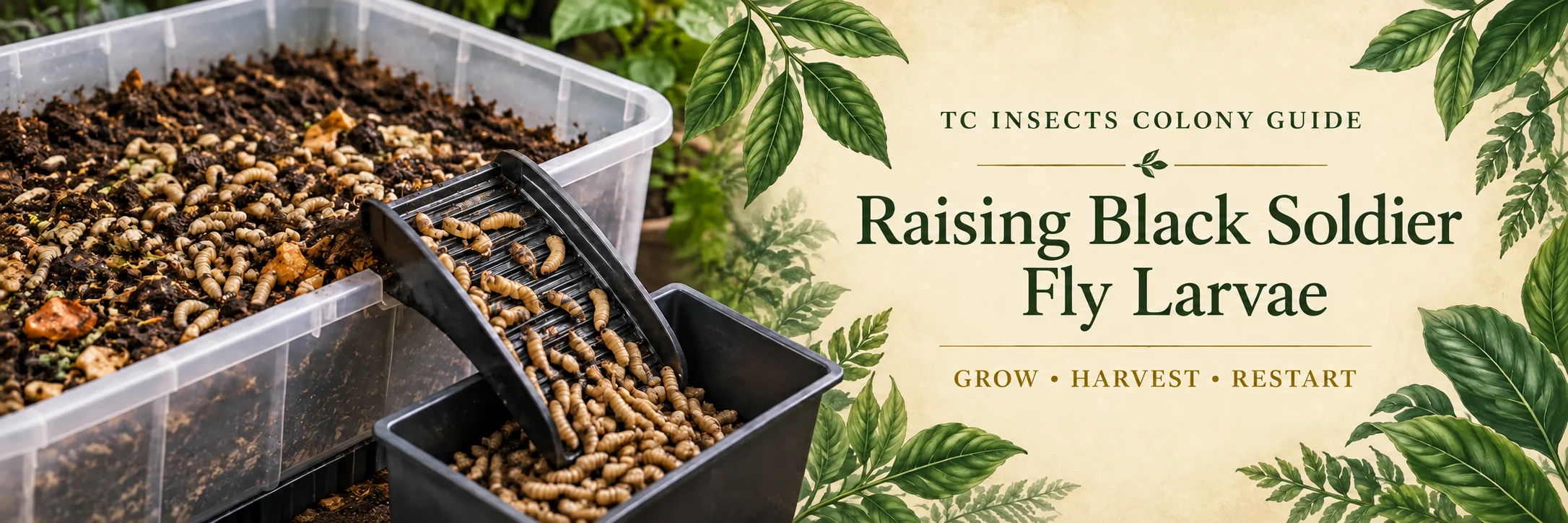
Use a plastic tote of 10 to 20 gallons with a lid, drill a few dozen small ventilation holes near the top, and cut a ramp: a strip of wood or plastic at about 30 to 40 degrees running from the bin floor up to a hole in the side, with a collection cup or a second bin under the hole. The larvae live in a layer of moist food 2 to 4 inches deep. Coco fiber or shredded cardboard mixed in keeps the mass from going soupy, and a drainage hole in one corner over a tray handles excess liquid.
Temperature is the setting that matters. Larvae grow fastest at 80 to 90 F and stop feeding below about 70 F; a heat mat under one end of the bin, or a spot in a warm garage in summer, keeps them moving. Keep the bin out of direct sun, which cooks it, and out of the rain. A thermometer probe in the food mass tells you the real number, since a feeding mass of larvae generates its own heat.
Feeding the larvae
Larvae eat almost anything soft: fruit and vegetable scraps, spent coffee grounds, bread, cooked rice, chicken feed, and layer pellets. Chop scraps small and add a layer a day or two thick, no more, so the mass never goes anaerobic and sour. The smell of a healthy bin is earthy; a sour or ammonia smell means too much food and too much moisture, and the fix is a handful of dry cardboard and a pause in feeding. Skip meat, dairy, and oily food in a home bin.
For larvae that will feed reptiles or laying hens, finish them on a calcium-rich diet for the last few days: layer feed, or scraps with a spoonful of calcium carbonate stirred in. The larvae store calcium as they grow, which is why they are sold as calcium worms and why the BSFL care guide calls them the low-dusting feeder. A cup of a few hundred small larvae eats a household's vegetable scraps comfortably.
The ramp harvest
This is the part that makes soldier fly larvae the easiest feeder to raise. When a larva finishes feeding, at about three quarters of an inch, it darkens from cream to brown, stops eating, and crawls upward looking for a dry place to pupate. In a bin with a ramp, the prepupae climb the ramp, drop through the hole, and land in the collection cup on their own. No sifting, no sorting. Check the cup daily; a busy bin delivers dozens a day.
Harvested prepupae are a fine feeder and a slightly firmer, darker one than the cream larvae; most reptiles and all chickens take them. If you want cream larvae for a picky animal, scoop them from the food mass a few days before they darken. Anything you do not feed goes into the refrigerator, where larvae keep for a few weeks, as our page on how long BSFL last in storage describes. Warm, dry prepupae left in the cup turn into flies within 1 to 2 weeks.
What the flies need, and why it is hard indoors
Adult black soldier flies do not eat and live about a week, and in that week they need to mate and lay. Mating happens in flight, in bright light, ideally sunlight, in a space several feet across, at temperatures in the 80s F. A cage in a dim garage in winter produces flies that never mate. Keepers who breed indoors use a large mesh cage under a strong daylight lamp with a bin of fresh food beneath a corrugated cardboard strip for the females to lay in, and even then results are uneven.
The adults are harmless. They do not bite, do not carry disease the way house flies do, and a stray one in the house just wants a window. Our post on whether calcium worms turn into flies covers what happens to a forgotten cup. If you want to try breeding, a warm outdoor bin in the southern half of the country, with a cardboard egg strip over the food, is the honest route; wild soldier flies find it within weeks in summer.
A restart schedule and the numbers
A grow-out bin for a few reptiles or a small flock runs on a cup of 500 to 1,000 small larvae every 3 to 4 weeks, staggered so one bin is harvesting while the next is growing. Two 10-gallon totes on a shelf, each started two weeks apart, deliver prepupae continuously. The larvae you buy are the seed, the scraps are the feed, and the ramp does the work.
For a flock of chickens, plan on a flock's treat ration from our chicken feeder guide and size the bins to it; a 20-gallon bin fed generously can turn a cup of 1,000 small larvae into a pound or more of prepupae in three weeks. The leftover food mass is a rich compost. Empty it into the garden between restarts, rinse the bin, and start the next cup.
The BSFL Grow-Out Kit
Small larvae to seed the bin, medium and large larvae to feed out while the bin grows.
BSFL Grow-Out FAQ
Can I raise black soldier fly larvae at home?
Yes, easily, from a purchased cup of small larvae in a warm bin. Larvae at 80 to 90 F eat kitchen scraps and grow to harvest size in 2 to 3 weeks, then crawl up a ramp on their own to be collected. Breeding the adult flies indoors is the hard part; most keepers restart the bin with a fresh cup instead.
What temperature do black soldier fly larvae need?
80 to 90 F for fast growth. They stop feeding below about 70 F and die above 100 F. A heat mat under one end of the bin or a warm garage in summer works; keep the bin out of direct sun, and put a thermometer probe in the food mass because a feeding mass makes its own heat.
What do you feed black soldier fly larvae?
Soft scraps: fruit and vegetable trimmings, coffee grounds, bread, cooked rice, chicken feed. Add a thin layer every day or two and mix in dry cardboard if the bin goes sour. Skip meat, dairy, and oily food. Finish larvae for reptiles or hens on layer feed or scraps with calcium carbonate for a few days.
How do you harvest black soldier fly larvae?
Let them harvest themselves. Finished larvae darken to brown, stop eating, and climb a ramp set at 30 to 40 degrees to a hole in the bin wall, dropping into a collection cup below. Check the cup daily. Scoop cream-colored larvae from the food a few days earlier if an animal prefers them.
Why is breeding black soldier flies indoors so hard?
Adults live about a week, do not eat, and mate in flight in bright light, ideally sunlight, in a space several feet across at temperatures in the 80s F. A dim indoor cage rarely produces mated females. A warm outdoor bin with a cardboard egg strip over the food, in a warm climate, is the honest way, since wild flies do the laying.
How often do I need to buy new larvae for a grow-out bin?
A cup of 500 to 1,000 small larvae every 3 to 4 weeks, with two bins started two weeks apart so one harvests while the other grows. Uneaten harvested larvae keep a few weeks in the refrigerator, and the spent food mass goes to the garden as compost between restarts.
More Feeder Colony Guides
Written by the TC INSECTS breeding team · Porter, Texas · Live Arrival Guarantee on every order
Have a care question? Ask our community.
Join Reptile Keepers USA, our free Facebook group for reptile, amphibian and invert keepers. Share your setups, get care help and swap feeder tips.
Join the free group