Ball Python Two-Hide Layout Guide
Why it matters
A ball python often chooses the location that feels secure, even if the temperature there is less ideal. Providing similar snug hides on both sides of the gradient removes that tradeoff. The snake can thermoregulate without leaving cover, and the keeper can interpret hide choice more clearly.
Setup
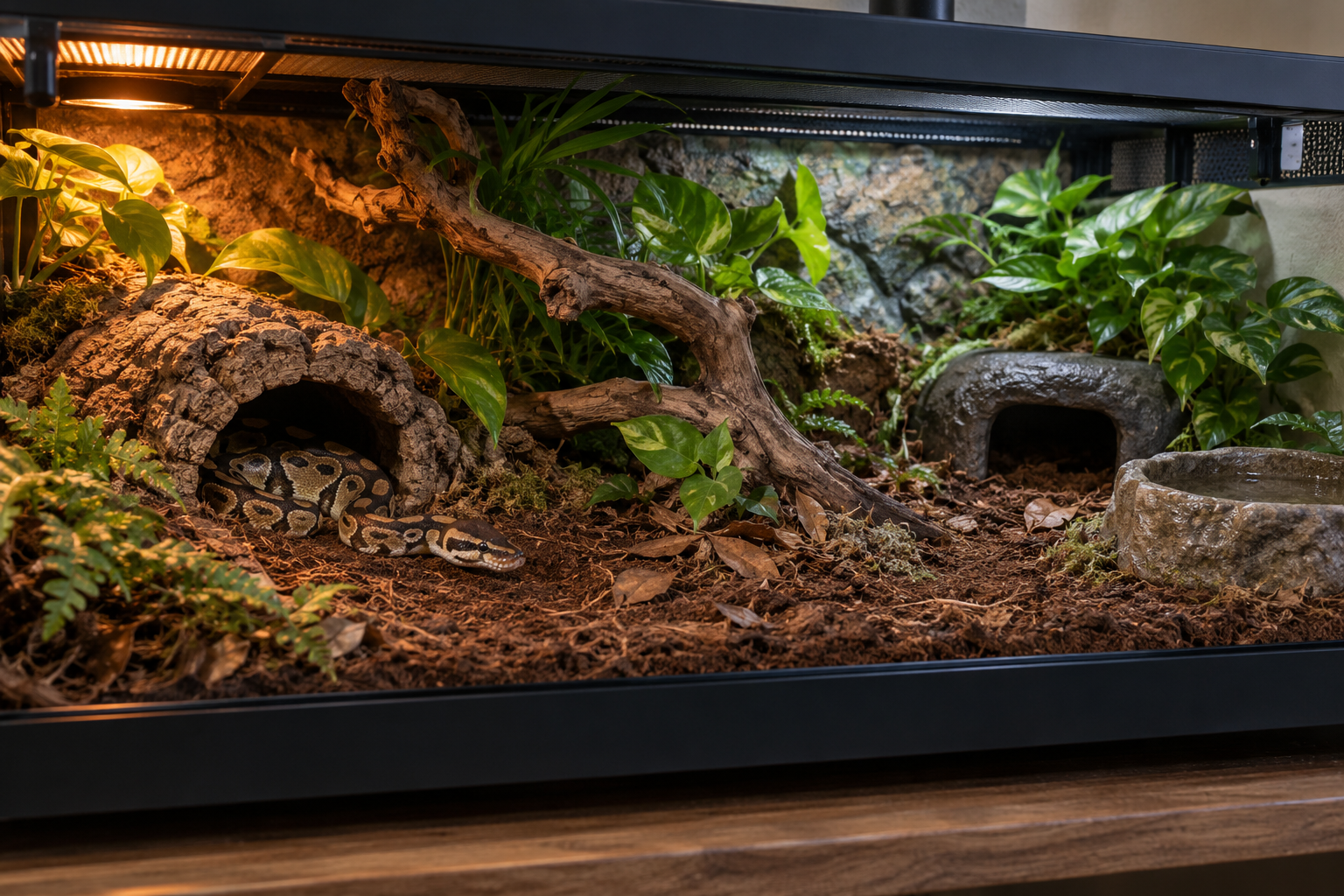
Provide snug hides on both warm and cool sides, plus a water bowl and secure cover. A hide should allow body contact on more than one side.
Use hides that contact the snake along the sides and top without pinching it. Place one in the controlled warm zone and one in the cooler zone, then add clutter or branches between them. Put a water bowl where it is stable and accessible. Confirm the lid and any cable openings are escape-proof before moving the snake in.
Everyday routine
Check hide cleanliness and water daily, and monitor the warm and cool areas with reliable instruments. Keep decor stable so it cannot fall during exploration.
What to check and common mistakes
If the snake stays exposed or refuses a hide, check its size and location. Feeding and shedding concerns belong in the full care sheet and veterinary guidance when needed.
Check under hides gently during cleaning, but avoid lifting them repeatedly just to see the snake. If one hide is never used, compare its size, darkness, and nearby activity with the preferred one. Persistent refusal to feed or abnormal breathing should not be blamed on hide placement alone.
Why two hides matter
Place one snug hide on the warm side and another on the cool side. Similar size and security matter: if only one hide feels safe, a ball python may remain there even when it would benefit from a different temperature. Give the snake a clear route between them with cover or clutter so crossing the enclosure does not require moving through open space. Keep the water dish accessible without blocking either retreat.
Check temperatures at the places the snake actually rests, not only in the air above them. After cleaning, return hides to predictable positions and verify that the lid, heating equipment, and thermostat remain secure. Track where the snake spends time over several days rather than reading too much into one hour. Refusal to use a hide can signal poor fit, exposure, or an unsuitable local temperature; adjust the enclosure before assuming the animal is simply picky.
Keep learning
Use the related guide for full species or product details. Check current store availability before ordering.
Have a care question? Ask our community.
Join Reptile Keepers USA, our free Facebook group for reptile, amphibian and invert keepers. Share your setups, get care help and swap feeder tips.
Join the free group