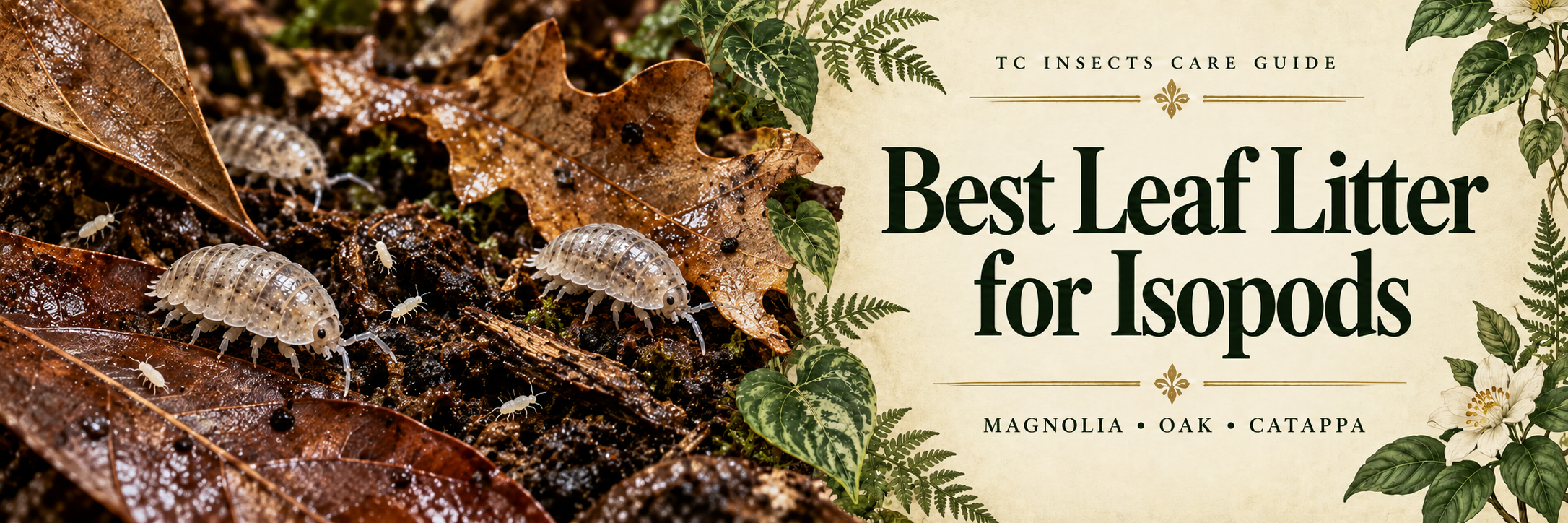
A practical guide to choosing, layering, and refreshing leaf litter for a healthy isopod colony.
The best leaf litter for isopods is a magnolia and oak base for the bulk of the layer, with a smaller amount of Indian almond, or catappa (Terminalia catappa), leaves mixed in for its reputation as a mild antifungal in damp bioactive substrate. Magnolia leaves are thick and waxy, so they resist breaking down and give you months of structure and cover, oak leaves are thinner and more palatable so your crew eats through them steadily, and catappa leaves break down fastest of the three, which is exactly why they work best as an addition rather than the whole layer. We stock the pieces of that base in our leaf litter and substrate lineup, and the right mix comes down to matching how fast you want the layer to turn over against how much hands-off longevity you want between refills. Get the ratio right and you get a litter layer that feeds the crew, resists mold, and still looks good weeks later.
Long-lasting structure plus steady, palatable breakdown
Tannins are a well-known mild antifungal in damp bins
Sooner in humid, heavily-stocked bins; top up, do not dump
The answer: layer it, do not pick just one
The best leaf litter for isopods is not a single species, it is a layered mix, because no one leaf does all three jobs you actually need: long-lasting structure, steady palatable food, and mold resistance. Magnolia and oak make up the bulk of that mix, and a smaller portion of Indian almond, or catappa, leaves rounds it out.
Think of it less like picking a favorite leaf and more like building a small ecosystem: a slow-to-break-down layer to hold shape and give cover, a moderate layer your crew actually eats through, and an accent layer that helps keep mold in check in a damp, humid bin.
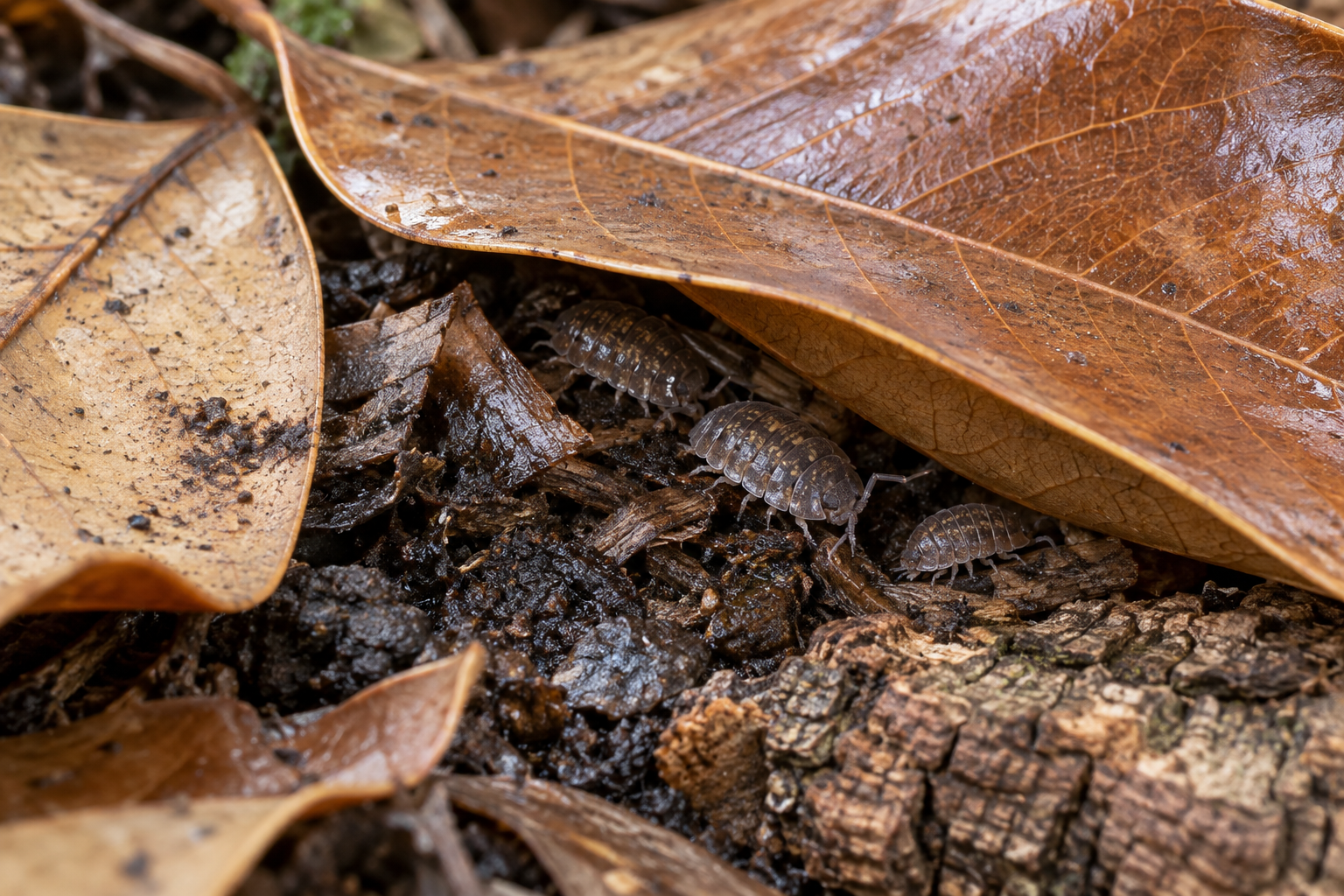
Magnolia leaves: the long-lasting structure layer
Magnolia leaves have a thick, waxy, leathery surface that resists waterlogging and does not turn to mush the way thinner leaves do, so a magnolia layer holds its shape for months rather than weeks. That makes it the backbone of the litter layer: cover for a shy colony, structure for springtails and isopods to move through, and a slow, steady surface that does not collapse into mud in a humid bin.
Because it lasts so long, your crew eats through magnolia leaves slowly, so do not expect it to disappear the way other leaf litter does. That is a feature, not a problem, and it is why we treat magnolia as the base layer rather than the main food source.
Oak leaves: the steady, palatable middle ground
Oak leaves are thinner than magnolia and break down at a moderate, steady pace, which means your isopods and springtails are actively feeding on them rather than just walking over them. Oak is also naturally tannin-rich, and many keepers believe those tannins offer some mild resistance to mold and bacteria in a damp bin, though that is more widely repeated hobby knowledge than a lab-tested claim.
It is also simply the most classic, widely available leaf litter in the whole terrarium hobby. Our own Assorted Hardwood Leaf Litter blend gives you that same steady, palatable middle ground in a ready mixed bag, so you are not out foraging for a specific tree.
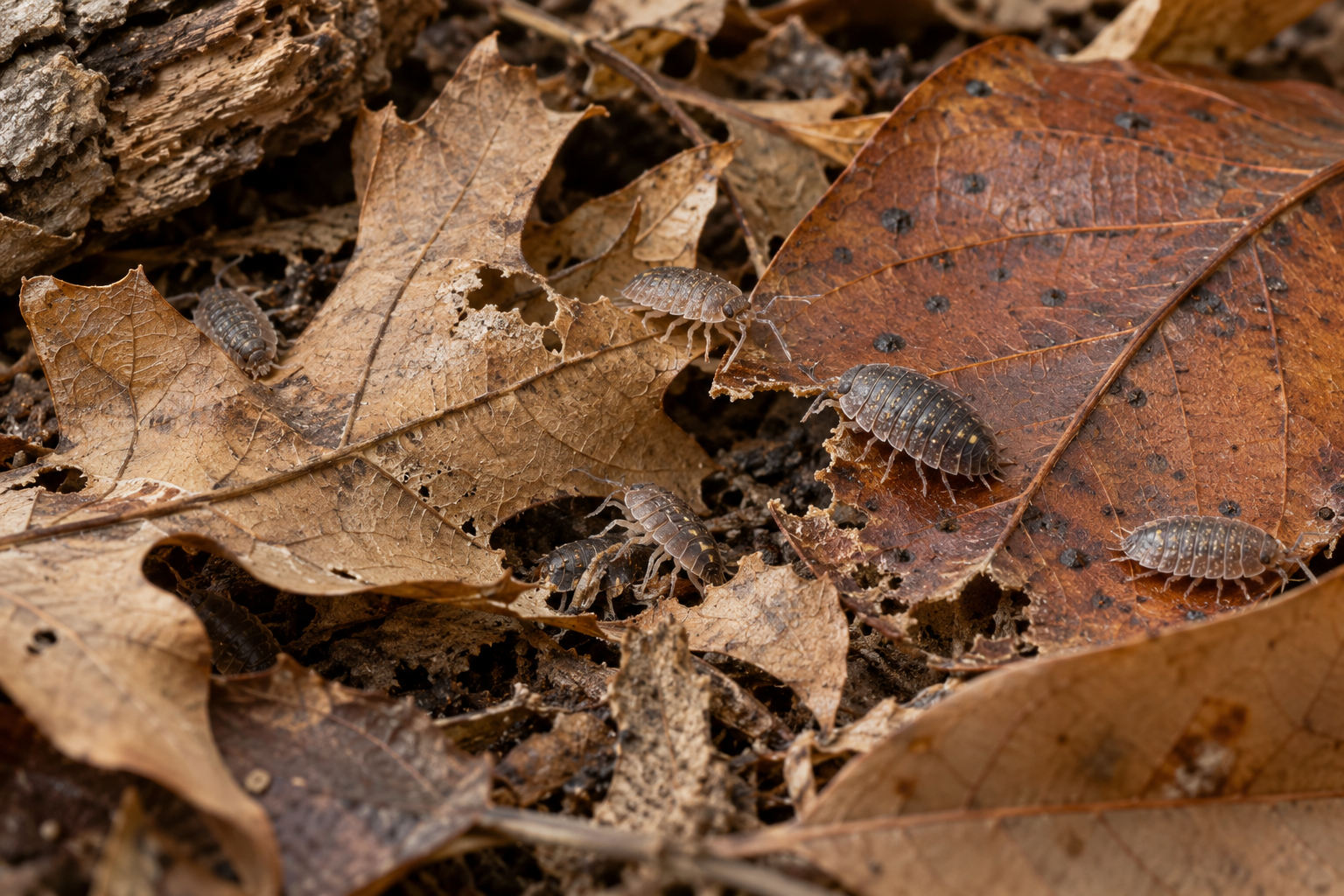
Indian almond (catappa) leaves: the antifungal add-in
Catappa leaves are borrowed straight from the aquarium and shrimp-keeping world, where they are well known for leaching tannins credited with mild antifungal and antibacterial effects in water. Isopod keepers add them to a bioactive bin for that same reputation, helping a humid substrate resist mold blooms, and they work the same way whether they are steeping in water or breaking down in damp leaf litter.
The catch is that catappa leaves are thin and break down the fastest of the three, so used as the entire litter layer you would be replacing them constantly. Mix in a smaller handful alongside your magnolia and oak base instead, and you get the antifungal reputation without the extra upkeep.
How much to use and what the ratio should look like
As a rough guide, aim for a mixed layer of roughly one to two inches covering the substrate, weighted mostly toward magnolia and oak with catappa as the smaller accent, maybe one part catappa to every four or five parts of the other two combined. Heavier litter is not automatically better, since a bin buried too deep can trap excess moisture and invite mold rather than prevent it.
If you are just getting a bin started, our isopod care guide covers how leaf litter fits alongside substrate and cover in a first setup, and our guide on isopods and springtails living together covers the other microfauna that shares this same litter layer.
Refresh schedule: watch the litter, not the calendar
Skip the fixed schedule and watch the litter itself. Once it looks mostly skeletonized, pulverized to dust, or thin enough that you can see bare substrate through it, it is time to top up, and you always add fresh litter on top rather than clearing out the old layer, since the partially broken down material underneath is still doing real work.
As a rough starting point, a well-stocked bin usually needs a top-up somewhere around every 4 to 8 weeks, faster in a warm, humid, heavily populated bin and slower in a cooler or lightly stocked one. If litter is vanishing unusually fast alongside other problems, our guide on why isopods die off covers the moisture and mold side in more depth.
Build Your Isopod Litter Layer
The exact leaves and substrate behind the answers above. Tap to add, then check out in one trip.
Frequently Asked Questions
Written by the TC INSECTS breeding team · Porter, Texas · Live Arrival Guarantee on every order
Have a care question? Ask our community.
Join Reptile Keepers USA, our free Facebook group for reptile, amphibian and invert keepers. Share your setups, get care help and swap feeder tips.
Join the free group