Explore the most eye-catching display isopods, from striped Armadillidium and patterned Porcellio to collectible Cubaris, and learn how to keep them visible in a healthy culture.
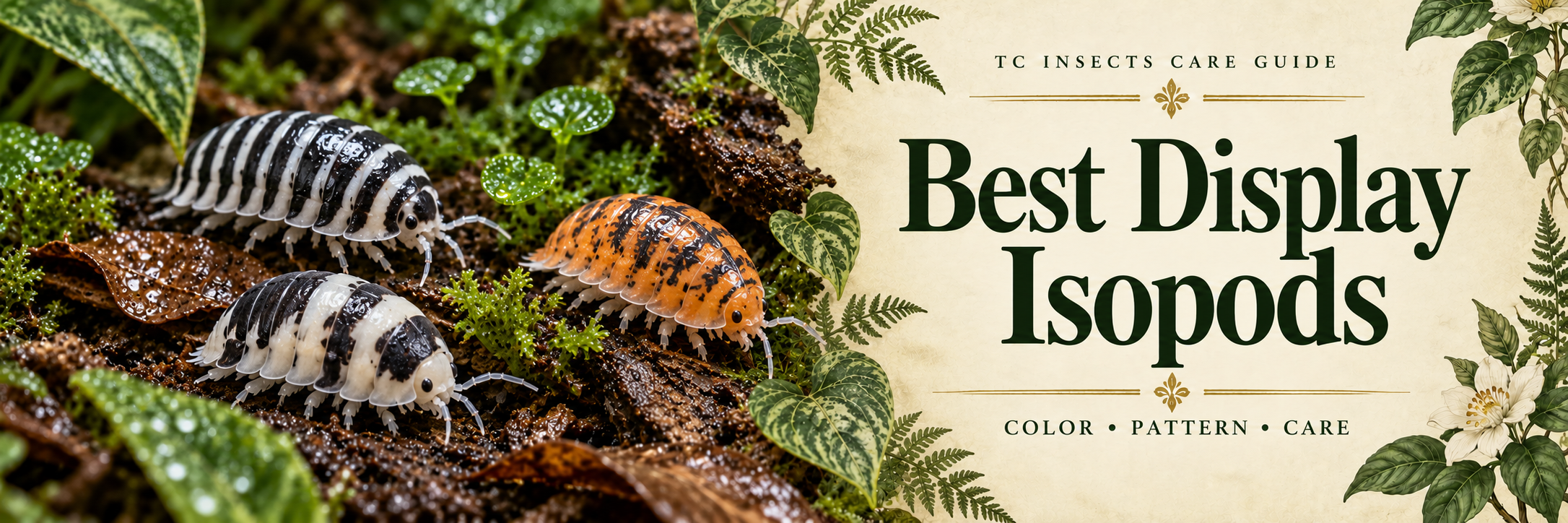
The best display isopods are the ones bred and selected for a bold, easy-to-see pattern rather than pure cleanup-crew hardiness, and a handful of genera lead that list: Cubaris morphs like Rubber Ducky and Panda King, striking Armadillidium like klugii and maculatum, and patterned Porcellio like ornatus and expansus. These are pet-only picks in the sense that you keep them to look at, not to bury in a bioactive tank where you will rarely see them. Getting the payoff means building the setup around visibility too: clear glass instead of an opaque tub, some open hardscape instead of deep leaf litter cover, and a moisture gradient so the isopods have a damp retreat without being buried in cover the whole time. Pick a showy species and hide it in a dark, cluttered bin, and you have just bought an expensive cleanup crew you never see.
Bred for pattern, not just cleanup speed
A view-through enclosure is half the point
Isopods pick their spot, and you get to watch
The showiest genera: Cubaris, Armadillidium, and Porcellio
Three genera do most of the heavy lifting in the display isopod world, each with a different look. Cubaris brings the boldest, most collector-driven patterns, morphs like Rubber Ducky and Panda King are instantly recognizable even to non-hobbyists, with a glossy, high-contrast look that photographs well and stands out against dark substrate. You will find the full range on our Cubaris isopods page.
Armadillidium brings a different kind of showy: species like klugii and maculatum roll into a tight, visible ball and carry bold color or striping, klugii often in vivid orange forms and maculatum in a striking zebra pattern. Porcellio adds size and texture to the mix, ornatus and expansus both grow larger than most beginner species and carry a marbled or mottled look that reads as more dramatic than a plain gray isopod.
Cubaris: Rubber Ducky and Panda King
Rubber Ducky is one of the most requested Cubaris morphs for exactly this reason, a smooth, glossy pattern that holds up well under enclosure lighting and reads clearly even from outside the glass. Panda King leans harder into contrast, with bold black and white patterning that is unmistakable even at a glance, which is exactly what you want in an isopod you are keeping to look at rather than to work a substrate.
Both are slower growing and longer lived than a typical cleanup-crew species, which is part of the trade-off for the pattern, and part of why a display culture is usually smaller and more curated than a bulk cleanup crew. If you want to compare more Cubaris options by how forgiving they are to keep alongside how they look, our beginner Cubaris guide ranks the more approachable morphs.
Armadillidium klugii and maculatum
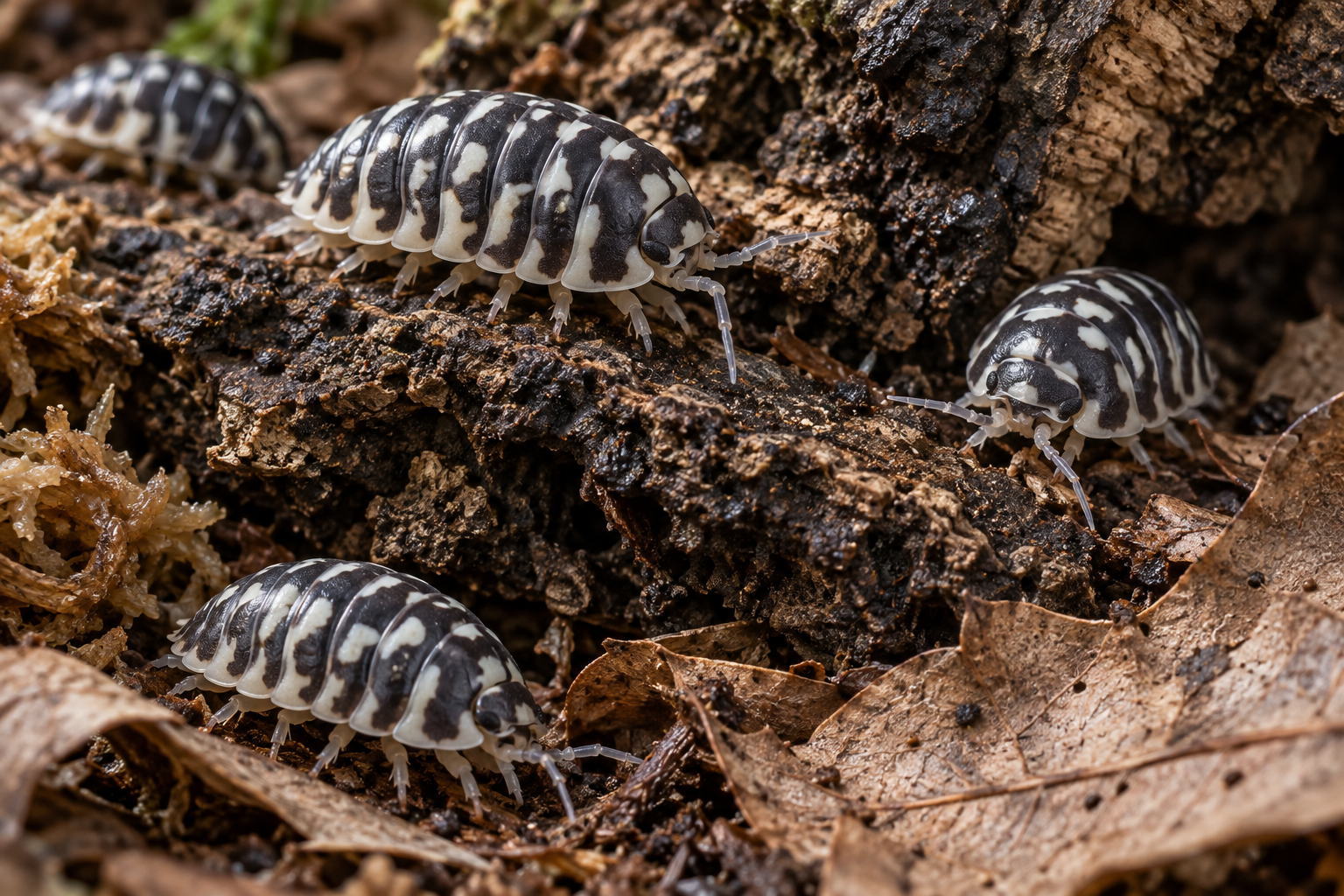
Armadillidium klugii shows up in several color forms, and the brighter orange morphs in particular are easy to spot even when the isopod is rolled up defensively, which most Armadillidium do when startled. That defensive roll is actually a display bonus rather than a downside, since a tightly curled, vividly colored ball is an easy, satisfying thing to spot in the enclosure.
Armadillidium maculatum, often sold under names like Zebra, carries bold striping down its back that stands out clearly against plain substrate. Both species are kept the same general way as other Armadillidium, and our Armadillidium isopods page has the wider color range if one pattern catches your eye over another.
Porcellio ornatus and expansus for size and texture
Porcellio ornatus, sometimes sold as Witch's Brew, carries a marbled, mottled pattern across a body larger than most beginner isopods, and that larger size alone makes it easier to actually see and appreciate in a display setup. Porcellio expansus pushes size further still, it is one of the larger isopods commonly kept, with a rougher, more textured shell that reads differently under enclosure lighting than the smoother Cubaris and Armadillidium patterns.
Because both species run larger, they also need a bit more room per isopod than a Dwarf White or Powder Orange colony would, so plan a display culture's footprint with that mature size in mind rather than sizing it like a beginner starter bin.
Setting up a culture where you can actually see them
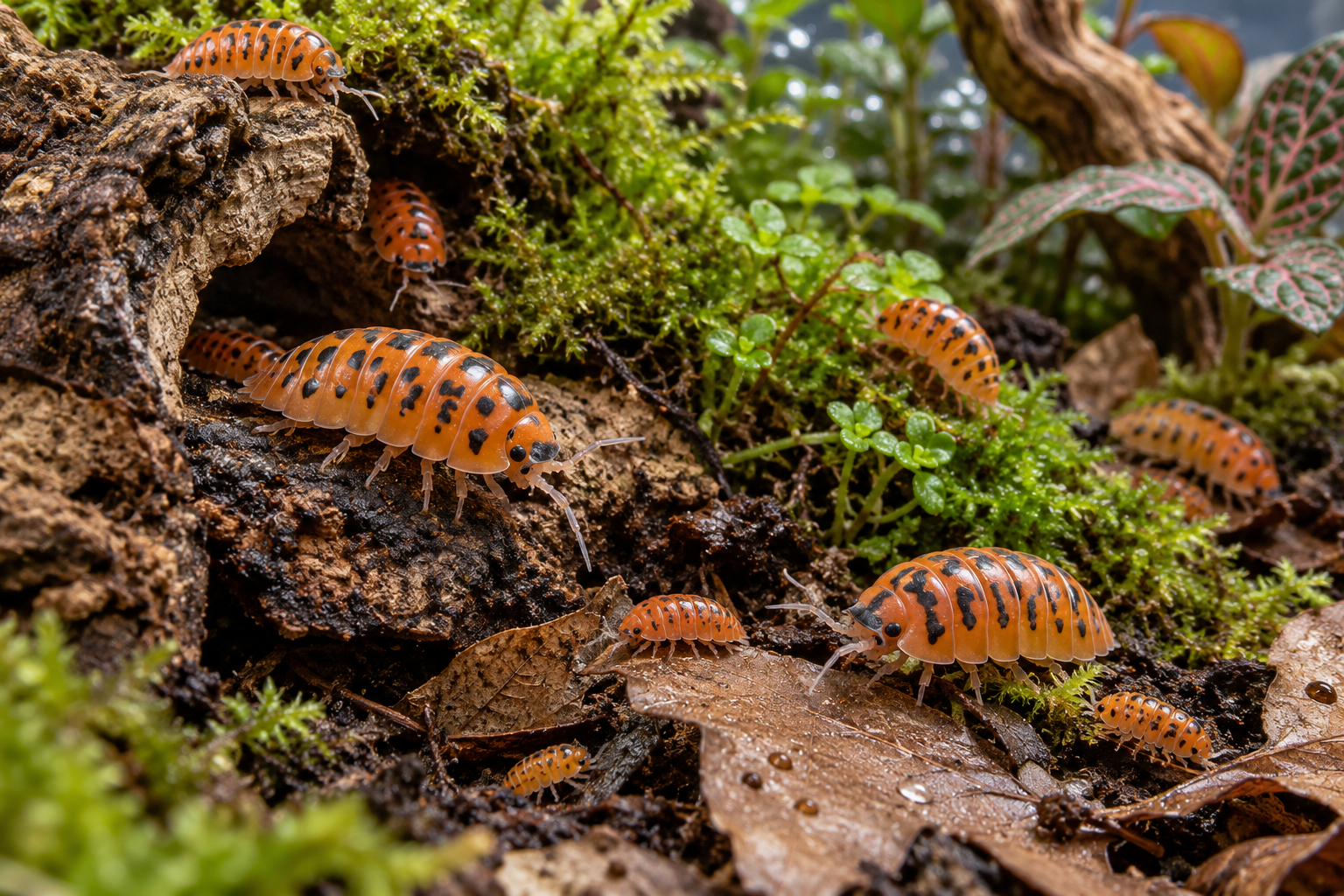
A showy isopod buried under two inches of leaf litter in an opaque tub is functionally invisible, so the enclosure matters as much as the species. Start with clear glass or acrylic instead of a solid-sided tub, keep the hardscape a little more open than you would for a pure cleanup crew, cork bark and rock work that leaves visible surfaces rather than wall-to-wall litter cover, and light the enclosure enough to actually show the pattern off.
Build in a moisture gradient rather than an evenly damp bin: a clearly damp zone on one side and a drier zone on the other lets the isopods choose their spot instead of hiding in cover to escape uniform dampness, and that choice is often what brings them out where you can watch. Our substrate and hardscape supplies have what you need to build that kind of setup.
The Showpieces: Cubaris, Armadillidium, Porcellio
The patterned, higher-end picks behind the guide above. Tap to add any of them, then send the whole order to your cart at once.
Frequently Asked Questions
Written by the TC INSECTS breeding team · Porter, Texas · Live Arrival Guarantee on every order
Have a care question? Ask our community.
Join Reptile Keepers USA, our free Facebook group for reptile, amphibian and invert keepers. Share your setups, get care help and swap feeder tips.
Join the free group