Fruit Fly Cultures for Genetics Labs: Culture and Experiments

D. melanogaster at 75 to 78 F; hydei runs closer to 3 weeks
Restart cups every 2 to 3 weeks to keep flies flowing
Females collected within 8 hours of emerging are unmated
Fast Generations, Clean Data
A fruit fly culture (Drosophila melanogaster) gives a genetics lab a new generation every 10 to 14 days at about 75 to 78 F, hundreds of flies per 32 oz cup, and crosses students can score under a hand lens, which is why it has been the standard genetics organism for over a century. Flightless strains make sorting and counting far easier than wild-type flies, and a culture kit with dry media lets an instructor start a fresh cup in five minutes. This guide covers generation timing, choosing melanogaster versus the larger hydei, media and cups, keeping cultures productive for 4 to 6 weeks, collecting virgin females for crosses, and building a semester schedule that never runs out of flies.

Keep Cultures Productive
Fresh media, clean transfers and a predictable schedule keep flies available for every cross.
Melanogaster is fast; hydei buys more handling time.
New cups prevent crashes and moldy media.
Use the short post-emergence window for clean crosses.
Why fruit flies are the genetics organism
A genetics lab needs an animal with a short generation, lots of offspring, visible inherited traits, and a tiny footprint, and no animal matches the fruit fly. From egg to adult takes about 10 days at 78 F, a single female lays hundreds of eggs, and traits like eye color, wing shape, and body color can be scored under a hand lens. A quart-sized culture cup on a shelf holds a whole population. That is why the fly has been used for inheritance, mutation, and development research for more than a hundred years, and why it still anchors high school and college genetics units.
Flightless and wingless strains changed the classroom side of this. Standard fruit flies fly, which means anesthesia, escapes, and flies in the hallway. Flightless strains walk, so students can tip a few onto a white card, sort them with a brush, and count without chilling or gas. The same strains are what reptile and dart frog keepers buy as feeders, which is why our cultures are sold from the fruit fly shop in feeder cups; the biology is identical. Our flightless versus wingless comparison explains the two mutations, which is itself a lesson.
Melanogaster or hydei for a lab?
Drosophila melanogaster is the genetics standard: small, about 3 mm, with a 10 to 14 day generation and a century of published traits and crosses. Choose it for any inheritance, life cycle, or population lab and for anything that has to match a textbook protocol. Drosophila hydei is about 3.5 to 4 mm and much bulkier, easier to see and handle, and slower, closer to 3 weeks per generation. Choose it for younger students doing anatomy, behavior, or life cycle observation where a bigger fly and a longer larval stage help.
Both are easy to keep in the same cup system, and a course that runs both can compare life histories directly. For crosses, stick with melanogaster in flightless form; for a first-week look at larvae, pupae, and adults under a lens, a hydei cup gives the clearest view. Culture care for either is covered in our fruit fly culture care guide.
Cups, media, and keeping cultures productive
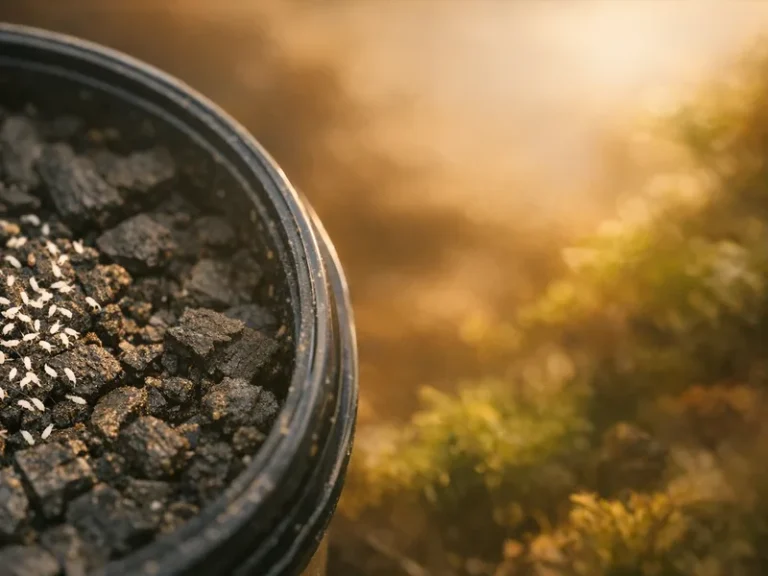
A lab culture is a 32 oz cup with a ventilated lid, a layer of moist medium on the bottom, a wad of excelsior or coffee filter for the flies to climb and pupate on, and a few dozen adults to seed it. Prepared dry media just needs water; mix it firm rather than soupy, because a wet culture drowns larvae and grows mold. Keep cups at 75 to 78 F for a predictable schedule, away from direct sun. Larvae appear in days, pupae on the excelsior within a week, and new adults begin emerging around day 10 to 14.
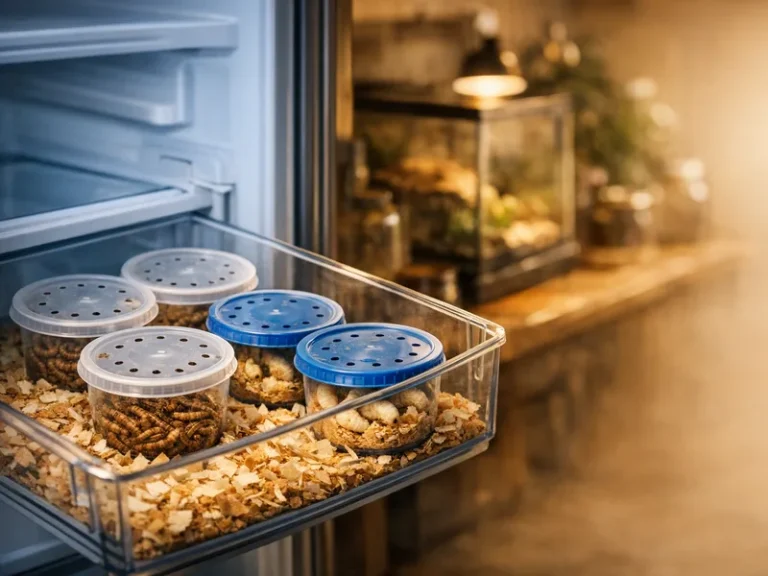
A cup produces heavily for 2 to 3 weeks and then declines as the medium is used up, which is why lab planning is about a rolling schedule rather than a single culture. Start a fresh cup from each producing cup every 2 weeks by moving 30 to 50 adults onto new medium, and always keep two lines going in case one cup molds or dries. Mites are the classic culture killer; keep cups off shared shelves with old cultures, and read how to keep cultures producing longer and mite-free before the semester starts.
Collecting virgin females for a cross
A genetic cross only works if the females have not already mated, and fruit fly females store sperm, so this step decides the experiment. Females do not mate for roughly the first 8 hours after emerging from the pupa, so the method is simple: clear every adult out of a culture cup, then collect the females that emerge over the next 6 to 8 hours and hold them separately. Do it in the morning and again in the afternoon, and you have virgins by the end of a school day. Newly emerged flies are pale, soft, and slow, which makes them easy to spot.
Sexing under a lens: males are smaller, with a darker, rounded abdomen tip and a dark band pattern that ends in a solid black tip; females are larger with a pointed, striped abdomen. Set up each cross with 3 to 5 virgin females and 3 to 5 males in a fresh cup, remove the parents after a week, and score the first offspring about 2 weeks after the cross was set up. A monohybrid cross scored over two generations fits inside about 5 weeks.
A semester schedule that never runs out of flies
Weeks 1 to 2: cultures arrive, students learn to handle flies
Weeks 3 to 4: collect virgins and set up the parental cross
Weeks 5 to 6: score the first generation, set the second cross
Weeks 7 to 8: score the second generation and analyze
Work backward from the lab dates. Order cultures 3 weeks before the first lab so you have a second generation of adults in hand, and a culture kit with media so restarts cost nothing. The rhythm below assumes cups at 75 to 78 F.
Start two fresh cups from each arriving culture. Use the first lab for anatomy, sexing, and life cycle: larvae, pupae, and adults are all present in a 2 week old cup.
Clear cups in the morning, collect virgins through the day, set crosses in fresh cups the same afternoon. Remove parents after 7 days.
Count and record phenotypes from the first cross, then cross those offspring to produce the second generation. Keep restarting maintenance cups every 2 weeks in the background.
Pool class counts, test ratios, and write it up. By now the maintenance line has been restarted three times and is ready for the next section or next term.
Practical notes and what to avoid
Flightless flies still walk fast; tip them onto a white index card inside a shallow tray so escapees are caught, and work with a fine brush, never forceps. If you need flies fully still for a photograph, 10 minutes in a refrigerator does it and they recover in minutes. Label every cup with strain, date started, and the cross it holds; unlabeled cups are the most common way a genetics lab loses a generation. Keep medium firm, keep cups warm, and never let a cup dry out completely.
Do not mix strains in maintenance cups, and do not let a mite-infested cup sit next to clean ones. At the end of the term, freeze retired cups for a day before discarding; never release cultures. For a second lab organism with a similar shelf-culture rhythm and no flying at all, bean beetles run behavior and population experiments in a jar of dry beans, and the two together cover most of an introductory course.
Keep reading: Mini Mealworms vs Fruit Flies for Hatchlings: Which First, When to Switch
The Genetics Lab Fly Kit
Flightless melanogaster for crosses, larger hydei for anatomy and life cycle, and a kit of media and cups for restarts all semester.
Frequently Asked Questions
How long is the fruit fly life cycle?+
About 10 to 14 days from egg to adult for Drosophila melanogaster at 75 to 78 F: eggs hatch within a day, larvae feed for about a week, pupae take 4 to 5 days, and adults emerge ready to mate within hours. Cooler rooms stretch it to 3 weeks. Drosophila hydei takes closer to 3 weeks even when warm.
Which fruit fly is best for a genetics lab?+
Drosophila melanogaster in a flightless strain. It has the fastest generation, a century of documented traits and crosses, and flightless flies can be sorted on a card without anesthesia. Use the larger Drosophila hydei for anatomy and life cycle observation where a bigger fly and a longer larval stage help younger students.
How do you collect virgin female fruit flies?+
Clear all adults from a culture cup, then collect the females that emerge over the next 6 to 8 hours and hold them in a separate cup. Females do not mate for roughly the first 8 hours after emerging, so morning and afternoon collections on one school day yield virgins for a cross set up that afternoon.
How long does a fruit fly culture last?+
A cup produces heavily for 2 to 3 weeks and fades over 4 to 6 weeks as the medium is used up. Start a fresh cup from each producing cup every 2 weeks by moving 30 to 50 adults onto new medium, and keep two lines going so a molded or dried cup never ends the lab.
How far ahead should I order fruit flies for a lab?+
About 3 weeks before the first lab, so a second generation of adults is emerging on lab day. Start two cups from each culture on arrival, keep them at 75 to 78 F, and use a culture kit with dry media so restarts every 2 weeks cost only a few minutes.
Do I need to anesthetize flightless fruit flies?+
No. Flightless flies walk instead of flying, so students can tip a few onto a white card inside a tray and sort them with a fine brush. If you need flies completely still for a photo, 10 minutes in a refrigerator slows them and they recover within minutes at room temperature.
Continue With Confidence
Have a care question? Ask our community.
Join Reptile Keepers USA, our free Facebook group for reptile, amphibian and invert keepers. Share your setups, get care help and swap feeder tips.
Join the free group