How to Start a Dermestid Beetle Colony From a Starter Culture

Faster near 85 F, much slower in a cool garage
Two starter cultures in two bins is the safe way
Fed steadily and kept warm; start in spring for fall
Build a Healthy Dermestid Colony
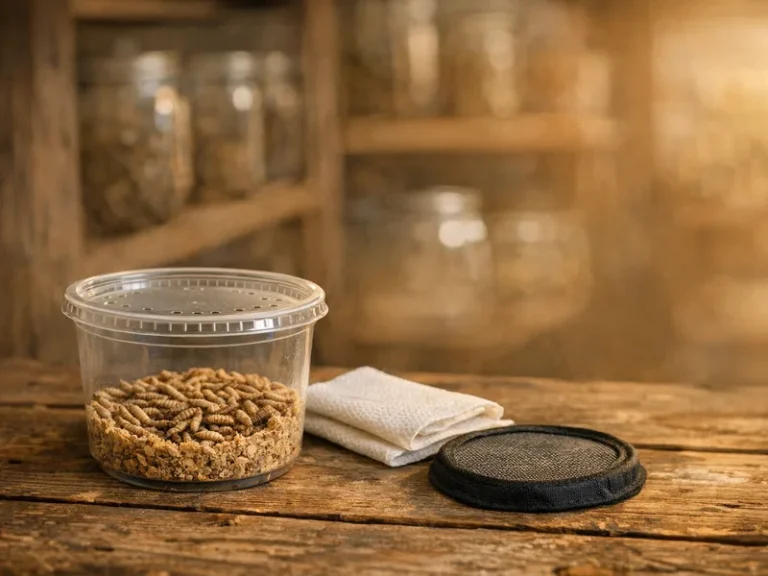
To start a dermestid beetle colony, put a few hundred larvae (Dermestes maculatus) in a smooth-walled plastic tote with a few inches of dry bedding, keep it dark and warm near 75 to 85 F with low humidity, feed it dried meat or dry dog food a little at a time, and leave it alone. Larvae become beetles in roughly 5 to 6 weeks, beetles lay hundreds of eggs, and a colony fed steadily can grow from hundreds to tens of thousands over a few months. That is the size that cleans a deer skull in days. This guide is the build: container, bedding, heat, food, the timeline, and the three things that kill new colonies.

Warm, Dry and Steady
A starter colony grows when the enclosure stays dry, dark, ventilated and consistently fed.
Choose a secure tote that larvae cannot climb.
Dry bedding and ventilation matter more than misting.
Steady protein lets the population multiply.
What you are actually building
A dermestid colony is a self-running population of beetles and larvae in a box, where the larvae do the eating and the adults do the breeding. Larvae are bristly, brown, about a third to half an inch long, and they are the workforce. Adults are dark oval beetles about a quarter inch long that lay eggs in the bedding and on food. A healthy colony has every stage present at once, so it never runs out of hungry larvae. Your only jobs are heat, dryness, darkness, food, and not disturbing it.
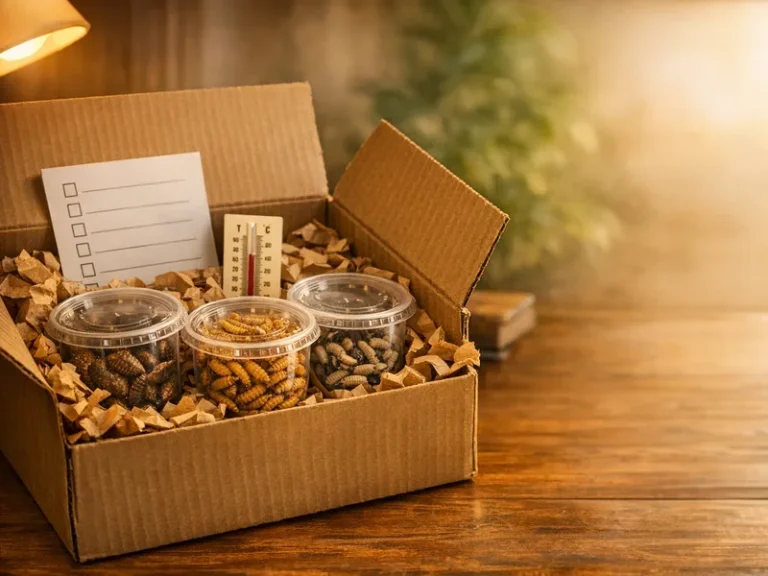
Buy larvae rather than trying to collect wild beetles; a purchased starter is one species, free of the mites and moths that ride along with wild-caught insects, and ready to breed. Our dermestid larvae are the same colony reptile keepers use as a bin cleanup crew. Order two cultures, both on the free shipping list, and run two bins from day one. A single colony that crashes in month two sets you back a season; a second bin is cheap insurance.
The container and bedding
Use a plastic tote with smooth vertical walls that larvae cannot climb, at least 10 gallons for a starter and much larger once the colony is working skulls. Drill or cut a ventilation panel in the lid and cover it with fine metal mesh; adults can fly in warm conditions and larvae will chew through window screen and thin plastic, so metal mesh, not fabric. Dermestid larvae also bore into soft materials to pupate, which is why foam coolers and thin-walled bins fail.
Bedding gives larvae somewhere to burrow and pupate. Two to four inches of shredded paper, cotton batting, wood shavings, or a dry roach substrate all work; many keepers layer cotton batting on top of shavings so pupating larvae have a soft place to dig. Keep the bedding bone dry. Add a few pieces of cardboard or egg carton for cover. Nothing green, nothing damp, and no water dish ever; the larvae get moisture from their food.
Heat, humidity, and darkness
Dermestids breed and eat fastest between about 75 and 85 F. In a heated house, room temperature works but everything runs slower. In a garage or shed, put a reptile heat mat under one end of the bin on a thermostat set near 80 F so the colony can choose its spot, and never use a lamp, which dries and lights the bin at the same time. Do not let the bin get hot enough to sweat inside the lid; condensation is moisture, and moisture is the enemy.
Humidity should stay low, roughly what a dry garage or a heated room gives you. A colony in a damp basement molds and crashes. Keep the bin dark: the beetles are nocturnal, breed in the dark, and a colony that is opened and lit every day stops laying. Check it briefly once a day for food, then close the lid. If you want to watch them work, a red bulb aimed at a small window in the lid lets you look without bothering them.
Feeding a colony between skulls
A colony needs meat protein constantly, not just when a skull shows up. Between skulls, feed dried meat scraps, freezer-burned game trimmings that have been air-dried, chicken bones with a little dried meat left on, or dry dog food. Feed small amounts and remove anything the larvae have not finished in a day or two so it does not mold. Larvae that go hungry turn on the pupae and eat them, and a starving colony can shrink by half in a week.
Skull scraps are the natural fuel once you are cleaning, but a new colony should get its first small skulls, squirrels, birds, and fish heads, only when it is a few thousand larvae strong. Prep every piece the same way you would a trophy skull: skinned, trimmed, and air-dried to a jerky texture, as described in dermestid beetles for skull cleaning. Wet food is the single most common way a new colony dies.
The timeline from starter to skull-cleaning colony
Weeks 1 to 3: settle and eat
Weeks 4 to 8: the first beetles
Months 2 to 4: exponential growth
Month 4 onward: working size
Expect the growth to look slow for the first month and then take off. The numbers below assume a warm bin near 80 F and steady food.
Larvae burrow into the bedding, feed at night, and molt several times. You will see shed skins and frass but not many more larvae. Some of the largest larvae pupate in the cotton or shavings within the first two weeks. Feed lightly, keep it dark, and resist the urge to dig.
Adults emerge from pupae roughly 5 to 6 weeks after you started, mate, and lay eggs on the food and in the bedding. Eggs hatch within days into tiny larvae you will barely see. This is the point where a colony either takes off or fails, and the difference is almost always food: keep protein in the bin every day.
With every stage present, the population climbs fast. The bin gets noticeably busier at night, food disappears overnight, and the frass dust builds up. Move to a bigger bin before the colony is crowded, and split it into the second bin if you have not already. A colony that started with a few hundred larvae in March can be tens of thousands strong by August.
When a prepped squirrel or fish head disappears in a day or two, the colony is ready for a deer skull. From here, skulls become the main food source and you supplement between them. Keep the second bin small and separate as a permanent backup.
The three ways new colonies die
First, moisture: a wet skull, damp bedding, condensation, or a basement. Everything in the bin should feel dry to the touch. Second, starvation and light: a colony fed only when a skull appears, or opened and lit every day, stops breeding and eats its own young. Third, pests: grain mites and dermestid-eating parasites ride in on wild-caught insects or on old bedding, so start from a clean purchased culture, use fresh bedding, and never add insects you found outdoors.
One last consideration is where the bin lives. Dermestids eat wool, feathers, hides, and taxidermy, and adults can fly in warm weather, so the colony belongs in an escape-proof bin in a garage, shed, or outbuilding, not in a closet in the house. Give it dry air, warmth, darkness, and a steady diet, and it will out-breed your ability to feed it, which is exactly the problem a skull cleaner wants to have. Keepers who run it as a cleanup crew in a dubia roach bin follow the same rules at a smaller scale.
The Dermestid Colony Starter Kit
Two starter cultures for two bins, dry substrate to burrow in, and chow to keep the colony fed until the first skull.
Frequently Asked Questions
How many dermestid beetles do I need to start a colony?+
A few hundred larvae is a normal starter, and two starter cultures in two separate bins is the safe way to begin. It takes a few months of steady feeding near 80 F for that to grow into the tens of thousands needed to clean a deer skull quickly, so start in spring if you want a working colony by fall.
What do dermestid beetles eat besides skulls?+
Dried meat scraps, air-dried game trimmings, chicken bones with dried meat, and dry dog food. Feed small amounts daily and remove anything uneaten after a day or two. Never feed wet flesh or vegetables; wet food molds and kills the colony, and a starving colony eats its own pupae.
How long does it take dermestid larvae to become beetles?+
Roughly 5 to 6 weeks at 75 to 85 F, longer in a cool room. Adults then lay hundreds of eggs that hatch within days, so once the first generation of beetles emerges the colony grows quickly as long as food is always available.
What kind of container do dermestid beetles need?+
A smooth-walled plastic tote the larvae cannot climb, with a ventilation panel covered in fine metal mesh, because larvae chew through fabric screen and thin plastic. Add 2 to 4 inches of dry bedding such as shredded paper, cotton batting, or roach substrate for burrowing and pupating, and keep it dark.
Can I keep a dermestid colony in my house?+
It is not a good idea. Adults can fly in warm weather, larvae bore into soft materials, and the beetles eat wool, feathers, hides, and taxidermy. Keep the colony in an escape-proof bin in a garage, shed, or outbuilding, away from any mounts, and use a heat mat on a thermostat if the space runs cool.
Why is my new dermestid colony not growing?+
Almost always one of three things: the bin is damp, it is too cold, or the larvae are not getting steady protein. Check that bedding is bone dry, the warm end reads 75 to 85 F, and there is dried meat or dog food in the bin every day. Also stop opening and lighting the bin; the beetles breed in the dark.
Continue With Confidence
Have a care question? Ask our community.
Join Reptile Keepers USA, our free Facebook group for reptile, amphibian and invert keepers. Share your setups, get care help and swap feeder tips.
Join the free group