Each has a different failure mode and a different fix
Of noticing a stuck spot, before it becomes a bigger problem
Humidity only. Forcing an eye cap risks the eye itself
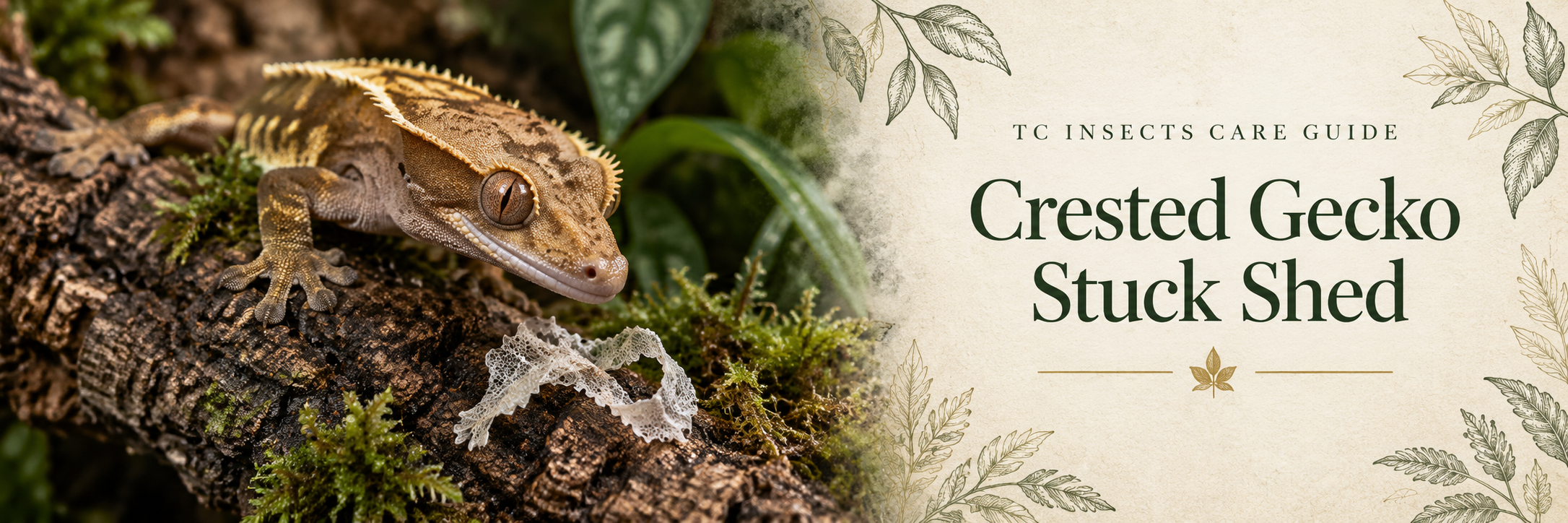
Retained shed on a crested gecko (Correlophus ciliatus) is not one problem, it is three, and each carries a different risk: toes can lose circulation, a stuck eye cap gets rubbed raw since a crestie cannot blink it clear, and the tail tip matters because this species never regrows a dropped tail. A warm, humid soak started within 24 to 48 hours of noticing a problem fixes most cases before they turn serious, and there is one hard rule throughout, never touch or pull at an eye directly. Prevention is a humidity cycle, not constant wet, which our crested gecko care sheet already lays out.

Toes: the circulation risk
A ring of dry retained shed around a toe tightens as it dries and can cut off circulation within days, the same risk that shows up in any gecko species, and the fix is the same regardless. Check toes under bright light during and after every shed.
Soak in shallow, lukewarm water for 10 to 15 minutes, then roll the softened ring free with a damp cotton swab, always toward the tip of the toe. A toe that is already dark, swollen, or cold needs an exotics vet the same day. Never pull, and never reach for tweezers.
Eye caps: why a crestie can't just blink it away
Unlike a leopard gecko, a crested gecko has no eyelids, so a retained eye cap cannot be blinked clear and instead sits there getting rubbed against branches and leaves. Left in place, it invites irritation and infection underneath, and vision on that side suffers in the meantime.
The fix is humidity, not fingers: raise humidity toward the top of the normal cycle and let the gecko's own eye-licking behavior work the cap loose over a soak or two. Never touch, rub, or attempt to peel an eye cap yourself. If it has not released within a day of consistent high humidity, that is an exotics vet visit, since forcing it risks the eye itself.
Tail tip: why this one never grows back
A crested gecko's tail is not like a leopard gecko's fat-storage tail; it drops through autotomy at the slightest excess stress and, unlike many other geckos, never regenerates. A tail tip with retained shed rarely threatens the tail's survival the way a toe ring threatens circulation, but a tight ring left in place can still affect the very tip.
Handle a shedding crestie gently and avoid grabbing or restraining by the tail at any point during this process. A humid soak addresses tail-tip shed the same way it does a toe, but there is little urgency here compared to the other two spots, since it is not a circulation risk in the same way.
The safe humid-soak routine, with a stop rule
Warm a shallow container of water to roughly 85 to 90°F and let the gecko sit for 10 to 15 minutes, or use a plastic tub with a damp paper towel for a 20 to 30 minute humid box if you would rather not have it sitting in water directly. Either method softens retained shed enough to work loose with gentle contact.
Give any spot that does not release a second attempt after about three hours, not immediately back to back. If two spaced attempts do not clear a toe or an eye cap, or if 24 to 48 hours pass with no improvement anywhere, stop and call an exotics vet rather than continuing to try at home.
Prevention is a humidity cycle, not constant wet
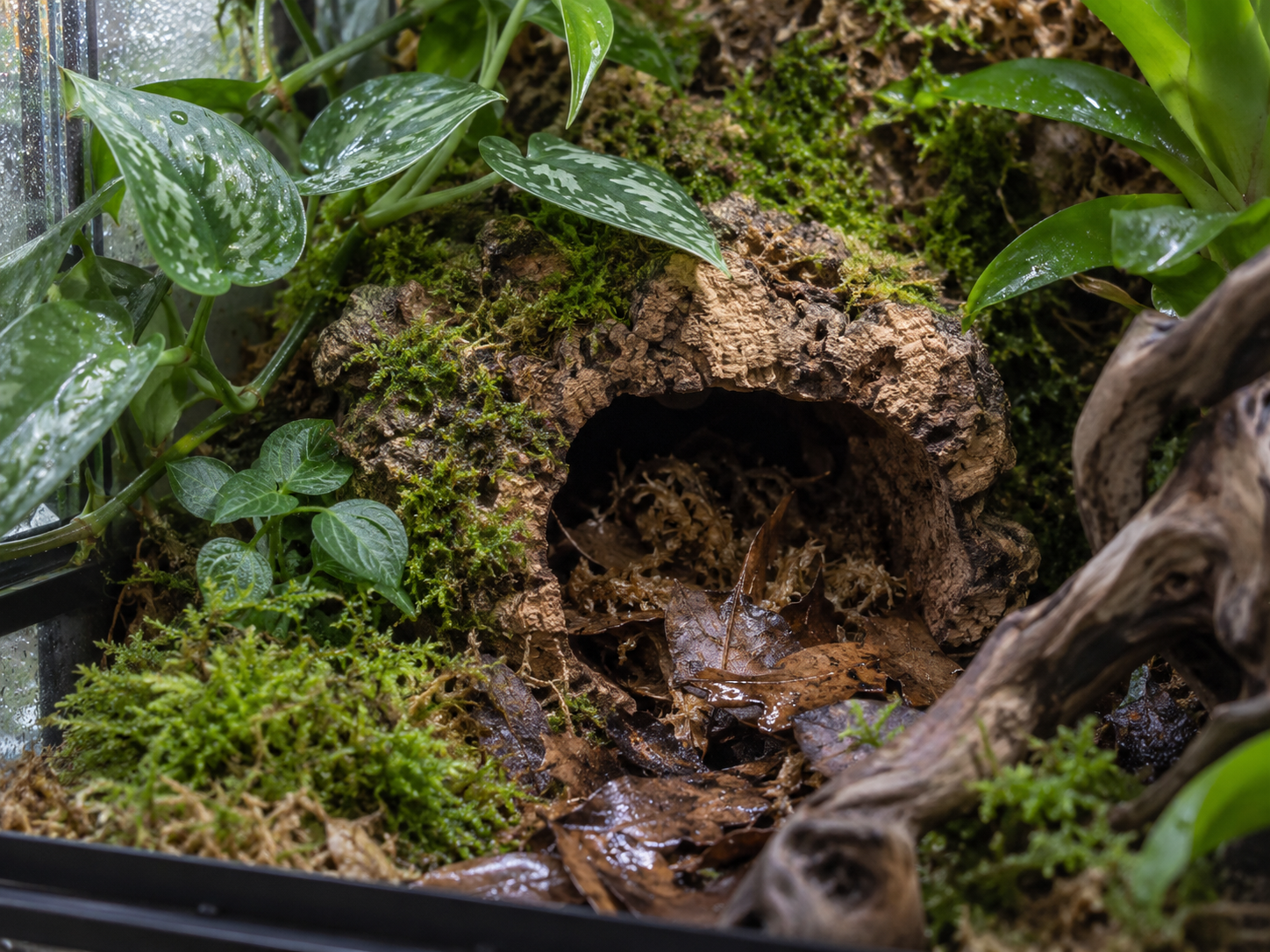
A crested gecko sheds cleanly when humidity swings the way it would in the wild: misted up toward 80 percent at night, then allowed to dry back down through the day, roughly the cycle in our care sheet. Constant, unchanging dampness does not prevent stuck shed the way people assume; the cycle itself is what keeps skin supple enough to come off cleanly.
A reliable hygrometer, not a guess, is how you confirm the swing is actually happening rather than the enclosure sitting flat at one humidity all the time. A bioactive floor with springtails and a small isopod crew smooths that cycle out between mistings far better than misting bare substrate alone, since living substrate holds and releases moisture instead of drying out completely between waterings.
Building the crew that holds the cycle
For a crested gecko, the right cleanup crew is small and calm: Powder Blue or Powder Orange isopods paired with a tropical springtail culture, never the large, protein-hungry species that suit a bigger, tougher animal. Our crested gecko cleanup crew guide covers sizing for a planted vertical enclosure, sized with our cleanup crew calculator, and our bioactive combos pair a springtail culture with an isopod colony in one order.
Seed the crew weeks before it needs to hold up under a full shedding cycle, not the week you notice a stuck spot. And if your gecko goes quiet on food for a day or two while working through a shed, that alone is not a reason to worry on its own, as long as it is otherwise active and holding its weight.
Crested Gecko Stuck Shed: Which Spot, What to Do
The Shed Cycle Kit
A springtail culture and small tropical isopods that keep the humidity cycle steady between mistings.
Written by the TC INSECTS breeding team · Porter, Texas · Live Arrival Guarantee on every order
Have a care question? Ask our community.
Join Reptile Keepers USA, our free Facebook group for reptile, amphibian and invert keepers. Share your setups, get care help and swap feeder tips.
Join the free group