Springtail Temperature Guide by Species

Normal indoor room temperature covers nearly every cultured species
The point where cultures crash, especially combined with condensation
Reproduction slows or stops, but a cold culture is usually recoverable
Stable room temperatures for steady cultures
Most cultured springtails do best between about 65 and 78 F, which is normal room temperature, with temperate species like the white springtail (Folsomia candida) tolerating the cooler end and tropical species preferring the warmer end, and sustained heat above the mid 80s F is what actually kills cultures. Cold is a different story: a chilled culture usually just slows down and stops reproducing rather than dying outright, so it is often recoverable once the room warms back up. Here are the real numbers, species by species, since almost nobody in this hobby publishes them.
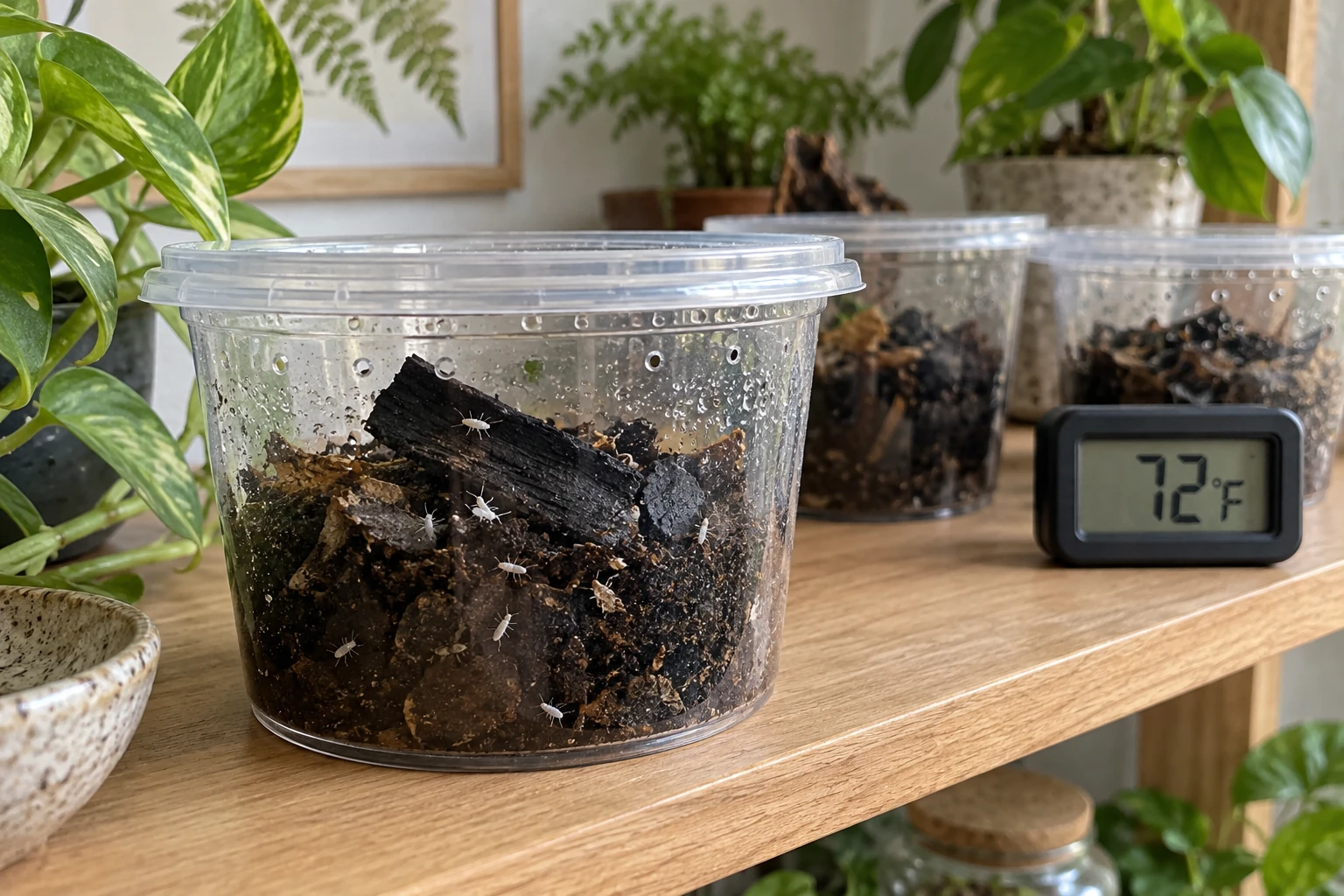
Choose a calm interior shelf
Keep cultures out of direct sunlight, away from heat mats, and clear of drafts or warm appliances.
Why room temperature is the whole answer
On our farm, we do not run supplemental heat for springtail cultures, because the sweet spot for nearly every species we culture, 65 to 78 F, is just normal indoor room temperature. That is a wide, forgiving window, and it is one of the easiest parts of springtail care to get right by accident, since most homes and offices sit inside it year round without anyone adjusting a thing.
This range is not a guess. It is the temperature band where springtails reproduce steadily without the stress of either extreme, and it holds true whether you are running a charcoal culture or a substrate culture. If your house is comfortable for you in a t shirt, it is almost certainly comfortable for your springtails too.
Temperate vs tropical, side by side
Not every springtail wants the exact same spot in that range. The temperate white springtail is the most cold tolerant of the commonly cultured species, comfortable toward the lower 60s to mid 70s F, which is why it is often recommended for a cooler room, garage, or unheated space. See our temperate vs tropical springtail guide for the full species breakdown.
Tropical springtails run the other direction, generally happiest in the low 70s to upper 70s F and less tolerant of a cold snap than the temperate white. Neither preference is dramatic, and both groups overlap heavily in the middle of the 65 to 78 F range, so the practical takeaway is simple: pick your species based on your room's normal low, not its normal high.
What heat actually does to a culture
Heat is the real threat, not cold. Sustained temperatures in the mid 80s F and up stress a culture fast, and if that heat is paired with high humidity or condensation, which is common in a sealed container sitting in a warm room, a culture can crash within days rather than weeks. This is the number we wish more sellers would publish, because it is the one that actually costs people their cultures.
The worst case is a closed cup or bin baking in a sunny window or sitting on top of a warm appliance. The combination of heat and trapped moisture drives mold and bacterial growth right alongside the springtails, and by the time you notice a smell or a die off, the damage is usually already done. Keep cultures out of direct sun and off anything that generates heat, full stop.
What cold does, and why it is more forgiving
A cold culture is a different problem entirely. Below the comfortable range, springtails slow their metabolism, eat less, and stop reproducing, but they generally do not die outright the way an overheated culture can. A culture that has sat in a chilly garage or an unheated room over winter often looks stagnant rather than dead.
Give a cold culture a few weeks back at normal room temperature before writing it off. If you see any springtails at all moving in the substrate or charcoal, the population is very likely still alive and just waiting for conditions to improve. This is why we consider cold culture crashes far more recoverable than heat crashes.
Where to actually put the culture
Placement solves most temperature problems before they start. Keep culture containers off the floor, where cold drafts collect in winter, and away from windows, exterior doors, and HVAC vents, where temperature swings are the widest. A shelf or cabinet in an interior room usually holds the steadiest temperature in the house.
Never set a springtail culture directly on top of a heat mat or other warming device meant for a reptile enclosure. Springtails do not need supplemental heat at normal room temperature, and a heat mat underneath a small container can easily push the culture into the mid 80s F danger zone without you realizing it. Explore our full springtail culture care guide for setup basics, and if a culture ever seems stalled, our why is my springtail culture not booming guide walks through the other common causes.
Keep reading: Arid Springtails: The 3 Species That Handle Dry Setups Best and Can You Mix Different Springtail Species Together?
Keep reading: Folsomia Candida Care: The Temperate White Springtail Culture Guide and Tropical Pink Springtail Care: Coecobrya tenebricosa Guide
The Springtail Culture Kit
A ready to go culture built for normal room temperature, no heat mat required.
Frequently asked questions
What temperature is best for springtails?
Most cultured springtails do best between about 65 and 78 F, which is normal indoor room temperature. Temperate species like the white springtail tolerate the cooler end of that range, while tropical species prefer the warmer end.
What temperature kills a springtail culture?
Sustained heat in the mid 80s F and up is what actually crashes a culture, especially when it is combined with condensation or high humidity inside a sealed container. A brief warm afternoon is not the same as sustained heat.
Can a springtail culture survive cold temperatures?
Usually, yes. Cold slows springtails down and stops reproduction, but it rarely kills the culture outright the way sustained heat does. Give a cold culture a few weeks back at normal room temperature before assuming it is gone. Our live springtail care guide covers recovery steps.
Do springtails need a heat mat?
No. At normal room temperature, 65 to 78 F, springtails do not need supplemental heat, and placing a culture directly on a heat mat risks pushing it into the mid 80s F danger zone.
Are temperate and tropical springtails kept at different temperatures?
The ranges overlap heavily, but temperate species like the white springtail handle the lower 60s better, while tropical species prefer the upper part of the 65 to 78 F range. See our springtails for sale page for both types.
Where should I keep a springtail culture at home?
Off the floor, out of direct sun, and away from windows, exterior doors, and HVAC vents, which is where the widest temperature swings happen. An interior shelf or cabinet usually stays the steadiest.
Keep learning
Have a care question? Ask our community.
Join Reptile Keepers USA, our free Facebook group for reptile, amphibian and invert keepers. Share your setups, get care help and swap feeder tips.
Join the free group