How to Tell if a Millipede Is Male or Female
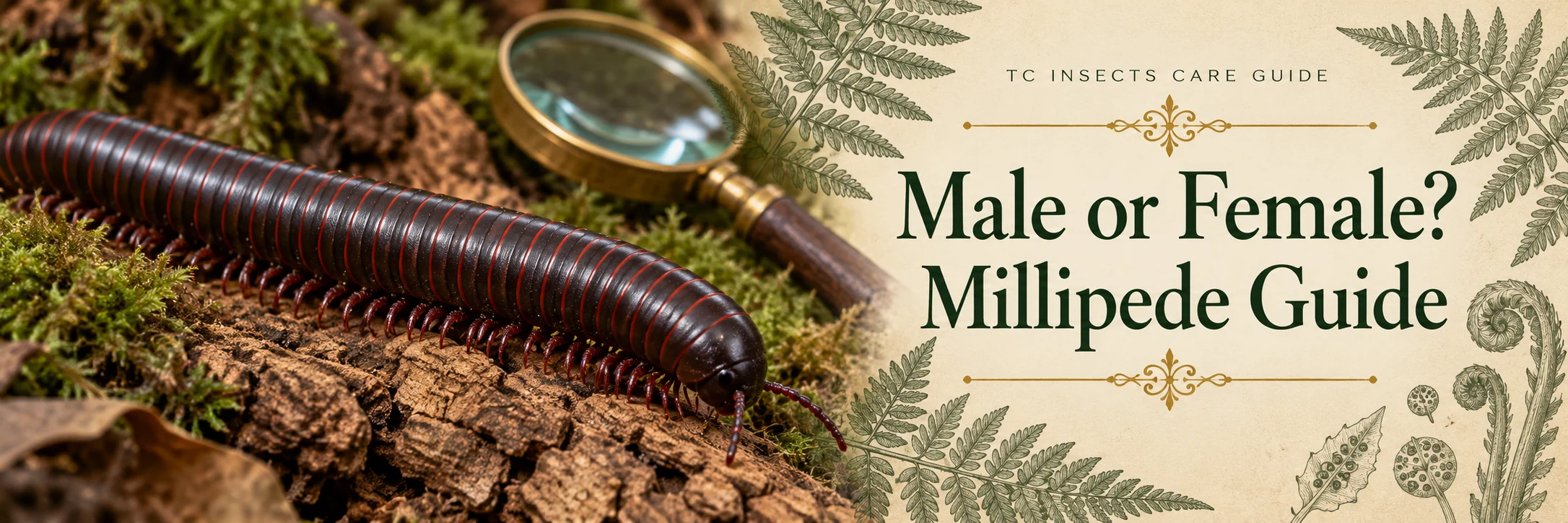
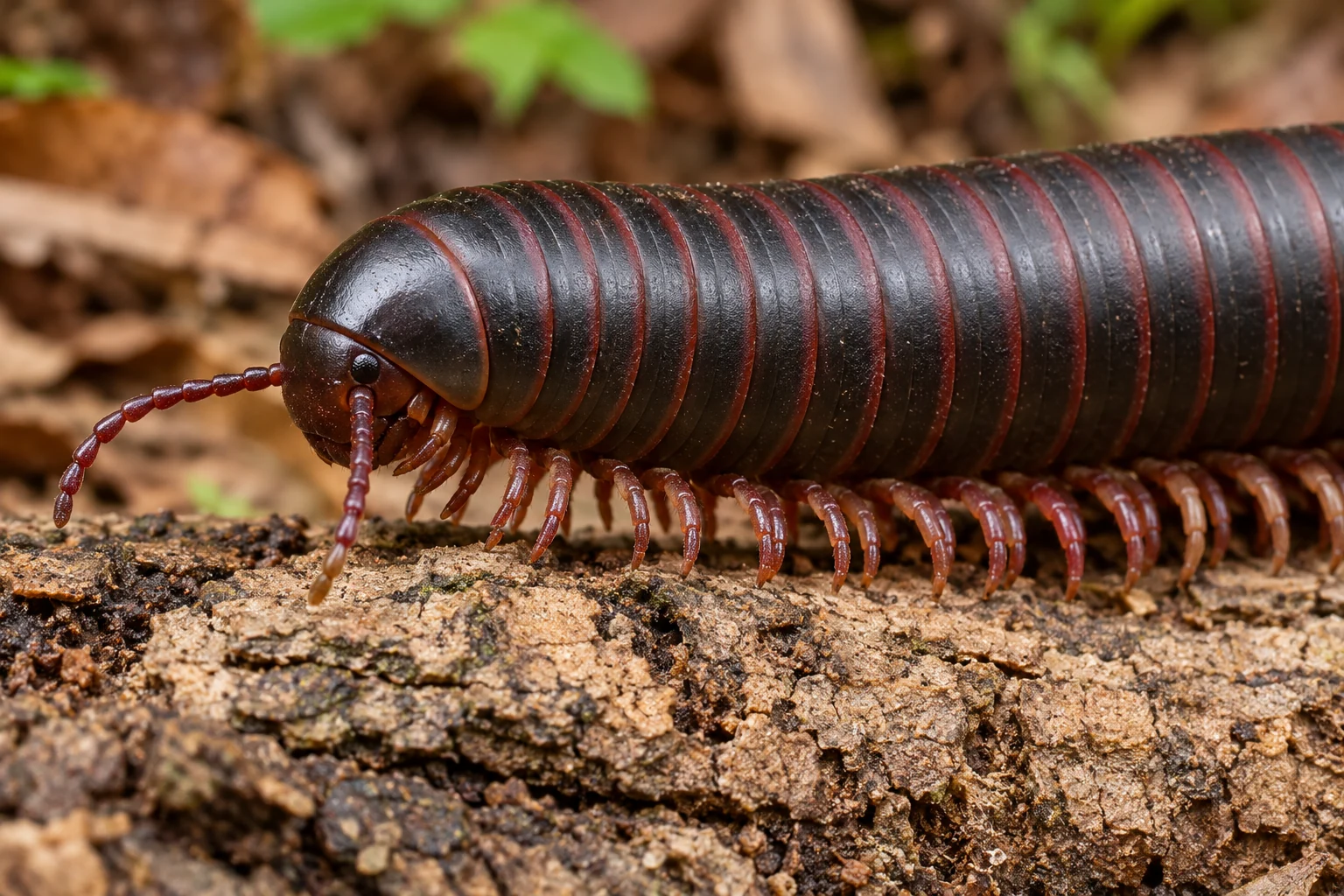
To sex a millipede, flip it over and count back to the seventh body segment from the head: on a male, the ordinary pair of legs there is replaced by small, stubby structures called gonopods, or that pair of legs is simply missing altogether. A female has normal walking legs all the way down her body, with no gap anywhere. This rule holds for most pet millipedes, including the American Giant Millipede (Narceus americanus) TC raises, and the general approach, look at the underside, not the top, is the same idea behind sexing an isopod. The real catch is size and age: a young millipede has not grown the feature yet.
Modified into gonopods on a male; normal and present on a female
Juveniles haven't grown the feature yet, so they can't be reliably sexed
A 10x lens or phone macro mode makes small gonopods easier to see
Flip It Over: Where to Actually Look
Sexing a millipede is entirely a job for the underside. Watching a millipede move across the substrate from above will never show you anything useful, since both the gonopods and the ordinary legs they replace sit tucked against the belly. Gently pick up an adult, or let one climb onto your hand and turn it over, and count body rings back from the head. Our enclosure setup guide covers handling a millipede without stressing it, which matters here, since you want it calm and still enough for an actual look, not curled into a defensive coil.
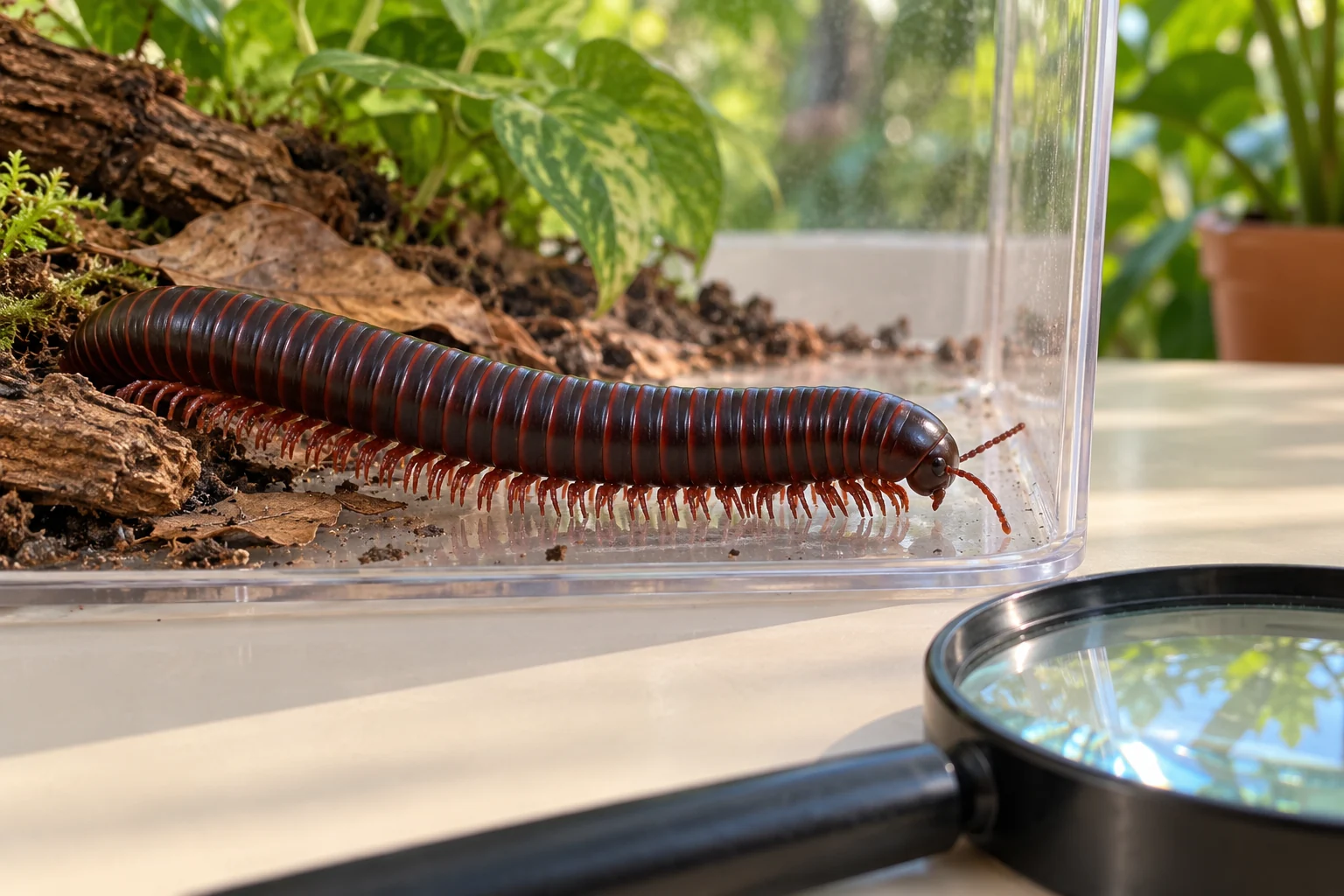
An easier option for a nervous or wriggly animal is to set it in a small, clear container and view it from below instead of holding it at all. Work slowly and in good light. The segment you want is roughly a third of the way down the body on most species, so count carefully rather than guessing at the general area.
The Male Tell: Gonopods on Segment 7
On a mature male, the seventh body segment does not carry the usual pair of walking legs. Instead, that pair has been reshaped over the millipede's development into gonopods, small, often stubby or rod shaped structures used to transfer sperm during mating. In the group TC's American Giant Millipede belongs to, Spirobolida, both leg pairs on that segment are converted, so a male shows either a visibly different structure there or simply an empty gap where legs should be. Either version counts as a confirmed male; you do not need to identify the exact shape to trust the result.
The Female Tell: Ordinary Legs, No Gap
Females do not build an equivalent structure you can spot at a glance. A female millipede simply keeps a normal, uniform pair of legs on segment seven, the same as every other segment on her body. Females do have their own internal reproductive opening on that same segment, but it is nowhere near as visible as a male's gonopods, so in practice a female is confirmed by ruling out the male's tell rather than spotting a clear, positive marker of her own. That asymmetry is normal and not a sign you are looking in the wrong place.
This is exactly why the order of operations matters: check for gonopods first, on every individual you want to sex. If you genuinely cannot find them after a careful look with real magnification, you are almost certainly holding a female, not a male whose gonopods are simply too subtle to see. That is a small but real difference in confidence between the two calls, worth keeping in mind before you commit to a breeding plan.
Why Juveniles and Small Species Are Harder to Sex
Gonopods are a late developing feature. A juvenile millipede, even one that is clearly growing and molting well, will not show them yet, so trying to sex a young animal usually just ends in a shrug either way. Wait until an individual looks like a full grown adult of its species before trusting a result. Smaller millipede species pack the identical anatomy into a much smaller body, which is where a hand lens or a phone's macro camera mode stops being optional and starts being the difference between a real answer and a guess.
One more wrinkle worth knowing, even if it will not affect most pet keepers day to day: in some millipede groups, a mature male can molt back into a leg only stage without gonopods for a cycle or two before molting forward into a reproductive male again. It is not documented as common in every species sold in the hobby, but it is a good reminder that a single check is a snapshot, not a permanent label.
Using What You Find: Building Toward a Pair
Once you can confirm at least one male and one female, you have what breeding actually requires, since a single millipede living alone will never produce young no matter how well it is fed and housed. If you are starting from scratch rather than sexing millipedes you already own, our American Giant Millipedes are sold as a Single or a 3 Pack, and since this species is communal, the 3 Pack is the easy way to land both sexes in one order instead of guessing with a single animal. From there, what happens next is a question worth its own answer once you have a confirmed pair to watch.
A Faster Way: Photograph It Instead of Staring
If holding a still, patient pose is hard to get in person, a flipped over millipede photographed on a phone and zoomed in afterward is often easier than squinting through a hand lens in real time. Set the millipede in a shallow, light colored dish so the underside stands out, take two or three photos from slightly different angles, and compare them on a bigger screen where segment seven is easy to count and easy to see clearly. Return the millipede to its enclosure right away; this whole process should take under a minute for a calm, healthy adult.
The Millipede Pairing Kit
A small starter group plus the substrate and calcium a future breeding pair needs to thrive.
Frequently Asked Questions
Written by the TC INSECTS breeding team · Porter, Texas · Live Arrival Guarantee on every order
Have a care question? Ask our community.
Join Reptile Keepers USA, our free Facebook group for reptile, amphibian and invert keepers. Share your setups, get care help and swap feeder tips.
Join the free group