
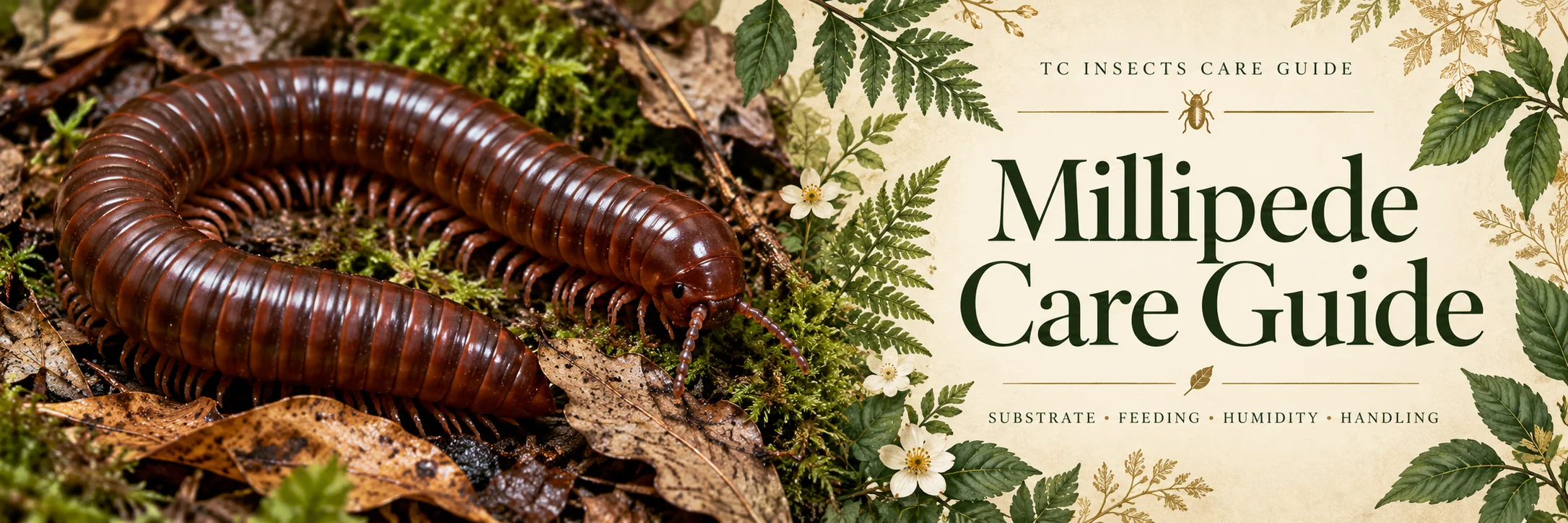
The American Giant Millipede (Narceus americanus) is a slow, gentle, beginner-friendly invertebrate native to the eastern United States. It grows to roughly 4 inches, is safe to handle, and lives on decaying leaves and rotting wood—which means its substrate is also its food. Get the substrate right and you have gotten almost everything right.
01 · Foundation
The substrate is the setup
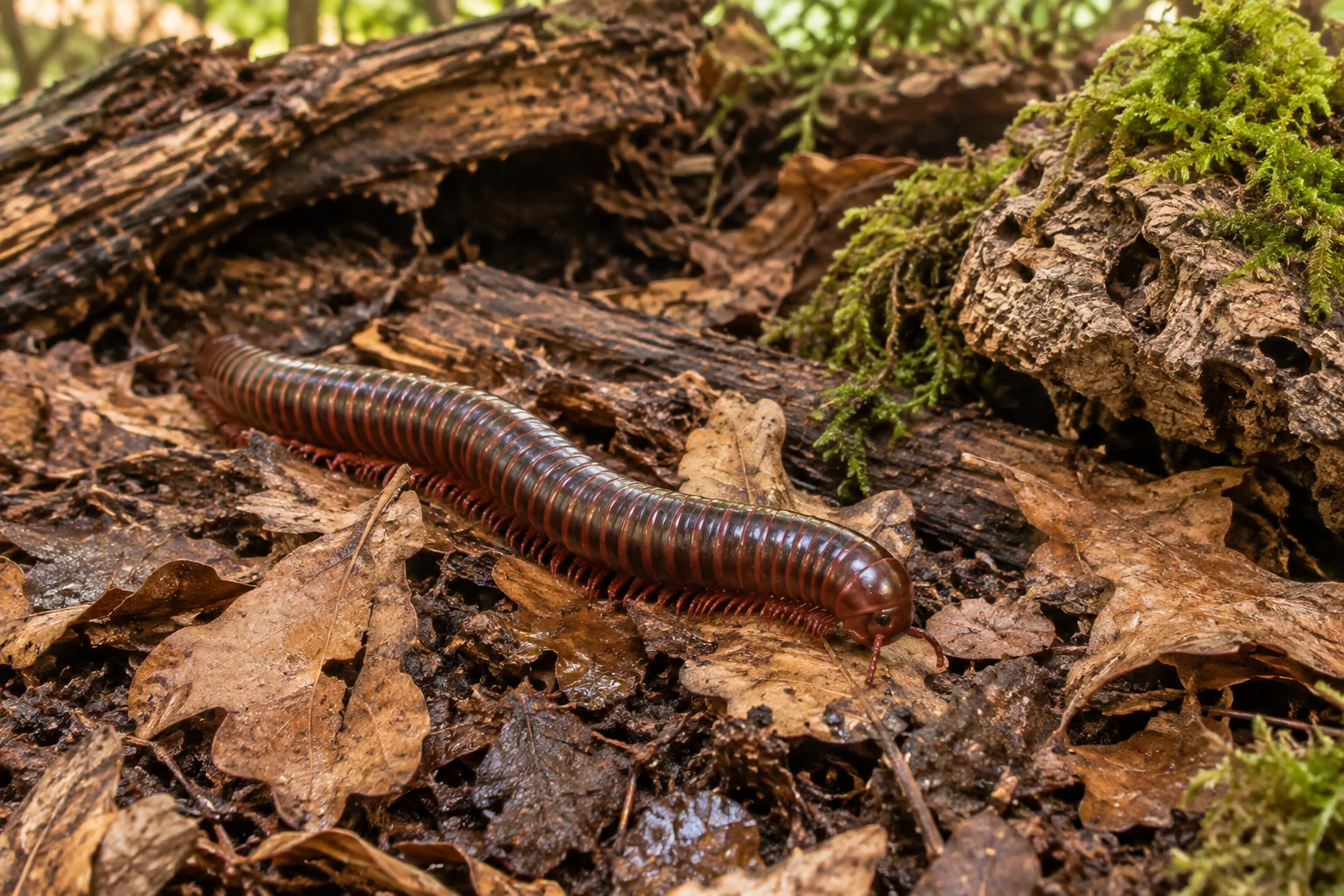
A few gallons of space per millipede works; the priority is depth, not floor area, because they burrow. Give them at least 3 to 4 inches of substrate built from decaying hardwood leaf litter, a handful of rotting untreated wood, and coco fiber to hold moisture.
That bed is not just habitat, it is the staple diet. A well-built substrate feeds the animal for a long time on its own; just replenish the leaf litter as it breaks down and disappears.
02 · Environment
Moisture and temperature
Keep the substrate damp like a wrung-out sponge: moist throughout, never waterlogged. Mist as needed to hold humidity, and use a ventilated lid to keep mold in check.
Room temperature suits them fine. They do not need supplemental heat and dislike being cooked, so keep the enclosure out of hot spots and direct sun.
03 · Nutrition
Feeding beyond the bedding
As extras on top of the leaf-litter staple, offer occasional slices of cucumber, squash, sweet potato, or soft fruit. Remove uneaten fresh food before it molds.
Provide a calcium source such as cuttlebone left in the enclosure. Millipedes use the calcium to build their exoskeleton, and it supports healthy molting as they grow.

04 · Gentle interaction
Handling
Handling is a real perk of this species: they are slow, non-biting, and non-venomous, which is why they are such a popular first invertebrate for kids and classrooms. Treated with a calm hand, one will simply walk across your palm.
The one thing to know: when stressed, millipedes can secrete a harmless defensive fluid that can stain skin and irritate eyes. Handle gently over a soft surface, keep them away from your face, and wash your hands afterward.
05 · Growth
Molting and the disappearing millipede
A millipede that has vanished is usually not in trouble. They burrow to rest and, most importantly, to molt, and a molting millipede may stay underground for weeks. Digging one up mid-molt can injure or kill it, so leave a buried millipede alone and keep the substrate moist.
When it resurfaces, it may look darker and slightly larger. Fresh leaf litter on the surface is the best welcome-back meal.
06 · Clean-up crew
Bioactive tankmates
Millipedes pair beautifully with isopods and springtails. All three are detritivores that thrive in the same humid, leaf-litter setup, and together they form a self-cleaning bioactive crew: springtails handle mold, isopods break down debris, and the millipede processes leaf litter.
Keep the shared enclosure moist and ventilated and the system largely balances itself. It is one of the easiest bioactive combinations there is.
Common keeper questions
Frequently Asked Questions
Are American Giant Millipedes safe to handle?
Yes. They are slow, do not bite, and are not venomous. The only caution is that a stressed millipede can release a harmless defensive fluid that may stain skin or irritate eyes, so handle gently, keep them away from your face, and wash your hands afterward.
What do millipedes eat?
Mostly their own substrate: decaying hardwood leaf litter and rotting wood. Supplement with occasional slices of vegetable or soft fruit, and offer a calcium source like cuttlebone for healthy molting. Top up the leaf litter as it disappears.
Can I keep a millipede with isopods and springtails?
Absolutely, and it is a great combination. All three are detritivores that thrive in the same humid leaf-litter setup and form a self-cleaning bioactive crew together.
Do millipedes need a heat lamp?
No. Room temperature is ideal, and they actively dislike overheating. Keep the enclosure out of direct sun and away from heat sources, and focus on substrate depth and moisture instead.
My millipede has been buried for weeks. Is it okay?
Almost certainly yes. Millipedes burrow to rest and to molt, and a molt can keep one underground for weeks. Do not dig it up, since interrupting a molt can be fatal. Keep the substrate moist and wait.
How big do American Giant Millipedes get?
Roughly 4 inches as adults, making them one of the largest millipedes native to North America and a satisfying display animal that still fits in a modest enclosure.
Keep exploring
