
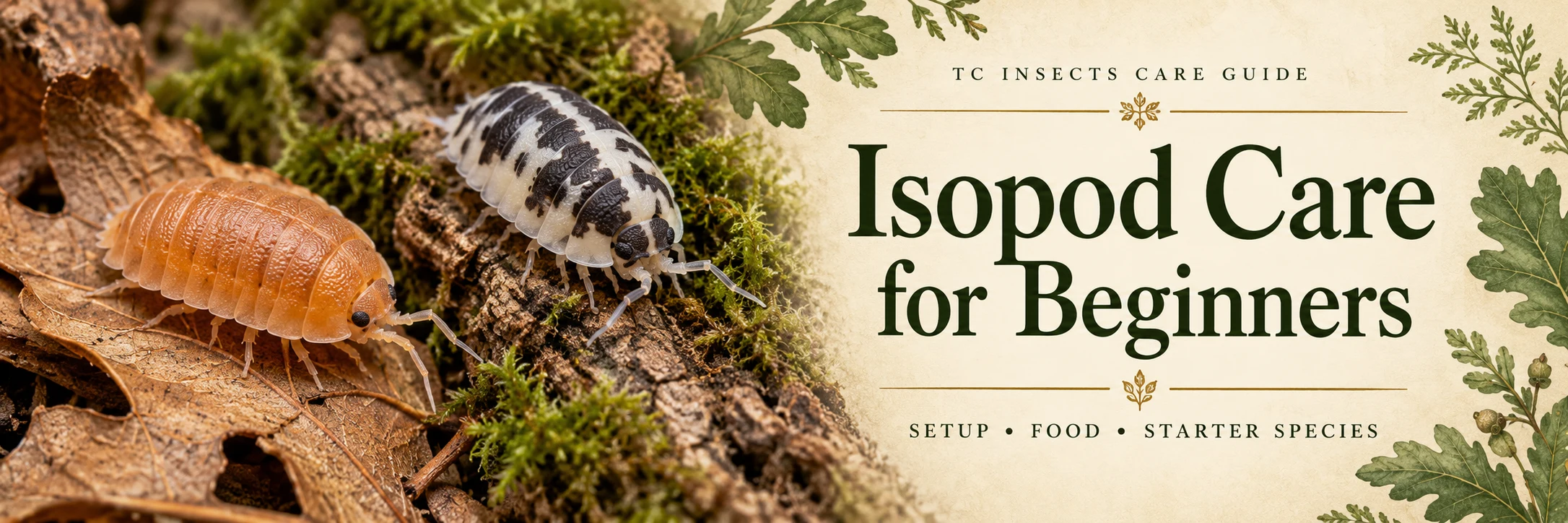
Isopods are hardy, low-maintenance land crustaceans that are simple to keep. Give them a 2-3 inch organic substrate topped with leaf litter, keep one side of the enclosure damp and the other dry, hold a room temperature of about 65-78°F, and feed leaf litter and decaying wood plus the occasional vegetable, a little protein, and a calcium source. The easiest beginner species are Dwarf Whites, Powder Orange / Powder Blue, and Dairy Cows.
Dwarf Whites, Powder Orange or Blue, and Dairy Cows are the hardest to get wrong.
No heat lamp needed unless your room runs consistently cold.
Enough to seed a colony that then grows on its own.
What are isopods, and why keep them?
Isopods are small terrestrial crustaceans - the same group as the “roly-polies” you found under logs as a kid. In the hobby they earn their keep two ways. As a bioactive cleanup crew, they break down animal waste, leftover food, mold, and dead plant matter, turning a reptile or amphibian enclosure into a nearly self-cleaning ecosystem. As pets in their own right, colorful captive-bred morphs are genuinely fun to watch and breed. Either way, they’re one of the most forgiving invertebrates you can start with.
The best beginner isopod species
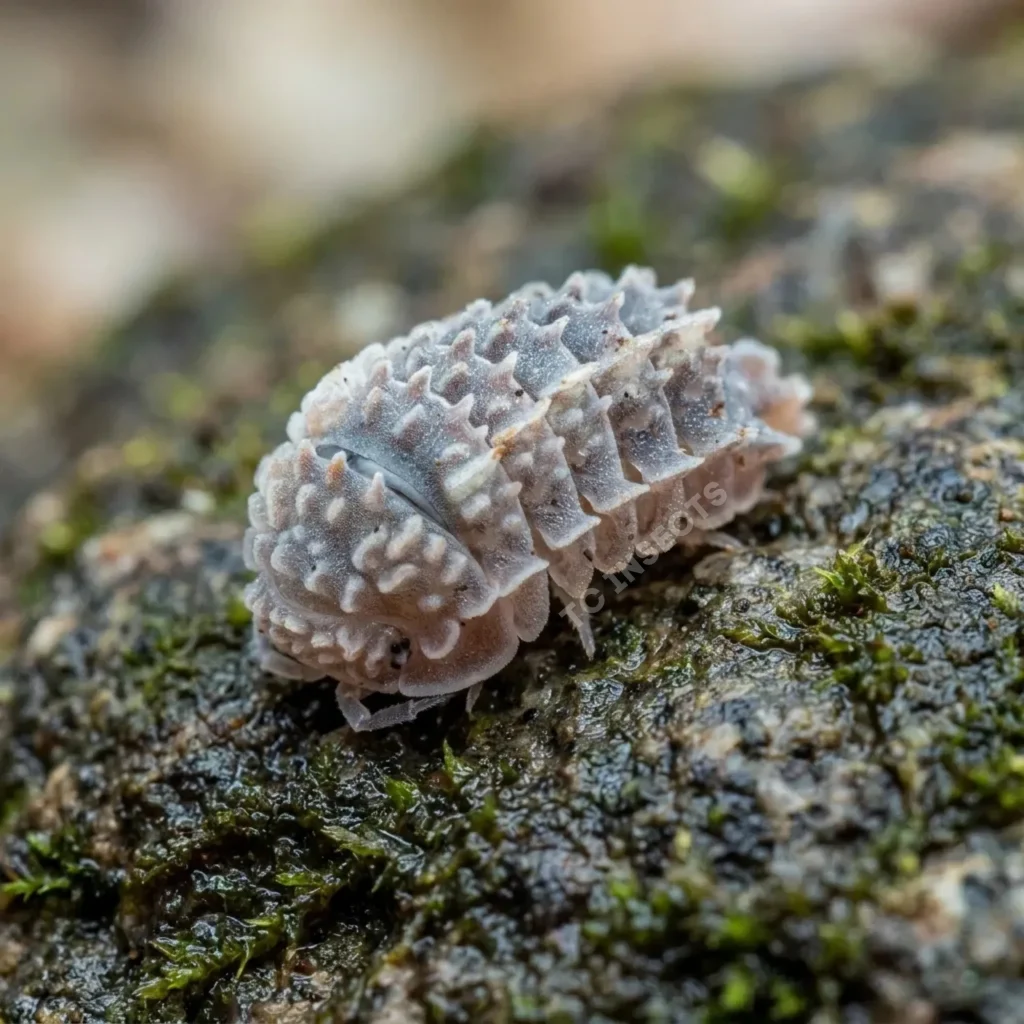
A few species are famously hard to mess up. Start with one of these before moving on to slower, pricier “display” types like Cubaris:
| Species | Look & size | Breeding | Best for |
|---|---|---|---|
| Dwarf White Trichorhina tomentosa | Tiny (~3-4 mm), white | Very fast | Cleanup crews; safe even with small geckos & frogs |
| Powder Orange / Blue Porcellionides pruinosus | Small, dusty orange or blue | Very fast | The all-rounder starter - cleanup plus color |
| Dairy Cow Porcellio laevis | Large (~½"), black & white | Fast, big appetite | Visible, characterful colonies; less ideal with soft-skinned animals |
Dwarf Whites are special: the whole species is female and reproduces on its own, so even a tiny starter culture takes off. Powder species are the classic “can’t go wrong” pick. Dairy Cows are big and striking, but their hearty appetite means they’re better as a standalone colony than as a cleanup crew for delicate amphibians.
Recommended beginner starter colonies
-
-
Sale!

Porcellio laevis - "Dairy Cow" Isopods
$12.99 - $149.99Select options This product has multiple variants. The options may be chosen on the product page -
Sale!
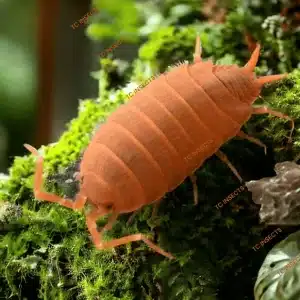
Porcellionides Pruinosus 'Powder Orange' Isopods
$8.50 - $249.99Select options This product has multiple variants. The options may be chosen on the product page
How to set up an isopod enclosure
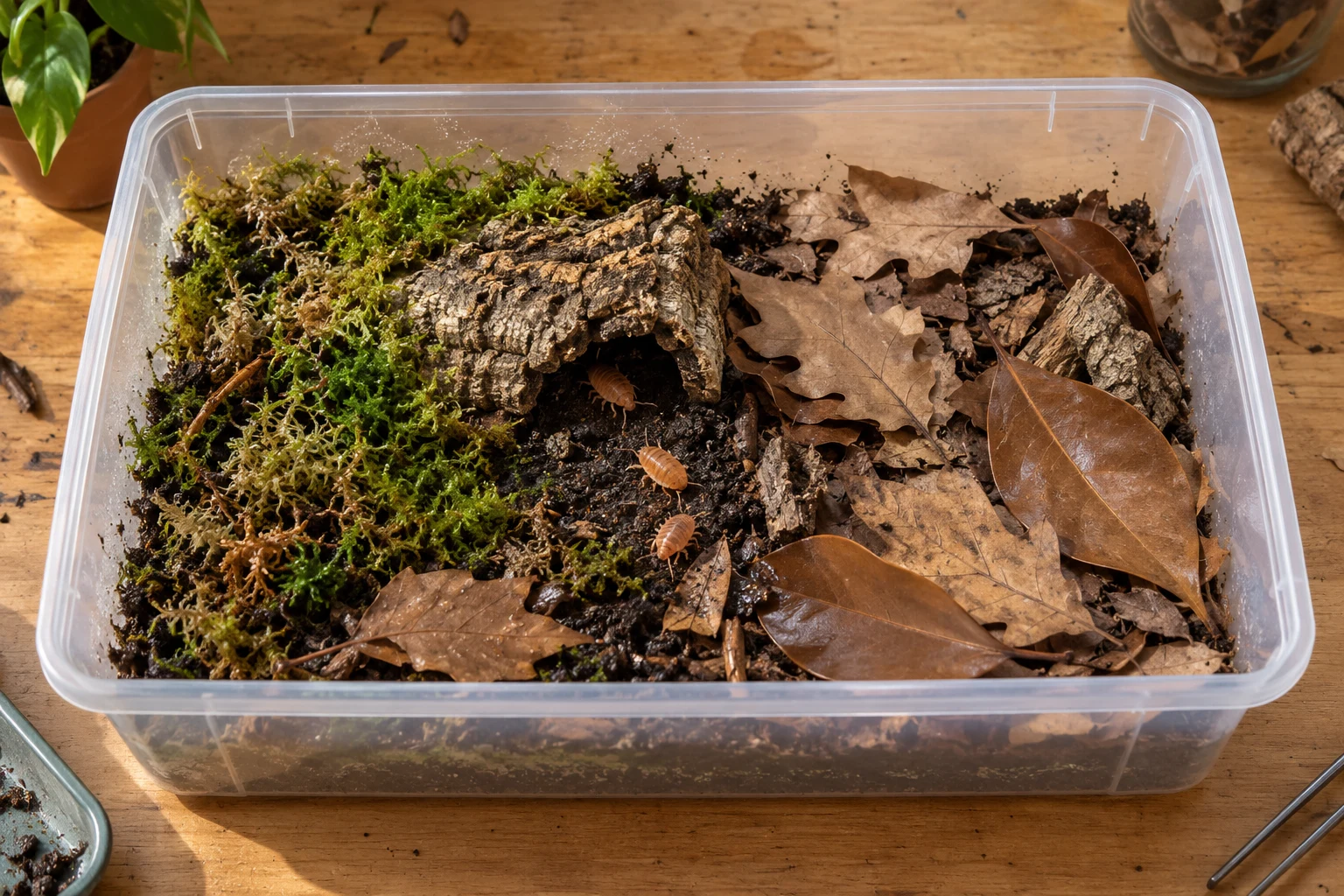
You don’t need anything fancy - a ventilated plastic tub works beautifully. Here’s the basic build:
- Container & ventilation: A 6-quart plastic shoebox is perfect for a starter colony under ~50 isopods. Drill small holes on the sides for cross-ventilation.
- Substrate: 2-3 inches of an organic mix - topsoil and coconut fiber with decayed hardwood and crushed leaf litter blended in. Isopods eat the substrate itself, so it doubles as food.
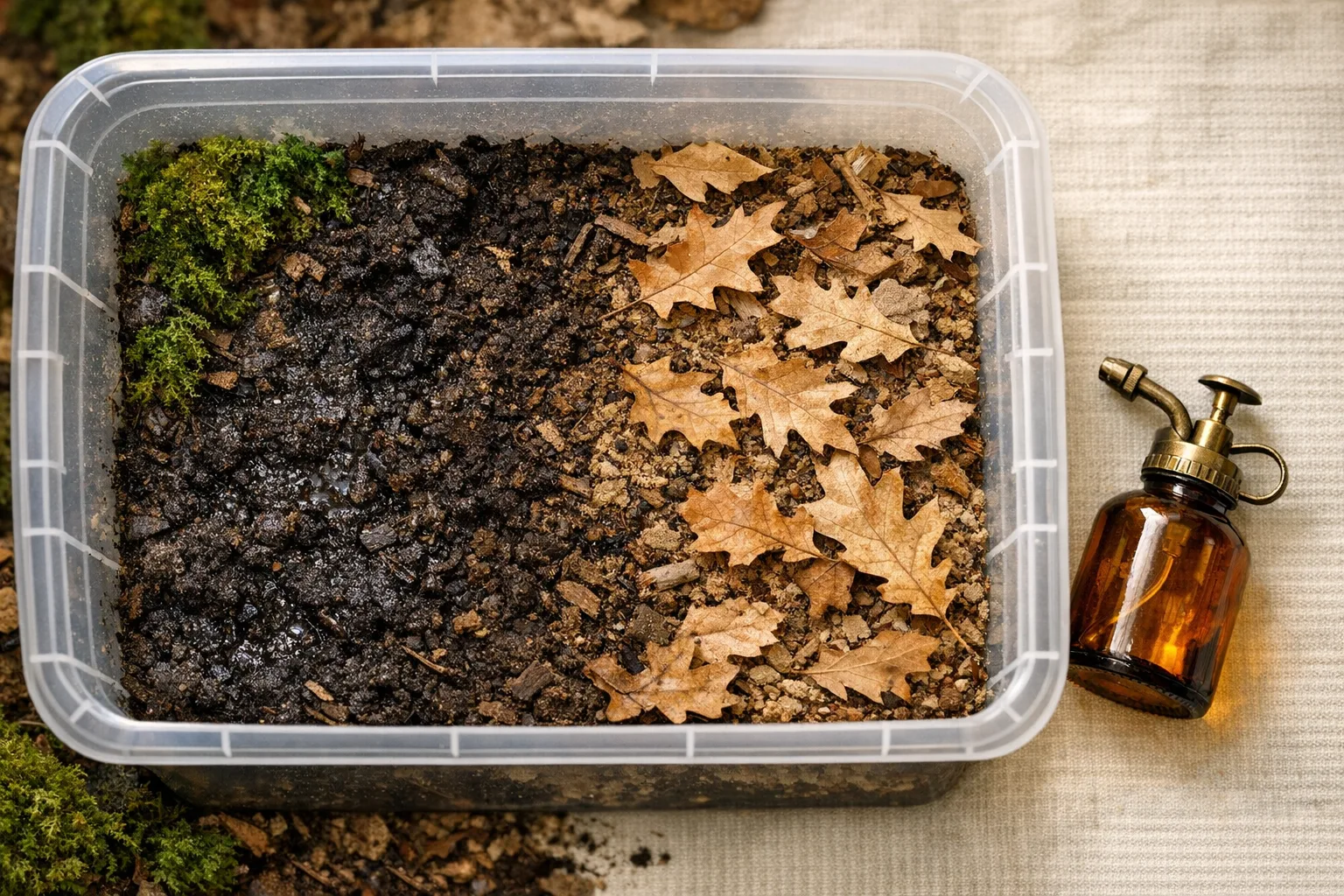
- Moisture gradient: Dampen roughly one-third of the bin (a pad of sphagnum moss works well) and leave the rest drier so isopods can choose the humidity they need.
- Hides & food cover: Add cork bark, a piece of decaying wood, and a generous layer of leaf litter for shelter and slow-release food.
- Springtails: Toss in a few springtails - they outcompete mold and keep the bin clean alongside your isopods.
Humidity, temperature, and moisture
The single most important habit is maintaining a moist-side / dry-side gradient rather than chasing one fixed humidity number. Keep the damp third moist but never soggy, and mist the substrate - not the isopods directly - when it starts to dry out, usually every couple of days in a ventilated bin. Most beginner species are happy at normal room temperature, roughly 65-78°F. They’re nocturnal and dislike bright light, so a shelf out of direct sun is ideal; no special lighting or heat lamp is needed unless your room runs cold.
Which beginner isopod is right for you?
A cleanup crew for a bioactive reptile/amphibian setup
Try Powder Orange or Powder Blue - the hardy, fast-breeding all-rounders. They establish quickly and keep a bioactive enclosure clean while adding a pop of color.
A colorful colony I can watch and breed
Try Dairy Cow Isopods - big, bold, and easy to watch. Their black-and-white markings and large size make them the most rewarding beginner colony to observe and breed.
What do isopods eat?
Isopods are detritivores, so most of their diet is the enclosure itself. Their staples are:
- Leaf litter - their number-one food. Oak, magnolia, and almond leaves break down slowly and feed the colony continuously.
- Decaying hardwood - long-term grazing and shelter.
- Supplemental veg & protein - small amounts of vegetables (carrot, squash, zucchini) and a pinch of protein, no more than a pencil-eraser’s worth per week for a small colony.
- Calcium - essential for healthy molting; offer a dusting of a reptile-safe calcium or a cuttlebone.
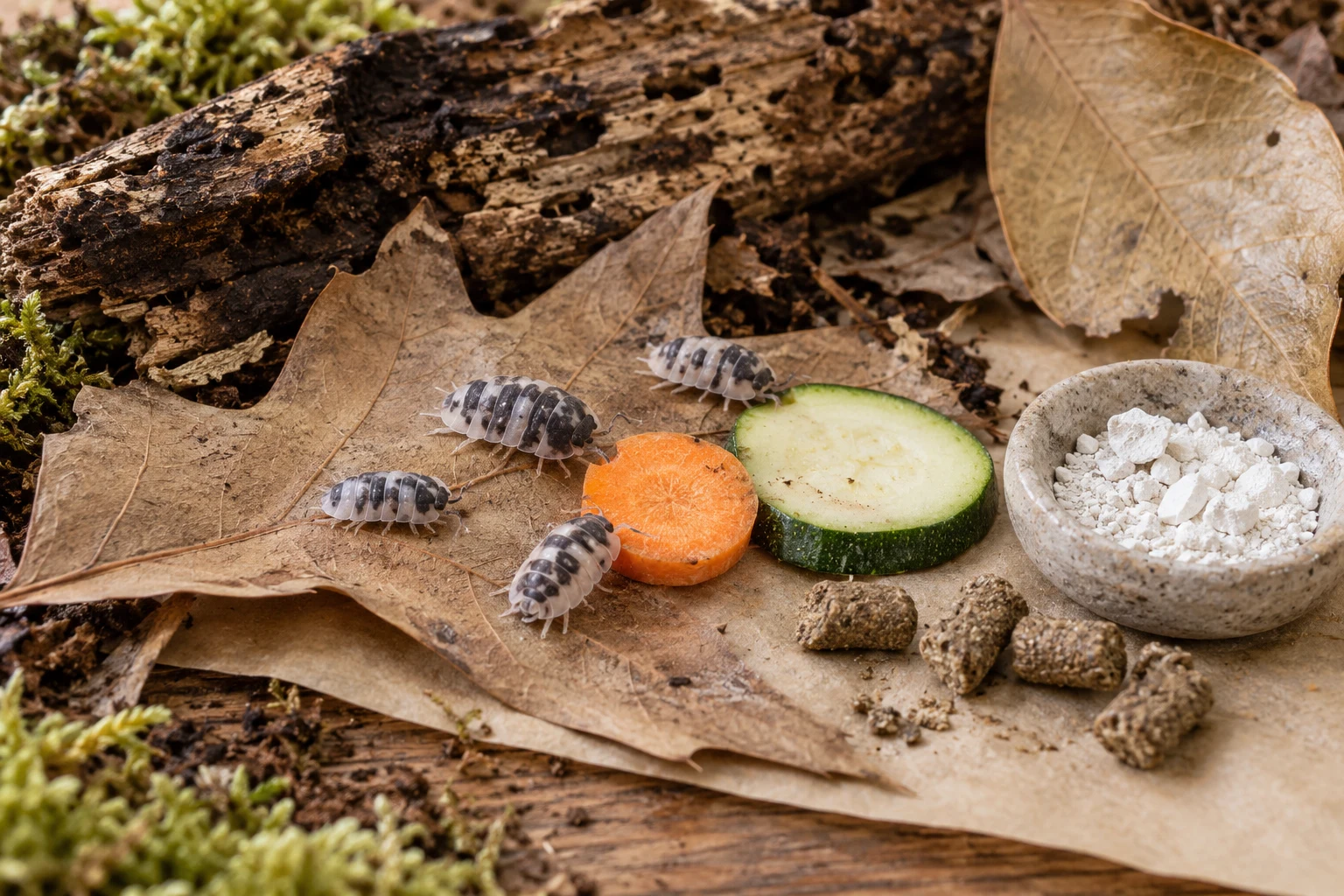
The most common rookie error is overfeeding: too much fresh food rots and invites mites and fungus gnats. When in doubt, feed less.
Common beginner mistakes to avoid
- Keeping it too wet. Soggy, unventilated bins cause die-offs. Aim for damp, not waterlogged, with airflow.
- Overfeeding fresh food. Leaf litter should be the base; treats are occasional.
- Skipping calcium. Without it, isopods struggle to molt.
- No dry zone. Always give them a drier side to retreat to.
- Panicking when you can’t see them. They burrow and hide - a quiet colony is usually a healthy one.
Everything a beginner isopod keeper needs from this guide. Untick anything you already have, then add the rest in one click.
Frequently Asked Questions
Written by the TC INSECTS breeding team · Porter, Texas · Live Arrival Guarantee on every order
