
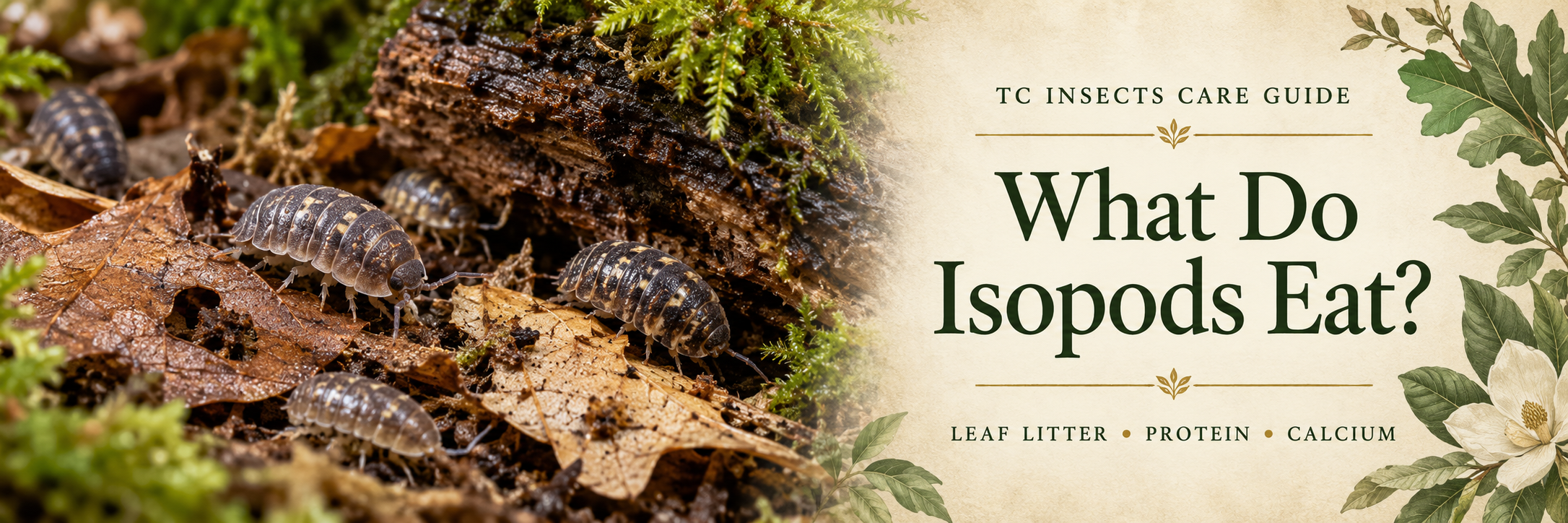
What Do Isopods Eat? A Feeding Guide
TC INSECTS is a family-run insect farm in Porter, Texas, and one of the largest isopod breeders in the country. Isopods are detritivores, which means their diet is simpler and stranger than most people expect: they graze decaying leaves, wood, and the microbes growing on them. Get the basics right and an isopod colony practically feeds itself.
Decaying hardwood leaves and rotting wood, always available.
A small amount; remove leftovers within a day.
Across the contiguous US, guaranteed alive; not HI or AK.
The foundation of an isopod diet is decaying hardwood leaf litter and rotting wood, grazed along with the fungi and bacteria growing on it. Protein and calcium are important supplements, but leaf litter is the everyday staple that should always be in the enclosure.
Shop What Your Isopods Eat
Magnolia Leaf Litter
Decaying hardwood leaves are the single most important food for isopods, providing food, cover, and a surface for the microbes they graze. Magnolia breaks down slowly, so it lasts a long time as both food and hide. Keep a layer in the enclosure at all times.
Isopod Supreme Feed
A prepared feed that covers the protein and micronutrients leaf litter alone does not. Offer a small pinch a couple of times a week and remove what is not eaten.
Dwarf White Isopods
Need the isopods themselves? Dwarf whites are the classic beginner colony: tiny, fast-breeding, and happy on a simple leaf-litter and protein diet.
Everything an isopod keeper needs from this guide. Untick anything you already have, then add the rest in one click.
Feeding Your Isopods
Leaf litter and wood are the foundation
Isopods are detritivores: in the wild they live in leaf litter and rotting wood, and that is exactly what they should eat in captivity. Decaying hardwood leaves, oak, beech, magnolia, and similar, along with soft rotting wood, are the everyday staple. Just as importantly, isopods graze the fungi and bacteria growing on that decaying matter, so the biofilm is part of the meal. Keep a layer of leaf litter in the enclosure at all times and top it up as it disappears.
Protein, offered in moderation
Isopods need occasional protein to breed and grow, but too much causes problems. Offer a small amount of a prepared isopod food, fish flake, or dried shrimp about two to three times a week, and remove anything uneaten within about a day. Leaving protein to rot is the fastest way to trigger a mite or mold outbreak in an otherwise healthy colony.
Vegetables and fruit as supplements
Small pieces of vegetables and fruit, such as carrot, squash, cucumber, or a bit of apple, make good occasional supplements and a source of moisture. Keep portions small, remove what is not eaten, and avoid citrus, onion, and any processed or salted human food. These are extras on top of the leaf-litter base, not a replacement for it.
Calcium for a healthy molt
Isopods are crustaceans, and like other crustaceans they need calcium to harden their shell each time they molt. A cuttlebone, crushed eggshell, or a piece of limestone left on the substrate lets them graze calcium as they need it. A calcium-starved colony molts poorly and breeds slowly, so this simple addition makes a real difference.
The microbe secret most guides miss
Here is the fact that separates a thriving colony from a stalled one: isopods do not digest fresh, sterile food well. They rely on the microbes, fungi and bacteria, that colonize decaying leaves and wood to break that material down first. That is why you never bake or sterilize your leaf litter to the point of killing everything on it, and why a slightly aged, biologically active enclosure feeds isopods far better than a spotless one.
Isopod Diet at a Glance
Always available; the base of the diet.
Small amounts; remove leftovers within a day.
Left on the substrate for healthy molting.
Isopod Feeding FAQ
Everything Your Isopods Eat, From Our Farm
Building or feeding a colony and have a question? Email customer.service@tcinsects.com and we will help.
TC INSECTS · A family insect farm just outside Houston · Guaranteed live delivery
