
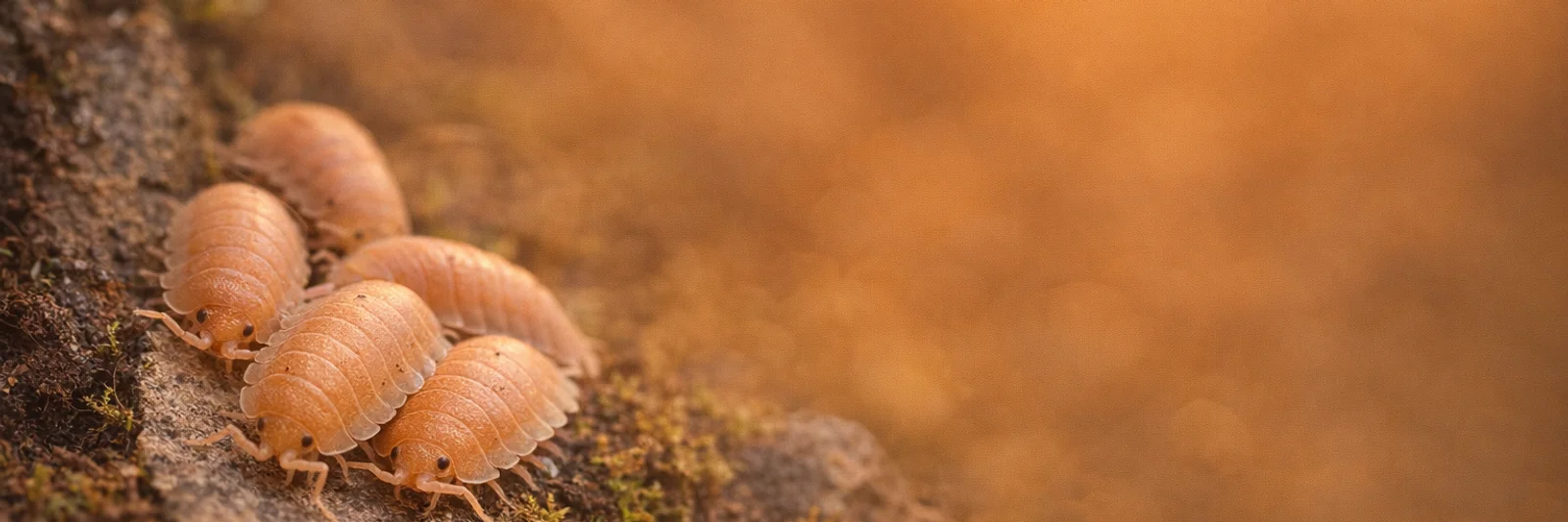
- The best beginner isopods are Dwarf White (Trichorhina tomentosa) and Powder Orange (Porcellionides pruinosus): cheap, fast-breeding, and very forgiving.
- Avoid rare, expensive Cubaris as a first species; they are slower and fussier, so save them for later.
- Every beginner isopod needs a humid side and a dry side, leaf litter, and a bit of calcium.
- Fast breeders forgive mistakes because the colony can recover from a bad week faster than it can crash.
- You can start a thriving culture for very little money, so there is no need to spend big to begin.
The Best Isopods for Beginners, Ranked
There is no single perfect starter isopod, but there is a clear order that works for most new keepers. This ranking favors species that are cheap, breed quickly, and shrug off the humidity swings and rookie errors that come with a first colony. Any of these is a solid place to start, and the top two are close to bulletproof.
- Dwarf White (Trichorhina tomentosa). Tiny, tropical, and close to bulletproof. They love warmth and humidity, breed fast, and are superb micro-cleanup for bioactive tanks and springtail-style duty. A near-perfect first isopod. Shop isopods.
- Powder Orange (Porcellionides pruinosus). Fast, forgiving, and famously fast-breeding. They tolerate a range of conditions and bounce back quickly, so a beginner colony explodes in numbers within a few months. Shop isopods.
- Powder Blue (Porcellionides pruinosus "powder blue"). The same tough, speedy species as Powder Orange in a soft blue-gray color. Just as forgiving and prolific, so it is really a matter of which look you prefer. Shop isopods.
- Dairy Cow (Porcellio laevis). Big, fast, and hungry, with a striking black-and-white pattern that beginners love. One honest caution: they are aggressive eaters and can nibble live plants and even small, soft animals, so keep them well fed and be careful in a planted bioactive setup with tiny tankmates. Shop isopods.
- Spanish Orange, also called Orange Vulgare (Armadillidium vulgare). A hardy roller that curls into a ball when disturbed. Slower to breed than the Powder species but very tough and beginner-friendly, and the bright orange color is a nice step up in looks. Shop Armadillidium isopods.
What Makes an Isopod Beginner-Friendly
A good starter isopod is one that survives your learning curve. The best beginner species share the same handful of traits, and it is worth knowing what they are so you can judge any new isopod you come across.
- Tolerant of humidity swings. Beginners tend to over-water or let a bin dry out, so a forgiving species that handles both is far more likely to make it.
- Fast breeding. A colony that multiplies quickly can recover from a bad week, so early mistakes do not wipe you out.
- Cheap to buy. An inexpensive starter culture means a low-stakes way to learn, without the pressure of a pricey investment.
- Not fussy about food or temperature. The easiest species eat a wide range of decaying material and thrive at normal room temperatures, roughly 70 to 80 F.
A Simple Starter Setup
You do not need anything fancy to keep beginner isopods happy. A basic setup gives them the two things they care about most: a gradient from damp to dry, and plenty of decaying material to eat and hide in.
Aim for a humid side and a dry side in the same bin. Keep one end damp by misting or pouring a little water there, and leave the other end drier so the isopods can pick the moisture level they want. Most beginner species do well at normal room temperatures, roughly 70 to 80 F.
- Humid side and dry side. Dampen one end and keep the other drier so your isopods can self-regulate. This single habit prevents most beginner losses.
- Leaf litter. A generous layer of dried, clean leaves is both food and cover, and it is the backbone of a healthy isopod diet.
- Rotting wood. A few pieces of soft, decaying hardwood give them extra food and a place to graze on the natural fungi and microbes they love.
- Calcium. Offer a calcium source such as crushed eggshell, cuttlebone, or a bit of limestone so they can build strong shells and molt properly.
- Ventilation. Give the bin real airflow. Cross-ventilation stops stale, stagnant air and mold, which are two of the fastest ways to crash a young colony.
How to Avoid Beginner Mistakes
Almost every failed starter colony comes down to the same short list of errors, and every one of them is easy to sidestep once you know it.
- Too wet. A soaked bin is the number one killer. Keep only one side damp and let the other stay drier; if the whole bin is wet, you are overdoing it.
- No ventilation. A sealed, airless container traps moisture and grows mold. Add cross-ventilation so air actually moves through the bin.
- No calcium. Without a calcium source, isopods struggle to molt and the colony slowly declines. Always keep some cuttlebone or crushed eggshell in the bin.
- Starting with rare or expensive Cubaris. The fancy species are slower and less forgiving. Learn on a cheap, tough isopod first, then move up to Cubaris once you have a system that works.
Frequently Asked Questions
What are the best isopods for beginners?
The best isopods for beginners are Dwarf White (Trichorhina tomentosa) and Powder Orange (Porcellionides pruinosus). Both are cheap, fast-breeding, and forgiving of the humidity swings and small mistakes new keepers make. Powder Blue, Dairy Cow, and Spanish Orange are also solid, beginner-friendly choices.
What isopods are easiest to keep?
Dwarf White and the Powder species (Powder Orange and Powder Blue) are the easiest to keep. They tolerate a wide range of conditions, breed quickly, and do not need special equipment, so a simple bin with a humid side, a dry side, leaf litter, and some calcium is enough to keep them thriving.
Are Cubaris good for beginners?
Not usually. Cubaris are beautiful, but they tend to breed slowly and are fussier about their conditions, which makes them less forgiving of beginner mistakes. They make a great second or third species once you have kept an easy isopod first and understand the basics.
How many isopods should I start with?
A starter culture of about 10 to 25 isopods is plenty for most beginners. A small group of a fast-breeding species will multiply into a full colony within a few months, so there is no need to buy a large, expensive count to get going.
Do beginner isopods need springtails?
They do not strictly need them, but springtails make a great partner in the same bin. Springtails eat mold and help keep the enclosure clean, which takes pressure off a new keeper. Many beginners start an isopod and springtail combo together for exactly that reason. Shop springtails.
What do beginner isopods eat?
Beginner isopods eat decaying plant material, mainly leaf litter and soft rotting wood, plus a calcium source like cuttlebone or crushed eggshell. You can add occasional vegetable scraps and a pinch of protein such as fish flakes, but leaf litter and rotting wood do most of the work.
Keep comparing: Isopod Care Guide· Best Cleanup Crew Isopods for Bioactive· Isopods vs Springtails· Do Isopods Need Springtails
