Giant Millipede Enclosure Setup
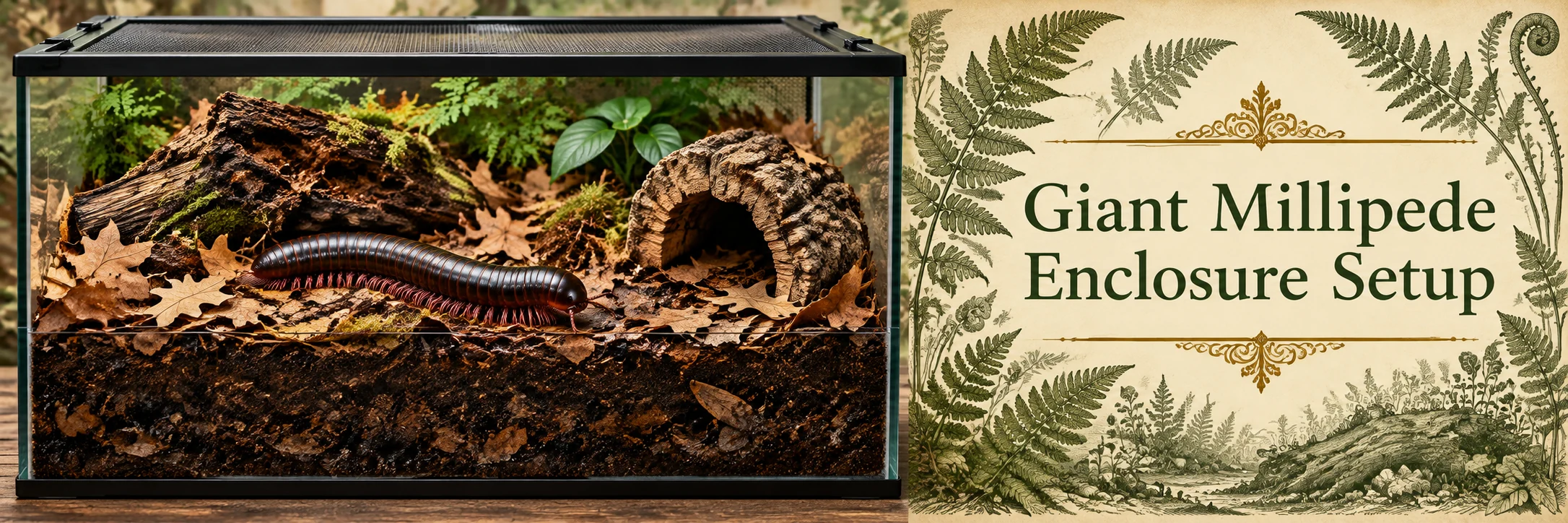
A giant millipede does best in a 10 to 15 gallon tank for one animal or a small group, roughly a gallon of space per large adult, filled with 4 to 6 inches or more of a moisture retentive substrate such as coco fiber, topsoil, and decomposing leaf litter, since the American Giant Millipede (Narceus americanus) we raise here is a deep, dedicated burrower. These specific numbers are sized for the American Giant Millipede; the larger African Giant Millipede needs meaningfully more tank space and substrate depth, so see our American vs African giant millipede comparison if that is the species you are setting up for. Keep humidity in the 70 to 80 percent range with regular misting, hold the tank around a warm 70 to 80F, and add cork bark, a half buried flowerpot, or a hollow log on the surface for cover. Get the substrate depth and moisture right and almost everything else about keeping this gentle giant falls into place. Here is the setup broken down piece by piece, with real numbers for each part.
Roughly 1 gallon of space per large adult
Deep burrowers need real digging room
Misted regularly, never allowed to dry out
The short answer: tank, substrate, and humidity
A giant millipede setup comes down to three things done right: enough floor space in a 10 to 15 gallon tank, enough depth in a moisture holding substrate, and enough humidity to keep both the millipede and its substrate alive and active. Miss any one of the three and the animal usually still survives, since Narceus americanus is a genuinely forgiving species, but it will spend most of its time buried and stressed rather than out grazing and visible.
The good news is that none of the three requires special equipment. There is no UVB, no heat lamp, and no misting system to buy for a single animal or small group, just the right container, the right depth of the right substrate, and a spray bottle used on a schedule. The rest of this guide walks through each piece with real numbers.
Tank size: 10 to 15 gallons for a small group
A single American Giant Millipede does fine in a 10 gallon tank, and a small group of 2 to 3 adults is more comfortable in the 15 gallon range, using roughly a gallon of space per large adult as a starting rule of thumb. Floor space matters more than height here, since millipedes are ground dwelling burrowers rather than climbers, so a wide, low footprint is a better use of space than a tall, narrow one.
A secure, ventilated lid matters as much as the tank itself. Millipedes are not escape artists the way some inverts are, but a loose or gapping lid lets humidity leak out fast, and holding that humidity steady is the harder half of this whole setup.
Substrate: depth and mix matter more than looks
Aim for 4 to 6 inches of substrate at minimum, and more is generally better for a larger adult or a small group. A mix of coco fiber or topsoil as the base, with peat moss worked in for moisture retention and a generous layer of decomposing leaf litter on top, gives a giant millipede both somewhere to dig and something to actually eat, since these animals graze on the same decaying material they burrow through. Our leaf litter and substrate supplies cover both halves of that mix.
Giant millipedes are also known to retreat underground for extended stretches, sometimes weeks at a time, especially around a molt, so do not be alarmed if yours disappears into the substrate and does not resurface for a while. That is exactly why the depth matters: a shallow bin gives an animal that wants to disappear nowhere real to go.

Humidity and temperature: the two dials to watch
Hold humidity in the 70 to 80 percent range through regular misting rather than soaking the substrate, which should stay damp like a wrung out sponge, never waterlogged. A quick hygrometer check now and then is the easiest way to confirm you are actually in range rather than guessing from how the substrate feels. Letting the tank swing dry between mistings is one of the more common setup mistakes with this species.
Temperature is the easier half. A steady 70 to 80F, which is normal room temperature in most homes, is genuinely all a giant millipede needs, and most keepers never add a heat source at all. Our millipede care guide covers the full day to day husbandry once the enclosure itself is set up.
Decor and cover: cork bark, pots, and hollow logs
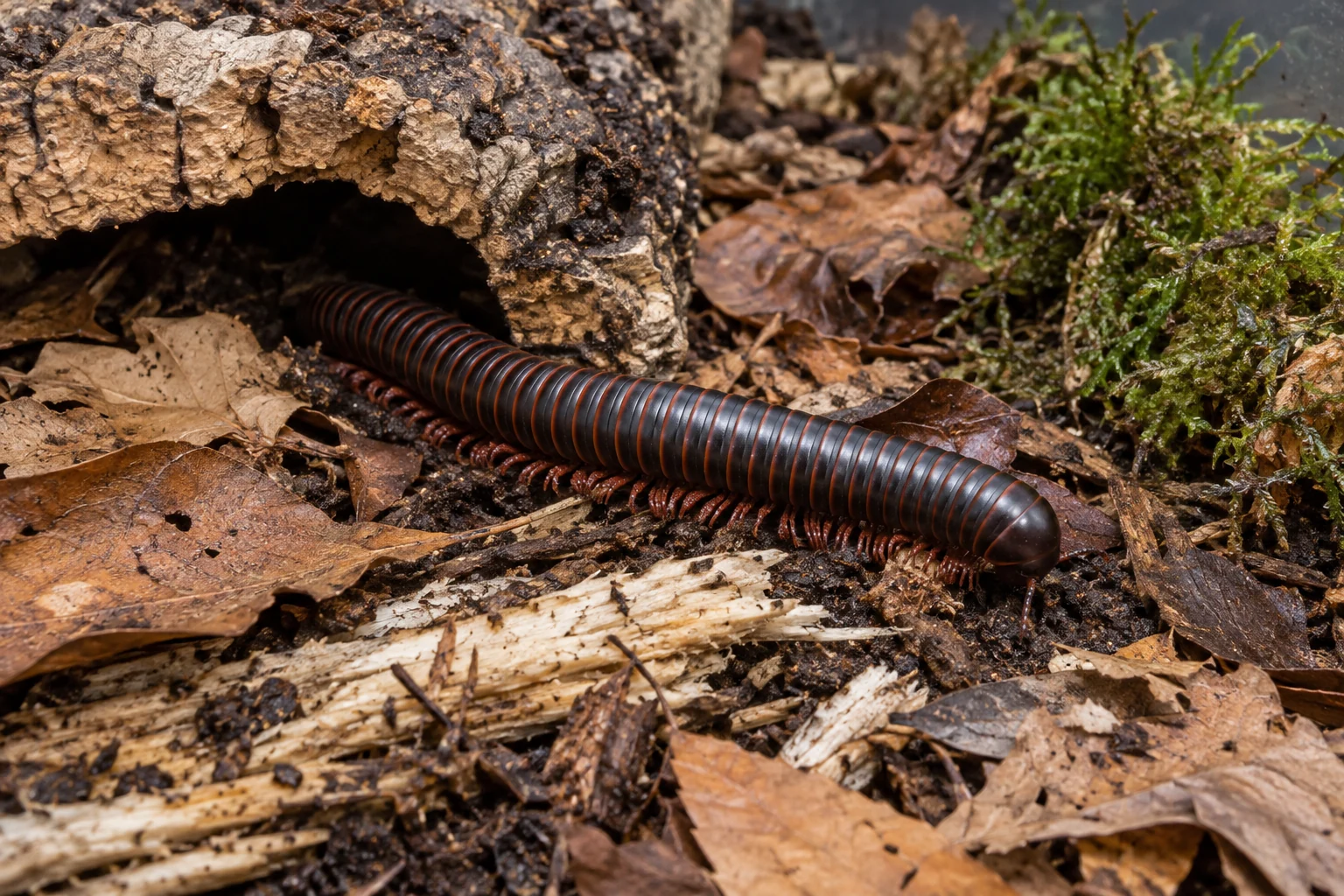
On top of the substrate, add a piece of cork bark, a half buried terra cotta pot on its side, or a hollow log for surface cover. Giant millipedes will use these as a resting spot between burrowing sessions, and cover pieces also help hold a little extra humidity right at the surface, which is exactly where a misting schedule tends to dry out fastest.
Keep decor simple. A single well placed hide plus a generous leaf litter layer does more for this species than an elaborate build, since a giant millipede spends the bulk of its time in and just under the substrate rather than climbing or exploring the way some other pet invertebrates do.
Maintenance without stressing your millipede
Spot clean visible waste and any moldy leaf litter as you see it, and plan on a fuller substrate refresh every few months rather than a full teardown on a fixed schedule. Every time you do reach in, handle your millipede low over the tank and support its whole body, since a startled or roughly handled animal can weep a defensive fluid from pores along its sides that stains skin and can genuinely sting if it reaches your eyes.
If that fluid ever does get in your eyes, flush them with clean water for several minutes and see a doctor if the irritation does not settle. In practice this is rare with calm, gently handled animals, and it should not put you off routine maintenance, it is simply worth knowing before you start.
Everything for a Giant Millipede Enclosure
The exact substrate, litter, and humidity setup behind the numbers above. Tap to add and check out in one click.
Frequently Asked Questions
Written by the TC INSECTS breeding team · Porter, Texas · Live Arrival Guarantee on every order
Have a care question? Ask our community.
Join Reptile Keepers USA, our free Facebook group for reptile, amphibian and invert keepers. Share your setups, get care help and swap feeder tips.
Join the free group