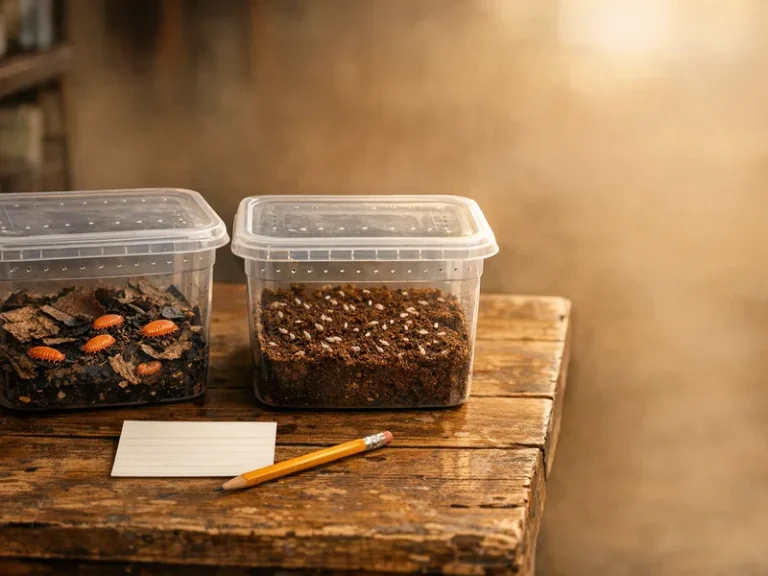
Escaped Feeder Insects and Cats or Dogs: What Is Safe

Farm feeders carry no toxins or pesticides
Keep the superworm bin out of reach; the rest cannot
Need heat and humidity to breed; die in a house
A few farm-raised feeders are usually harmless
A cat that eats a dubia roach off the floor, or a dog that noses into a mealworm bin, has eaten something harmless: farm-raised feeder insects are not toxic, carry no pesticides, and are the same insects fed to reptiles, birds, and hedgehogs on purpose. One or two are a snack; a whole cup can upset a stomach, and a superworm can nip inside a mouth, which is the one feeder worth keeping away from a curious pet. The escape itself is the smaller problem than most keepers fear: dubia cannot climb smooth walls and cannot breed at house temperatures, and mealworms, superworms, and larvae simply hide and die. This guide covers what each feeder means for a cat or dog, which can bite, why a loose dubia is not an infestation, and how to make a feeder bin pet-proof.
Separate the pets, recover the insects, secure the bins
Small accidental snacks are usually harmless, but secure lids and calm cleanup prevent bites, spills, and repeat escapes.
What a cat or dog gets from eating a feeder
Farm-raised dubia, mealworms, superworms, black soldier fly larvae, hornworms, and silkworms are raised on grain, chow, or leaf, handled without pesticides, and fed to animals as food. A cat or dog that eats one or two gets a little protein and nothing else. Wild-caught insects are the ones that carry lawn chemicals and, in the case of a wild hornworm off a tomato plant, plant toxins; a captive hornworm raised on chow carries none of that, which the hornworm bite post also covers.
Quantity is the only real concern. A dog that empties a 500-count cup of mealworms has eaten a lot of fat and chitin at once and may vomit or have loose stools for a day, the way it would after any rich meal. A cat rarely eats more than a few. If a pet has eaten a whole cup, or shows more than a mild upset, a call to your vet is the sensible step, as with anything a pet eats in bulk.
The one that can bite
Superworms have strong mandibles and will nip whatever holds them, including the inside of a dog's mouth. A dog that grabs one usually drops it and learns; a pet that swallows one whole is fine. Keep the superworm bin closed and above pet height, and never leave a superworm loose where a cat will bat it into a corner and then eat it. Our page on whether superworms bite explains the mandibles.
Everything else on the feeder list is toothless from a pet's point of view. Dubia do not bite, mealworms and BSFL cannot, hornworms have soft mouthparts built for leaves, and silkworms are the gentlest thing in the room. A cat playing with a dubia is playing with a small, slow, harmless roach that will not fight back.
Why a loose dubia is not an infestation
Dubia roaches are tropical. They need temperatures in the 80s F and high humidity to breed, they cannot climb smooth surfaces, they do not fly, and a nymph loose in a house at 70 F hides under something, does not breed, and dies within weeks. There is no dubia infestation of a home in the way there is with German roaches, and the two are not related. The guide to stopping dubia from escaping covers the tub design; the guide to whether red runners can infest a house covers the faster, climbing species, which still needs heat to breed.
Mealworms and superworms loose on a floor crawl under a baseboard, pupate, and emerge as a beetle or two that die without a bin of bran. BSFL pupate into a fly that leaves through a window. Hornworms and silkworms die within days without their food. A cat is, in fact, the most effective escaped-feeder control a house can have, and none of the feeders will hurt it.
Pet-proofing the feeder bins
The bins that matter are the ones a pet can open or knock over: a superworm bin, a mealworm bin with a loose lid, and a dubia tub on the floor. Use tubs with latching lids, put them on a shelf a dog cannot reach and a cat cannot tip, and keep the room they live in closed if the cat is a counter-jumper. A dubia tub with a screened window in the lid rather than an open top keeps the roaches in and the cat out. Water crystals instead of a water dish mean nothing spills when the tub is bumped.
Feeding time is the other leak. A roach that escapes the dish in a reptile enclosure with an open top, or a mealworm dropped on the way from the bin, is the usual source of a loose feeder. Feed from a dish with a lip inside a closed enclosure, count the insects in and out, and carry the day's portion in a closed deli cup rather than an open hand.
Allergies and the pet that reacts
A small number of people react to roach dust and shed skins, and the same can happen, rarely, to a pet that lives in a room with a large roach colony: sneezing, itchy eyes, or a rash after contact. Keep the dubia tub in its own ventilated space, sift it outdoors or in a garage, and wash hands after handling. Our post on feeder roach allergy covers the human side, and the same precautions cover a dog that sleeps beside the tub.
For a household that wants no roach dust at all, mealworms, BSFL, and silkworms are the low-dust feeders, and the quiet, odorless feeders for apartments page ranks them. None of them shed the way a big roach colony does.
What to do the day a bin spills
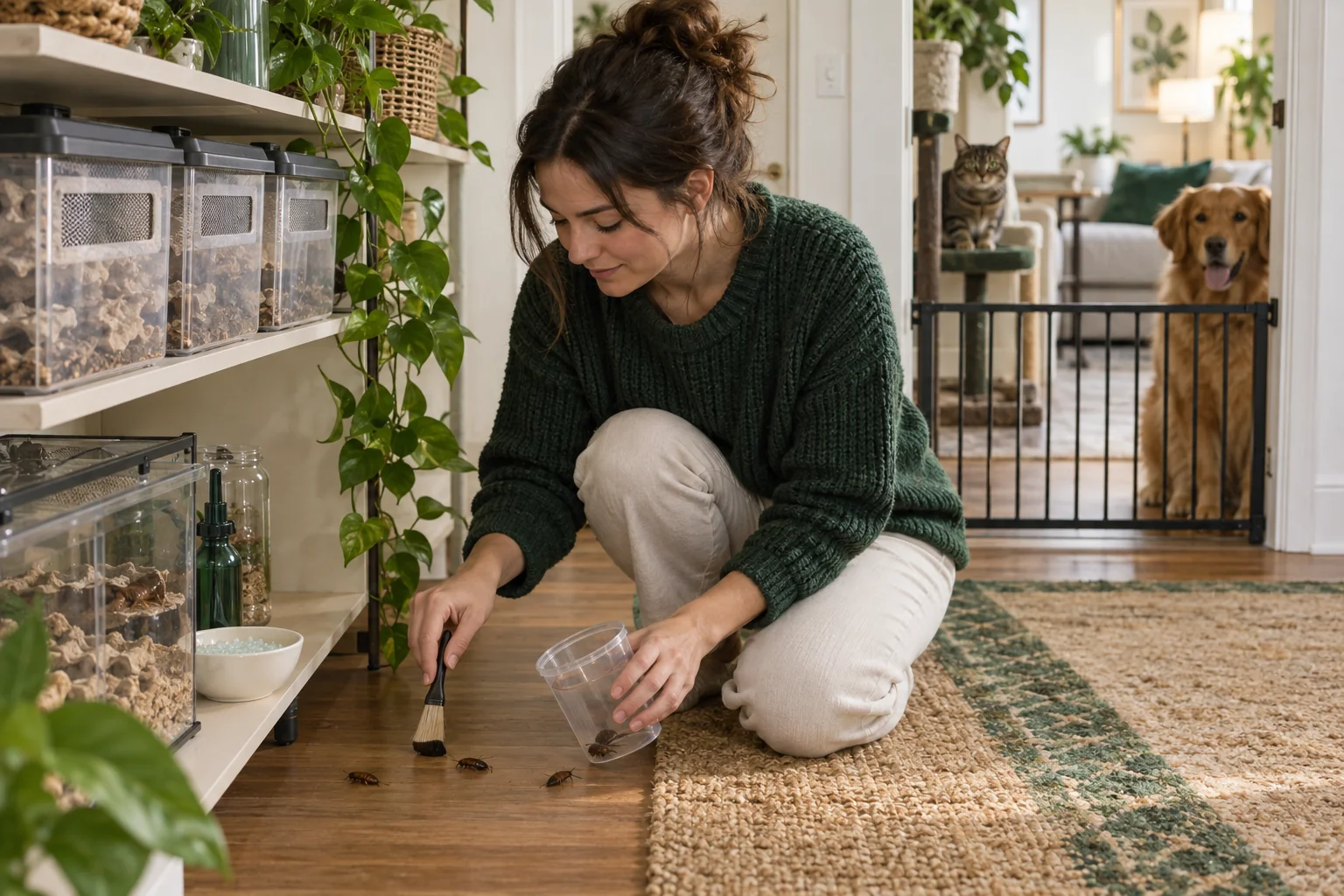
Close the door to the room, put the pets in another one, and gather the insects by hand into a cup; dubia gather easily by picking up whatever they are hiding under, mealworms and superworms by lifting the bran with a scoop, larvae with a spoon. Do not use an insecticide spray or a bug bomb anywhere near a reptile room or a feeder bin; it is the one thing that can turn a harmless spill into a real problem for the animals you keep. Vacuuming is fine for the last few.
Then check the count against what went in, expect to find one or two stragglers over the next week, and let the cat handle those. A spilled bin is an afternoon's annoyance, not a crisis, and the pets that ate a few on the way are the only ones who enjoyed it. Dubia, the feeder that cannot climb, bite, or breed loose, are in the dubia shop.
The Pet-Proof Bin Kit
Feeders that do not bite, and the water crystals and feed that mean nothing spills when a tub is bumped.
Frequently Asked Questions
Is it dangerous if my dog eats a dubia roach?+
No. Farm-raised dubia carry no toxins or pesticides and are fed to animals on purpose; one or a few are a harmless snack. A dog that eats a whole cup of any feeder may have an upset stomach for a day from the rich meal, and a call to your vet is sensible after a bulk raid.
Can my cat get sick from eating mealworms or superworms?+
Mealworms are harmless in small numbers. Superworms are too, but they can nip inside the mouth, so keep the superworm bin closed and out of reach. A cat rarely eats more than a few insects; a whole bin is the only quantity worth a vet call.
Will escaped dubia roaches infest my house?+
No. Dubia are tropical, need temperatures in the 80s F and high humidity to breed, cannot climb smooth surfaces, and do not fly. A loose nymph at house temperature hides and dies within weeks without breeding. Red runners climb and run faster but still need heat to breed.
Are hornworms safe if a pet eats one?+
Captive hornworms raised on chow are, yes. Wild hornworms off a tomato or tobacco plant can carry plant toxins, which is why only farm-raised hornworms are fed to animals. A hornworm cannot bite; its mouthparts are built for leaves.
How do I keep pets out of feeder bins?+
Use tubs with latching lids on a shelf a dog cannot reach and a cat cannot tip, a screened window in the lid rather than an open top, and water crystals instead of a water dish so nothing spills. Carry the day's feeders in a closed deli cup and feed from a lipped dish inside a closed enclosure.
What should I do if a feeder bin spills?+
Shut the room, move the pets, and gather the insects by hand or with a scoop into a cup. Never use insecticide spray or a bug bomb near a reptile room or a feeder bin. Vacuum the last few, expect a straggler or two over the week, and let the cat find those.
More helpful guides
Have a care question? Ask our community.
Join Reptile Keepers USA, our free Facebook group for reptile, amphibian and invert keepers. Share your setups, get care help and swap feeder tips.
Join the free group