
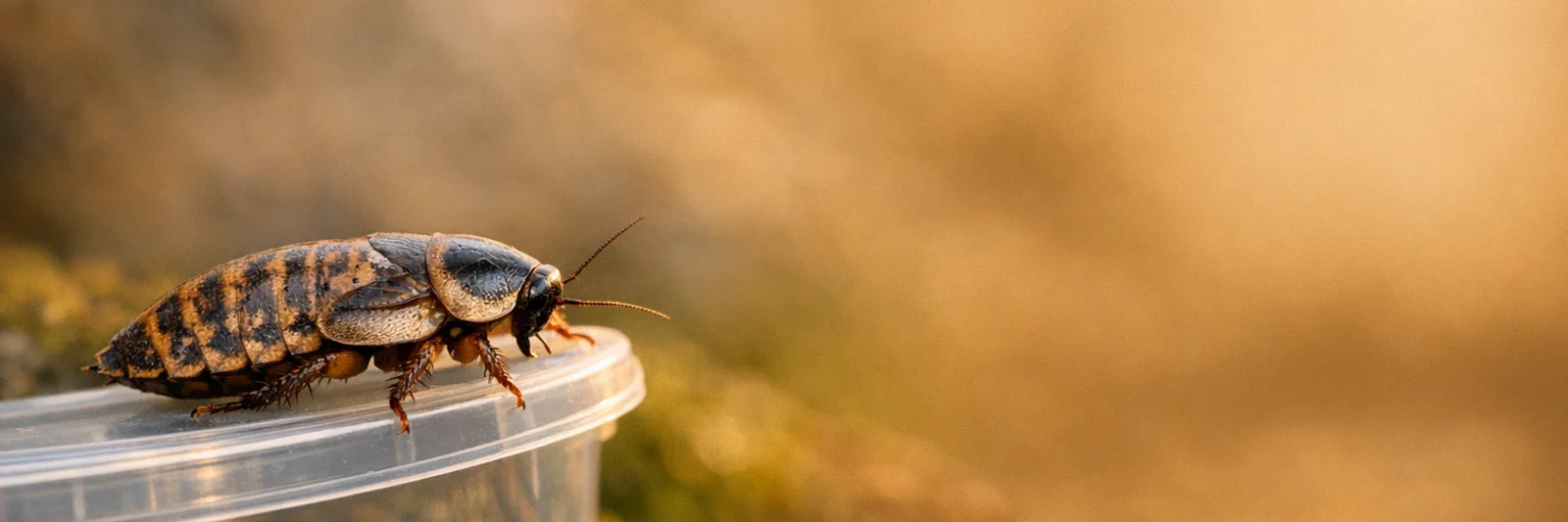
- Adult dubia roaches cannot climb smooth plastic or glass, so a bin with bare, smooth walls already contains a grown colony.
- Male dubia have wings but do not fly, so an escapee crawls rather than takes to the air.
- Tiny nymphs are the real escape risk, since they can squeeze through vent gaps and loose lid seams too small for an adult.
- A petroleum jelly rim, a smooth packing tape band, and a tight fitting ventilated lid are the three standard escape barriers, each with its own tradeoffs.
- Dubia need sustained warmth to breed, so an escaped roach cannot start an infestation in a normal room temperature home.
Why Adult Dubia Almost Never Escape
Dubia roaches earned their reputation as the easiest staple feeder partly because of what they cannot do. Their feet and leg pads cannot grip a smooth surface, so bare plastic or glass walls are already a barrier they cannot climb over. Compare that to crickets, which jump, or red runner roaches, which can scale smooth surfaces, and it is easy to see why a basic dubia bin needs so little extra work.
Flight is not a real concern either. Female dubia have no wings at all, and while males grow short wings, they are heavy bodied and do not use them to fly away. So even a bin with a lid that is not perfectly sealed rarely loses adult roaches, since climbing out is off the table and flying out never was.
The Real Risk: Nymphs and Feeding Spills
If dubia do get loose, it is almost always one of two situations. The first is nymphs, the small, wingless juveniles hatching inside the colony. They cannot climb smooth walls any better than adults can, but their tiny size lets them slip through gaps an adult never could, like a loose fitting lid seam, a cracked corner, or mesh sized for airflow rather than for keeping out something the size of a grain of rice.
The second is feeding time. Every time you open the lid to add food or pull roaches for a meal, you create a window of opportunity, and loose food debris left on the rim can give a roach just enough grip to work its way up and over. Neither risk is dramatic, but both are easy to close off with the right setup and habits, covered next.
Escape Barrier Comparison: Which One to Use
Most keepers rely on one of three barriers near the top of the bin, or combine two for extra insurance. Here is how they stack up on effort, mess, and how often they need attention.
- Petroleum jelly rim: a thin smear around the top inch of the inside wall. Cheap and effective against nymphs, but messy to apply evenly, collects dust and shed skins over time, and needs reapplying every few weeks as it dries out or gets grimy.
- Smooth packing tape band: a strip of tape wrapped around the rim, smooth side facing the roaches. Far less messy than jelly and lasts longer, though it can peel at the seams in a humid bin and should be checked and refreshed occasionally.
- Tight fitting ventilated lid: the lowest maintenance option once it is in place, since a good lid stops the problem at the source instead of relying on a roach failing to climb over something. The tradeoff is upfront cost and making sure the vent holes or mesh are fine enough to still block nymphs.
Smart Feeding Time Habits
Most escapes that do happen trace back to the few minutes the bin is open, so a couple of small habits go a long way.
- Feed in a dish or shallow tray set inside the bin rather than scattering food loose on the floor of the tote, so debris does not build up near the rim where a roach could get a grip.
- Use tongs to pull feeders instead of reaching in and rooting around, which keeps the lid open for less time and disturbs the colony less.
- Chill roaches briefly before handling if you need to sort or count them outside the bin. A short stint in a cool spot slows them down without harming them, making a spill or an escape far less likely while you work.
Will an Escaped Dubia Infest My House?
No, and this is worth saying plainly: dubia roaches will not infest a normal home even if one gets loose. Like other feeder roaches, they need sustained warmth, roughly the mid 80s to low 90s Fahrenheit, plus a steady food and moisture source held in one place to breed and establish. A room temperature house does not provide that, so a stray roach is a nuisance to catch, not the start of an infestation. We cover this same reassurance in more depth for a cousin feeder species in our red runner infestation guide, and the same logic holds here.
Frequently Asked Questions
Can dubia roaches climb out of a bin?
No, adult dubia roaches cannot climb smooth plastic or glass, so a bin with bare, smooth walls already keeps a grown colony contained. The only real climbers to worry about are tiny nymphs, and they get out by squeezing through gaps rather than climbing over them.
How do I stop dubia roaches from escaping?
Add a barrier near the top of the bin, such as a petroleum jelly rim, a smooth packing tape band, or simply use a tight fitting ventilated lid, and keep the ventilation holes small enough to block nymphs. Feeding in a dish, pulling roaches with tongs, and keeping the lid closed except when needed close off the rest of the risk.
Can dubia roaches infest my house?
No, dubia roaches cannot infest a normal home because they need sustained warmth and a steady food and moisture source held in one place to breed, which a room temperature house does not provide. A stray roach is a one time nuisance to catch, not the start of a colony.
Do baby dubia roaches climb?
Baby dubia, called nymphs, cannot climb smooth plastic or glass any better than adults can. Their real advantage is size: they are small enough to squeeze through vent gaps or loose lid seams that would never let an adult through.
What is the best dubia roach escape barrier?
A tight fitting ventilated lid is the most reliable single barrier, since it stops roaches at the source instead of relying on them failing to climb over something. Many keepers pair it with a thin petroleum jelly rim or a smooth tape band for extra insurance during feeding time, when the lid is open.
Keep comparing: How to Store Dubia Roaches Long-Term· Can Red Runner Roaches Infest Your House?· Do Dubia Roaches Smell?· How to Keep Feeder Crickets Alive Longer
