
- Most feeder cricket losses happen in the first 24 hours after shipping, caused by stress and low humidity, not natural die-off.
- Never use an open water dish for crickets. They drown easily, even in shallow water, so use water crystals or fresh vegetables instead.
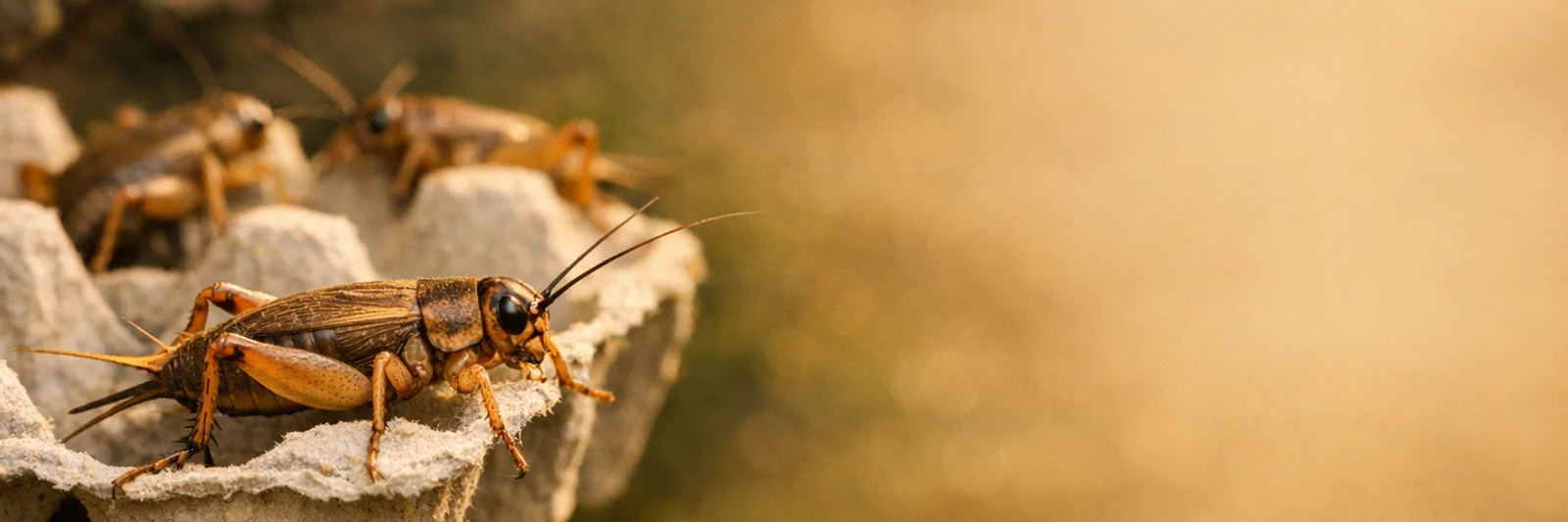
- Egg crate or cardboard flats give crickets more surface area to spread out on, which cuts down on crowding and cannibalism.
- Feeder crickets do best kept warm, roughly 80 to 90 degrees Fahrenheit, and struggle in cold, drafty rooms.
- Remove dead crickets every day. A single rotting cricket can spike ammonia and mold in the container fast.
The First 24 Hours After Your Shipment Arrives
Open your box as soon as it arrives, even if you are not ready to feed anyone yet. Crickets shipped in a sealed box with limited airflow are already stressed from travel, temperature swings, and being packed close together, and every extra hour in that box adds to the damage.
Move the crickets into a well-ventilated container with a screened or perforated lid right away. Ventilation is the single biggest factor in surviving that first day. A container that traps moisture and waste gas builds up ammonia fast, and that alone can wipe out a big share of a shipment that would have otherwise been fine.
Give Them Moisture, Never an Open Dish
Crickets need moisture to survive, but an open water dish is one of the most common ways keepers accidentally kill them. Crickets are clumsy around standing water and drown easily, even in something as shallow as a bottle cap.
Instead, use water-storing crystals made for feeder insects, or offer fresh, moisture-rich vegetables like a slice of potato, carrot, or orange. These give the crickets something to drink from without any real drowning risk, and they double as a light snack while your crickets settle in.
Set Up the Container Right
A little bit of setup goes a long way toward keeping a shipment alive for weeks instead of days. Give the crickets more usable space than the floor of the container alone.
Egg crate or stacked cardboard egg flats work well here. They add vertical surface area, give crickets places to climb and hide, and spread the group out so they are not constantly climbing over each other. Crowded crickets stress each other out and are more likely to turn cannibalistic, which speeds up losses on its own.
Keep Them Warm and Not Overcrowded
Feeder crickets are more resilient in a warm room than a cool one. Aim for roughly 80 to 90 degrees Fahrenheit, with the mid to high 80s being a comfortable sweet spot for most home setups. A cold, drafty room slows crickets down and makes them far more prone to dying off, even if nothing else is wrong.
Give the group enough room for their numbers. A container that is too small for the size of the shipment concentrates waste, heat, and stress in one place, and that combination is a fast track to a die-off, no matter how good your ventilation or moisture setup is otherwise.
The One Daily Habit: Remove the Dead
Check the container once a day and pull out any crickets that have died. This is a simple habit, but it is one of the most effective things you can do. A dead cricket left in the container starts to rot quickly, and that rot drives up ammonia and mold that can sicken and kill the survivors around it.
Removing the dead daily also gives you an early warning sign. If you suddenly see more dead crickets than usual, it usually points to something fixable, like the container running too cold, too crowded, or too damp, so you can adjust before it turns into a bigger loss.
Ongoing Care Once They Are Settled
Once your crickets are past that first stressful day, ongoing care is straightforward. Keep the temperature steady in that 80 to 90 degree range, keep the moisture source topped off without ever switching to an open dish, and keep checking daily for dead ones.
Feed a simple gutload of fresh vegetables, leafy greens, or a commercial cricket feed so they stay healthy and pass good nutrition on to whatever eats them. A well-fed, well-hydrated, warm colony that is not overcrowded is the version of care that keeps crickets alive the longest, and it is also what makes them a better feeder for your pet.
Frequently Asked Questions
How do you keep feeder crickets alive longer?
Give them ventilation right away, a moisture source that is not an open water dish, warmth in the 80 to 90 degree range, enough space so they are not overcrowded, and remove dead crickets daily. Most losses happen in the first 24 hours after shipping, so getting that window right matters most.
Why do my crickets keep dying?
The most common causes are poor ventilation, an open water dish they drowned in, a container that is too cold, overcrowding, and dead crickets left to rot and foul the air. Working through each of these one at a time usually finds the problem.
Do crickets need water?
Yes, but never from an open dish, since crickets drown easily even in shallow water. Use water-storing crystals or fresh, moisture-rich vegetables like potato or carrot slices instead.
What temperature is best for feeder crickets?
Crickets do best kept warm, roughly 80 to 90 degrees Fahrenheit, with the mid to high 80s being a comfortable target for most homes. Cold, drafty rooms slow them down and make die-off far more likely.
How long do feeder crickets live?
With good care after shipping, a healthy batch of crickets can commonly be kept for a couple of weeks or longer before you need more. Most early losses come from shipping stress and poor setup in that first day or two, not from natural lifespan.
Keep comparing: Crickets vs Mealworms· How Many Crickets to Feed a Bearded Dragon· Feeder Crickets vs Dubia· How to Gut-Load Feeders
