Isopod Size Chart: How Big Each Species Really Gets
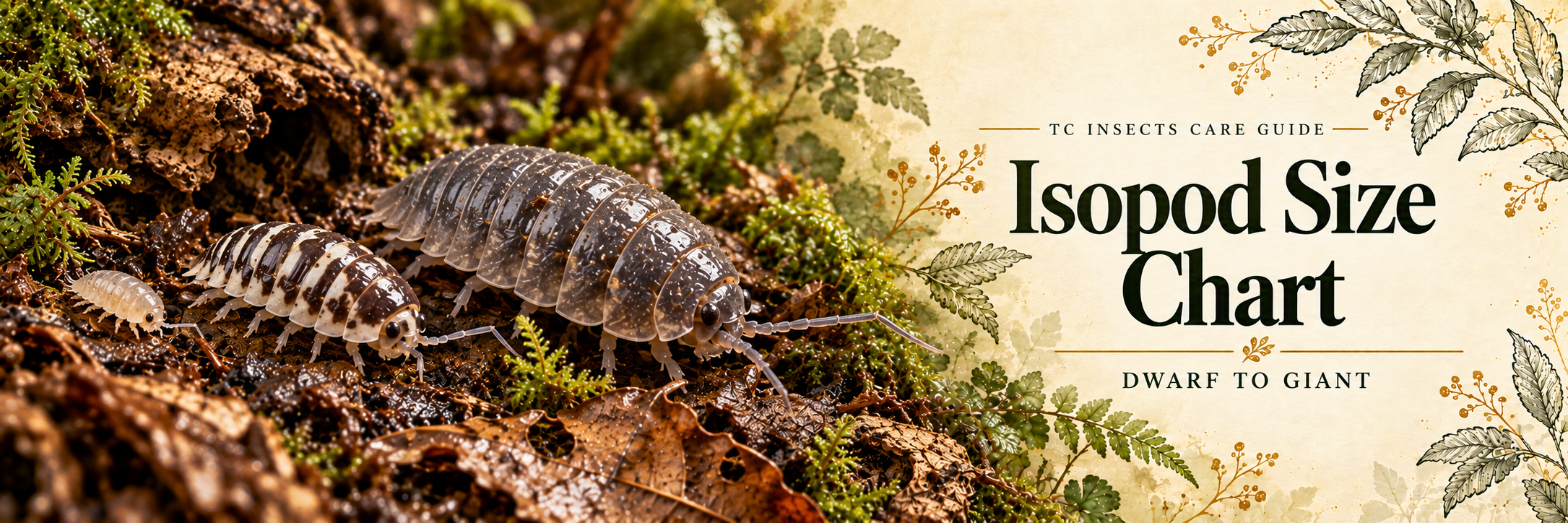
Isopod adults range from about 2 millimeters for the smallest dwarf species up to over 1.5 inches for the largest Porcellio TC carries, a nearly twentyfold spread in body length within one hobby. Size is not just trivia: it decides whether a species works as an occasional feeder for a tiny dart frog, how much waste a cleanup crew can actually process, and how much floor space a colony needs to stay comfortable. This chart organizes TC's own species by size class, dwarf, small, medium, and giant, using the numbers from our own live listings first and outside sources only where our own catalog does not cover a figure.
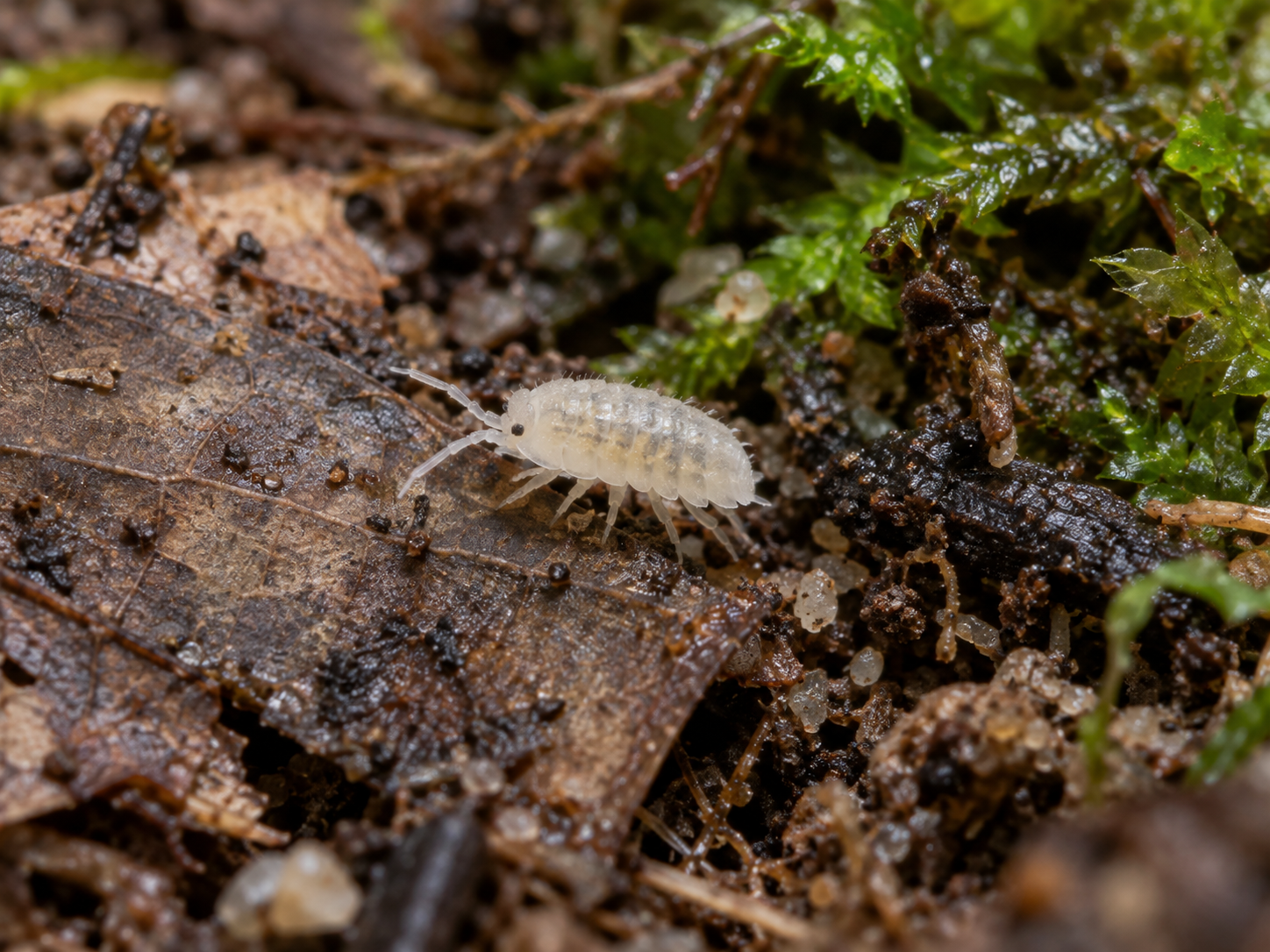
Trichoniscus sp., a true microfauna species that lives inside the substrate
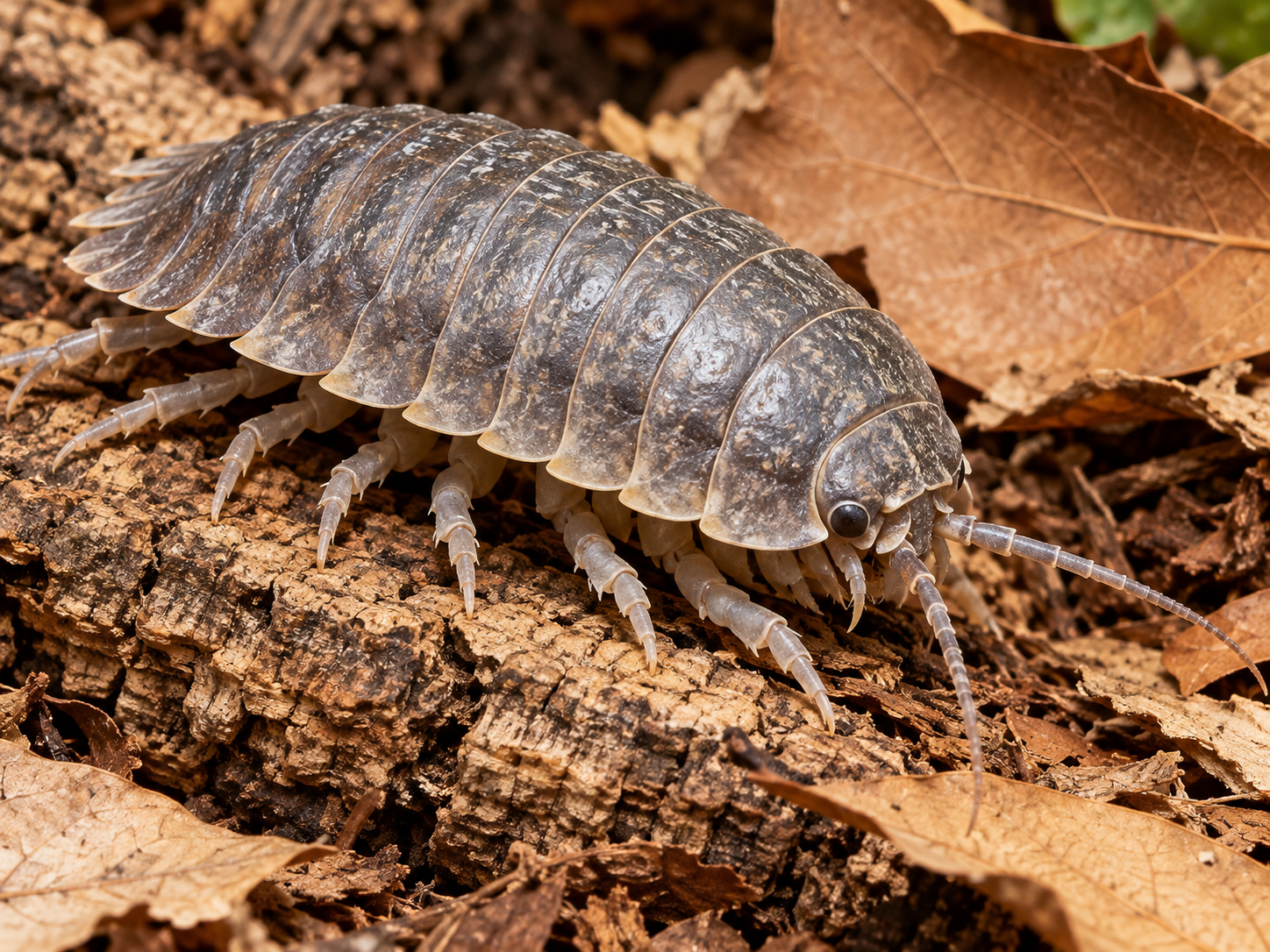
Porcellio hoffmannseggii runs nearly double TC's next largest species
Most beginner picks land in the small to medium range, about 3/16 to 3/4 inch
How Big Do Pet Isopods Actually Get?
TC's own catalog spans about 2 millimeters at the small end to over 1.5 inches, about 38 millimeters, at the large end, a real size range rather than a marketing claim, since every number on this page traces back to a live TC listing or one of our own published care guides. Most of the beginner species that move the most units, Dwarf White, Powder Orange, and Powder Blue, cluster in a modest 3 to 13 millimeter band, so the true size extremes belong to a smaller group of specialty picks on either end.
Size is not just a curiosity. A smaller bodied species like Dwarf White works as an occasional soft bodied feeder for a thumbnail dart frog or a tiny gecko, something a large, tough shelled Porcellio cannot do. A bigger bodied species processes more leaf litter and waste per animal, which matters for a heavily stocked enclosure, while a giant species like Titan simply needs more floor space per individual than a dwarf colony ever will. The size classes below group TC's lineup so you can match the number to the actual job.
Dwarf Isopods: Under About 1/4 Inch
TC's dwarf tier covers everything from about 2 to 5 millimeters, small enough that these species work inside the substrate itself rather than out on the open surface.
Dwarf Purple (Trichoniscus sp.)
Dwarf Purple (Trichoniscus sp.) is TC's smallest listed species, with adults at 2 to 4 millimeters. It lives almost entirely inside leaf litter and substrate rather than on the surface, so this is a working microfauna layer you will rarely see moving in the open, not a display animal.
Dwarf White (Trichorhina tomentosa)
Dwarf White (Trichorhina tomentosa) carries a size window of 1 to 5 millimeters on TC's own listing, though most adults in a healthy colony run closer to the 3 to 4 millimeters our genus comparison chart cites. Every individual is female and parthenogenetic, which is a big part of why this tiny species builds a colony faster than almost anything else TC sells.
Venezillo parvus (Dalmatian)
The Dalmatian isopod (Venezillo parvus) sits at about 5 millimeters on TC's own listing, though other hobby sources report individuals up to 8 to 12 millimeters. It is a true roller, tucking into a tight ball when disturbed the same way the much larger Armadillidium do, just at a tenth of the body size. Full care details are in our Venezillo parvus guide.
Small Isopods: About 1/4 to 1/2 Inch
Step up to roughly 6 to 15 millimeters and isopods become genuinely easy to watch moving across a bin, instead of only turning up when you dig.
Powder Orange and Powder Blue (Porcellionides pruinosus)
Powder Orange and Powder Blue (Porcellionides pruinosus) run 1 to 1.25 centimeters on TC's own listing, about 3/8 to 1/2 inch, one bracket up from the dwarf species above. They are surface active and quick, which makes their size easy to actually see in a bin instead of only finding it by digging. Shop the full color range on our Powder isopods page.
Cubaris sp. Panda King
Panda King (Cubaris sp.) runs 10 to 15 millimeters on TC's own listing, sometimes a touch larger, putting it at the top of the small class and the easiest common entry point into the Cubaris genus. The dark body with bright white banding reads clearly even at this modest size.
Medium Isopods: About 1/2 to 3/4 Inch
From about 13 to 20 millimeters, isopods start reading as a real display animal on their own, and this band includes a couple of names that need an extra safety note.
Zebra and Armadillidium vulgare morphs
Zebra (Armadillidium maculatum) runs 15 to 20 millimeters on TC's own listing, and Armadillidium vulgare color lines like Orange Vigor run a close 13 to 18 millimeters, occasionally to 20. Both roll into a tight, sealed ball when disturbed, called conglobating, which is part of why a medium sized Armadillidium reads as more of a display animal than a dwarf species does.
Dairy Cow (Porcellio laevis)
Dairy Cow (Porcellio laevis) sits at 18 to 20 millimeters on TC's current listing, while other TC pages describe the species more generally as about half an inch, so treat half an inch as typical and 20 millimeters as the large end of a mature individual. Dairy Cow is large and protein driven enough that it belongs in an animal free display or feeder colony, never loose with a live reptile or amphibian.
Giant Canyon (Porcellio dilatatus)
Giant Canyon (Porcellio dilatatus) lists at around 15 millimeters typical on TC's own page, with hobby reports to 20 millimeters, landing it in the same medium band as Dairy Cow despite the dramatic sounding name. Like other large Porcellio, it is a display or feeder bin species, not a cleanup crew for an enclosure with a live animal. Full care is in our Giant Canyon guide.
Giant Isopods: Titan Stands Alone Over 1.5 Inches
Titan (Porcellio hoffmannseggii) is the one species on this page in a class by itself, with TC's own listing and multiple dedicated care guides putting adults past 1.5 inches, roughly 38 millimeters, nearly double Giant Canyon and Dairy Cow just one class down. There is currently a real gap in TC's lineup between that medium band, topping out near 3/4 inch, and Titan's giant class, nothing in between.
Like other large, protein driven Porcellio, Titan belongs in an animal free display bin or a dedicated breeding project, never loose with a live reptile or amphibian. It also breeds slowly and can turn territorial with its own kind, so the size that makes it a striking centerpiece is the same trait that makes it a poor first isopod. Full care is in our Titan isopod guide.
How Should Size Change What You Buy?
Match the size class to the job, not just the look. A dwarf or small species like Dwarf White, Dwarf Purple, or Powder Orange is the right pick for a cleanup crew sharing space with a live animal, an occasional soft bodied feeder for a tiny insectivore, or any bin where you want fast, forgiving breeding more than visual size. Our beginner isopods page groups exactly these easier, smaller picks in one place.
A medium or giant species like Zebra, Dairy Cow, Giant Canyon, or Titan suits an animal free display bin, a dedicated feeder colony, or a keeper who already has an easier colony running and wants a bigger, slower, more hands on second project. Genus behavior matters as much as size once you have picked a class, which our genus comparison chart and growth timeline guide cover in more depth than a size number alone can show.
The Small to Giant Sampler Kit
One species from each size class on this page, from 3mm Dwarf White up to Titan's 1.5 inch giants.
Frequently Asked Questions
Written by the TC INSECTS breeding team · Porter, Texas · Live Arrival Guarantee on every order
Have a care question? Ask our community.
Join Reptile Keepers USA, our free Facebook group for reptile, amphibian and invert keepers. Share your setups, get care help and swap feeder tips.
Join the free group