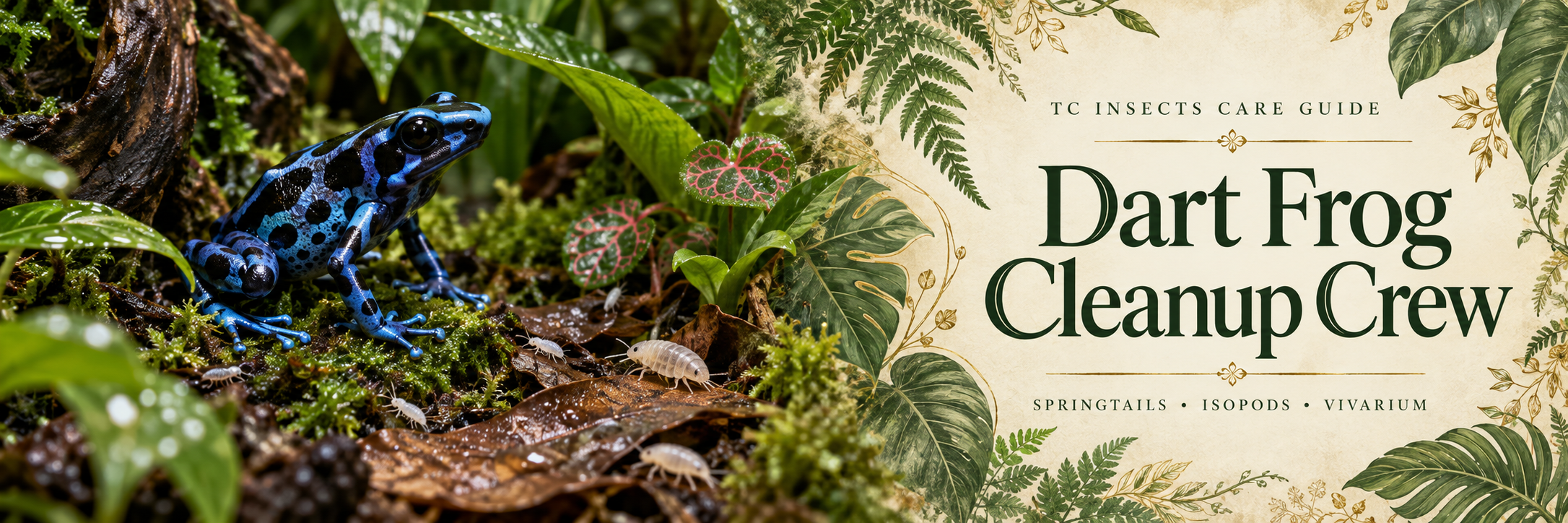
The best cleanup crew for a dart frog vivarium starts with springtails, not isopods, because springtails are the primary frog-safe microfauna in this kind of setup and they double as a supplemental food source for the frogs, especially tiny froglets. Layer in Dwarf Whites (Trichorhina tomentosa) and other small tropical isopods alongside them, and leave the large, robust species like big Porcellio and Dairy Cow out of the build entirely, since a dart frog vivarium is small, densely planted, and kept very humid, and a big appetite isopod can outcompete or disturb an environment built around a tiny, delicate frog. Our isopod and springtail combos pair the right small-bodied crew together in one order. Get the ratio right and seed it early, and the crew becomes part of the frog's ecosystem instead of just a cleaning service.
Also a real food source for the frogs and froglets
Skip large Porcellio and Dairy Cow entirely
Let the crew establish before frogs or eggs go in
The answer: springtails first, small isopods second
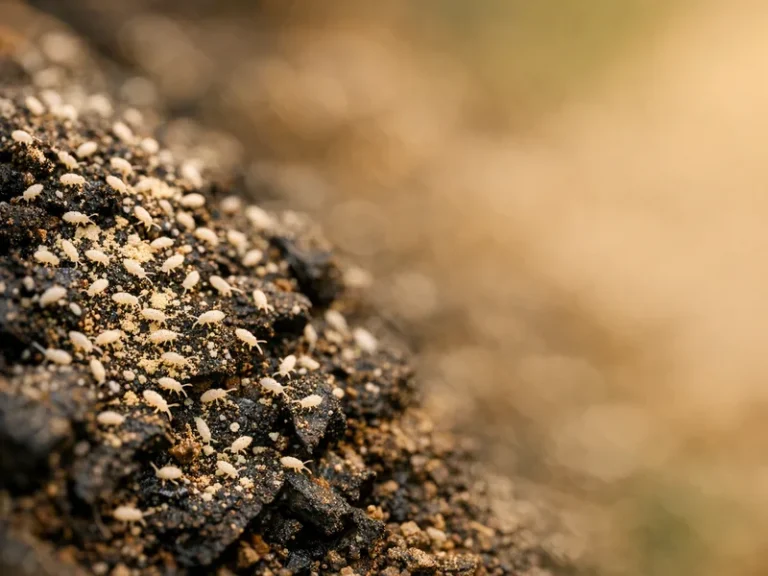
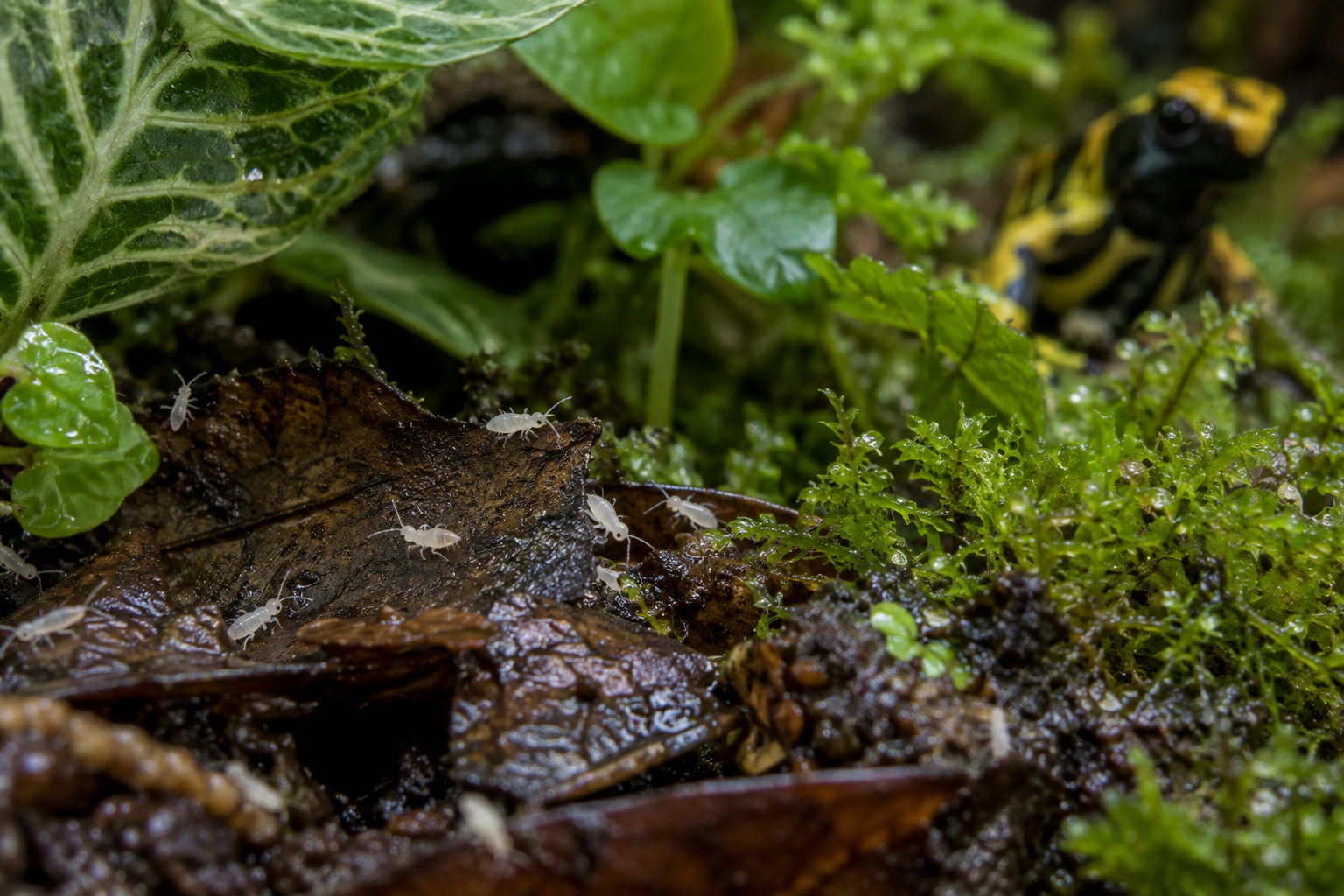
In a dart frog vivarium, springtails are the backbone of the cleanup crew, not an afterthought. They graze mold and fungus in a setup that runs very humid, and they double as food for the frogs themselves, a dual role most other bioactive builds do not need from their microfauna.
Layer in Dwarf Whites and other small tropical isopods for extra cleanup power on top of that, but keep the crew small and calm across the board. Leave large, robust species out of the build entirely, the opposite approach from what we recommend for a big, heavy-waste animal like a ball python.
Why springtails are not optional here
Dart frog vivariums run humid, densely planted, and heavily misted, which is exactly the environment where mold and fungus take hold fastest. Springtails graze that mold and fungus continuously, which makes them functionally required microfauna in this setup rather than a nice-to-have addition.
They also do something most cleanup crew microfauna do not: feed the animal they are cleaning up after. Froglets are often too small for fruit flies at first, and springtails are frequently the first food size they can actually eat, while many adult dart frogs will snack on springtails too. Our springtail cultures ship as living, reproducing colonies ready to seed straight into a planted vivarium.
Where small isopods fit in
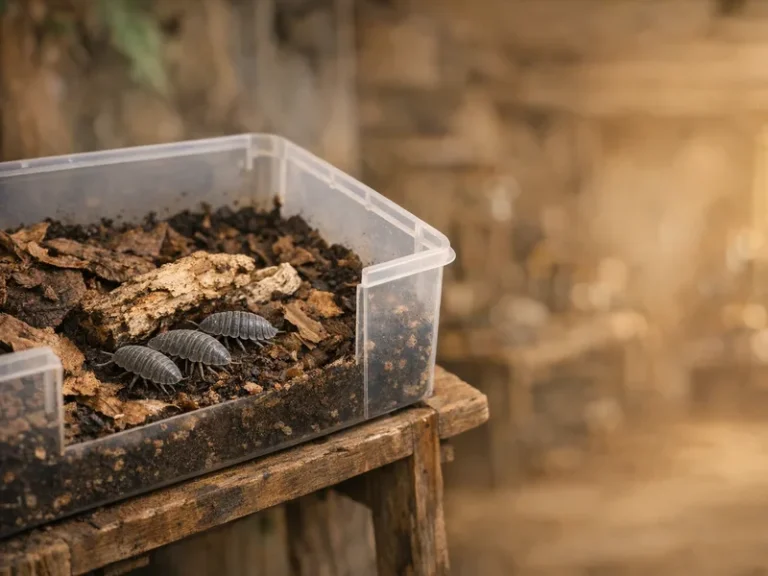
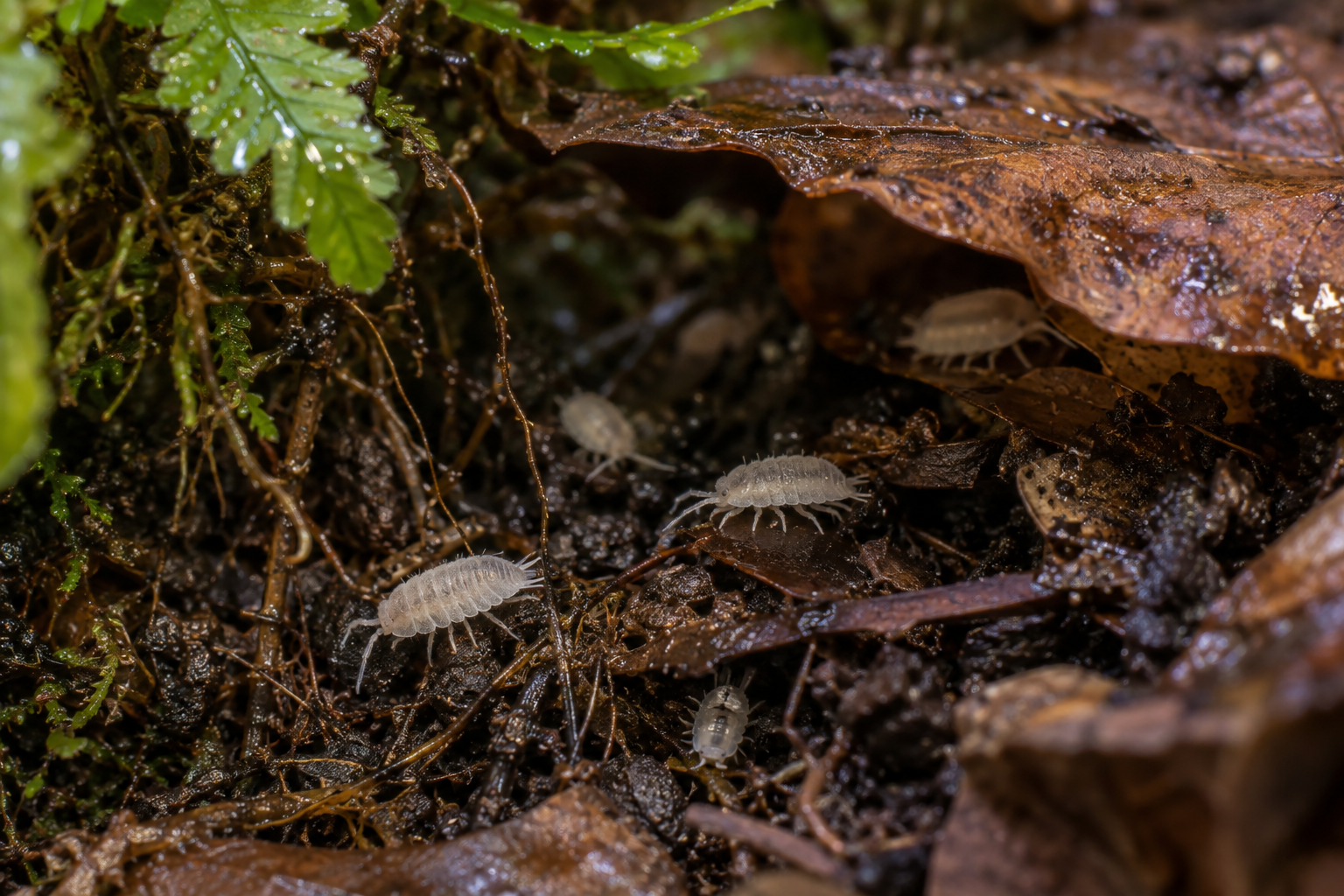
Dwarf Whites (Trichorhina tomentosa) are tiny, gentle, and spend most of their time tunneling through the substrate, which suits the small footprint of a dart frog vivarium well. The species reproduces on its own, so a small starter culture builds into a working population without much effort.
Small tropical Porcellionides, the Powder Blue and Powder Orange isopods, are another good fit, easygoing and quick to establish in the warm, humid range a planted vivarium holds. Either pairs naturally with springtails rather than competing with them, since the two groups are doing different jobs. Our beginner isopods covers both.
Why to leave large isopods out of the build
Big, robust species like Dairy Cow or large Porcellio belong in their own display or feeder colony rather than a pet's enclosure, and they are the wrong tool here. A dart frog vivarium is small and densely planted, and a big appetite decomposer can outcompete the more delicate microfauna balance the setup depends on, or simply disturb a tank that is built around a small, sensitive animal.
This is a mismatch issue, not a danger claim. It is the same species-to-animal matching logic behind every cleanup crew guide we write, just landing on the opposite answer from a build like a ball python guide, where a bigger, hungrier crew is actually the right fit.
The living substrate and leaf litter a dart frog viv needs
A dart frog vivarium is built on a genuinely living substrate with a real leaf litter floor, not a decorative one. Leaf litter is standard in this hobby for good reason: it gives the cleanup crew material to work through, gives springtails and isopods places to hide and breed, and gives the frogs themselves cover and, in many setups, a place to lay eggs.
We carry the pieces of that base in our substrate and leaf litter lineup. Build the living layer first, seed the crew into it, and only then is the vivarium actually ready to support the microfauna, let alone the frogs.
Ratios and seeding timeline
As a rough starting point, a single springtail culture plus a modest 20 to 30 isopods is reasonable for a standard-size dart frog vivarium, scaling up for a larger tank or a bigger group of frogs. Those are ballpark numbers, so for a figure matched to your exact footprint, run it through our cleanup crew calculator.
Seed the crew into the finished, planted vivarium at least 4 to 6 weeks before the frogs go in, or before you expect breeding activity in an established tank. That head start lets the springtails and isopods build real numbers before frogs, eggs, or froglets are relying on them.
Everything You Need for a Dart Frog Cleanup Crew
The frog-safe crew and living substrate behind the answers above. Tap to add, then check out in one trip.
Frequently Asked Questions
Written by the TC INSECTS breeding team · Porter, Texas · Live Arrival Guarantee on every order
Have a care question? Ask our community.
Join Reptile Keepers USA, our free Facebook group for reptile, amphibian and invert keepers. Share your setups, get care help and swap feeder tips.
Join the free group