Why Are My Red Runner Roaches Dying?
Paired adults documented living over a year in controlled studies
TC's own holding range. Below the mid 70s stresses a colony
Red runners want it drier than dubia. Damp bedding invites mold fast
Why Is My Red Runner Colony Dying?
Most red runner roach deaths trace back to one of a few fixable causes: substrate that stayed too wet, no real hydration source, a bin that ran too cold or too hot, overcrowding, or simply old adults reaching the end of a lifespan that commonly runs past a year. A sudden wave of deaths across every age points to the environment, while a slow trickle of old, dark adults in an otherwise busy colony is normal. Blatta lateralis is a different animal than dubia, so our dubia die off guide will not cover everything here. Work through the causes below in order.
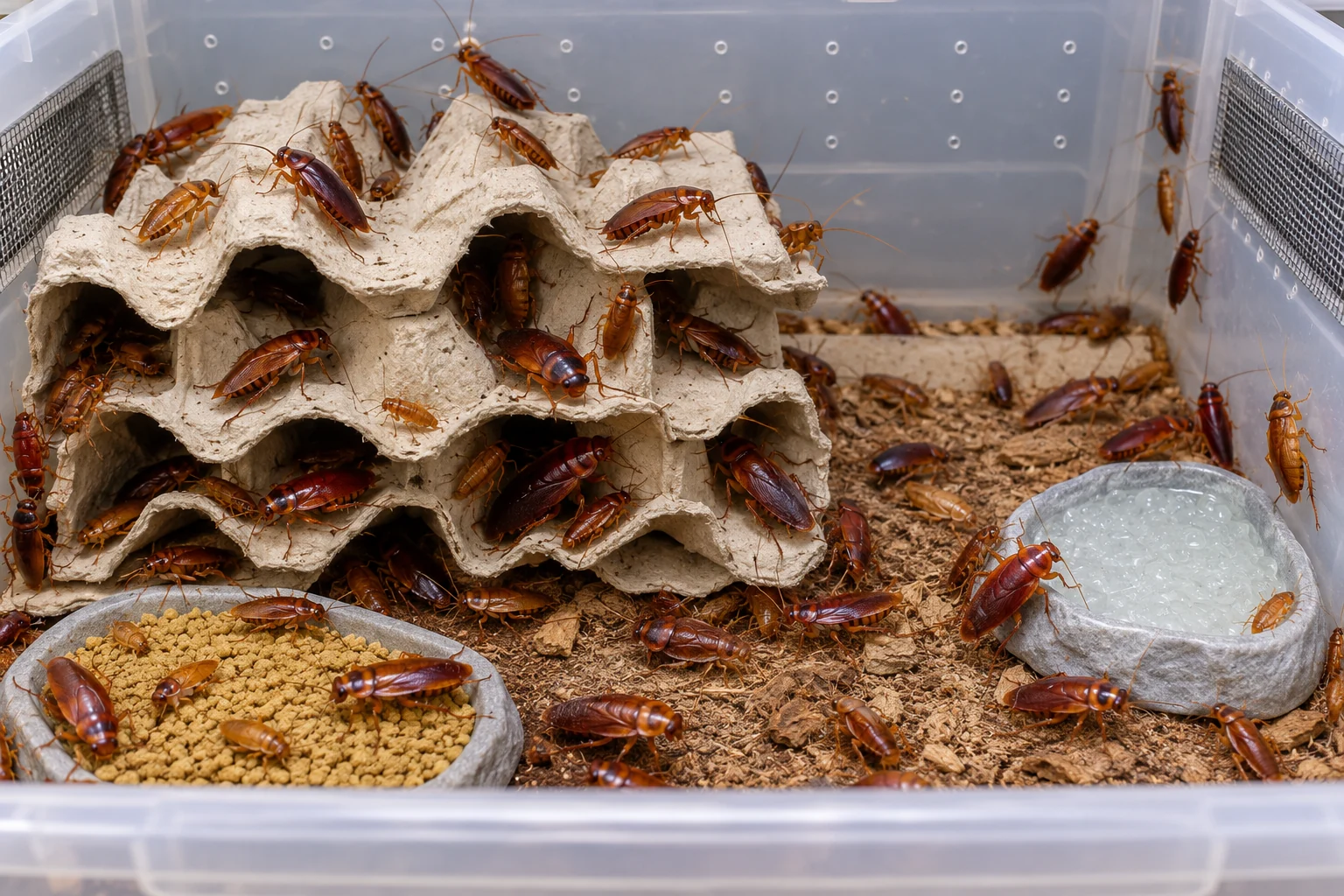
The recovery setup
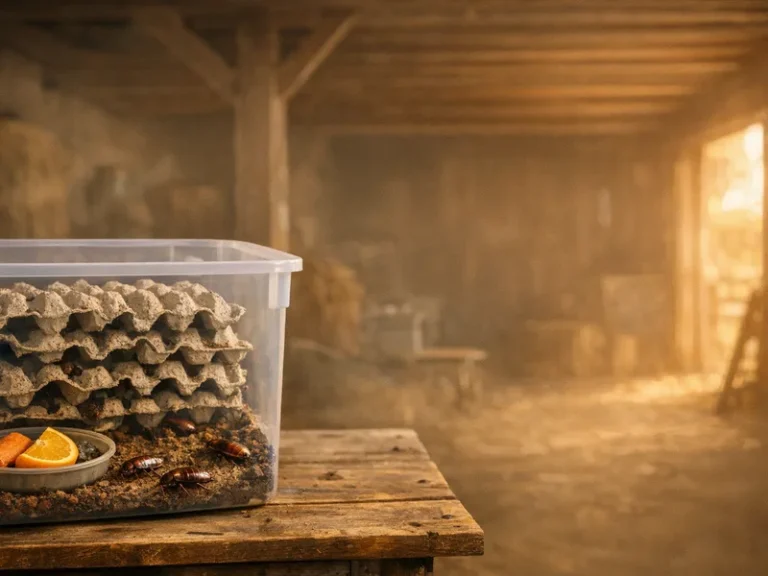
A visual checklist for the conditions covered throughout this guide. — generated visualization.
Keep moisture controlled and localized.
Use crystals or gel instead of open water.
Measure the bin; do not guess by feel.
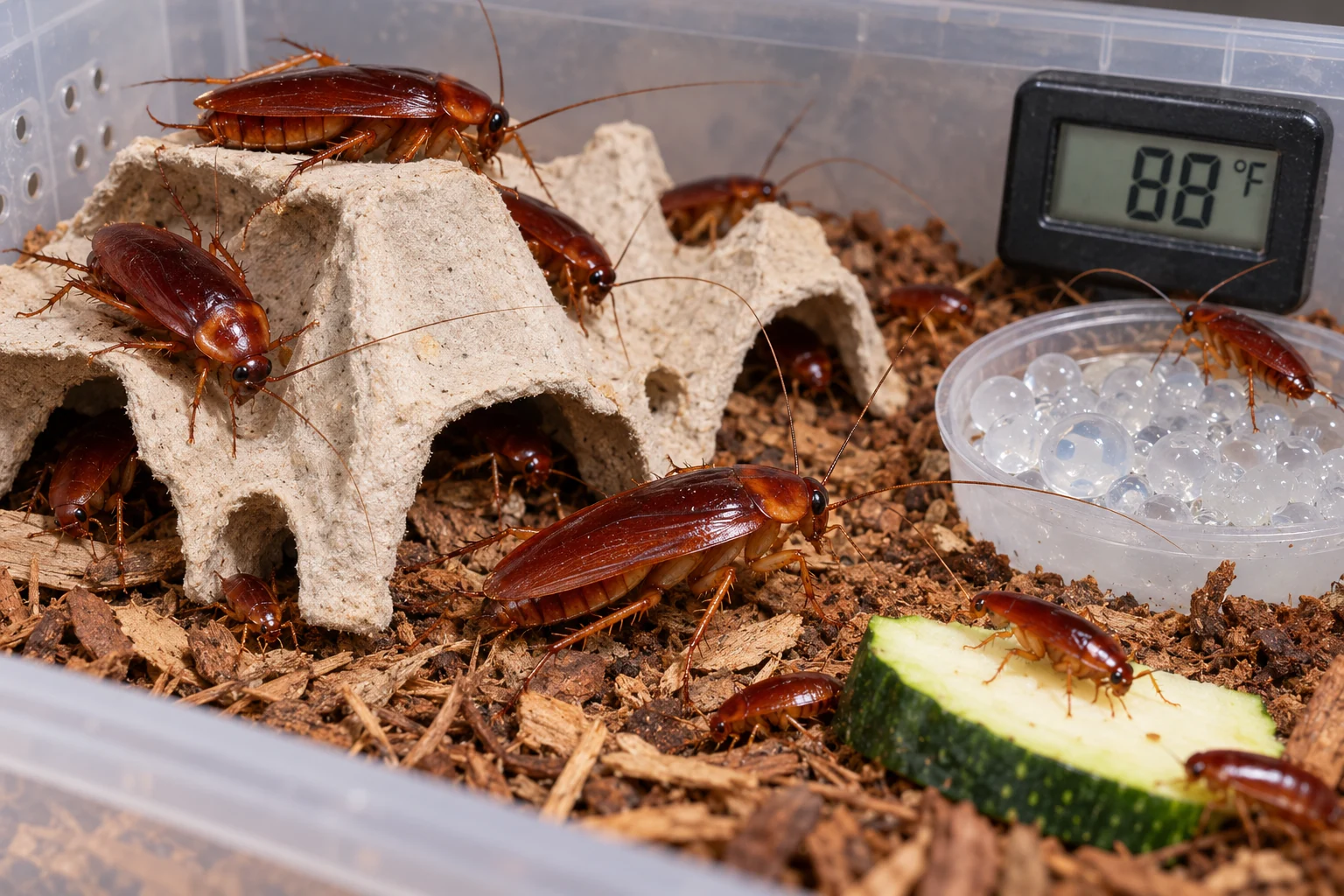
Work Through the Causes in Order
Sudden Crash or Slow Trickle? Start Here
Figure out the pattern before you fix anything. A slow trickle of a few dead adults at a time in an established, otherwise active colony is usually just normal turnover, since red runners in controlled studies have been documented living over a year as paired adults. A crash that hits nymphs and adults together, or that started right after a specific change such as a new heat source, a cleaning product, or a delayed shipment, points to an environmental cause instead, and that is what the rest of this guide works through.
Red runners are a different species from dubia, with different moisture needs, so do not assume dubia advice applies directly. If you keep both, treat them as two separate troubleshooting jobs with two different sets of causes to check.
Wet Substrate and Mold: The Most Common Killer
Red runners do best on the drier side, noticeably drier than a dubia setup, and a damp, packed substrate is the single most common reason a red runner colony starts dying. Standing moisture breeds mold and bacteria fast in a warm bin, and a strong ammonia smell or visible mold on the egg crate is a clear sign the bedding has gone past what the colony can handle. Nymphs, with the least reserve, usually go first.
The fix is airflow and restraint with moisture, not more cleaning product. Keep the bin cross ventilated with a screened lid, run a bare bottom setup or only a thin dry substrate layer, and confine any dampness to one small corner rather than the whole floor. Our red runner care guide covers the full bin setup if you are starting from scratch. If the colony has been damp for a while, a full substrate swap and a wipe down of the walls resets the bin faster than trying to dry it out in place.
Dehydration Without an Open Water Dish
Red runners still need a real hydration source, they just cannot be given one the way many other insects are. An open water dish drowns roaches quickly, so keepers who know that sometimes swing too far the other way and skip water entirely, which slowly dehydrates the colony instead. Either mistake shows up the same way: weak, undersized nymphs, molting problems, and adults dying off faster than expected.
Water crystals or a hydration gel solve both problems at once, since they hold moisture without standing water a roach can fall into. Fresh vegetable scraps such as carrot or squash add a secondary moisture source, as long as anything uneaten is pulled out within a day so it does not rot. If your bin has neither a gel, crystals, nor produce in it right now, that gap is worth fixing before you look anywhere else, even in a colony that started from healthy live red runner roaches.
Temperature: Too Cold Stresses Them, Too Hot Kills Fast
Red runners hold up to a wider range than many feeder insects, but both extremes cause real problems, and they fail differently.
Too Cold
Red runners thrive warm, roughly 85 to 95 F, and breeding tapers off well below that. A cool room in the 60s or low 70s will not necessarily kill a colony outright, but held there for weeks it stresses them, slows feeding, and leaves both nymphs and older adults more likely to die of something that would not have been fatal at the right temperature. Add a low watt heat mat to one side of the bin and leave a cooler zone so the colony can choose.
Too Hot
A bin in direct sun or sitting against a heat mat with no thermostat is the faster, more dangerous failure. Once a bin climbs well past the mid 90s, deaths can happen within hours instead of building up gradually, and a die off that coincided with a heat wave, a new heater, or a bin moved closer to a window points straight at overheating. Check the actual surface temperature with a thermometer instead of guessing by feel.
Overcrowding and a Thin Diet
A bin that has outgrown its egg crate crowds roaches onto too little surface area, which raises competition for food and water and lets waste build up faster than the colony can handle. That stress alone raises the death rate even when temperature and moisture look fine on paper. Add another layer of egg crate or split the colony into a second bin once roaches are stacked several deep with nowhere to spread out. Our guide to breeding red runners at home covers splitting and scaling a colony in more depth.
Diet matters too. A dry gutload such as a quality roach chow should be the base, topped with the produce and water crystals covered above. A colony fed only scraps, or left to run out of food between visits, breeds poorly and produces weaker nymphs that are the first to die when anything else goes wrong. If deaths are concentrated in small nymphs rather than adults, check food and water before anything more complicated.
Chemical Exposure and Roaches That Arrive Weak
Household sprays, scented cleaning products, and even some new plastics or treated wood can be lethal to roaches in tiny amounts, and a die off that started right after cleaning near the bin or spraying for pests elsewhere in the house is the clearest clue you will get. Move the colony away from the source, air out the room, and rehouse into a clean, untreated bin if you suspect contamination.
A shipment that arrives sluggish or with a few dead on arrival is a separate issue from an established colony crashing, and it is covered by TC's live arrival guarantee. Email clear photos of the animals in their unopened cups to customer.service@tcinsects.com within 1 hour of the delivery scan, and TC will replace them or issue store credit. Give a cold shipped batch time to warm gradually to room temperature before you judge how many made it, since a sluggish, cool roach can look far worse than it actually is. A few individuals that are simply pale and unmoving, rather than dead, are often just mid molt rather than in real trouble.
Keep reading: Which Pet Roaches Can Fly? Gyna, Panchlora and More and Blaberus Cave Roaches Compared: Peruvian, Honduras, Colombia, Florida
Match the Pattern You Are Seeing
Substrate is too wet for this species, mold and bacteria building up
Improve ventilation, dry the substrate out, or switch to a bare bottom bin
Dehydration, not enough hydration between water crystals and produce
Add water crystals or a hydration gel plus small amounts of fresh vegetable
Temperature below the mid 70s F for an extended stretch
Add a low watt heat mat to one side of the bin. Keep a cooler zone too.
Overheating, often well past the mid 90s F
Check the actual bin temperature with a thermometer. Move off direct heat or sun.
Overcrowding. Not enough space, hides, or airflow per roach
Add egg crate or split into a second bin to spread the colony out
Chemical exposure from a household spray or scented product
Move the bin, ventilate the room, rehouse in a clean untreated bin
Normal aging in an established colony
No action needed. This is routine generational turnover.
The Red Runner Recovery Kit
Hydration, diet, and substrate fixes for the most common causes behind a red runner die off.
Frequently Asked Questions
Why are my red runner roaches dying all at once?+
A sudden, colony wide crash almost always points to the environment rather than disease: substrate that stayed too wet, no real hydration source, a bin that ran too cold or dangerously hot, or a household chemical nearby. Work through temperature and moisture first, since those cause the most red runner die offs, then check for a timing clue like a new heater or a recent cleaning product.
What temperature kills red runner roaches?+
Red runners thrive at roughly 85 to 95 F and tolerate cooler rooms for a while without dying outright, just breeding poorly. The real danger is overheating: a bin in direct sun or against a heat mat with no thermostat can climb into the high 90s and beyond, and deaths from that kind of heat spike can happen within hours rather than building up slowly.
Can red runner roaches die from too much moisture?+
Yes, and it is the most common cause of a red runner die off. Unlike some feeder insects, red runners do best on the drier side, and a damp, packed substrate breeds mold and bacteria fast in a warm bin. A strong ammonia smell or visible mold is a clear sign to dry the bin out and improve airflow right away.
How do I keep red runner roaches hydrated without drowning them?+
Skip the open water dish, since red runners drown in it easily. Use water crystals or a hydration gel instead, which hold moisture without standing water, and add small amounts of fresh vegetable such as carrot or squash that you remove within a day so it does not rot and add mold to the mix.
How long do red runner roaches live?+
In controlled studies, paired adult red runners have lived over a year, so a slow, steady trickle of old, dark adults dying in an active, otherwise healthy colony is normal generational turnover, not a problem to fix. It only becomes a real concern when deaths spike suddenly or hit nymphs and adults together.
My red runner roach is pale and not moving, is it dying?+
Probably not. A pale, motionless red runner is very often mid molt rather than dying, since roaches turn white and go still while a fresh exoskeleton hardens over a few hours. Check for a thin, empty shed skin nearby, and see our guide on roach molting versus a dead roach for the full rundown.
Continue With Confidence
Have a care question? Ask our community.
Join Reptile Keepers USA, our free Facebook group for reptile, amphibian and invert keepers. Share your setups, get care help and swap feeder tips.
Join the free group