Blaberus Cave Roaches Compared
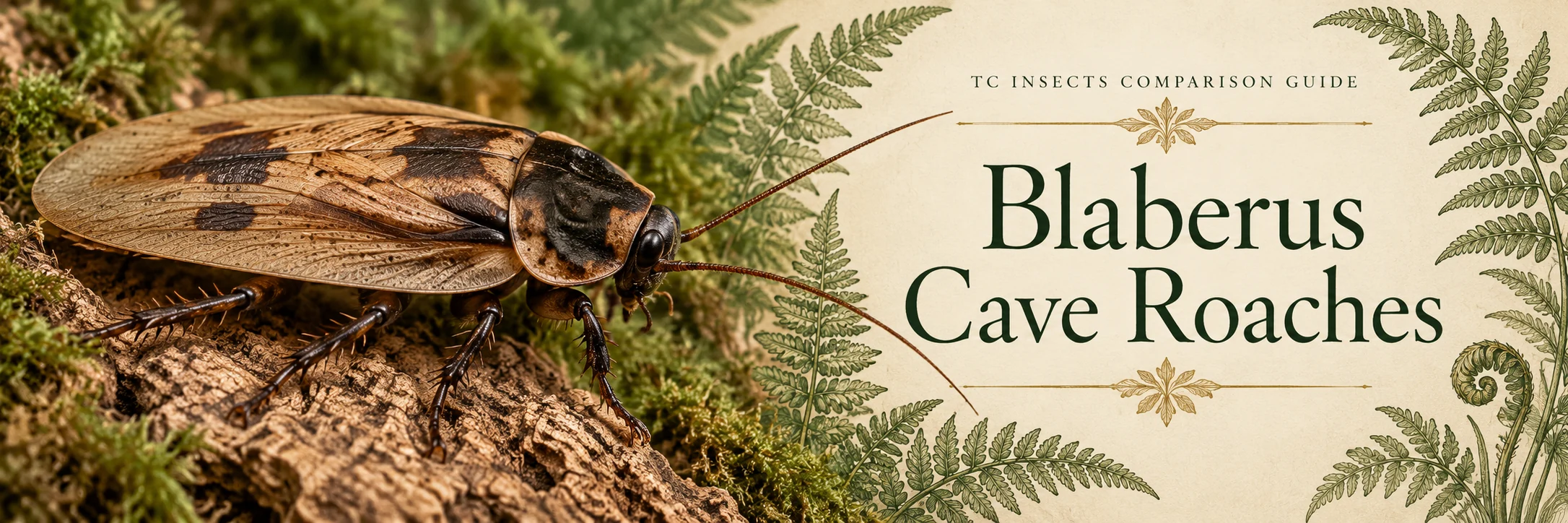
TC currently stocks four Blaberus cave roaches, the Peruvian, Honduras, Colombia and Florida-locality lines, ranging from about 50 to 75 mm as adults; the most-searched name in the genus, Blaberus giganteus, is not part of our lineup right now. All four have wings as adults, none can climb smooth surfaces, and only the Honduras line is even an occasional flier, a nuance covered across TC's whole exotic roach lineup here. This guide compares size, temperament, breeding pace and housing across all four so you can pick the right one.
Peruvian, Honduras, Colombia and Florida lines; B. giganteus is not currently available.
Florida line runs smallest at 50 to 54 mm; Honduras is largest at 67 to 75 mm.
Only Honduras adults may rarely fly; the other three never leave the ground.
Meet the four Blaberus lines TC carries
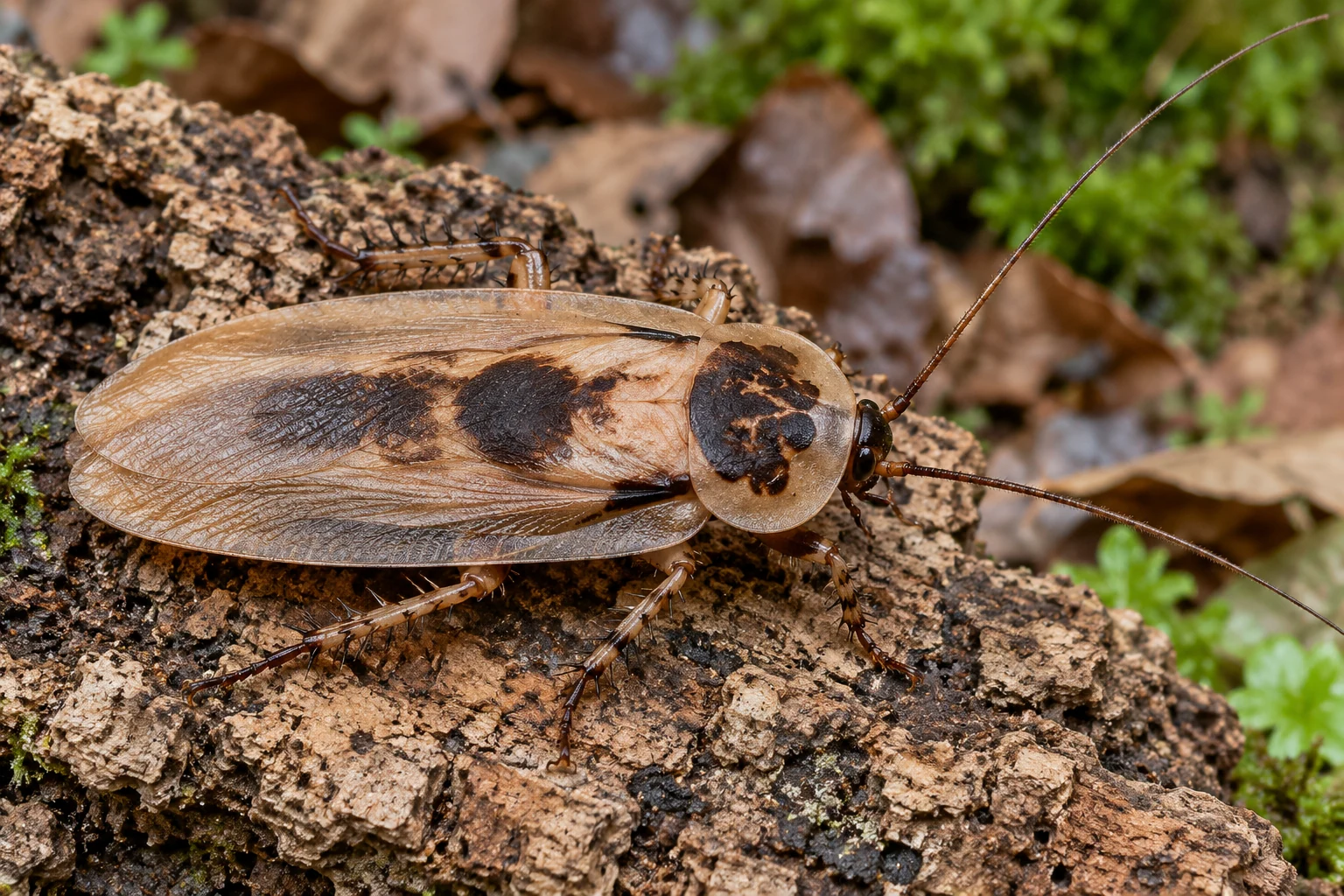
Blaberus is a genus of large, flat-bodied cave and forest roaches native to Central and South America, all of them live-bearing, all of them built to wedge into tight rock and log crevices. TC keeps four lines in stock: the Peruvian Cave Roach (Blaberus cf. peruvianus), the Honduras Cave Roach (Blaberus sp. Honduras), the Peruvian Black-Head (Blaberus parabolicus Colombia line), and the Miami Polymorphic Roach (Blaberus atropos Florida line).
One name you will not find on this list is Blaberus giganteus, the true Giant Cave Roach and the species most people search for by name. It is not part of our current lineup. The four lines below are genuinely comparable in size and care, and two of them, Honduras and Peruvian, were historically confused with or bred alongside giganteus stock, which is exactly why line purity matters below.
The four lines, species by species
Every TC Blaberus ships as 1 or 5 mixed nymphs, a collector count, not a feeder count. Here is what sets each line apart.
Peruvian (Blaberus cf. peruvianus): the accessible entry point
At roughly 57 to 65 mm, Peruvian is TC's most forgiving Blaberus and the cheapest of the four. It tolerates a wide humidity range, stays active from 70 to 85F, and adults have wings but do not actively fly. The cf. in its name means the captive line closely matches a formally described species without a confirmed match to type specimens, an honest, minor uncertainty that does not affect day-to-day care.
Honduras (Blaberus sp. Honduras): the largest, and the one that might fly
Honduras is TC's biggest line at 67 to 75 mm, and the only one of the four where adults of both sexes may occasionally fly, though even TC calls it rare in captivity. Its species identity is unconfirmed, originally sold as B. giganteus before differences in wing pattern and behavior came to light. The one real husbandry catch: crowded, male-heavy colonies can turn territorial enough to tear wings, so give this line more floor space and hides than you think it needs.
Colombia (Blaberus parabolicus, Colombia line): the slow-growing black-head
This is the striking one: glossy black head, dark brown body, a yellow-orange spot on the pronotum, at 59 to 63 mm. It is also the fussiest about moisture, wanting consistently damp substrate rather than the wide tolerance the Peruvian and Florida lines allow, and it grows more slowly than its genus-mates. The Colombia tag marks sourcing, not a different species; older Peruvian-sourced lines carry the same Peruvian Black-Head common name. If a moisture-loving burrower with documented parental biology interests you more than a cave roach, TC's Cuban Burrowing Roach is a different genus worth a look.
Florida (Blaberus atropos, Florida line): pattern variety from one founder group
Despite the name, this species is native to Trinidad, Tobago and Guyana; the Florida tag marks where this particular founder group was collected from an established population, not where the species originates. At 50 to 54 mm it is the smallest of the four, cannot fly, and shows variable pronotum markings across siblings from the same parents, which is the whole appeal for collectors who want a colony where no two adults look quite alike.
Why none of these make good feeders
Every TC Blaberus line ships in counts of 1 or 5 nymphs, priced and sold like the collector species they are, not the bulk feeder some buyers expect from a cave roach. Nymphs take several months to reach adulthood, broods run 20 to 30 for Honduras and Peruvian up to 30 to 40 for Florida, and a starter group of 5 becomes a modest breeding cluster only after many months of steady heat.
If you actually need volume, Dubia roaches or Orange Head roaches reach a usable feeder size faster and ship in the hundreds, not fives. Blaberus earns its place as a display animal you watch for years, not a colony you harvest weekly.
Housing rule #1: never mix Blaberus species
Blaberus species hybridize readily in a shared enclosure, and the hobby has decades of muddied cross lines between fusca, giganteus and their relatives to show for it. Two of TC's four lines, Honduras and Peruvian, carry documented ties to that same hybrid history, so mixing either with another Blaberus, including a future giganteus purchase, produces offspring that are not pure of any line. Keep every species in its own bin, always.
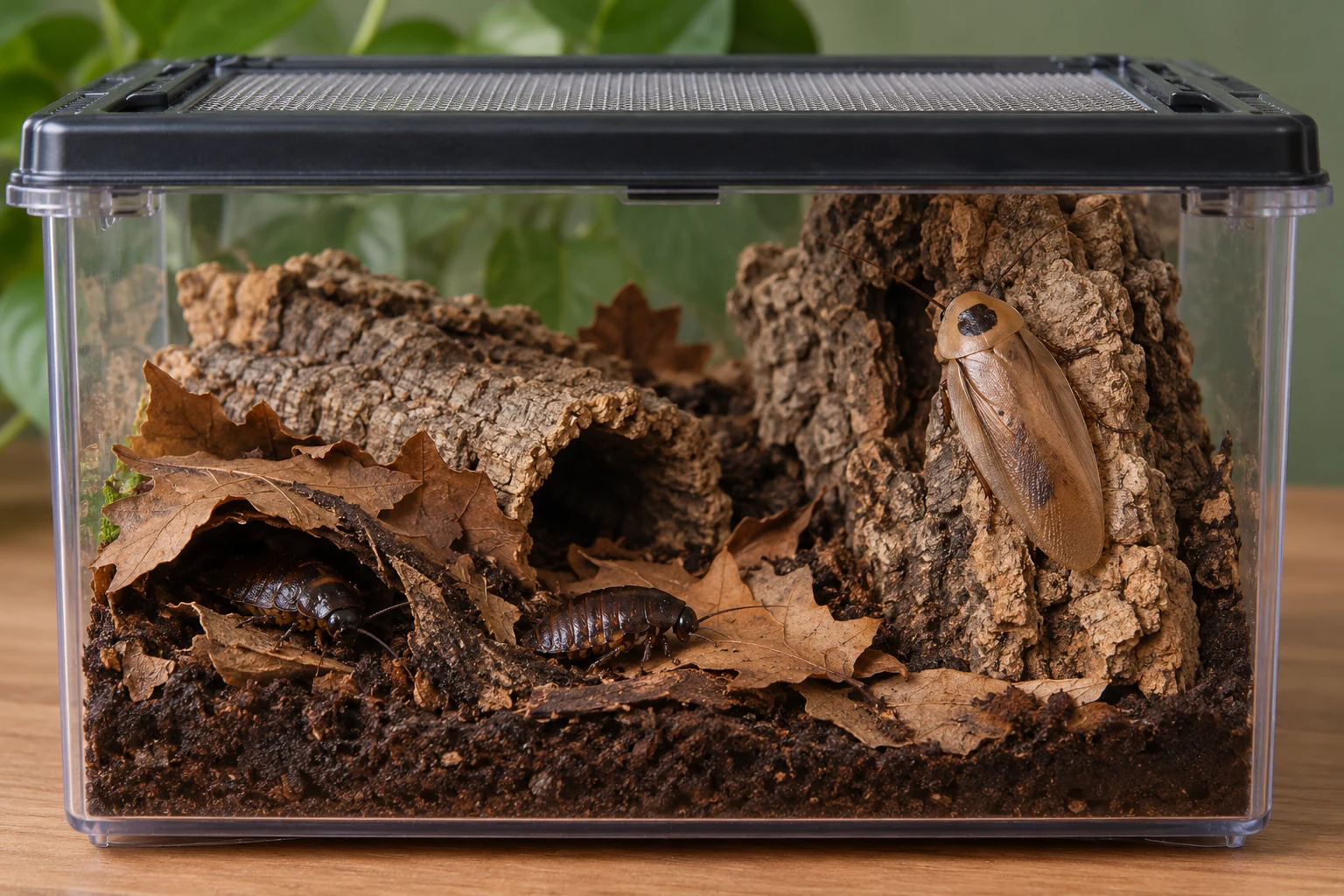
The fix costs nothing: a separate ventilated container per species, 2 to 4 inches of substrate, coco fiber plus leaf litter, kept moist for Colombia and Honduras and more forgiving for Peruvian and Florida, cork bark or stacked egg flats for cover, and a heat source if your room runs below 70F. None of the four climb smooth walls, so the lid only needs to be secure, not airtight, except for Honduras, where the occasional flier argues for a snugger fit.
Which Blaberus should you start with?
Start with Peruvian if this is your first Blaberus: it is the cheapest, most tolerant of humidity swings, and the least fussy about enclosure size. Reach for Colombia if you want the most visually striking line and can commit to consistently moist substrate. Choose Florida if pattern variety across a colony matters more to you than raw size, since no two siblings look quite the same.
Honduras is the collector's pick: the largest, the rarest, the one with a genuinely open taxonomic question, and the only one that might occasionally fly. It also asks for the most floor space, since crowded males turn territorial. Whichever line you pick, house it alone, and pair your setup with TC's general exotic roach care guide for the heat and ventilation basics every genus shares.
The Blaberus Starter Kit
Start with the most forgiving Blaberus line plus the substrate, food and cover that fit all four.
Frequently Asked Questions
Written by the TC INSECTS breeding team · Porter, Texas · Live Arrival Guarantee on every order
Have a care question? Ask our community.
Join Reptile Keepers USA, our free Facebook group for reptile, amphibian and invert keepers. Share your setups, get care help and swap feeder tips.
Join the free group