Why Are My BSFL Crawling Out of the Container?
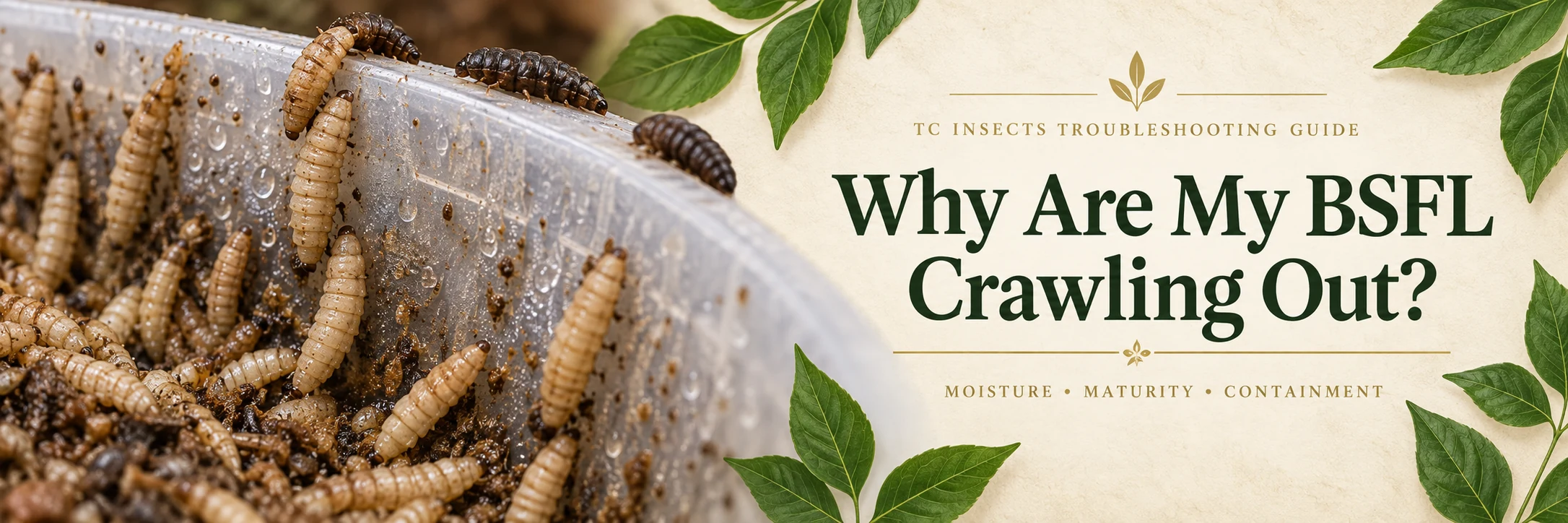
Mature larvae wander to pupate, and wet walls make the climb easy
Many larvae darkening and wandering together, usually after weeks of warm storage
A dry, taller container and a cool spot buy weeks before they wander
Dry walls and maturity explain most wandering
Black soldier fly larvae, sold as calcium worms, almost always climb out of a container because mature larvae have entered the pre-pupal stage and are wired to wander toward a dry, sheltered spot to transform, and damp container walls make that climb far easier. A few larvae exploring near the rim after a misting or a splash is normal, not a crisis. A mass exodus of a dozen or more usually means a big share of the batch has darkened and stopped eating, the same signal that comes right before pupation. Dry the walls, move to a taller container, and store the rest somewhere cool to slow the clock. Here is how to tell ordinary wandering from a real escape problem, and the fixes that actually keep larvae where you put them.
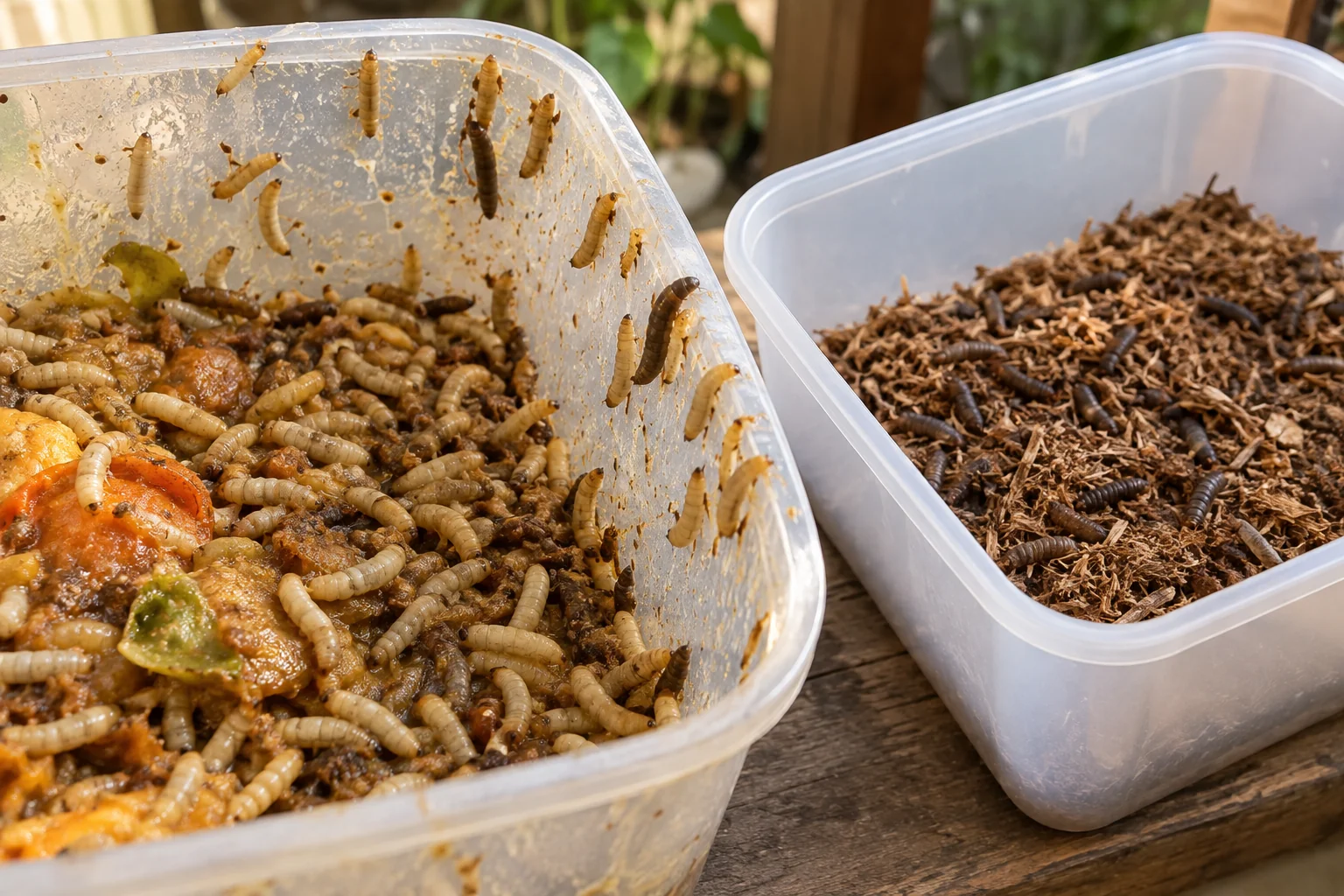
Dry walls and maturity explain most wandering
Use the visual reference together with the complete guide below for practical identification, care, and troubleshooting.
Why BSFL Climb Out in the First Place
Black soldier fly larvae, Hermetia illucens, spend most of their larval life eating and staying put in their bedding. That changes near the end. At room temperature, our own life cycle guide on calcium worms turning into flies puts larval growth at roughly two to four weeks before a larva darkens, stops feeding, and starts actively seeking a dry, sheltered spot to pupate. Climbing the walls of a container is simply that instinct playing out somewhere you would rather it did not. It is a sign the biology is on schedule, not that anything has gone wrong with the batch.
The Role of Moisture: Why Wet Walls Make It Easy
A dry container wall is a genuinely difficult surface for a small, legless larva to climb. A damp one is not. Moisture on the wall, from condensation, a recent misting, or larvae that were rinsed before going in, gives a larva enough grip to pull itself straight up and over the rim. This is why keepers who mist a nearby enclosure on a timer sometimes find a trail of escaped larvae the next morning: the mist wet the container along with everything else, and the wall stopped being a barrier.
How to Stop the Escapes: A Fix Ladder
None of these fixes stop the underlying biology, but together they buy real time and contain most of a batch. Work through them in order.
Dry the walls
Wipe the inside of the container dry with a paper towel before you do anything else, and skip misting the container directly. If larvae need moisture, mist their bedding lightly instead of spraying the walls, and let any splashes dry before closing the lid.
Use a taller, smooth-sided container
A few extra inches between the bedding surface and the rim is often the difference between a wandering larva and an escaped one. Smooth plastic is harder to grip than a rough or textured surface, so a clean deli-style cup outperforms a container with ridges or seams near the top.
Feed out the darkening ones first
Once a larva has visibly darkened and stopped eating, it is on its way to pupating whether it stays in the bin or not. Feeding those out first, ahead of the paler, still-feeding larvae, gets the most restless members of the batch out of the container before they start climbing.
Store the rest cool to slow the clock
Cool storage, 50 to 60 F, holds larvae in a kind of pause and delays the whole pre-pupal process for weeks, which means fewer larvae reaching the wandering stage at once. A warm room speeds every part of this timeline, including the part where they leave.
Does a Barrier Trick Like Tape Actually Work?
Many keepers line the inside rim with a strip of the rough, hook side of hook-and-loop fastener tape, and it genuinely catches most climbing larvae the way it is meant to, though it needs wiping clean every few days to keep working. It is a widely shared hobbyist trick rather than anything we have tested ourselves, so treat it as one option among several rather than a guarantee. A more obvious-sounding fix, coating the rim in petroleum jelly, turns out to be less reliable: several keepers report larvae still working their way across it, so a dry, tall container does more of the real work than any single barrier product.
A Few Wanderers Versus a Mass Exodus
A couple of larvae near the rim, especially right after handling or a misting, is ordinary exploring and not a sign anything is wrong. A dozen or more climbing at once, though, usually means a large share of the batch reached the pre-pupal stage together, most often because the whole container has been sitting warm for weeks rather than being rotated into cool storage. You cannot fully stop mature larvae from wandering forever if you keep them warm. The fixes above slow the clock and contain most of a batch; they do not cancel the biology driving it.
What to Do With Larvae That Already Got Out
Check nearby warm spots first, since a heat lamp stand or a sunny windowsill is exactly where a wandering larva heads once it is loose. An escapee that has already been crawling around your floor is better discarded than fed out, simply for basic hygiene, not because it has become unsafe in any other way. If you are managing a larger batch over time rather than using it all at once, our BSFL storage guide and calcium worms care guide cover how to hold the rest so fewer of them reach the wandering stage before you are ready. A few that slip all the way to the adult fly stage are a harmless outcome, not an infestation.
BSFL Wandering Diagnostic
The Stay-Put BSFL Kit
A dry container to switch to, fresh larvae to restock with, and a light dust for the ones you feed out first.
Frequently asked questions
Is it normal for a few BSFL to climb the walls of their container?
Yes. A few larvae exploring near the rim, especially right after the container was misted or handled, is ordinary behavior and not a sign of a problem. Wipe the walls dry and put the lid back on, and that alone usually stops it. It only becomes worth troubleshooting further when several larvae are climbing at once or a few have already made it out.
Can BSFL climb out of a container that is completely dry?
It is much less common, but not impossible. A tall, smooth-sided container with dry walls stops the vast majority of climbers, since they rely on moisture for grip, but a large colony reaching the wandering stage all at once can still find the rare escape route, especially around a loose-fitting lid. Depth and a secure lid matter alongside dryness, not instead of it.
Do I need to dust BSFL that are about to pupate before feeding them out?
Not usually. Black soldier fly larvae carry naturally high calcium, which is why many keepers skip dusting them at all (see our calcium dusting guide). Some still add a light dust for fast-growing juveniles or gravid females with especially high calcium needs, whatever stage the larvae themselves are in, but it is an extra step rather than a requirement.
What should I do if a BSFL actually gets out and I cannot find it?
Check warm spots first, like near a heat lamp or a sunny windowsill, since that is exactly what a wandering larva is looking for. If you never find it, there is little cause for concern: an adult black soldier fly is harmless, does not bite or sting, and does not start a home infestation the way a fruit fly or house fly might.
Will keeping BSFL in the refrigerator stop them from wandering?
No, and it can do more harm than good. A standard refrigerator usually runs colder than the 50 to 60 F range that safely slows black soldier fly larvae, so instead of a gentle pause you risk chilling them too hard. A cool room, closet, or garage shelf holds them at the right temperature far more reliably than a fridge crisper drawer.
Should I just buy a fresh batch instead of dealing with one that keeps wandering?
That is a reasonable call once a batch is mostly dark and restless, since you are close to losing them to pupation anyway. Fresh calcium worms (BSFL) dropped into a dry, taller container give you a full window of calm feeding again, while the old batch finishes out on its own schedule.
Keep learning
Have a care question? Ask our community.
Join Reptile Keepers USA, our free Facebook group for reptile, amphibian and invert keepers. Share your setups, get care help and swap feeder tips.
Join the free group