BSFL vs Mealworms for Reptiles
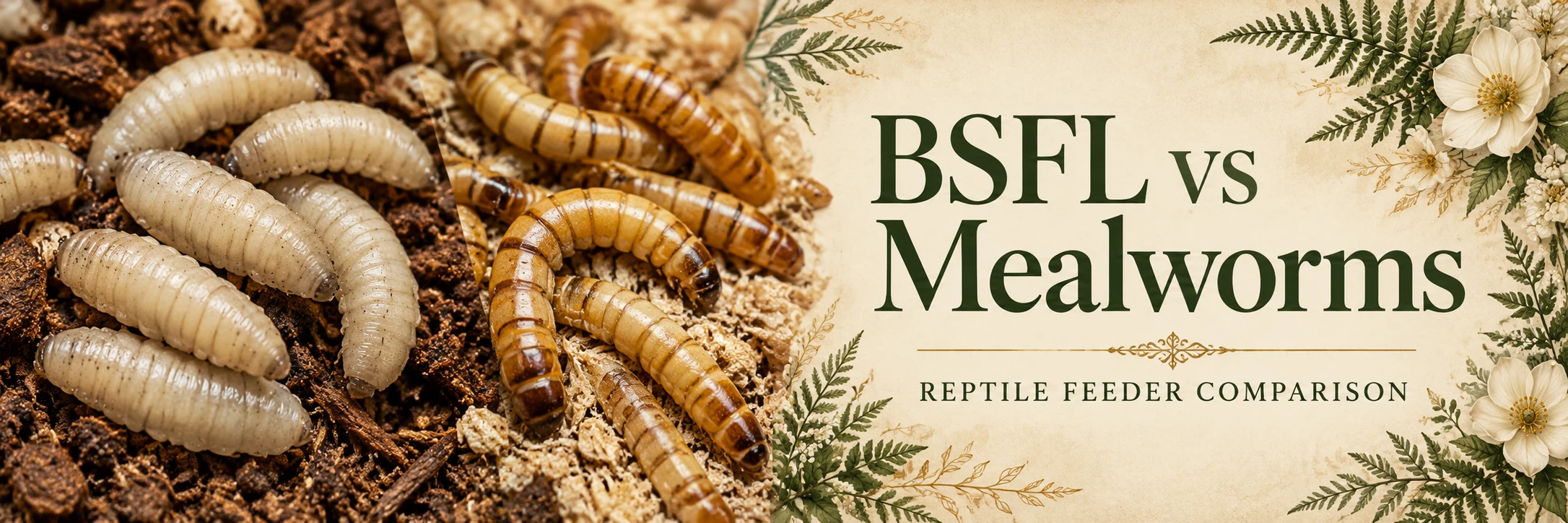
For most pet reptiles, black soldier fly larvae (often sold as calcium worms) beat mealworms as the everyday staple, and the reason comes down to two traits: a favorable calcium to phosphorus ratio and a soft, thin-walled body that is genuinely easier to digest than a hard-shelled beetle larva. Mealworms, the larval stage of Tenebrio molitor, are not a bad feeder, they are simply a different tool: higher in fat, tougher in exoskeleton, and better used as an occasional treat or variety feeder than a daily staple. This guide is written for reptile keepers, not the backyard-chicken crowd who ask this same question for eggshell calcium, the physiology and the feeding math are different for a lizard or snake. Below is the actual nutrition comparison, how much of each to feed, and when mealworms are genuinely the better choice, plus where the harder exoskeleton matters most in our feeder impaction guide.
Naturally favorable; mealworms run calcium-poor and phosphorus-heavy
BSFL digest easier; mealworms are higher in fat with harder chitin
Feed BSFL as the everyday feeder, mealworms a few times a week
The short answer for reptile keepers
Reach for black soldier fly larvae as your everyday staple and keep mealworms in the rotation as a treat, not the other way around. BSFL carry a naturally favorable calcium to phosphorus ratio, and their bodies are soft and thin-walled, which most reptiles handle easily meal after meal. Mealworms are a perfectly fine feeder, they are just built differently: leaner on calcium, higher in fat, and wrapped in a tougher exoskeleton that takes more work to break down.
That difference matters more than it sounds. A reptile fed mostly on a calcium-poor, phosphorus-heavy feeder over months can end up with a running calcium deficit that supplements alone have to fight uphill against, while a diet built around a naturally better-balanced feeder starts you off ahead. Neither feeder is dangerous in moderation, the real question is which one should be doing the daily heavy lifting.
Calcium and phosphorus: the real reason BSFL win as a staple
Black soldier fly larvae, sold in our shop as BSFL or calcium worms, are unusual among feeder insects because they carry a naturally favorable calcium to phosphorus ratio, generally reported in the neighborhood of 2 to 1 in favor of calcium, so they take far less dusting than most feeders, though a light dust still helps for fast-growing juveniles and gravid females. Mealworms sit at the opposite end, with phosphorus considerably outweighing calcium, which is the same basic imbalance that makes crickets and superworms need regular calcium dusting to avoid problems over time.
This is not a reason to panic about mealworms, an occasional treat is not a long-term diet, but it is the reason experienced keepers treat the two feeders differently. If a feeder is going to make up the bulk of an animal's diet week after week, you want the one that is already working in your favor on calcium, and that is BSFL, not mealworms. Our black soldier fly larvae ship live and gut-loaded, so the calcium advantage is already built in before your reptile ever takes a bite.
Soft body vs hard shell: what that means for digestion
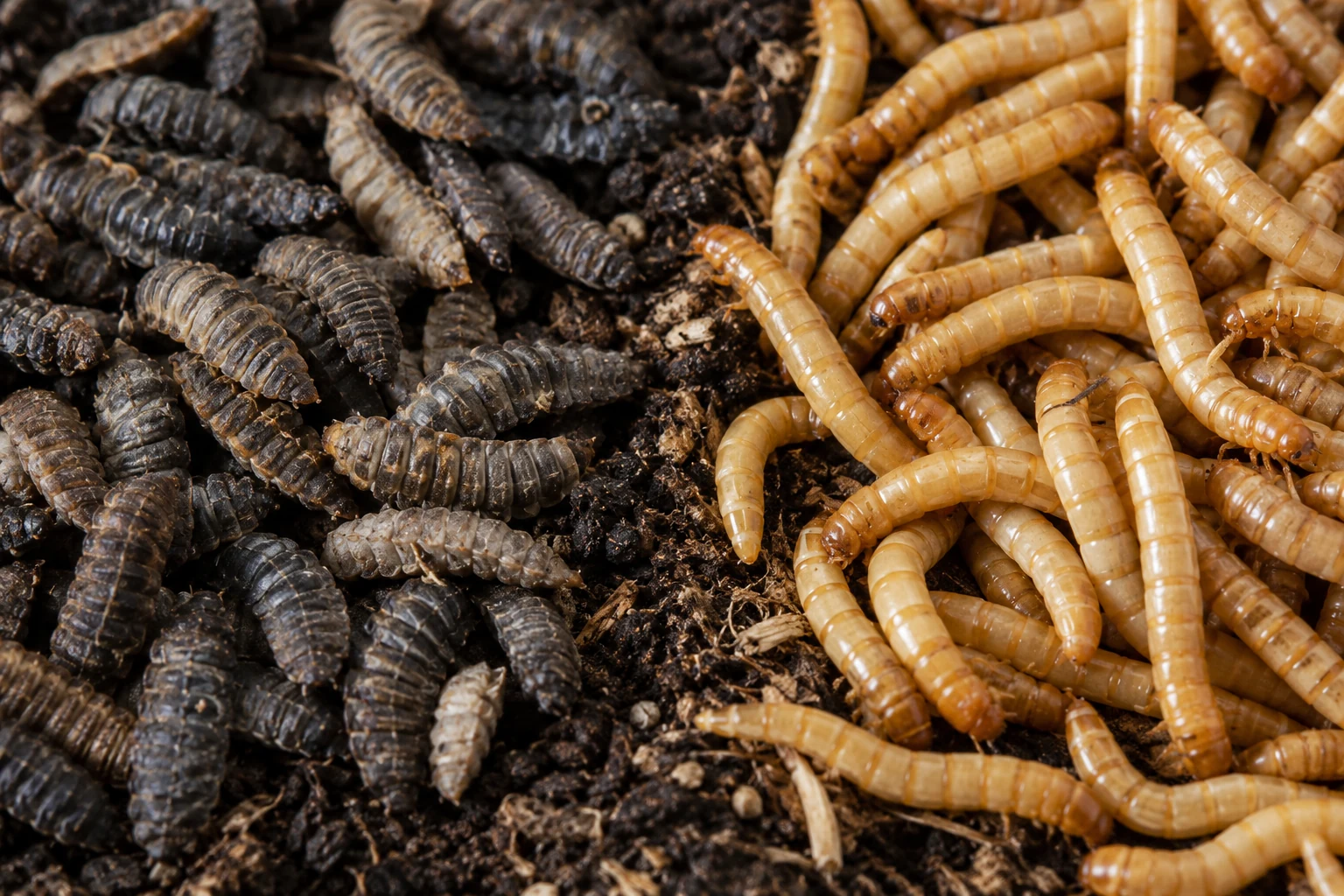
The other half of the story is texture, not just chemistry. Black soldier fly larvae are the larval stage of a fly, not a beetle, so their body wall is soft and thin, closer to a caterpillar than a beetle grub. Mealworms are beetle larvae with a genuine exoskeleton, made of chitin, that thickens as the worm grows, which is exactly why the largest mealworms and superworms are the ones keepers watch most closely for size-matching.
A softer-bodied feeder is simply less work for a reptile's gut to process, which is a real advantage for smaller reptiles, younger animals, or any pet that is a slow or picky eater. This is husbandry logic, not a medical claim, chitin is not inherently dangerous in reasonable amounts, but it is tougher material, and the standard rule of never feeding an insect longer than the gap between your reptile's eyes matters more with a harder-shelled feeder like a mealworm than with a soft one like a BSFL.
Fat content: why mealworms make a better treat than staple
Mealworms have a well-earned reputation as a fattier feeder, which is exactly why so many keepers use them as a training treat or an occasional variety feeder rather than a daily meal. A steady diet leaning on a high-fat feeder can contribute to excess weight gain over time, especially in less active reptiles, the same reason keepers rotate in leaner staples like BSFL or dubia roaches for the bulk of the diet.
BSFL are comparatively leaner and are usually marketed as a calcium-forward staple rather than a fattening treat, which is exactly the role they are best suited for. None of this makes mealworms an unhealthy feeder, fat is a normal and needed part of an insect-based diet, it just means mealworms earn their spot in the rotation rather than the everyday bowl.
How many to feed of each
Numbers vary by species, age, and appetite, so treat these as a starting point, not a prescription. For BSFL as a staple, a general guideline many keepers use is offering as many as your reptile will actively eat in a single feeding, roughly every other day for a juvenile and two to three times a week for an adult, always sized no larger than the gap between its eyes.
For mealworms, use them a couple of times a week at most alongside a BSFL or dubia-based staple diet, in similar size-matched portions, and watch body condition over time rather than feeding to a fixed number. We carry both feeders in a full size run, from pinhead-sized starters up to adult-sized mealworms, so sizing to your specific reptile is straightforward either way.
When mealworms are actually the better call
There are real situations where mealworms earn the win. A picky eater that ignores everything else will often snap at a wriggling mealworm, since the firmer body and movement can trigger a stronger feeding response than a softer BSFL. Mealworms also store a little differently day to day, which some keepers find more convenient for small, frequent treat feedings.
The practical answer is not either-or, it is both, in the right proportion. Keep BSFL as the everyday staple for the calcium and digestibility advantage, keep mealworms on hand for treats, picky-eater rescue, and variety, and your reptile gets the best of both feeders instead of missing out on either one. If you are also weighing other soft-bodied feeders, our hornworms vs silkworms comparison covers the other end of the feeder lineup.
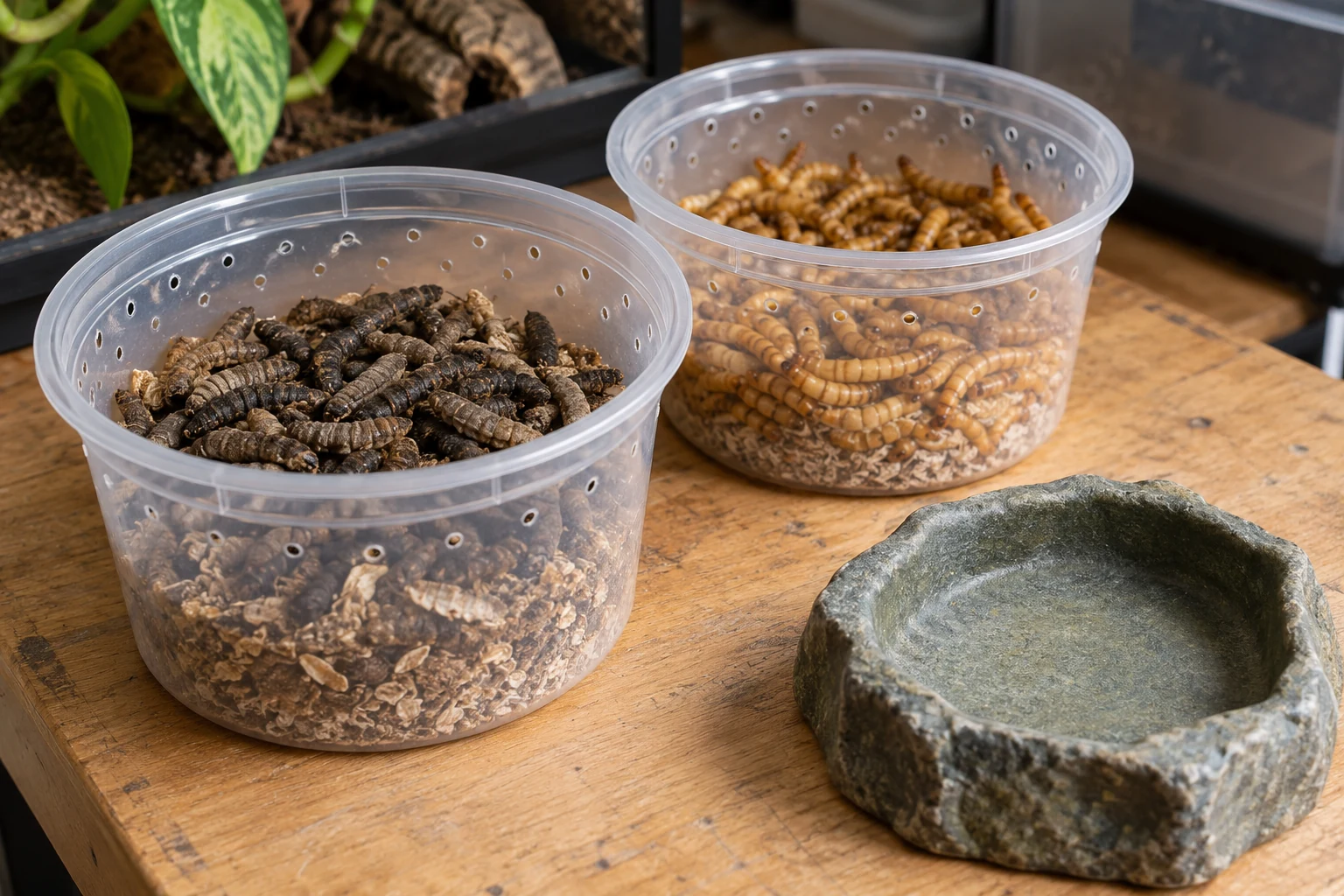
The Staple Feeder Behind the Numbers Above
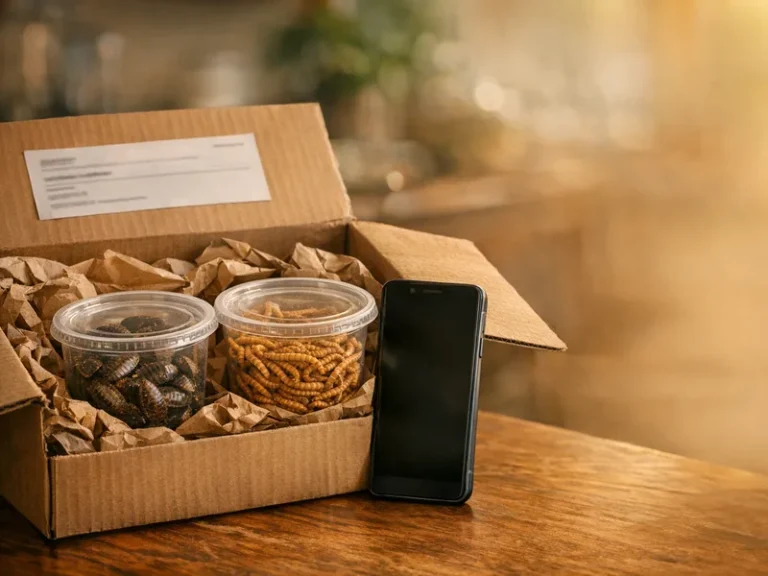
BSFL and mealworms, both size-matched and ready to ship, so you can build the diet this comparison actually recommends.
Frequently Asked Questions
Written by the TC INSECTS breeding team · Porter, Texas · Live Arrival Guarantee on every order
Have a care question? Ask our community.
Join Reptile Keepers USA, our free Facebook group for reptile, amphibian and invert keepers. Share your setups, get care help and swap feeder tips.
Join the free group