How to Tell if a Jumping Spider Is Male or Female
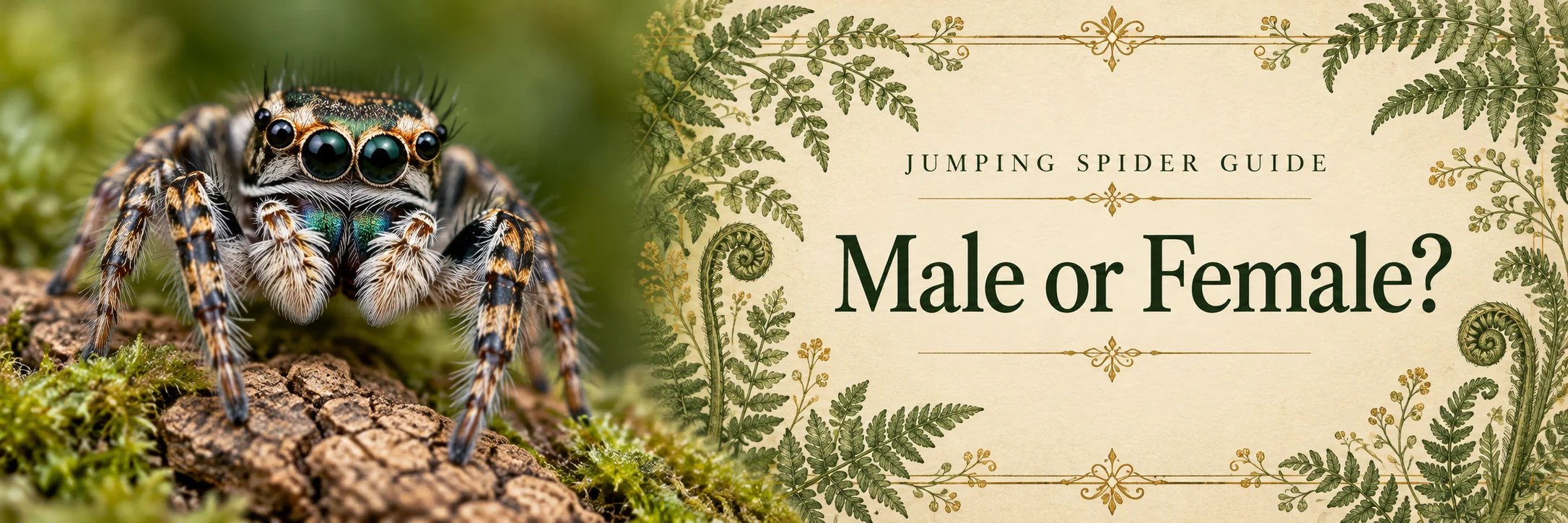
You can tell a male jumping spider from a female by checking three visible traits as it matures: the pedipalps, which swell into an enlarged, boxing glove shaped bulb on an adult male while staying slim and simple on a female, the size gap, since adult female Phidippus regius commonly grow noticeably larger than males of the same age, and on regius specifically, fang color, which shifts blue green in males and pink in females from roughly the fourth instar onward. None of those three is completely certain on its own. The one sure confirmation is the epigyne, a small hardened plate visible on the underside of a mature female's abdomen that an adult male simply does not have. Here is how to check each sign, in the order we would check them, before you ever need our jumping spiders confirmed by sex.
Females stay slim; visible once mature
Visible from roughly the 4th instar onward
A plate on the abdomen only mature females have
The quick answer: check the pedipalps first
The pedipalps are the small, leg like appendages just in front of a jumping spider's first pair of true legs, and they are usually the fastest visible sign once a spider reaches maturity. An adult male's pedipalps swell at the tip into an enlarged, rounded bulb that keepers commonly describe as boxing glove shaped, while an adult female's pedipalps stay slim and simple, closer in shape to a small leg.
This sign only shows up reliably once a spider is at or near its final molt, so a young juvenile of either sex will look similar here. If your spider is still small and growing, the pedipalps are not yet a useful test, and you will want to lean on the other signs below or simply wait.
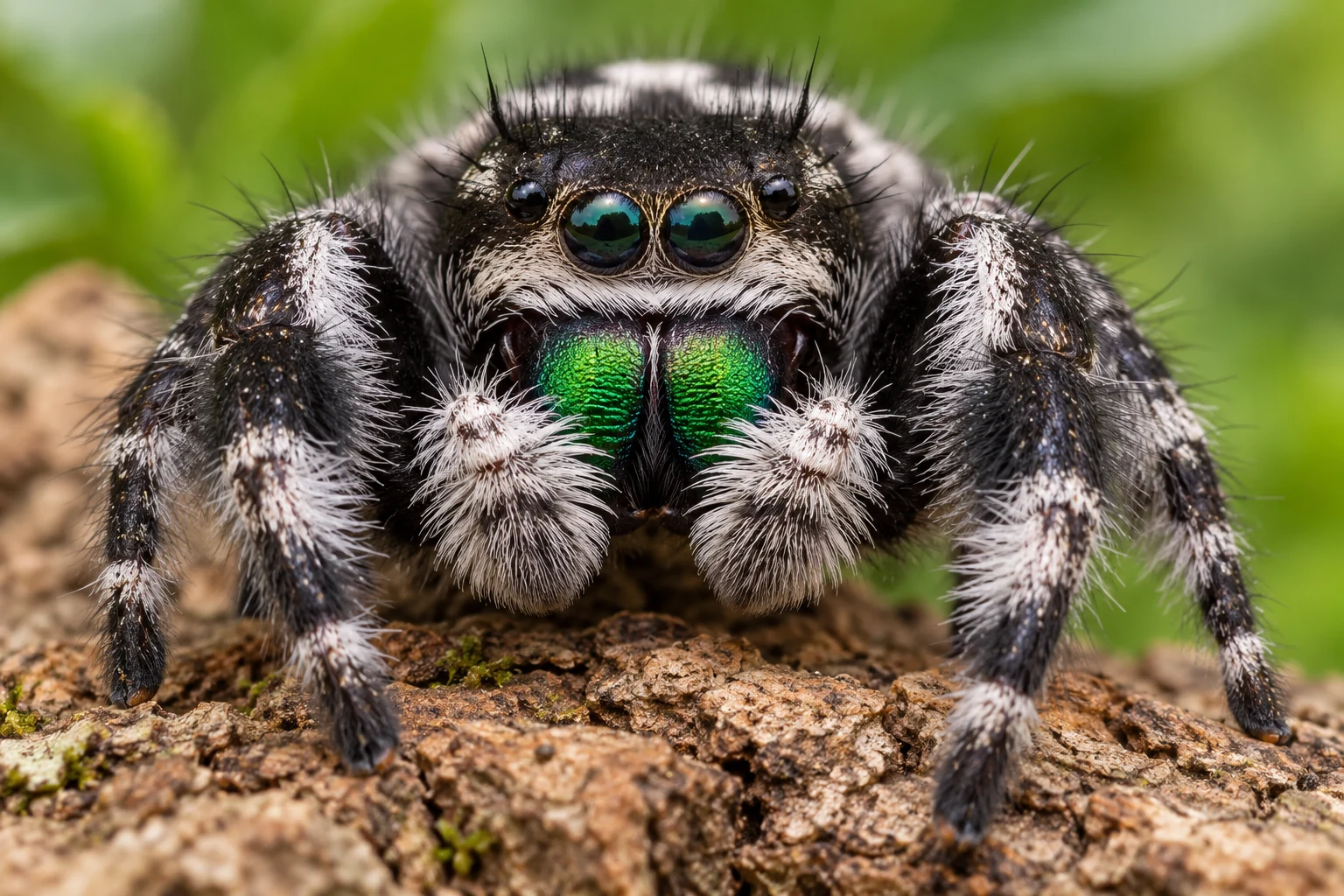
Size: females usually run bigger
In Phidippus regius, adult females commonly grow noticeably larger bodied than males of the same age and generation, which is a common pattern across many spider species and not unique to jumpers. A visibly larger, heavier bodied spider next to a smaller, more slender one of the same clutch or batch is often, though not always, a female next to a male.
Size alone is the weakest sign on this list, since individual growth varies and you rarely have two spiders side by side to compare fairly. Treat it as a supporting clue that lines up with the pedipalp check, not a standalone answer.
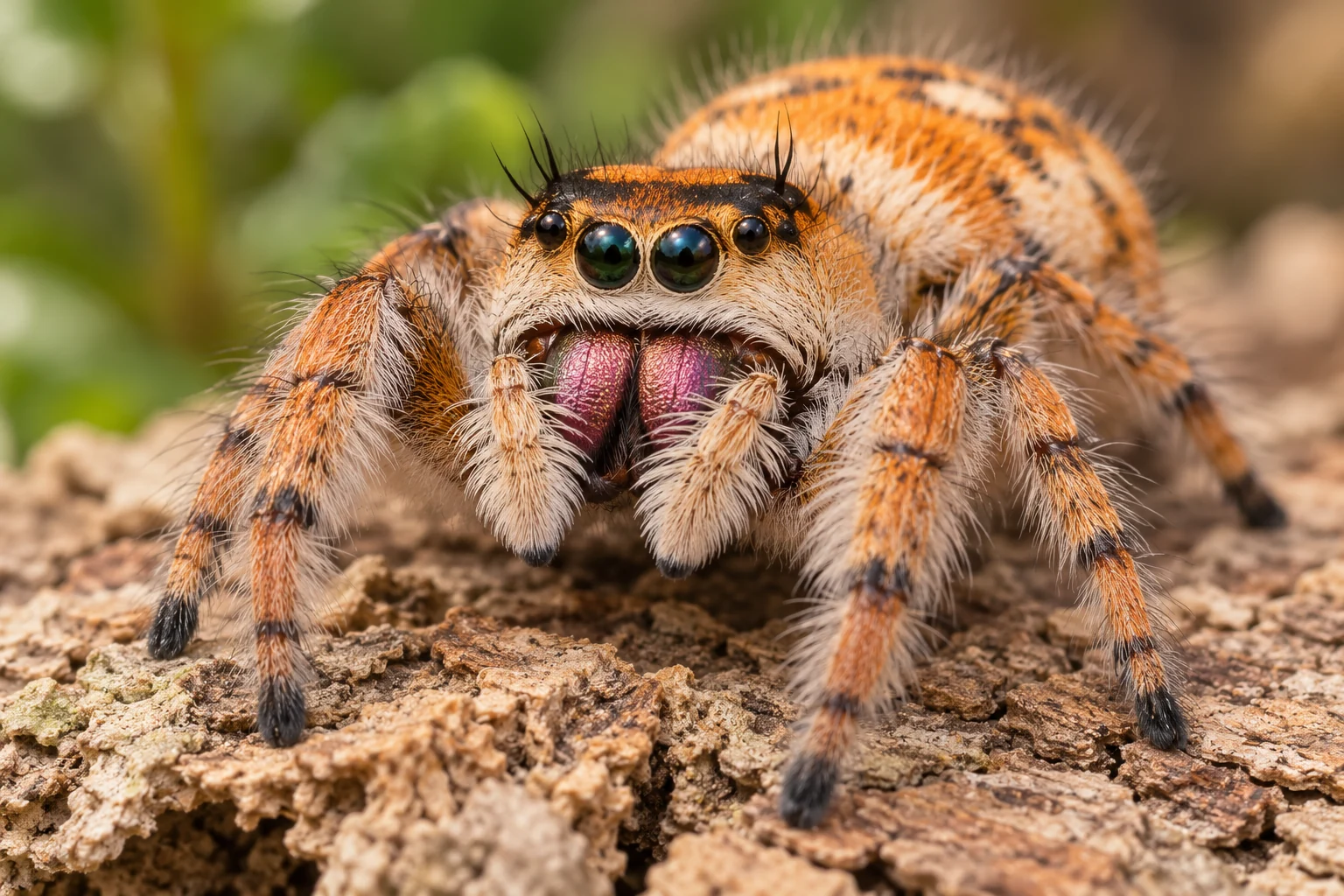
The Phidippus regius fang color trick
One of the more specific tricks for this species: as a Phidippus regius matures, its fangs, technically the chelicerae, shift color by sex. Males typically develop a blue green or teal cast, while females shift toward pink or a warm reddish tone, and keepers report this becoming visible from roughly the fourth instar onward, well before the pedipalps fully develop.
This is a genuinely useful early tell for regius specifically, but treat it the way you would any single hobby observation: helpful and worth checking under good light with a magnifier or a close photo, but not the final word on its own. It is not documented as a universal rule across every Phidippus species.
The one sure sign: the epigyne
The epigyne is a small, hardened, often darker colored plate on the underside of a mature female's abdomen, just in front of where silk is spun, and it is the structure females use during mating. A mature male has no equivalent structure there at all, which makes checking for it the single most certain way to confirm a female.
The catch is timing and visibility: the epigyne only fully forms at maturity, and getting a clear look usually means a calm spider, good light, and either a steady hand with a magnifier or a sharp photo of the underside. If you can see a plate there, you have a confirmed female. If a mature spider clearly lacks one, you are almost certainly looking at a male.
Timing: when can you actually tell?
Sexing a jumping spider gets easier with every molt, not harder. A young spiderling shows none of these signs reliably, the fang color trick in regius can start showing from around the fourth instar, and the pedipalps and epigyne only finish developing at or near the final adult molt.
If you are trying to sex a specific spider and it is still small, the honest answer is to wait for a few more molts rather than force a guess. Every sign gets clearer as the spider matures, so patience is doing real work here.
Why sexing your spider actually matters
Beyond simple curiosity, sex is genuinely useful information. It sets realistic expectations for lifespan, since females commonly live longer than males, as we cover in our jumping spider lifespan guide, and it matters a great deal if you ever plan to pair spiders for breeding, where confirming both a male and a female correctly beforehand avoids wasted attempts.
For a keeper who just wants a single pet and is not planning to breed, sex mostly answers a fun question rather than changing day to day care, since feeding, housing, and handling stay the same either way.
Grow a Spider You Can Confidently Sex
The right food to raise a spiderling to a confirmed male or female. Tap to add and check out in one click.
Frequently Asked Questions
Written by the TC INSECTS breeding team · Porter, Texas · Live Arrival Guarantee on every order
Have a care question? Ask our community.
Join Reptile Keepers USA, our free Facebook group for reptile, amphibian and invert keepers. Share your setups, get care help and swap feeder tips.
Join the free group