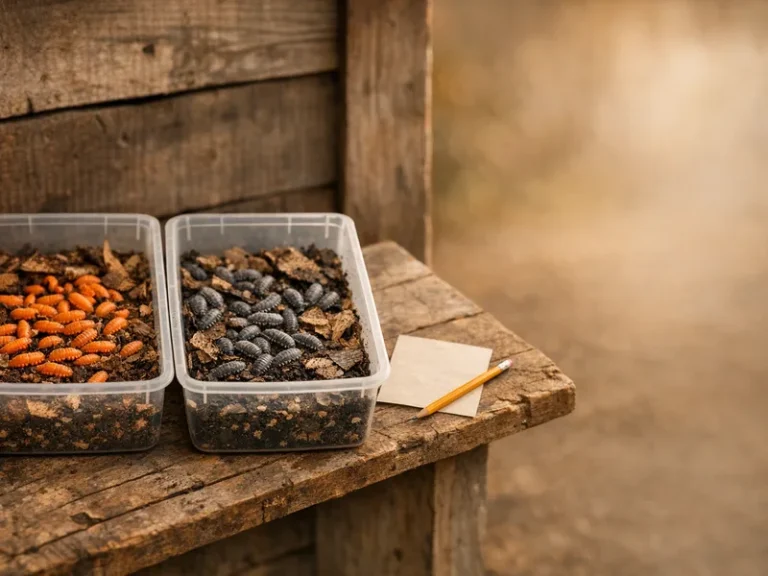
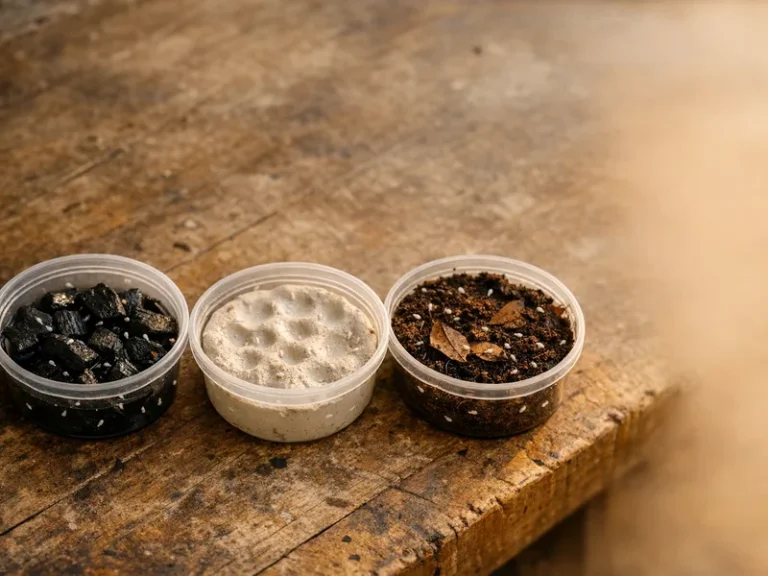
Savannah monitors (Varanus exanthematicus) are true insectivores, not omnivores like a bearded dragon, so both juveniles and adults get fed as much as they will actively eat, and most keepers do that daily rather than every other day. Dubia roaches make a calm, no-climb, no-smell staple, with black soldier fly larvae, red runner roaches, superworms, hornworms, and silkworms rotating in behind them. The real risk with this species is not underfeeding, it is the opposite: savannah monitors are notoriously prone to obesity in captivity, so portion control matters just as much as the feeder list. Our dubia roaches page is the place to start building that staple.
Not an every-other-day feeder like a bearded dragon
No climb, no smell, calm to hunt
Portion control matters as much as the feeder list
The short answer: a true insectivore, fed daily
Savannah monitors are true insectivores in a way a bearded dragon or a lot of other popular pet lizards are not, so the feeding approach looks a little different. Both juveniles and adults generally do best offered as much as they will actively eat in a sitting, and most keepers do this daily rather than stretching to every other day, which is common advice for other lizard species.
Dubia roaches make the natural everyday staple: calm, easy to size, and easy to contain since they cannot climb smooth plastic or glass. Behind dubia, black soldier fly larvae, red runner roaches, superworms, hornworms, and silkworms all rotate in well, covering nearly every non-cricket feeder line we carry, the same broad insectivore-monitor rotation we cover for a smaller relative in our ackie monitor feeding guide.
Dubia as the staple, and why it works so well here
Dubia roaches (Blaptica dubia) fit a savannah monitor's everyday feeding for a few practical reasons at once: they carry solid protein, take on a better calcium balance once dusted, do not climb out of an enclosure, and do not develop the odor some feeder colonies get. For an animal eating daily, that combination of nutrition and low hassle matters.
Size up as the monitor grows, moving from small and medium dubia for a young animal to large and jumbo sizes for an adult with real size and appetite. Our dubia roaches ship in a full size range from hatchling through adult, so sizing up as the monitor grows is simple.
The supporting rotation: BSFL, red runners, superworms, hornworms, silkworms
Behind dubia, a savannah monitor's rotation can genuinely pull from nearly the whole non-cricket feeder catalog. Black soldier fly larvae add a naturally calcium forward option that needs only light dusting, mainly for fast-growing juveniles and gravid females, and red runner roaches bring a faster, leaner alternative to dubia that some monitors key in on with real enthusiasm.
Superworms make a heartier, bigger bodied option for an adult with a large appetite, while hornworms and silkworms add hydration and a softer, leaner feeder into the mix a couple of times a week. None of these need to be fed every single day, they are there to keep the rotation from going stale on a single feeder.
The real risk is obesity, not underfeeding
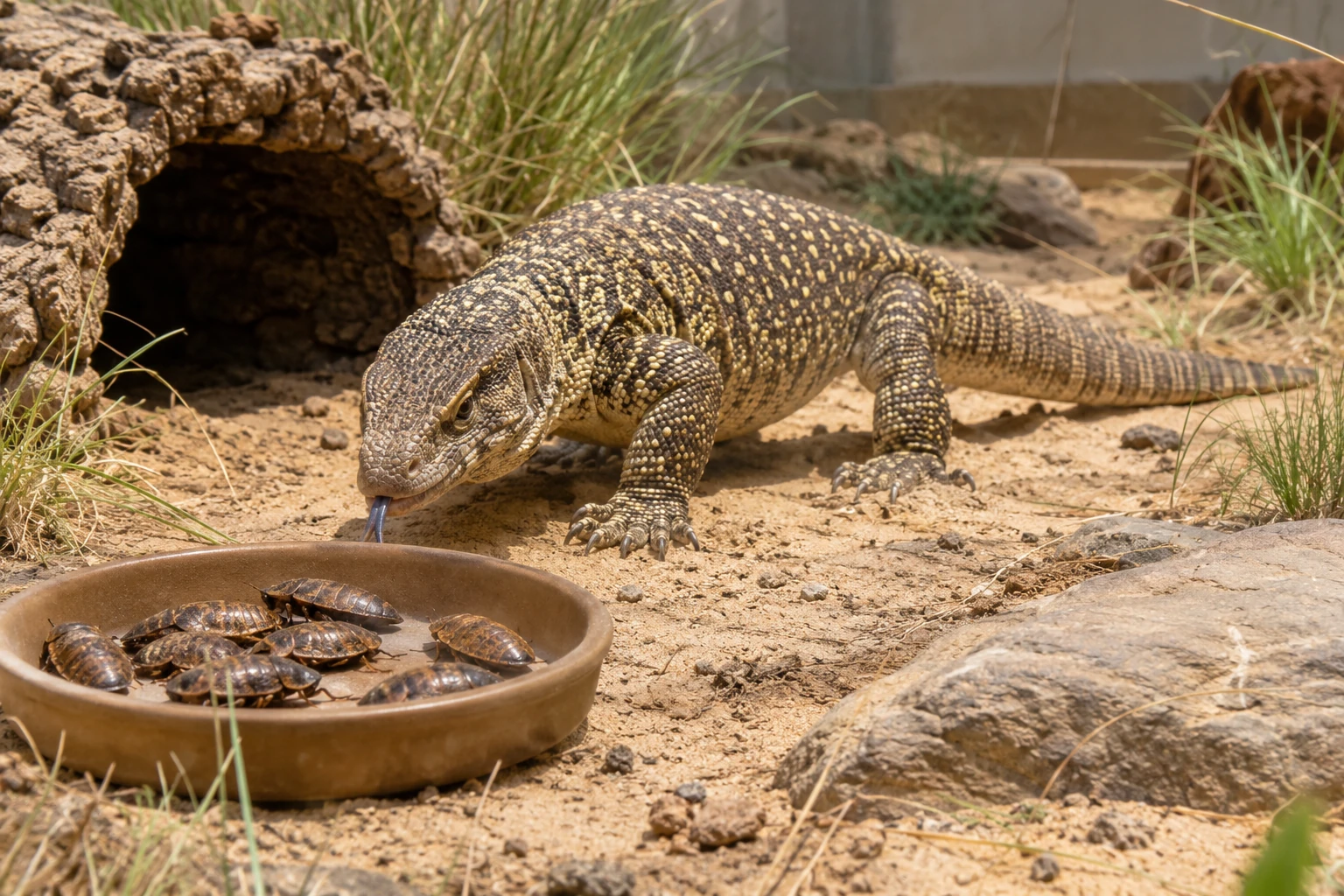
It is easy to read as much as they will eat, daily and assume savannah monitors need constant feeding pressure, but the actual, well-documented problem with this species in captivity runs the other way. Savannah monitors are notoriously prone to obesity, largely because a captive enclosure gives far less room to roam and hunt than the wild grassland habitat they evolved for, while food stays constantly available.
That means as much as they will eat still needs a sensible ceiling, and it is worth watching body condition over time rather than filling a bowl on autopilot. A lean, active monitor with visible muscle tone and a normal waistline is the goal, not a round, sedentary one, and if you are ever unsure whether your monitor's weight looks healthy, that is a good question for an exotics vet familiar with monitors.
Practical portion control
A few habits keep daily feeding from turning into overfeeding. Favor genuine variety across the rotation above rather than defaulting to the richest, fattiest feeder every time, and size insects appropriately for the monitor's age rather than always reaching for the biggest one in the cup.
Gut-load feeders for a day or two before offering them so the nutrition inside the insect is working in the monitor's favor, and dust with a reptile-safe calcium powder on a regular rotation. Those two habits do more for long-term health than adjusting the daily quantity alone.
A note for keepers in Florida
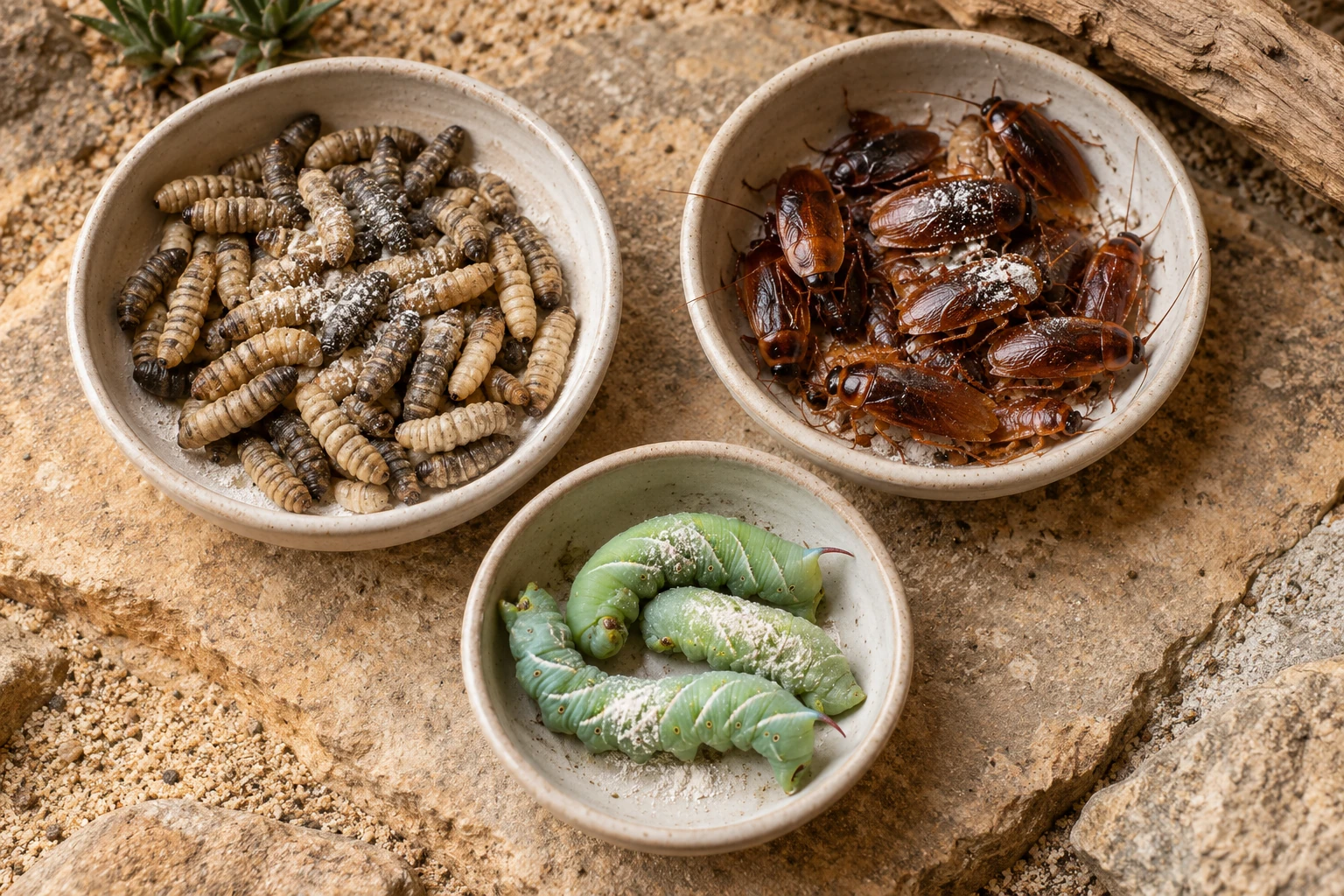
Dubia and red runner roaches are both restricted from shipping into Florida, so a Florida-based savannah monitor keeper needs to lean on the rest of the rotation instead: black soldier fly larvae, hornworms, silkworms, mealworms, and superworms all ship there without issue. Our Florida feeder guide walks through building a full routine around those five.
Everywhere else, dubia can stay the everyday staple with the rest of the lineup rotating in behind it. Either way, the core rule stays the same for a true insectivore like this one: feed generously, but feed with an eye on body condition, not just an empty bowl.
Build a Savannah Monitor's Daily Rotation
The staple and the four backup feeders behind the rotation above, sized for a growing or adult monitor.
Frequently Asked Questions
Written by the TC INSECTS breeding team · Porter, Texas · Live Arrival Guarantee on every order
Have a care question? Ask our community.
Join Reptile Keepers USA, our free Facebook group for reptile, amphibian and invert keepers. Share your setups, get care help and swap feeder tips.
Join the free group