Will Isopods Survive a Summer Power Outage?
Isopods live unheated, so an outage takes no equipment away
Fast lab shock test, not a temperature to aim anywhere near
They hit first, but a long hot outage still stresses a bin
Protect the habitat before the room heats up
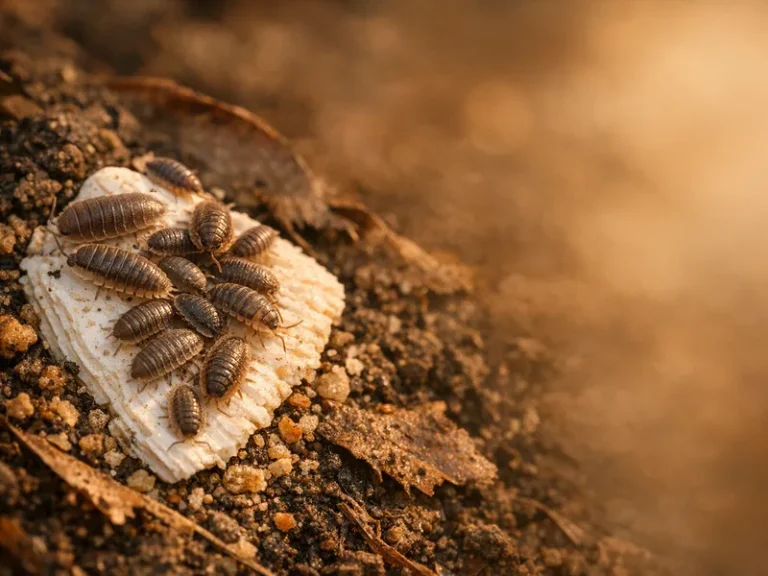
Isopods survive a summer power outage better than almost any other pet you keep, because a damp bin with deep substrate is slow to follow the room and holds its moisture for days with no power at all. They are already living at room temperature with nothing plugged in, so an outage takes nothing away from them the way it does from a heated reptile or a chilled aquarium. What usually kills a colony during an outage is direct sun hitting the bin and the substrate drying out, and both of those arrive long before the missing air conditioning does. A bin is buffered, not immune, so a long outage that parks the room in the 90s F is still a real problem. We farm in Porter, Texas, so this is not a thought experiment for us, and here is exactly what we do when the lights go off in August.
Shade, a damp refuge and sensible airflow
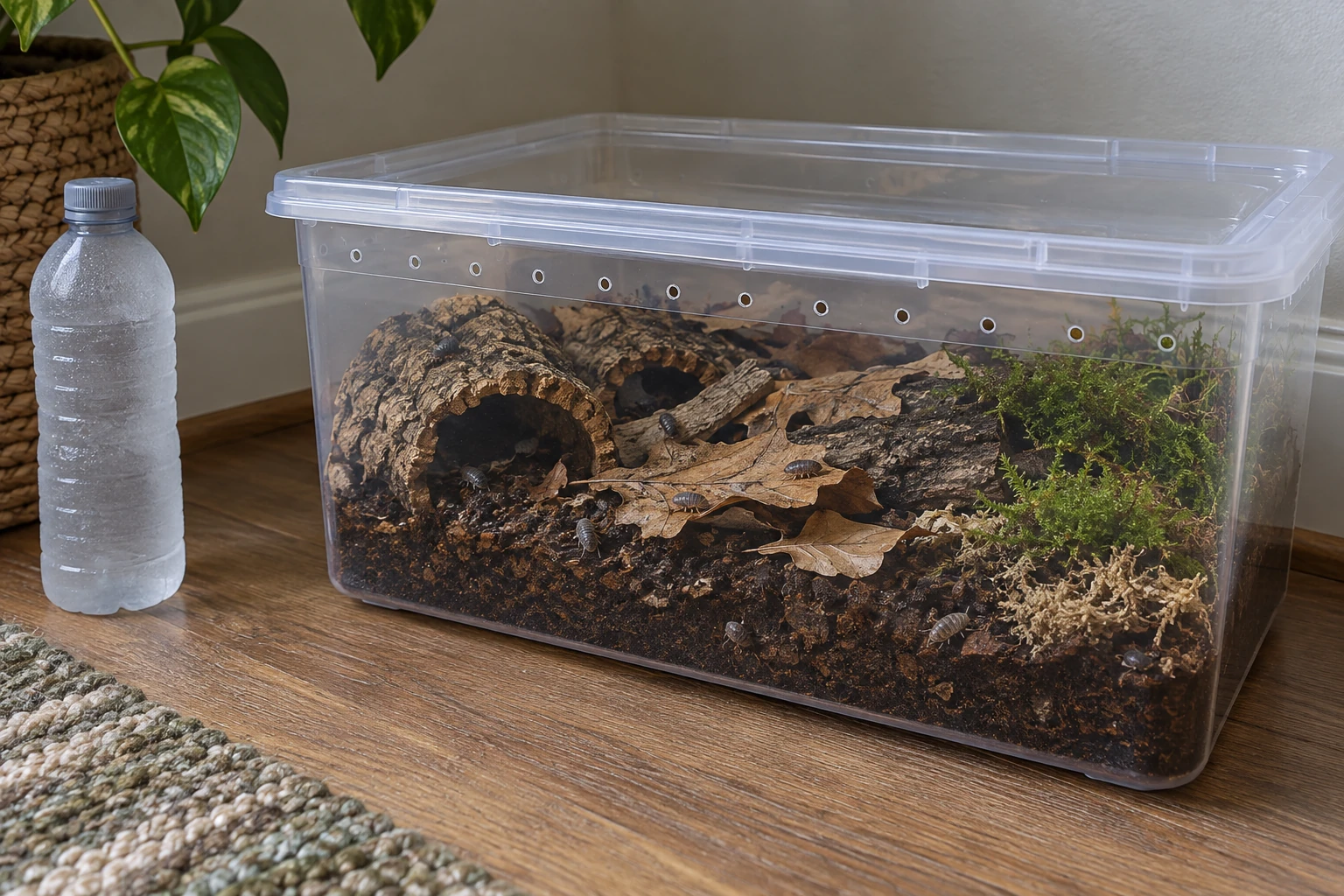
Move bins early to a shaded interior spot. Keep the damp end moist without flooding, and keep any frozen water bottle outside the habitat.
Why isopods ride out an outage so well
Start with the thing most keepers forget in the panic: nothing in a normal isopod bin is plugged in. A healthy colony sits at ordinary room temperature, somewhere around 65 to 78 F, with no heater, no pump, and no light on a timer. When the power drops, a heated snake enclosure loses its heat source and a chilled tank loses its chiller, but an isopod bin loses nothing at all. It just sits there doing what it was already doing. If you want the longer version of why we keep them unheated in the first place, we walk through it in do isopods need a heat mat.
The second reason is physical. A bin of damp substrate holds a lot of water by weight, and water is slow to warm up and slow to cool down. That thermal mass means the substrate lags behind the room, so the bin does not spike the moment the air does. Moisture evaporating off the surface pulls a little more heat out as it goes, the same way sweat cools skin. Be honest about what that buys you, though: it is a lag, not a cap. Given long enough the bin drifts to whatever the room is sitting at, so the temperature buffer is measured in hours while the moisture it holds is the part that lasts for days. Two to three inches of damp substrate under a good layer of leaf litter is a far better buffer than it looks like, and the deeper layers stay cooler and damper than the top.
The real danger threshold, honestly
Here is where we would rather hedge than sound certain. Published lab work on the common rough woodlouse (Porcellio scaber) put the point where the animals could no longer right themselves at roughly 105 F. That number is not a target and it is not a survival guarantee. It comes from a fast ramp test where researchers raised the temperature about one degree F every minute, so it measures a short shock, not what a colony can live through for a whole afternoon. Sustained heat far below that will still stress a bin, stall breeding, and eventually kill animals. It also comes from one hardy temperate species, so do not carry it across to tropical, humidity dependent isopods like Cubaris, which give up a long way before a rough woodlouse does.
The more interesting direction from that same work is what low oxygen does. Animals tested in reduced oxygen tipped over about three degrees cooler, near 102 F instead of 105 F. Read that carefully, because the oxygen level in that test was severe, well below anything anyone has shown a plastic bin on a shelf actually reaches. We are not claiming your closed bin hits lab hypoxia. It is simply a cheap reason to keep air moving when the room is hot, since airflow costs you nothing and the trend points the wrong way. On how fast your own room climbs, we have no measured number for your house and will not pretend to: a tight, shaded, well insulated house holds on for a good while after the cooling stops, and an older leaky one gives up much faster. Watch a thermometer in the room rather than trusting a rule of thumb. We also have not found solid hobby data pinning down exactly how many hours at exactly what temperature kills a colony, and we are not going to invent one. Treat anything sustained in the 90s F as real stress and act on it.
Our outage action plan
Move the bins first, and move them early, before the house has heated up. You want the lowest and most interior spot you have: a ground floor closet floor, an interior bathroom, a hallway with no windows. Heat rises, so upper floors usually run several degrees warmer than the ground floor, and any spot where sun comes through a window is the worst place in the house. Direct sun on a plastic bin is the single fastest way to cook a colony, so getting away from glass matters more than anything else on this list.
Then handle moisture and air. Check the substrate with a squeeze test: it should hold together and feel damp without water running out. If the damp side has gone dry, moisten it now, while the room is still cool. If the bin runs on a tight lid, crack or prop it so air can move, but know the trade you are making: more airflow in a hot room dries the substrate faster, and drying out is one of the two things actually killing colonies here. Wet the damp side first, then open it up, then check the moisture more often than usual. Our guide on how much ventilation isopods need covers what good airflow actually looks like. Once it is set the way you want it, stop opening it. Every time you lift the lid to check, you trade cool humid air for hot room air. If you want extra help, set a frozen water bottle on the floor beside the bin, not inside it, and swap it as it thaws.
What not to do
Do not mist heavily into a hot sealed bin. It feels helpful and it is the opposite. Hot saturated air holds heat, stops the evaporative cooling that was working in your favor, and turns the bin into a humid oven with nowhere for the moisture to go. Wet the substrate itself at the damp end instead, low and slow, and let the substrate do the work rather than the air. If a bin is already hot and already sealed, open the airflow before you add any water at all.
Do not put ice on or in the substrate either. It pools melt water in one spot, drives heavy condensation on the lid and walls, and hands the animals a cold shock right on top of a heat stress they are already fighting. Same logic applies to relocating: a garage, a shed, an attic, or a parked car all run far hotter than the inside of your house, so none of them are a rescue plan. If things do go wrong and you see losses afterward, our breakdown of why isopods die will help you separate a heat event from the usual husbandry misses.
What to expect afterwards
In our experience the honest outcome of a bad heat stretch is a breeding pause, not a dramatic overnight die off. Isopods under heat stress tend to stop producing broods, so you see fewer and fewer tiny mancae over the following weeks while the adults sit deeper in the substrate and act sluggish. That quiet stretch scares people into thinking the colony failed when it is usually just resting. Count what you actually have once the room is back to normal, not while the bin is still hot.
Recovery is slow and boring, which is the point. Restore the moisture gradient, add a fresh layer of leaf litter, feed lightly so uneaten food does not mold in a stressed bin, and then leave it alone for a few weeks. Resist the urge to tear the substrate apart looking for survivors, because digging through it does more damage than the heat did. If a colony really did crash and you are starting over, our beginner isopod care guide covers rebuilding from scratch, and the hardy beginner species are the ones most likely to shrug off the next outage.
Keep reading: Will Feeder Insects Survive a Power Outage? Heat and Cold Ranked
Keep reading: Keeping Feeder Insects Alive in a Hot House: Summer Storage Without AC
The Resilient Colony Kit
Hardy room-temperature species that keep going with nothing plugged in.
Frequently asked questions
Will my isopods die if the power goes out?
Usually not. Isopods already live unheated at room temperature, so an outage removes no equipment they depend on, and a damp bin with 2 to 3 inches of substrate is slow to follow the room and holds its moisture for days. The bigger risks are direct sun landing on the bin and the substrate drying out. That buffer is a lag and not a shield, though, so a long outage that parks the room in the 90s F still calls for moving the bin somewhere cooler.
How hot is too hot for isopods?
Most keepers aim for 65 to 78 F. Lab work on one hardy temperate woodlouse put the point where animals stop functioning near 105 F, but that is a fast ramp shock test rather than a survivable temperature, and tropical species such as Cubaris quit a long way below it. Treat anything sustained in the 90s F as real heat stress and move the bin somewhere cooler.
Should I put ice in my isopod bin during a power outage?
No. Ice on or in the substrate pools melt water, drives heavy condensation, and delivers a cold shock in one spot on top of the heat stress. Set a frozen water bottle on the floor beside the bin instead, so it cools the surrounding air without wetting or shocking the colony, and swap it as it thaws.
Where should I move my isopod bins during a summer outage?
The lowest and most interior spot you have, such as a ground floor closet floor, an interior bathroom, or a windowless hallway. Heat rises and upper floors usually run several degrees warmer, and any room where sun reaches the bin is the worst choice. Move them early, before the house has warmed up.
Do isopods need air conditioning?
No. Isopods need a room that stays roughly in the 65 to 78 F range with damp substrate, not a powered appliance. Air conditioning matters during a Texas summer only because it keeps the room inside that range, which is why the fix during an outage is finding a naturally cooler spot rather than replacing the cooling.
How long can isopods survive without power?
There is no honest single number and we will not make one up. It depends on how hot the room gets, how deep and damp the substrate is, and whether sun reaches the bin. A shaded, damp, deep bin in a cool interior room generally buys days, while a bin sitting in a sunny window can be in trouble within a single afternoon.
Keep learning
Have a care question? Ask our community.
Join Reptile Keepers USA, our free Facebook group for reptile, amphibian and invert keepers. Share your setups, get care help and swap feeder tips.
Join the free group