Are Springtails Safe for Reptiles?
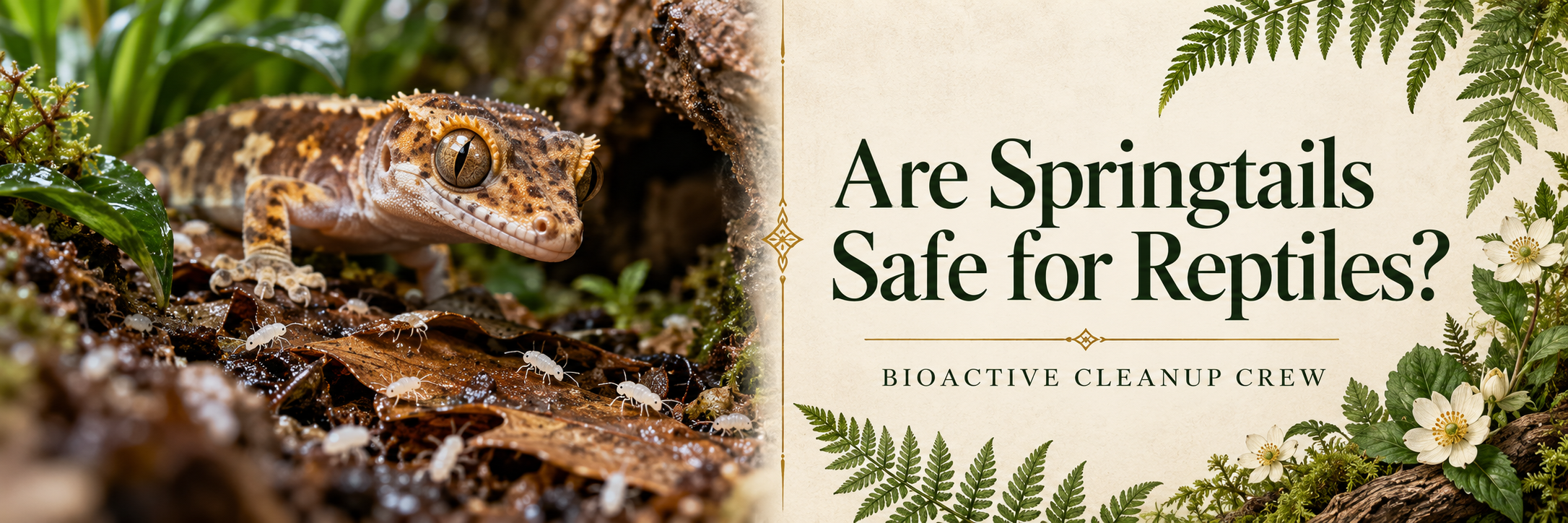
Yes, springtails are completely safe for your reptile, amphibian, or invertebrate: they cannot bite or sting anything, they are either ignored or harmlessly eaten, and they spend their time actively cleaning your enclosure instead of bothering the animal in it. Springtails such as Folsomia candida have no venom, no stinger, and no mouthpart built to handle something as large as a gecko, so the worst case for your pet is exactly nothing. What they do instead is graze mold and fungus, break down fine waste, and clean up bits of shed skin, the same harmless-but-useful role our isopod safety guide describes for their usual tankmate. The one thing keepers sometimes flag, springtails swarming a bowl of uneaten food, is a moisture and feeding fix, not a sign anything is wrong with the animal.
No venom, no stinger, mouthparts built only to scrape mold
No toxin or risk, and most reptiles ignore them anyway
Actively clean the enclosure instead of bothering the animal
The short answer: yes, completely safe
Yes, springtails are completely safe around your reptile, amphibian, or invertebrate. They cannot bite, sting, or otherwise hurt an animal of any size, and having a springtail population in the enclosure changes nothing for your pet except that the substrate stays cleaner. If you have been holding off on bioactive because you pictured bugs bothering your gecko at night, you can let that worry go.
Springtails are, if anything, even more harmless than the isopods they are usually paired with. Our isopod bite safety guide already covers why isopods pose no threat to people or pets, and springtails clear that same bar with room to spare, since they are smaller, softer, and built to scrape mold rather than bother anything alive.
Why they physically cannot hurt your reptile
Start with size and equipment. Most springtails run somewhere around 1 to 3 mm, smaller than a grain of rice, with soft bodies and mouthparts built to scrape fungus, algae, and decaying plant matter off a surface. There is no venom gland, no stinger, and nothing sharp enough to break the skin of an animal thousands of times its size. Physically, a springtail has none of the tools it would need to hurt a reptile even if it wanted to.
The one piece of anatomy people ask about is the furcula, the spring-loaded tail-fork that gives springtails their name and their signature flick-and-vanish jump. That mechanism is purely a getaway move, flinging the springtail away from a perceived threat, not a weapon aimed at one. When a springtail encounters your gecko, the most aggressive thing it is physically capable of doing is springing off in the opposite direction.
What happens when your reptile eats one
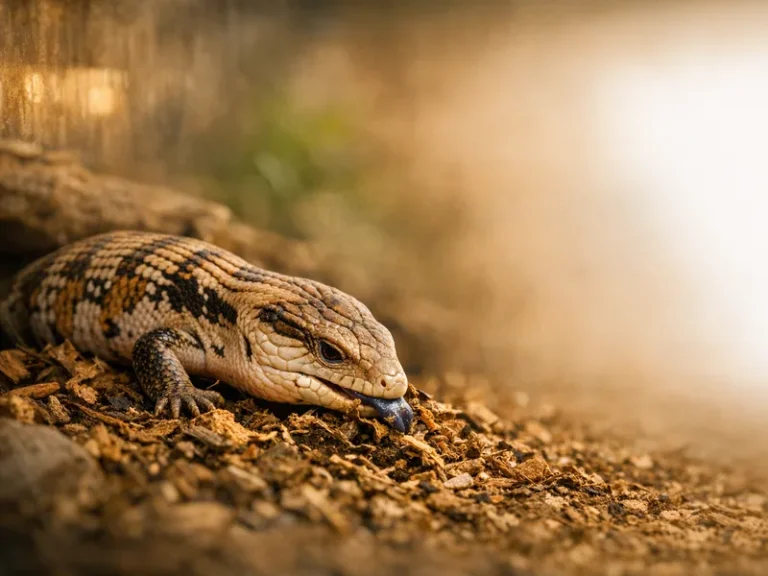
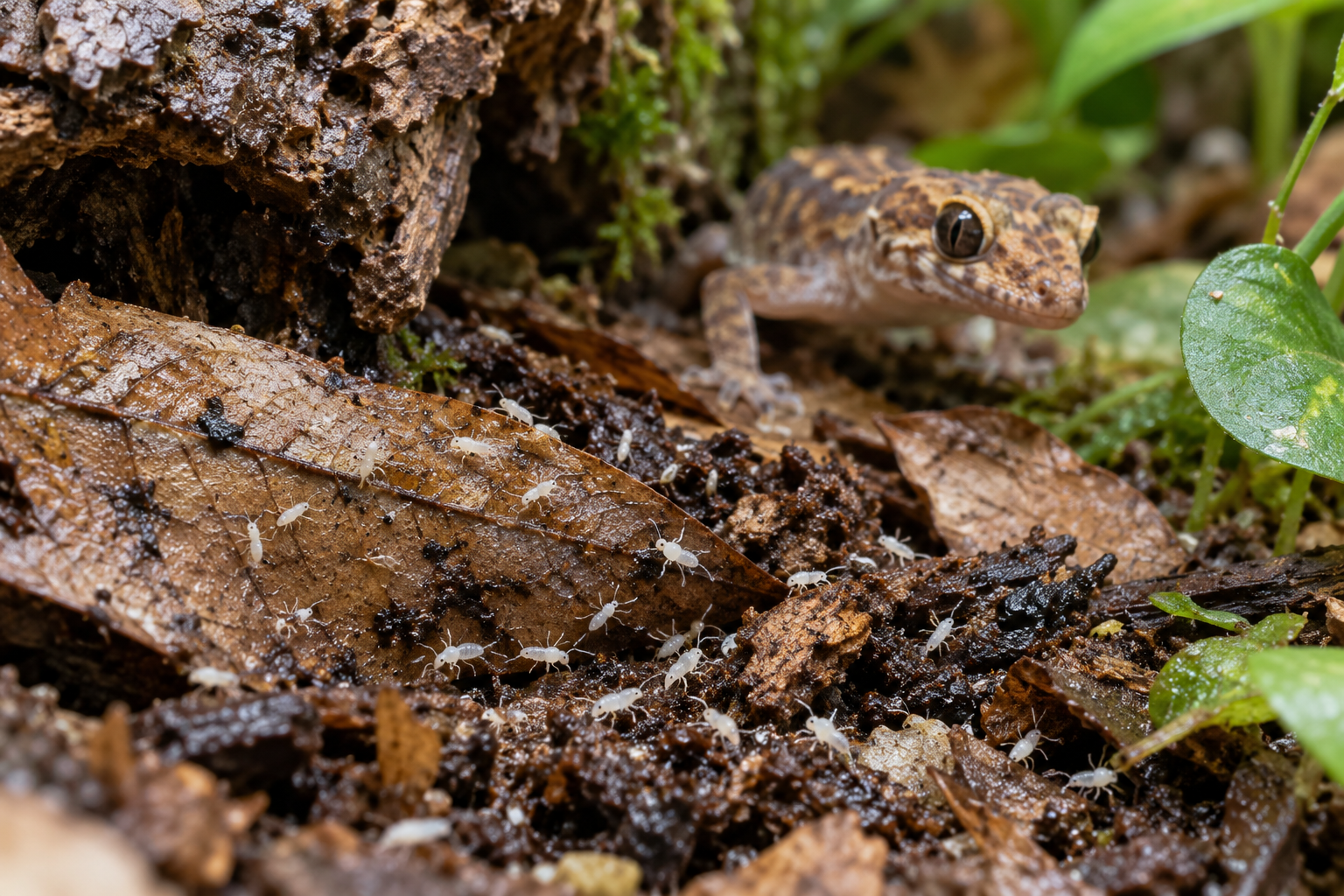
Most reptiles simply ignore springtails, they are too small to register as prey to an adult leopard gecko or bearded dragon. Some smaller or more insectivorous animals, especially juvenile geckos, dart frogs, and mantids, will snap one up now and then, and that is completely fine. A springtail that gets eaten is harmlessly digested, there is no toxin, no shell sharp enough to matter, and no risk either way.
Do not count on them as a meal, though. They are too small and too low in calories to matter as a food source, which is a different role than the one isopods play as an occasional supplemental feeder. Springtails are cleanup crew first, and whether your reptile eats a few or ignores every one of them, nothing changes about how safe they are to have in the tank.
The actual benefit: they clean, they don't harm
Here is the part that gets lost while people are busy worrying about safety: springtails are actively working for your enclosure, not against it. Fungus and mold are their primary food, so a healthy springtail population finds a mold bloom and grazes it down, often within a day or two of it appearing. They also clean up fine organic waste and help break down shed skin left behind after a molt, the small stuff that isopods do not always get to first.
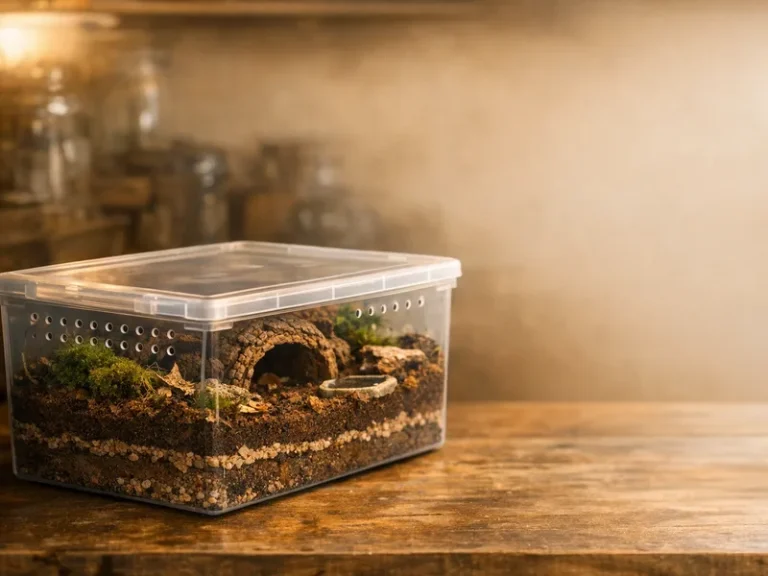
That combination, harmless to the animal and genuinely useful to the enclosure, is exactly why springtails are the default second half of almost every cleanup crew. Our bioactive combos pair a springtail culture with isopods in one order, and if you are still building the enclosure itself, the step-by-step setup guide shows exactly where the crew goes in.
The one 'issue' keepers mention, and it isn't danger
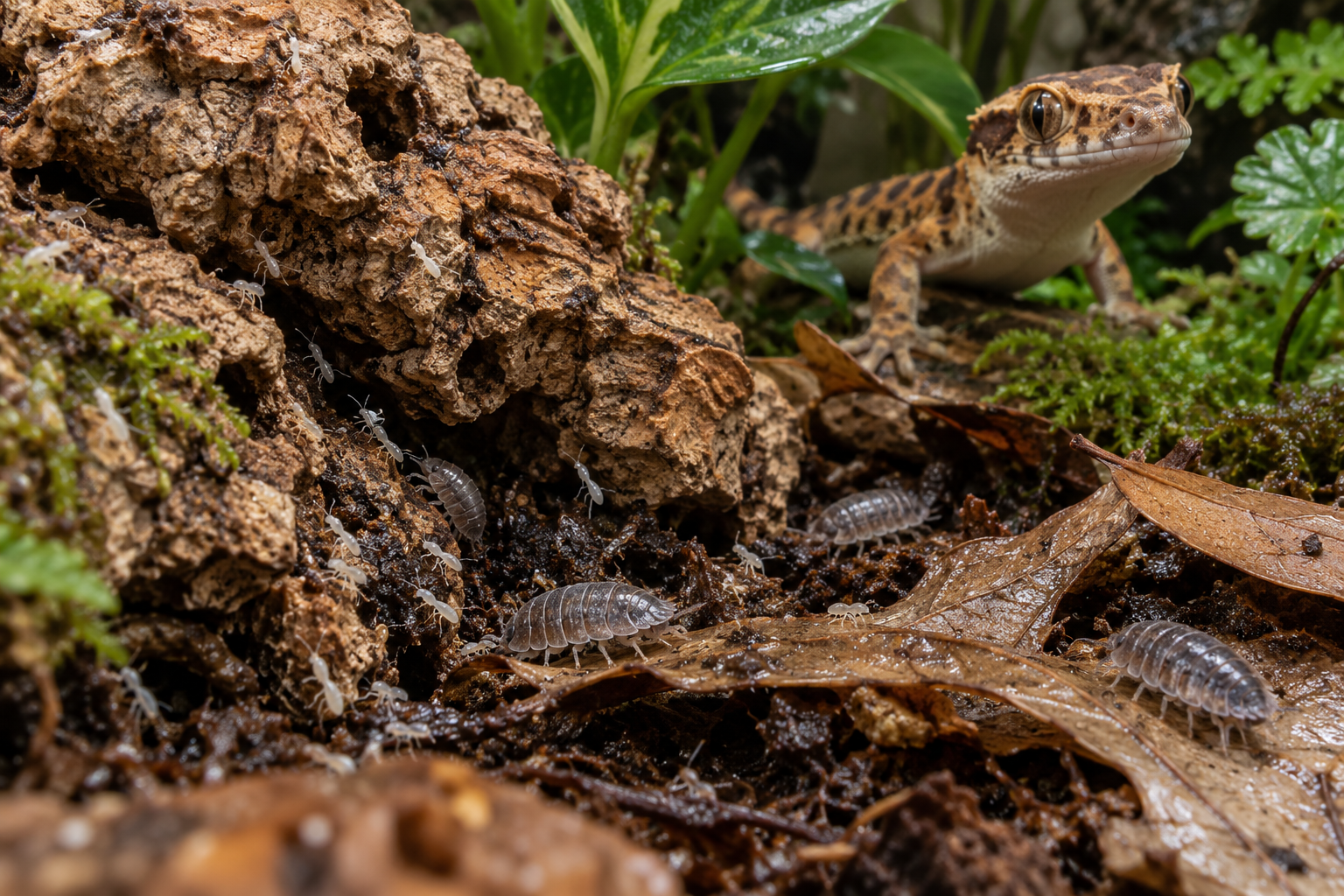
The closest thing to a real complaint you will find about springtails is keepers noticing them swarming a dish of uneaten gecko food or a patch of substrate that stays too damp. That is not the springtails misbehaving, it is springtails doing exactly what they always do, finding food and moisture and multiplying on it. The 'issue' is a byproduct of overfeeding or a spot that stays wetter than the rest of the tank, not a springtail behaving badly or a danger to your pet.
The fix is boring and effective: pull uneaten feeders and food out of the enclosure within a day rather than letting them sit, and dial back misting slightly if one corner never dries out between sessions. Do that and the population settles back down to background levels on its own. It is a moisture and feeding-schedule tweak, the same kind of adjustment covered in our guide on keeping a springtail culture balanced, not a reason to pull springtails out of the enclosure.
Getting started with springtails
If a bioactive setup has been on your list and springtails were the thing giving you pause, they are the easiest, lowest-risk place to start. A single culture poured into a damp corner of the enclosure establishes quietly in the background, and because they are harmless to your reptile in every direction, there is no downside to seeding them generously. Pick a tropical culture for a warm, humid tank or a temperate culture for a cooler, drier room, our springtail cultures ship as living, reproducing colonies either way.
From there, most keepers add isopods alongside them to round out the crew, since the two split the cleanup work between fine mold and heavier waste. If you would rather not buy them separately, the bioactive combos above bundle both in a single order. Either way, the springtails themselves were never the risk, they are one of the safest living additions you can make to any enclosure.
Start Your First Springtail Culture
Straight answers to the questions above, ready to add in one tap. Living cultures, shipped active and reproducing.
Frequently Asked Questions
Written by the TC INSECTS breeding team · Porter, Texas · Live Arrival Guarantee on every order
Have a care question? Ask our community.
Join Reptile Keepers USA, our free Facebook group for reptile, amphibian and invert keepers. Share your setups, get care help and swap feeder tips.
Join the free group