Blue Tongue Skink Cleanup Crew

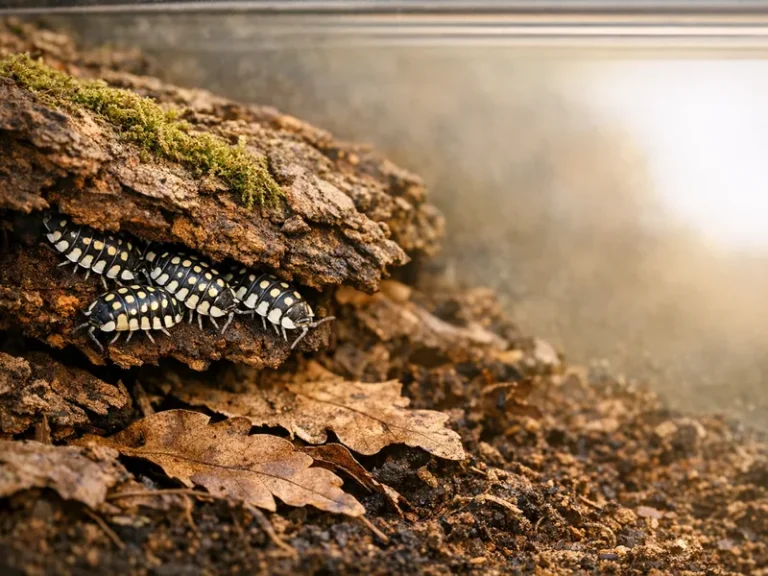
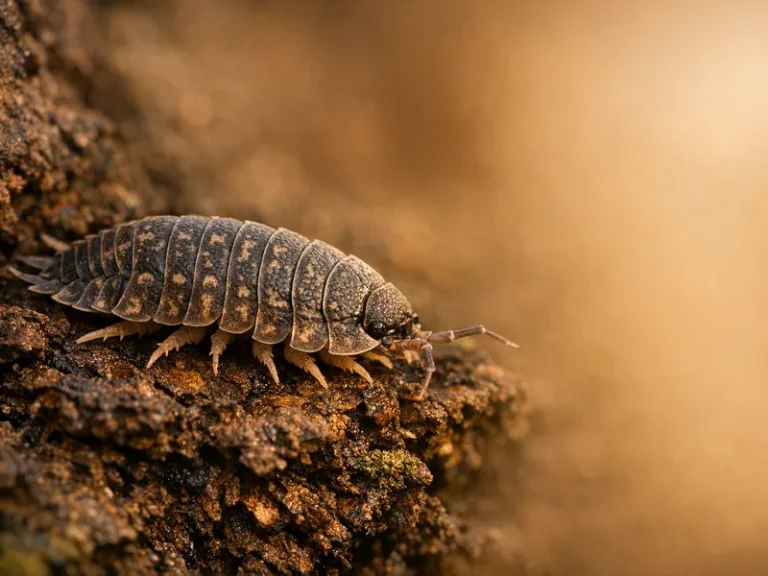
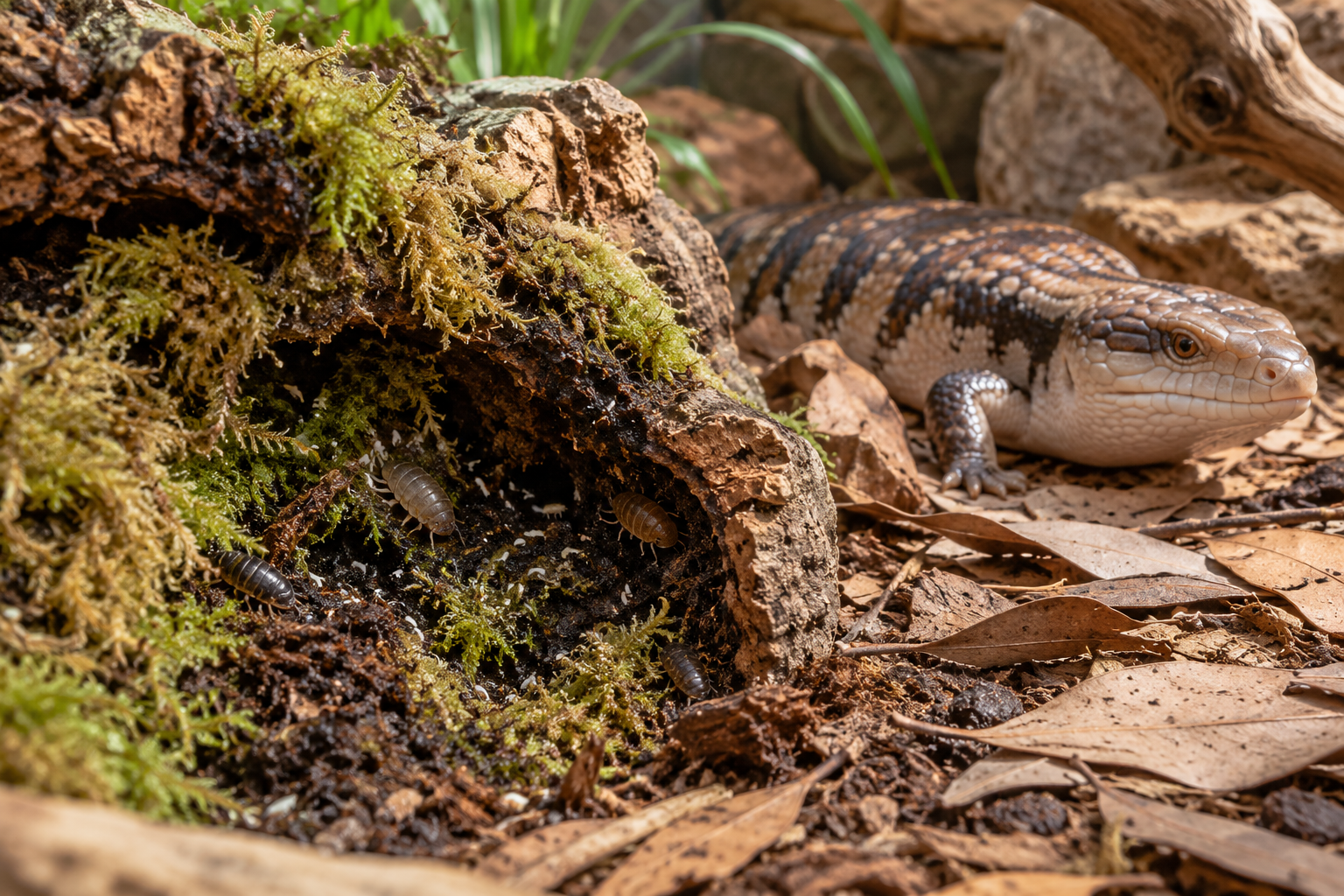
The best cleanup crew for a blue tongue skink is Powder isopods (Porcellionides pruinosus) and Dwarf Whites (Trichorhina tomentosa), paired with springtails, sized for the drier, lower-humidity enclosure most blue tongues are kept in. Set your expectations honestly before you seed anything: a blue tongue skink is a voracious omnivore that actively digs for and snacks on isopods as enrichment, not an animal that merely tolerates them nearby, so losing some of the crew to a curious skink is normal, not a failure. Leave the big, protein-hungry Dairy Cow (Porcellio laevis) and other large Porcellio out of the build entirely, the same rule as any live animal's enclosure. Our Armadillidium isopods are a hardy option worth adding to the mix.
Sized to a drier, low-humidity enclosure
Not just tolerance, active foraging
Own-bin-only, not loose with the skink
The answer: Powder and Dwarf White for a drier setup
For a blue tongue skink, build the crew around Powder isopods and Dwarf Whites, always paired with springtails. That is the same safe pairing we recommend across every cleanup crew guide on this site, just seeded and sized for the drier, lower-humidity enclosure most blue tongue skinks are kept in rather than a tropical, heavily misted build.
The bigger adjustment for this species is not which isopods to use, it is what to expect from the skink itself, which behaves very differently around a cleanup crew than a snake or an arboreal gecko does.

Why a blue tongue skink changes the calculation
A blue tongue skink is a voracious, ground-dwelling omnivore that actively forages through its substrate, and isopods are squarely within that foraging behavior rather than something the skink happens to ignore. Keepers consistently report their skinks digging for and eating isopods as a form of enrichment, treating the substrate like a foraging puzzle rather than simply resting on top of it the way a ball python does.
That is a meaningfully different relationship from most of the animals we write cleanup crew guides for. A skink is not a passive tank-mate the crew has to avoid disturbing, it is an active predator of the crew itself, so the honest framing here is about managing losses, not preventing contact.
The right isopods, sized to drier air
Powder isopods (Porcellionides pruinosus) tolerate a drier substrate better than most beginner species provided they have one damp refuge, which suits the generally lower ambient humidity most blue tongue setups run, somewhere in the neighborhood of 40 to 60 percent depending on the exact species you keep. Dwarf Whites (Trichorhina tomentosa) tunnel through the substrate and reproduce on their own once established. Both are on our beginner isopods page.
If you want a hardy complementary pick for an especially dry setup, Armadillidium species are naturally drought-tolerant pill bugs worth adding alongside the core crew. They are not a required substitute for Powder and Dwarf White, just a genuinely tough option if your enclosure runs on the drier end. Browse our Armadillidium isopods if you want to add one.
Why Dairy Cow and big Porcellio stay out
The rule holds here too, even though the concern is a little different from a snake enclosure. Big, protein-driven isopods like Dairy Cow are an unnecessary addition around an animal that is already actively hunting the substrate for food, adding size and appetite to a relationship that does not need either. There is no upside to it when Powder and Dwarf White already give the skink something to forage for.
Keep any Dairy Cow you own as its own separate display or feeder colony, not loose with a blue tongue skink. Our guide on which isopods are safe with your reptile covers the size and temperament trade-offs across species in more depth.
Springtails for the drier substrate
Springtails still round out the crew, grazing the mold and fungus that shows up in whatever damp pocket your enclosure maintains. In a lower-humidity blue tongue setup that damp zone is smaller and more contained than a tropical build's, so a temperate or arid-leaning springtail culture is often a better match than a tropical one.
Seed the springtail culture into that damp corner or humid hide specifically, rather than across the whole substrate. Our springtail cultures ship as living, reproducing colonies ready to establish there.
Realistic losses, seeding, and timing
Go in expecting a blue tongue skink to actively reduce the isopod population through normal foraging, the same honest framing we give for a bearded dragon. That is not a sign anything is wrong, it is simply what an omnivorous, ground-foraging lizard does, and Powder and Dwarf White are cheap and fast-breeding enough to make that an acceptable trade.
Seed more generously than you would for an animal that ignores the crew, and give it 6 to 8 weeks to establish before the skink moves in so the colony is breeding steadily before it faces any foraging pressure. Run your enclosure's exact dimensions through our cleanup crew calculator for a specific starting number.
Everything You Need for a Blue Tongue Skink Cleanup Crew
The drier-setup crew, stocked heavy enough for an active forager. Tap to add, then check out in one trip.
Frequently Asked Questions
Written by the TC INSECTS breeding team · Porter, Texas · Live Arrival Guarantee on every order
Have a care question? Ask our community.
Join Reptile Keepers USA, our free Facebook group for reptile, amphibian and invert keepers. Share your setups, get care help and swap feeder tips.
Join the free group