The Best Cleanup Crew for a Bearded Dragon
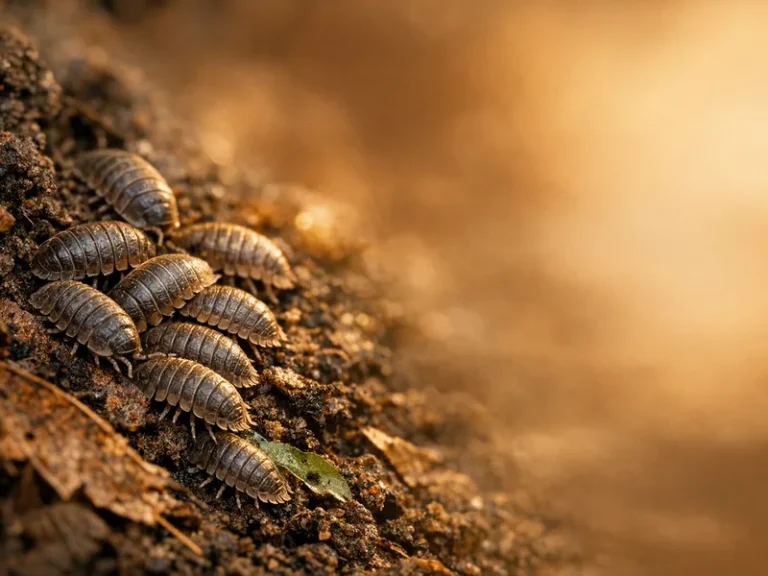
The best cleanup crew for a bearded dragon is Powder Blue or Powder Orange isopods (Porcellionides pruinosus) and Dwarf Whites (Trichorhina tomentosa), paired with springtails, not the big, robust Porcellio some sites suggest because a beardie will "eat some anyway." Bearded dragons are opportunistic omnivores that snap at anything that moves, which makes a large, protein-hungry isopod a mutual risk rather than a one-sided safe bet. The right crew is sized for a beardie's semi-arid enclosure, generally in the 40 to 60 percent humidity range rather than a wetter tropical mix, and stocked heavily enough to absorb the losses a curious dragon will cause. Our Powder isopods page is the place to start.
Not big Porcellio, despite some sites' advice
Semi-arid, not a wet tropical mix
A beardie snaps at anything that moves
The answer: Powder and Dwarf White, not big Porcellio
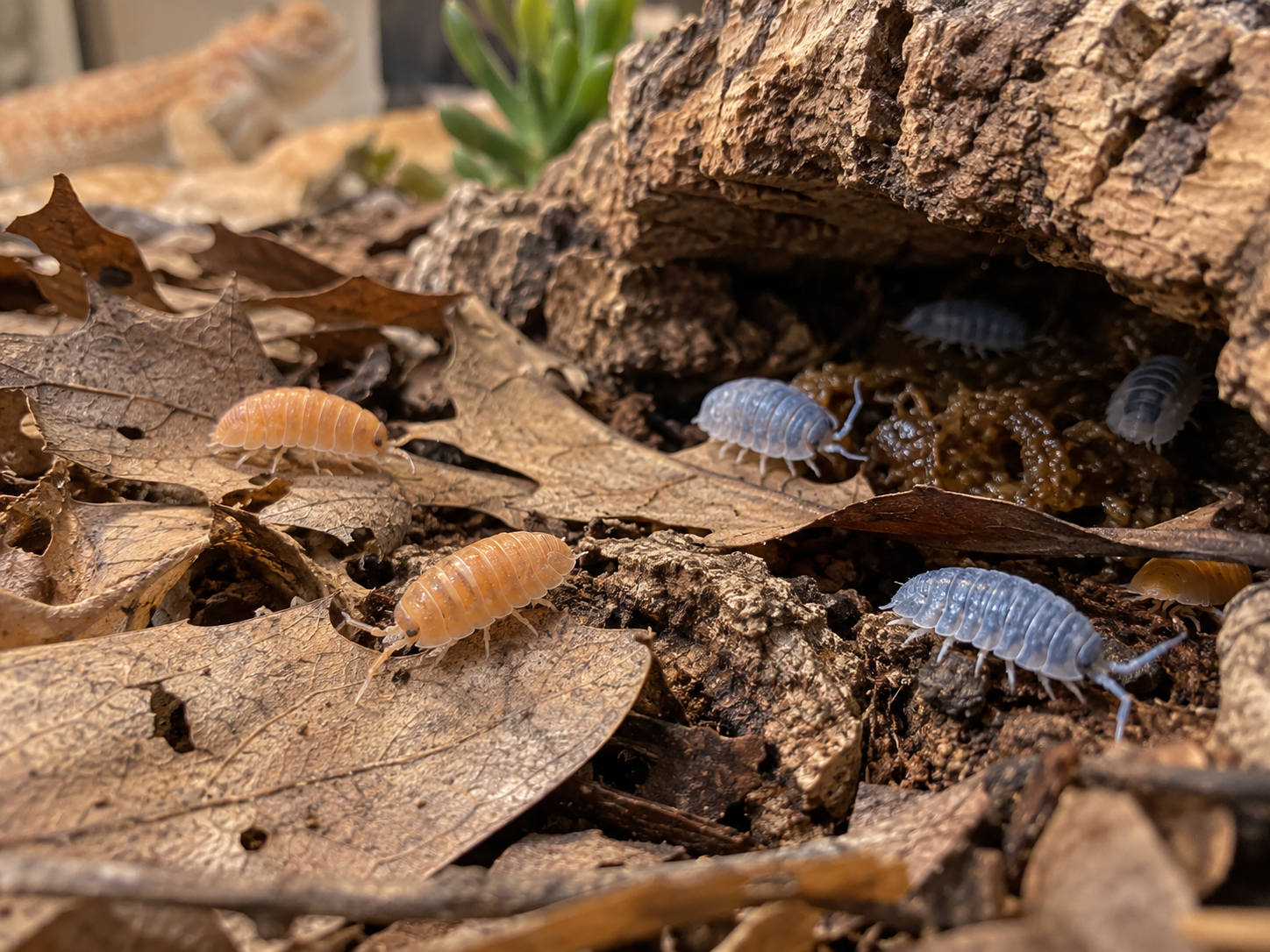
For a bearded dragon, build the crew around Powder Blue or Powder Orange isopods and Dwarf Whites, always paired with springtails. That is a different answer from some of the advice circulating in the hobby, which suggests reaching for big, robust Porcellio isopods since a beardie's messy tank needs a tough species and the dragon will pick some off anyway.
We do not recommend that trade. A large, protein-driven isopod loose with an animal that actively hunts and hunts back is a mismatch in both directions, and Powder and Dwarf White already handle a bearded dragon's substantial waste output without that risk.
Why the 'go big and tough' advice is wrong for a beardie
Bearded dragons are opportunistic omnivores, not passive tank-mates. They actively dig, forage, and snap at anything in the enclosure that moves, which is very different from a snake that merely rests near a cleanup crew without hunting it. That same active foraging works in reverse too: a big, protein-hungry isopod like Dairy Cow is drawn to protein sources in the enclosure, and a low-humidity beardie tank does not offer much else for it to eat.
The result is a setup where both animal and isopod have some incentive to bother each other, which is exactly the mismatch we avoid across every cleanup crew guide on this site. Powder and Dwarf White remove that problem because neither is large or aggressive enough to be a concern, no matter how much a bearded dragon noses around the substrate.
The right isopods, sized to an arid tank
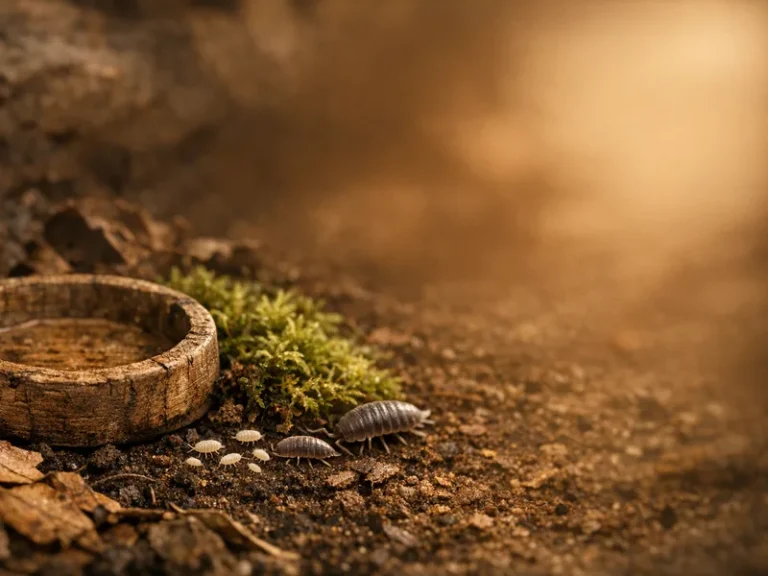
Powder Blue and Powder Orange isopods (Porcellionides pruinosus) are small, fast-breeding, and tolerant of a drier substrate than most beginner species, which fits a beardie's semi-arid enclosure well. Dwarf Whites (Trichorhina tomentosa) tunnel through the substrate and process fine waste in the same damp pockets, reproducing on their own once established. Both are on our Powder isopods page.
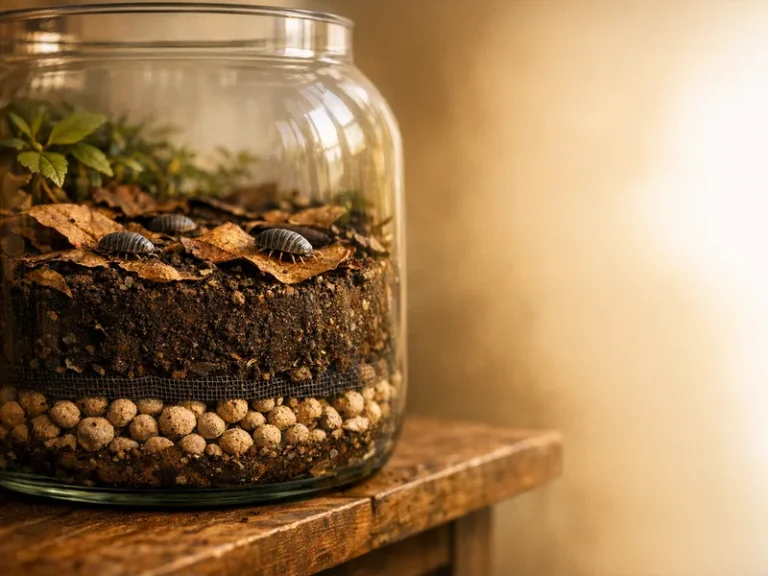
That semi-arid framing matters because a bearded dragon enclosure generally runs in the neighborhood of 40 to 60 percent humidity, drier than the wetter tropical mix a crested gecko or dart frog needs. Seed the crew with that in mind: a smaller humid hide or damp corner rather than a uniformly moist substrate.
Springtails and the humid hide
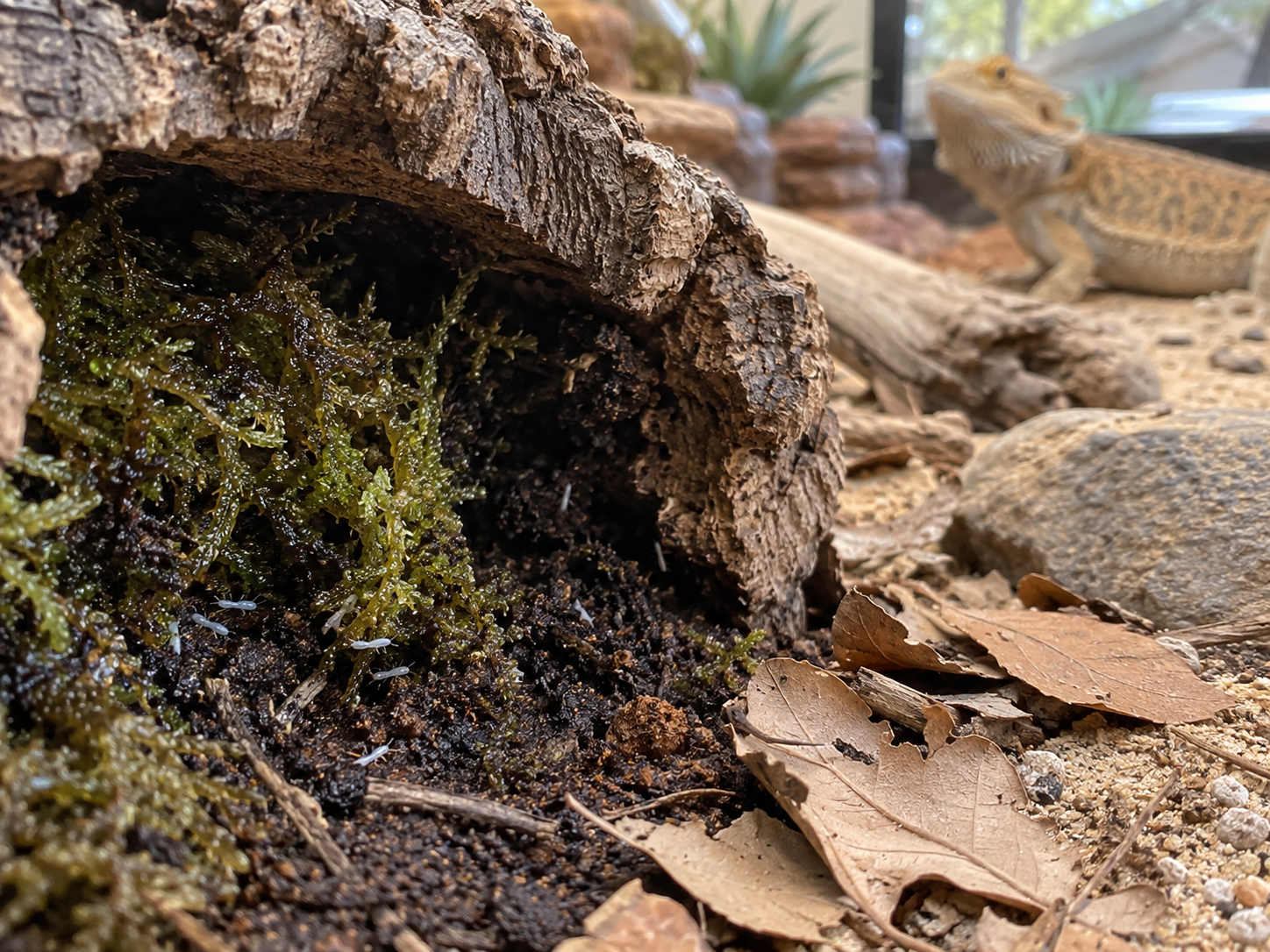
Springtails still earn their place here, grazing the mold and fungus that builds up in the one damp zone a beardie tank maintains. Without them, that humid hide or moisture pocket is the first place mold shows up, since it is the only consistently damp spot in an otherwise dry enclosure.
Seed a springtail culture directly into that humid hide or damp corner rather than across the whole substrate. Our springtail cultures ship as living, reproducing colonies ready to establish there.
Yes, the dragon will eat some, and that is fine
Be honest with yourself going in: a bearded dragon will eat isopods it encounters while foraging, and that is a normal, low-stakes part of keeping a bioactive beardie enclosure, not a sign anything has gone wrong. Powder and Dwarf White are cheap, fast-breeding, and easy to restock, which is exactly why they are the right choice for an animal that treats its substrate as a snack bar.
The practical fix is to bulk up the colony before the dragon moves in rather than seeding a bare-minimum culture and hoping it holds. A well-established, actively breeding crew can absorb a beardie's foraging losses and keep multiplying regardless.
Seeding density and timing for a beardie enclosure
Because a bearded dragon will draw down the population by foraging, seed more generously than you would for an animal that ignores the crew entirely. A larger starter batch of Powder isopods plus a Dwarf White culture and one or two springtail cultures is a reasonable starting point for a standard beardie enclosure, scaling up for a larger tank. For a number matched to your exact footprint, run it through our cleanup crew calculator.
Establish the crew 6 to 8 weeks before the dragon moves in, a bit longer than the 4 to 8 week window we recommend elsewhere, so the colony is well past its fragile early stage and already breeding steadily before it has to withstand any foraging pressure.
Everything You Need for a Bearded Dragon Cleanup Crew
The safer arid crew, stocked heavy enough to absorb a beardie's foraging. Tap to add, then check out in one trip.
Frequently Asked Questions
Written by the TC INSECTS breeding team · Porter, Texas · Live Arrival Guarantee on every order
Have a care question? Ask our community.
Join Reptile Keepers USA, our free Facebook group for reptile, amphibian and invert keepers. Share your setups, get care help and swap feeder tips.
Join the free group