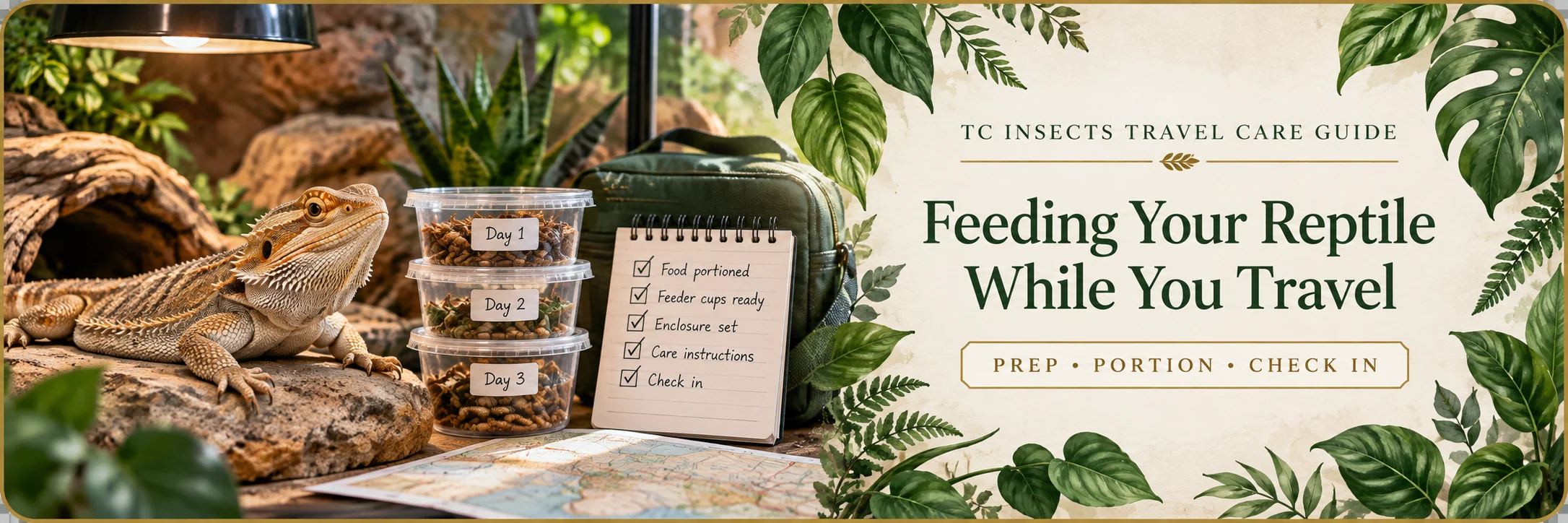
Feeding Your Reptile While You Travel
Most healthy adult reptiles and tarantulas coast through this
The easiest fasting case of any animal on this list
Dart frogs and small amphibians can't skip a week
Plan the Feeding Before You Leave
Most healthy adult reptiles handle a short trip without any special plan: a 2 to 3 day weekend rarely needs a sitter at all, a week calls for a pre-portioned feeding plan, and two weeks or more needs an actual person with written instructions. An adult tarantula is the easiest animal on this list, often fine for weeks to months, while a dart frog or other small daily-feeding amphibian is the hardest, since it cannot skip more than a couple of days. Here is the plan by trip length, a sitter card you can actually copy, and how to keep your feeder insects alive while you are gone too.
Portion, Label, and Keep It Simple
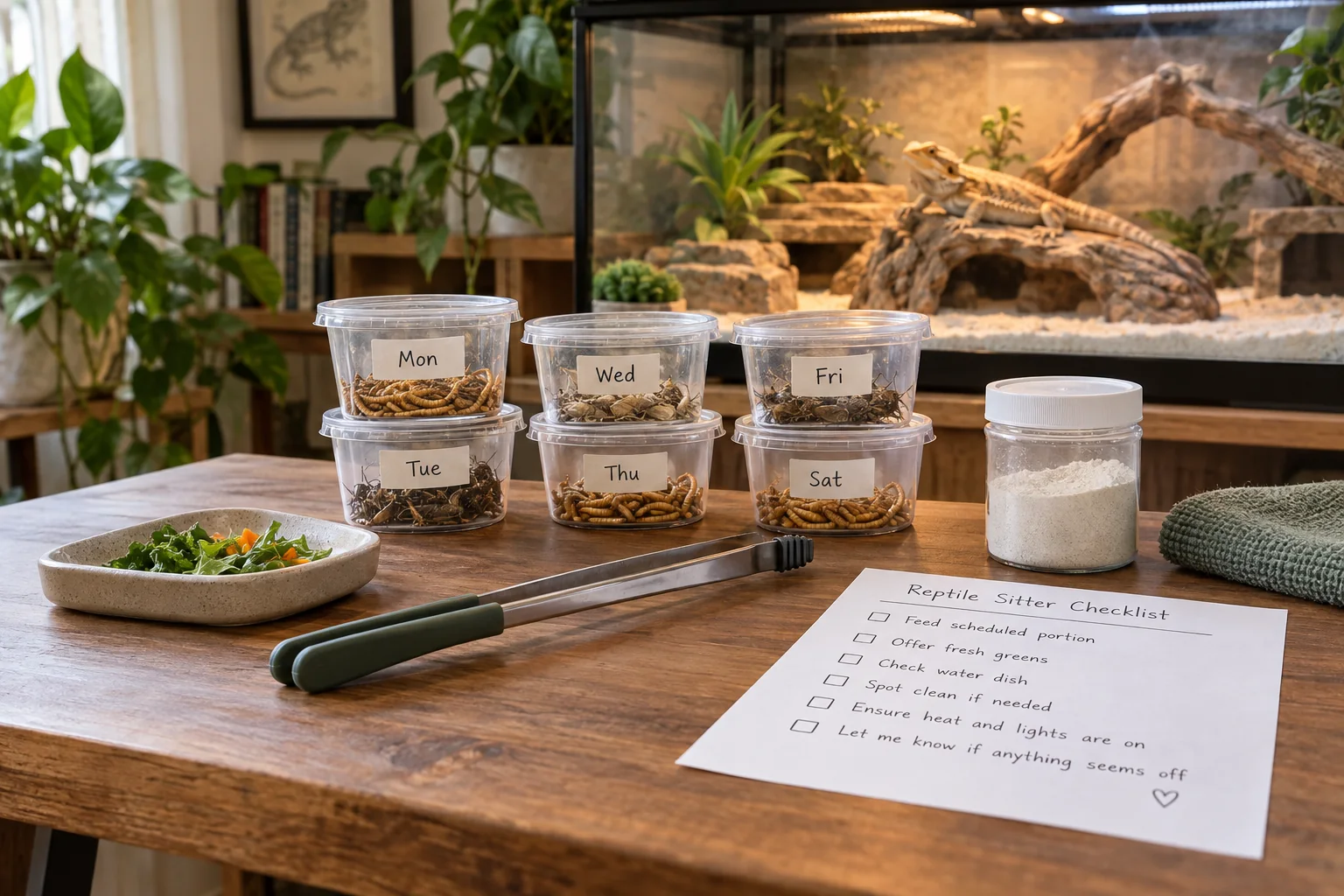
Prepare only the feedings your animal actually needs, label each portion clearly, and leave written instructions that are easy to follow.
How long your reptile can actually go without food
A healthy adult bearded dragon commonly handles 7 to 10 days without a meal, and a healthy adult leopard gecko can stretch to 10 to 14 days by drawing on tail fat, so a short trip is rarely the emergency new keepers fear. Adult tarantulas are the extreme end of easy, since a well-fed adult can often go weeks to months between meals, with water access mattering far more than food for them in the short term.
Juveniles and small daily feeders are the opposite story. A juvenile bearded dragon or gecko should not skip more than a few days, and dart frogs, which most keepers feed daily as froglets and every other day as adults per our dart frog care sheet, are not built for a week of silence. Match your plan to your actual animal's age and species rather than the easiest case on this list.
A long weekend (2 to 3 days): usually no sitter needed
For most healthy adult reptiles, a 2 to 3 day trip needs nothing more than a normal feeding right before you leave and a check of the enclosure's heat and water on the way out the door. Skip the temptation to overfeed the night before, since a stuffed animal sitting in a warm tank while you are gone is more of a digestion risk than a genuinely fine short gap in feeding.
The one exception even at this length is a very young animal or a daily-feeding amphibian, where even a long weekend is worth a quick sitter check rather than assuming it is fine by default.
A week away: prep and a simple check-in
A week is where preparation starts to matter. Pre-portion feeders into small labeled containers for one or two feedings, so a sitter or a family member only has to tip one container in rather than judge a count themselves. A single mid-week check-in, in person or a photo sent from a house sitter, catches a heat lamp failure or an escaped feeder before it becomes a real problem.
Two weeks or more: a real sitter with real instructions
Beyond about two weeks, hand your sitter a written card rather than a verbal explanation, since the details that matter are easy to forget under time pressure. Something like: Feed the portioned cup on the counter every third day. Do not add more feeders to the tank. Do not add water to the feeder cup. If the heat lamp or thermometer looks wrong, text me a photo before touching anything.
Tell the sitter explicitly what not to do: do not attempt to handle the animal, do not try to fix an escaped feeder situation alone, and do not improvise a feeding amount beyond what is portioned. A sitter who only follows the card is far less likely to cause a problem than one trying to be extra helpful.
Keeping your feeder insects alive while you're gone
The feeders themselves need a plan too, not just the pet eating them. Mealworms and dubia roaches are the most forgiving choices for a trip since both hold up well in storage for weeks with minimal attention, while a fruit fly culture or a cup of hornworms is the wrong thing to leave unattended for two weeks.
If a storm or an outage is even a small possibility while you are away, leave your sitter simple instructions rather than assuming they will know what to do. Our feeder insects power outage guide covers which species tolerate a heat wave or a cold snap and which need to move to a cooler or an insulated space fast.
The easy case and the hard case
An adult tarantula in a simple, dry enclosure with a full water dish is close to the ideal low-maintenance travel pet, genuinely able to sit through an extended trip with barely a check-in beyond water. A baby chameleon or a young dart frog is the opposite end: small, prone to dehydration, and dependent on frequent, precisely dusted feedings that a casual sitter is unlikely to get right.
If your travel schedule is genuinely unpredictable, that gap is worth factoring in before you choose your next pet, not just when you are already booking a trip. For an animal you already keep, the honest fix is a more detailed sitter card and a shorter trip, not skipping the prep.
The Pre-Trip Feeder Kit
Long-shelf-life feeders and calcium, portioned before you leave so a sitter only has to tip one cup.
Reptile Travel Feeding FAQ
How long can I leave my bearded dragon without feeding it?
A healthy adult commonly handles 7 to 10 days without a meal, which covers most vacations without a sitter visit for feeding alone. Juveniles should not go more than a few days, and any reptile should still have stable heat and fresh water the whole time.
Can a tarantula be left alone for two weeks?
Usually yes, for a healthy adult. Tarantulas can often go weeks to months between meals, and water matters more than food in the short term. Fill the water dish well before you leave and a two week trip is rarely an issue for an adult.
What should I tell a pet sitter about feeding my reptile's insects?
Write it down rather than explain verbally: exactly how much to feed, from a pre-portioned container, on which days, and what never to do, like adding feeders to the colony or water to a feeder cup. A short written card prevents most sitter mistakes.
Will my feeder insects survive while I'm away?
Mealworms and dubia roaches hold up well for a week or two with minimal care, which makes them the better pre-trip order. Fragile feeders like fruit fly cultures or hornworms are riskier to leave unattended and are better used up before you go.
Can dart frogs go a week without fruit flies?
Not comfortably. Froglets are typically fed daily and adults about every other day, so a week with no feeding is a real gap for this species, not a minor one. Dart frogs need an actual sitter with dusting instructions, even for a short trip.
What if the power goes out while I'm traveling?
Give your sitter simple species-specific instructions ahead of time rather than leaving them to guess. Our feeder insects power outage guide covers which species tolerate heat or cold swings and which need to move to a cooler space quickly.
More Feeder Care Guides
Written by the TC INSECTS breeding team · Porter, Texas · Live Arrival Guarantee on every order
Have a care question? Ask our community.
Join Reptile Keepers USA, our free Facebook group for reptile, amphibian and invert keepers. Share your setups, get care help and swap feeder tips.
Join the free group