Isopod Morph Abbreviations Explained
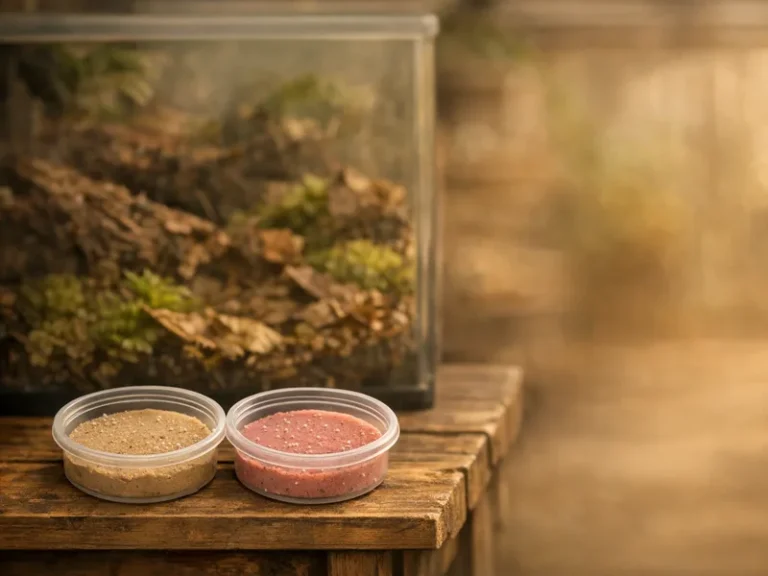
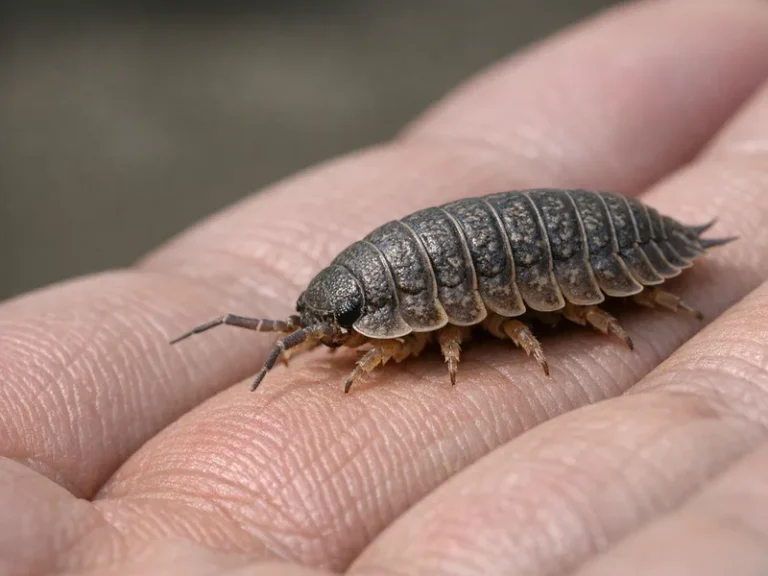
The natural, unselected color form a species starts as
T+ keeps a few pigment steps, T- is pure white with red eyes
How hobby breeders call a new morph proven and locked in
Read the shorthand before choosing a morph
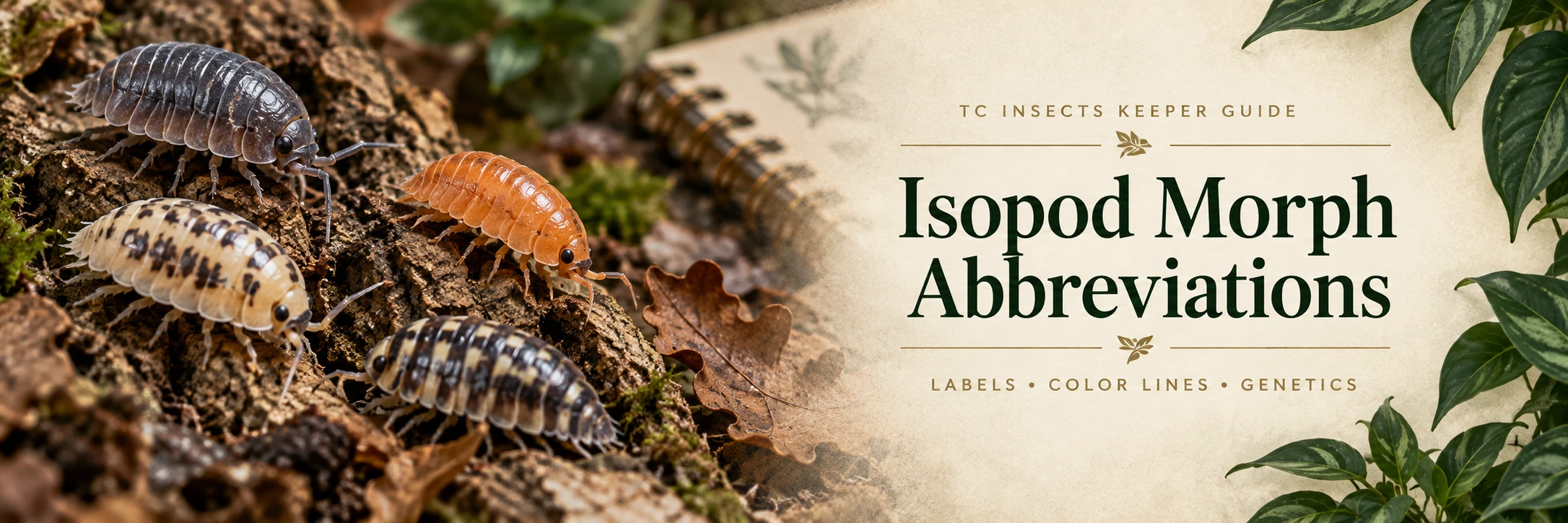
The abbreviations on isopod listings are shorthand for color morphs and genetics, so WT means wild type, the natural form a species starts as, HY is high yellow, HO is high orange, and a T+ or T- label refers to a type of albinism, which is why the same species can appear under a dozen different names. Once you know the code, a listing like B1 Panda King HY or T- Powder Orange stops looking like a secret language and starts reading like a spec sheet. Here is what every common abbreviation means, the genetics behind them, and how to shop with more confidence once you can read the label.
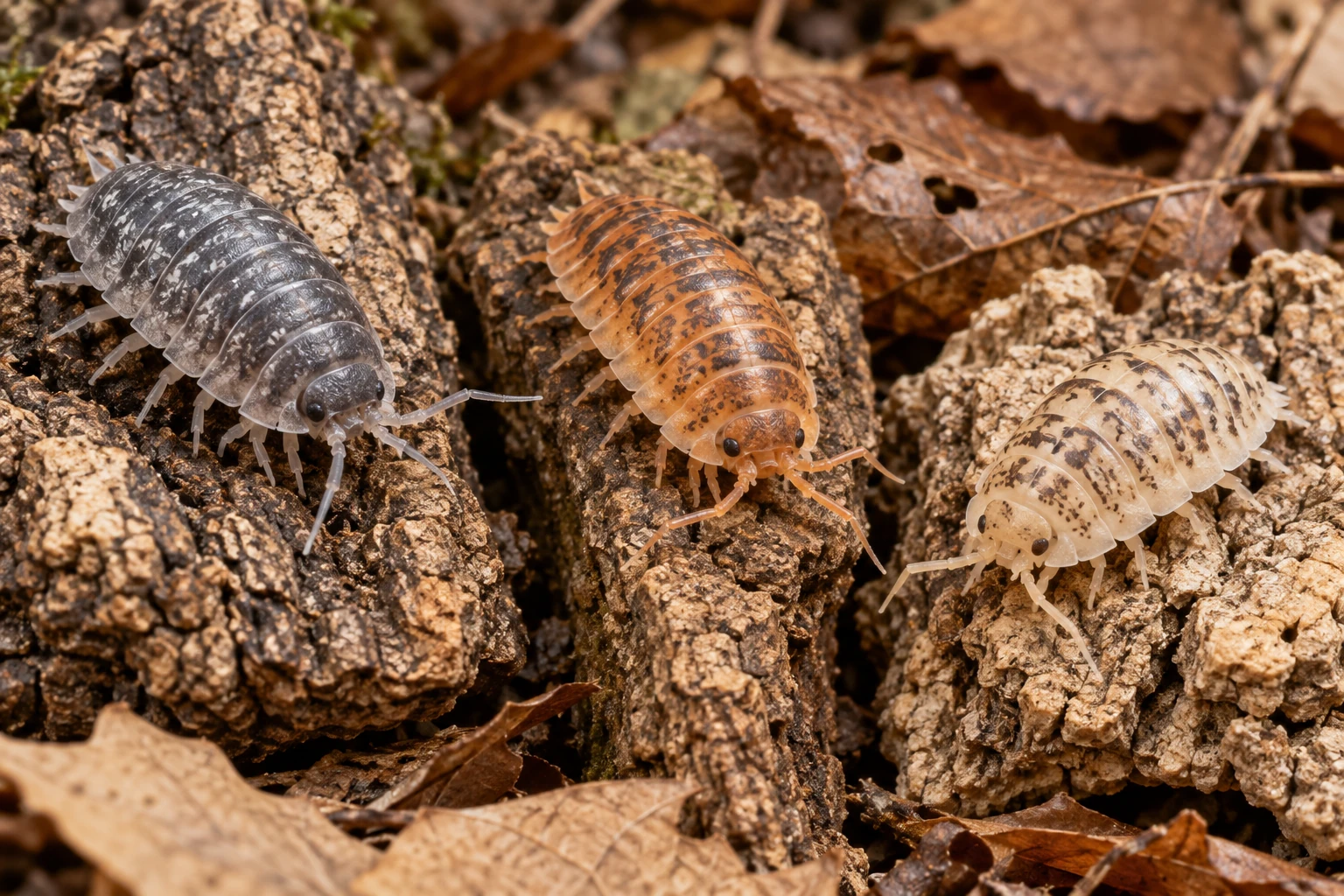
Compare the actual color line
Use the photo and the seller’s description together, and ask how the line has been isolated and proven.
The Letters on Every Listing
Start with the basics that show up on almost every listing. Wild type, shortened to WT, is the natural, unselected color and pattern a species has before any breeder has picked out something unusual. High yellow (HY) and high orange (HO) describe lines bred for noticeably more yellow or orange pigment than that wild type baseline, usually built up over several generations of selecting the brightest individuals to breed together.
T+ and T- both mark a type of albinism, but they are not the same trait. T- isopods are generally missing a working copy of tyrosinase, the enzyme that starts the melanin pigment pathway, so they come out pure white with red eyes and no dark pigment at all. T+ isopods still have some working tyrosinase, so they can complete the first steps of that pathway, which is why a T+ animal often keeps a faint tint or pattern instead of going fully white.
The Rest of the Shorthand
A few more abbreviations show up constantly once you start browsing listings. Sp. after a genus name means the species has not been formally described yet, so the seller is being upfront that science has not caught up with the hobby. Cf. means "compare to" and shows up when a seller believes an animal is probably a certain species but is not fully certain of the identification. Locality refers to where a wild population was originally collected, which is a different idea from a morph, a locality is about geography and a morph is about a selectively bred trait.
Line-bred and isolated, often shortened to iso, both describe a group kept separate from other lines of the same species to keep a trait or a bloodline predictable. F1 means the first generation of offspring from a specific pairing, and F2 is the next generation down, bred from F1 siblings. Sellers use F1 and F2 mostly to signal how far along a new morph is in proving itself, an F1 group is still an early test cross, while a group several generations deep is closer to a stable line.
The Three Genetic Categories
Most isopod morphs fall into one of three broad genetic categories, and knowing which one you are buying changes what to expect from the babies. A recessive trait, like many orange or caramel color forms, generally only shows up when an animal carries two copies of the gene, so pairing a recessive morph with a wild type animal usually produces wild type-looking offspring that are quietly carrying the trait rather than displaying it. A co-dominant trait shows up in the offspring even from a single copy, so pairing a co-dominant morph with a wild type animal generally produces a visible mix in the litter rather than everything reverting to plain wild type.
The third category, line-bred selection, is not a single gene at all. It is the gradual result of a breeder picking the brightest, boldest, or most patterned individuals generation after generation until the whole line trends that direction. Line-bred morphs can drift back toward average-looking offspring faster than a true recessive or co-dominant trait if new, unselected animals get mixed in, which is part of why keeping a line isolated matters so much to breeders trying to hold a look steady.
Why the Same Isopod Wears a Dozen Names
One species can genuinely show up under several different trade names, and it usually comes down to two separate things getting bundled into one label: the species itself, and the specific color line within that species. Powder Orange isopod (Porcellionides pruinosus) and Powder Blue isopod are a good example, both names describe the same species, just different selectively bred color lines sold under names that sound like entirely different animals.
The other reason is genus confusion. "Cubaris" has become something of a catch-all trade name in the hobby for a whole group of similar-looking isopods that are not always true Cubaris at all. The Silver Ghost isopod (Nesodillo arcangelii), for instance, is commonly sold under a Cubaris-adjacent name despite belonging to a different genus. None of this is necessarily dishonest, it is just hobby shorthand that grew faster than the taxonomy did, which is exactly why the abbreviations in this post matter more than the common name on the label.
The Buyer's Takeaway
With all these labels floating around, the most reliable way to buy is to buy on the photo and the seller's description of the actual line, not just the name. On our own listings, a label like WT is telling you plainly this is the standard, unselected look, while HY, HO, or a named line should come with a photo that actually shows the color it claims, and it is worth cross-checking that photo against something like our best display isopods roundup so you know what a genuinely striking, verified line looks like.
Before paying a premium for a named morph, it is worth asking the seller a couple of direct questions: is this line isolated from other lines of the same species, and how many generations has it bred true. A young F1 group priced like a proven morph is a bigger gamble than a line several generations deep that a breeder has stabilized, and our isopod pricing by tier guide has a sense of what different labels are typically worth. If you want to see a range of morphs side by side before deciding what to collect, browse our rare and specialty isopods, or start smaller with an isopod and springtail combo that pairs a few species together.
Keep reading: Isopod Trade Names vs Scientific Names: What Sellers Really Mean
Keep reading: Isopod Count vs Culture: What You Are Buying
The Collector Starter Kit
A curated first pull of rare and specialty morphs, so you can put today's terms to the test.
Frequently asked questions
What does WT mean on an isopod listing?
WT stands for wild type, the natural, unselected color and pattern a species has before any breeder has selected for something unusual. It is the baseline every other named morph is compared against.
What is the difference between T+ and T- isopods?
Both are types of albinism, but they are not identical. T- isopods generally lack working tyrosinase entirely and come out pure white with red eyes, while T+ isopods keep some working tyrosinase and can complete the early steps of the melanin pathway, so they often keep a faint tint or pattern instead of going fully white.
What does "sp." mean for an isopod?
Sp. after a genus name means the species has not been formally described by science yet. It is common in the isopod hobby, where many collected species are traded and bred well before they receive an official scientific name.
What does "cf." mean on an isopod label?
Cf. means "compare to" and signals that the seller believes an animal is probably a certain species but is not fully certain of the identification. It is an honest hedge rather than a guarantee of species.
What is the difference between F1 and F2 isopods?
F1 is the first generation of offspring from a specific pairing, often a test cross to see how a new trait inherits. F2 is the next generation down, bred from F1 siblings. Sellers use these labels to show how far along a new morph is in proving itself as a stable line.
Why does the same isopod species have so many different names?
Trade names often bundle the species and a specific color line into one label, so the same species can be sold under multiple names for different color forms. Genus confusion adds to it, since catch-all names like "Cubaris" get used loosely for isopods that are not always true Cubaris at all.
Keep learning
Have a care question? Ask our community.
Join Reptile Keepers USA, our free Facebook group for reptile, amphibian and invert keepers. Share your setups, get care help and swap feeder tips.
Join the free group