Best Beginner Isopods (and the Cubaris Name Game)

Trichorhina tomentosa: tiny, hardy, multiplies quickly
No extra heat unless your room stays below about 60 F
Many trade names sit in other genera like Nesodillo
Best Beginner Isopods (and the Cubaris Name Game)
The best beginner isopods are Dwarf Whites (fastest breeder), Powder Orange and Powder Blue (small and forgiving), and Porcellio scaber or laevis (big and hardy), with Cubaris murina as the gentle way into the fancy genus. Start with a species that breeds fast and tolerates mistakes, not the expensive morph you saw a photo of. And here is the truth sellers skip: most of the "Cubaris" trade names you see are not scientifically Cubaris at all, which trips up a lot of new keepers. Let's sort out both.
Build confidence with a forgiving first colony
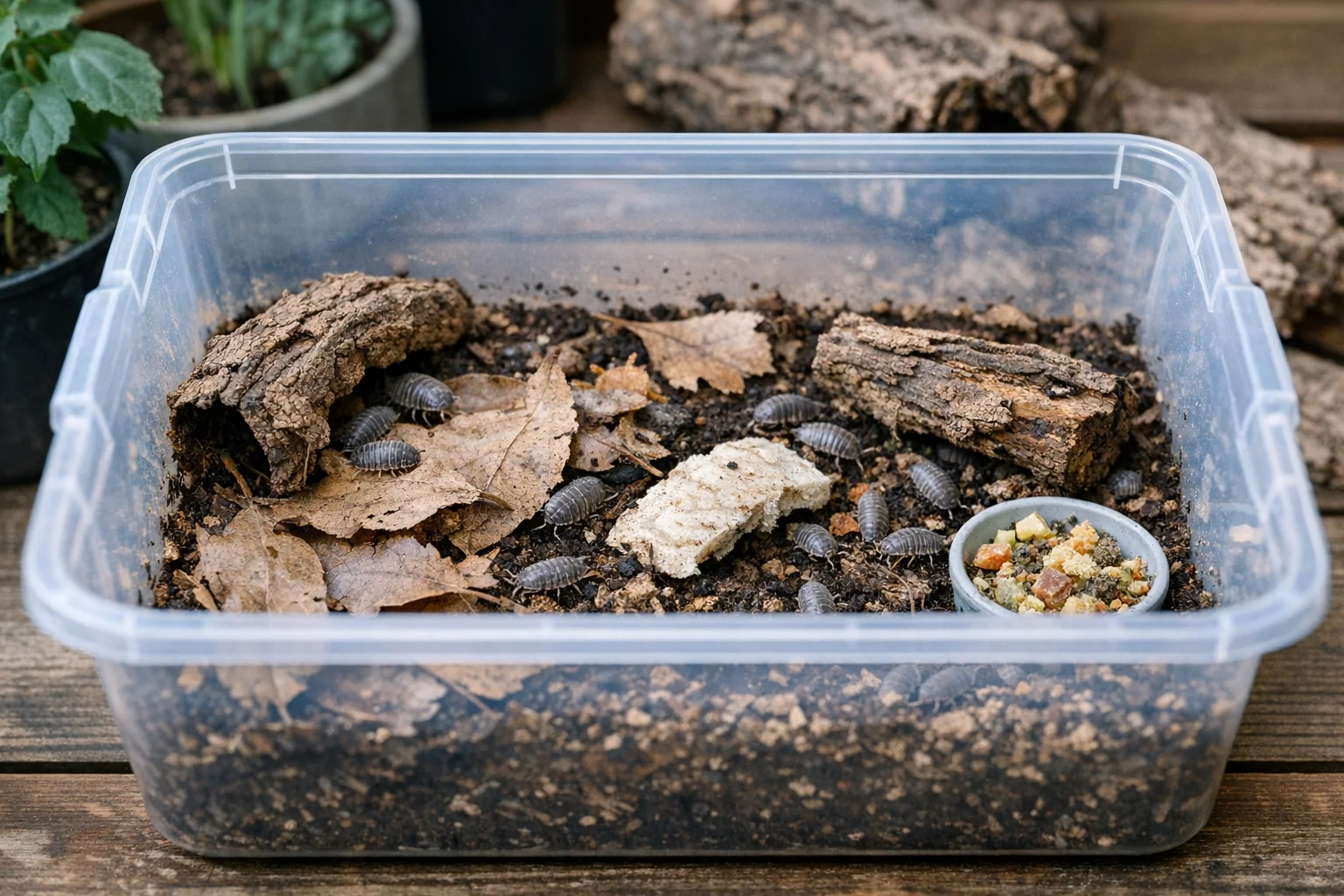
Choose a hardy species, provide leaf litter and calcium, and maintain a moist-side and dry-side gradient.
Start with a species that forgives mistakes
The best beginner isopod is one that breeds fast and tolerates a learning curve, because your first colony will teach you what damp-but-not-wet actually means. Fast breeders bounce back from a mistake; slow, pricey species punish it. On our farm the species we point new keepers to are the ones that build a colony quickly and eat a simple diet of leaf litter with a little veg and a pinch of protein.
Across all of them the basics are the same: keep them at roughly 65 to 78 F with no extra heat unless your room drops below about 60 F, maintain a moist-side and dry-side gradient, keep a thick layer of leaf litter as the staple food, and offer a calcium source like cuttlebone for molting. Our isopod care guide covers the full setup, so pick a forgiving species and let it teach you.
The four best beginner species
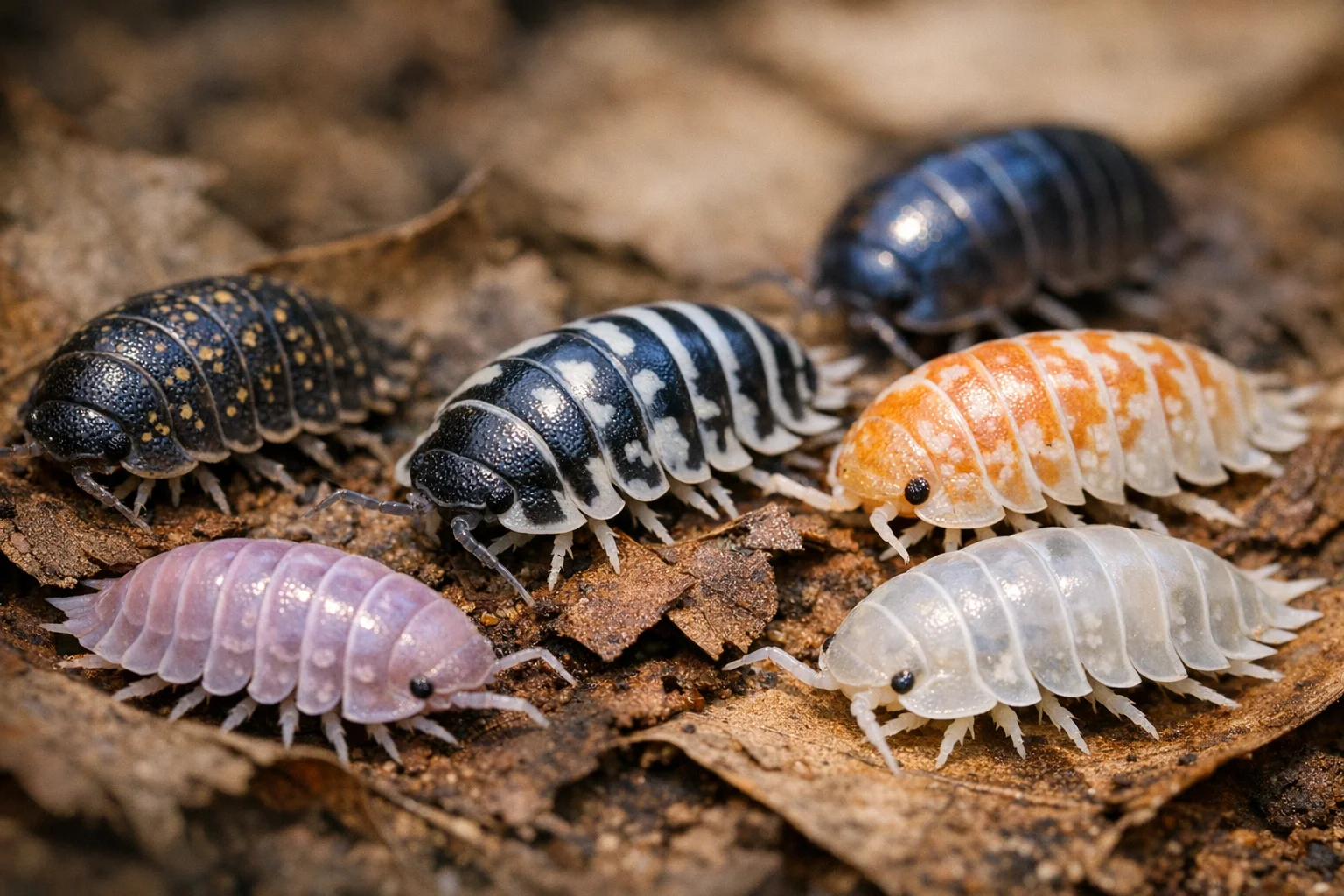
Dwarf White (Trichorhina tomentosa) is the fastest breeder and the easiest first colony: tiny at 3 to 4 mm, hardy, and a workhorse cleanup crew that multiplies quickly. Powder Orange and Powder Blue (Porcellionides pruinosus) are small, fast, forgiving, and a little more drought-tolerant, which makes them great for drier setups and for keepers who want a bit of color. You will find all of these on our beginner isopods page.
Porcellio scaber and Porcellio laevis (the Dairy Cow) are the big, hardy pick, with laevis being a fast breeder with a large appetite. They are excellent cleanup crew, with one caveat worth knowing: laevis is so protein-driven that it can nip small or fragile tankmates, so it is not the species to loose in with a tiny gecko. And for the person who wants into the fancy world, Cubaris murina ("Little Sea") is the forgiving intro: it is one of the few true Cubaris, it handles a wider range than its fancy cousins, and it is the standard entry point to the genus.
The Cubaris name game: most aren't Cubaris
Here is the part almost no seller explains. "Cubaris" has become a catch-all label in the hobby, a wastebasket taxon, where lots of pretty Asian isopods got dumped into the genus even when they do not fit the original scientific description. The result is blunt: most of the "Cubaris" trade names sold today are probably not scientifically Cubaris at all.
The clearest example is the popular Silver Ghost, which is actually Nesodillo arcangelii, not Cubaris. Nesodillo was treated as a synonym of Cubaris back in 1935 and only re-established as its own genus in 1998, which is why the two still get tangled together on shelves and price lists. None of this changes how you care for the animal, but it does explain why the same isopod shows up under three different names, and why the taxonomy on a fancy morph can be a moving target.
Set your expectations before you buy a fancy Cubaris
The fancy genus is where beginners get burned. Many of the sought-after morphs breed slowly, cost real money per animal, and want stable, warm, humid conditions that are less forgiving than a Dwarf White colony. Buy a $60 pod of a slow species as your first isopod and one husbandry mistake can wipe out the investment before you have learned the ropes.
The smarter path is to cut your teeth on a fast, cheap beginner species, get a feel for moisture and feeding, and then step up. If the fancy look is what pulled you in, start with Cubaris murina as the forgiving true-Cubaris intro, then move to the pricier morphs on our Cubaris page and rare and specialty isopods once your husbandry is dialed in. That way the name game and the price tag both work in your favor instead of against you.
Which beginner isopod for which keeper
If you want the single easiest colony and a hard-working cleanup crew, get Dwarf Whites. If you want a little color and a species that tolerates a drier setup, go Powder Orange or Powder Blue. If you want a big, visible isopod for a larger bioactive enclosure and you are not housing tiny tankmates, Porcellio scaber or laevis is hardy and prolific. If the fancy genus is the whole reason you are here, start with Cubaris murina and level up from there.
Whatever you pick, buy from a colony bred in stable conditions rather than wild-collected stock, and start with our isopod and springtail combos if you also want the springtail half of a cleanup crew in the same order. Get one forgiving colony thriving first, and the rest of the hobby opens up.
Frequently asked questions
What is the best beginner isopod?
Dwarf White (Trichorhina tomentosa) is the easiest and fastest-breeding first colony. Powder Orange and Powder Blue (Porcellionides pruinosus) are small and forgiving with a bit of color, and Porcellio scaber or laevis are big and hardy. Pick a fast breeder that tolerates mistakes over an expensive slow morph.
Are most "Cubaris" isopods actually Cubaris?
No. Cubaris has become a catch-all label in the hobby, so many trade names are not scientifically Cubaris at all. The popular Silver Ghost, for example, is actually Nesodillo arcangelii. It does not change their care, but it explains why the same isopod appears under several names.
Is Cubaris murina a good beginner isopod?
Yes, it is the forgiving way into the fancy genus. Cubaris murina ("Little Sea") is one of the few true Cubaris, tolerates a wider range of conditions than its fancy cousins, and is the standard entry point before you move up to pricier, slower morphs.
Should a beginner buy fancy Cubaris morphs?
Usually not as a first isopod. Many fancy morphs breed slowly, cost a lot per animal, and want stable warm humid conditions, so one mistake is expensive. Cut your teeth on a fast, cheap species first, then step up to the fancy morphs once your husbandry is dialed in.
Can I keep Dairy Cow isopods as a beginner?
Yes, Porcellio laevis is hardy and breeds fast, which makes it a fine beginner cleanup crew. Just know it is protein-driven and can nip small or fragile tankmates, so do not house it with tiny animals like small geckos as a hands-off cleanup crew.
What temperature and setup do beginner isopods need?
Roughly 65 to 78 F with no extra heat unless your room stays below about 60 F. Keep a moist-side and dry-side gradient, a thick layer of leaf litter as the staple food, and a calcium source like cuttlebone for molting. Our isopod care guide covers the full setup.
Ready to Stock Up?
Have a care question? Ask our community.
Join Reptile Keepers USA, our free Facebook group for reptile, amphibian and invert keepers. Share your setups, get care help and swap feeder tips.
Join the free group