What to Feed a Praying Mantis, Nymph to Adult
the smaller fly, then hydei as they grow
remove uneaten prey so it can't bother a molting mantis
about half to full body size is the safe band
What to Feed a Praying Mantis, Nymph to Adult
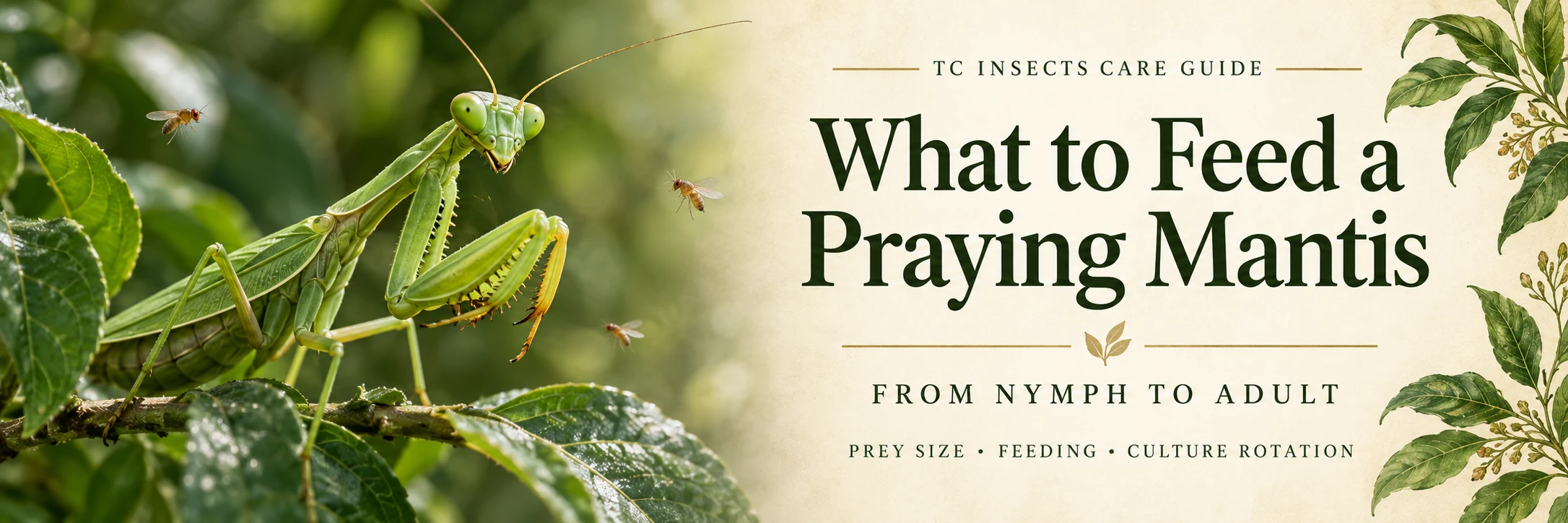
A praying mantis eats live, correctly sized insects, and the right prey is set by the mantis's size at each stage. Tiny freshly hatched nymphs start on flightless melanogaster fruit flies, step up to the larger hydei fly as they grow, and larger nymphs and adults move on to bigger feeders. Feed every two to three days, keep each prey item no bigger than roughly half to the full size of the mantis's own body, and remove anything uneaten. Running a couple of fruit fly cultures on rotation keeps a steady supply for the hungry nymph stages.
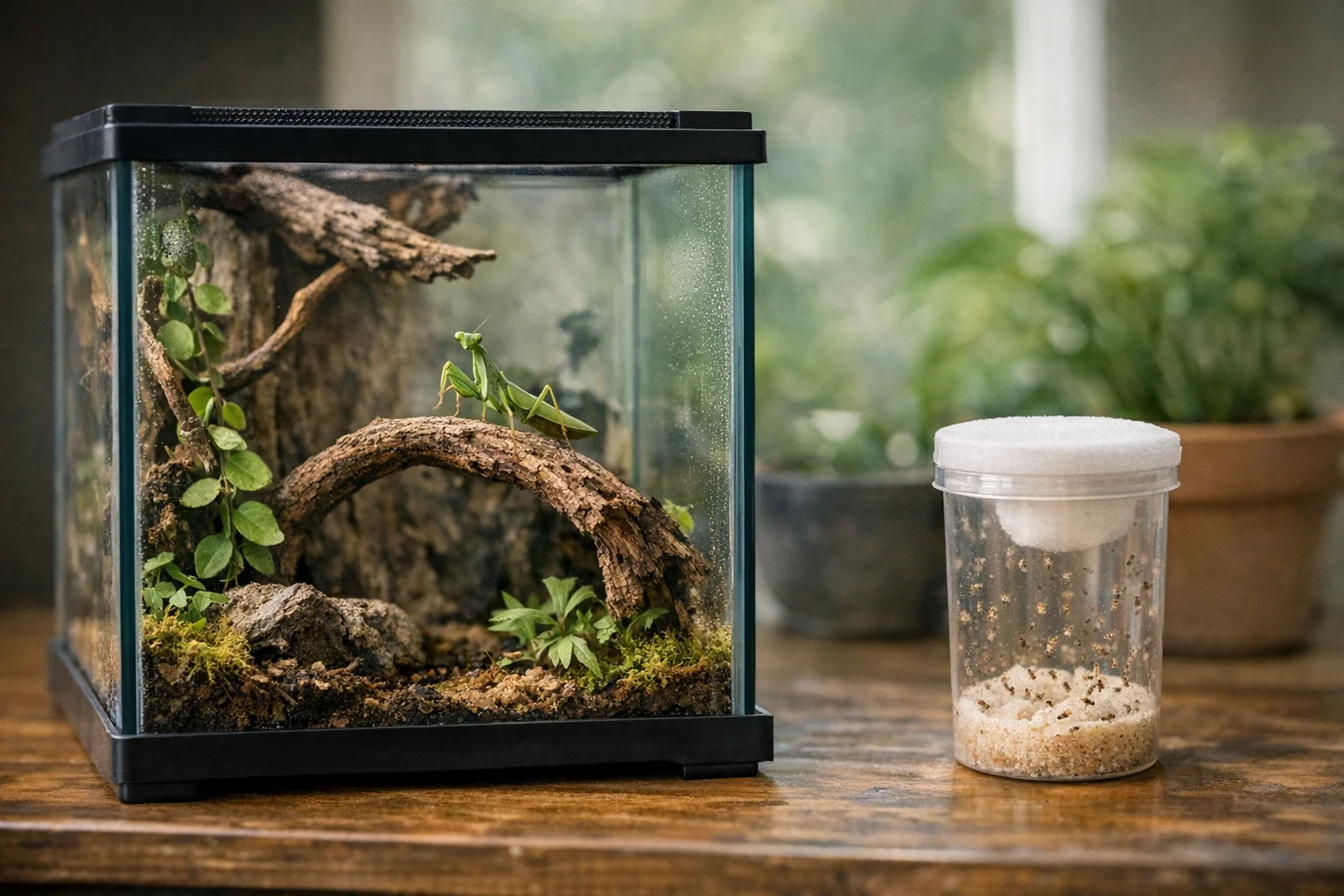
Match every feeder to the mantis in front of you
Start tiny nymphs with smaller fruit flies, increase prey size as they grow and remove uneaten insects before molts.
Start Nymphs on Flightless Fruit Flies
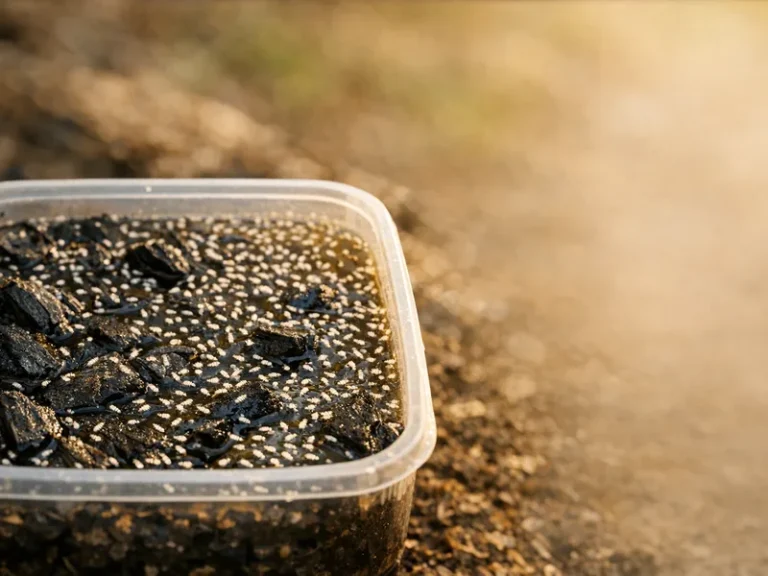
Freshly hatched mantis nymphs are tiny, and the ideal first food is the smaller flightless fruit fly. On our cultures the flightless melanogaster is the small strain, the right bite for a new nymph, while hydei is the larger fly for bigger nymphs. Because the flies are flightless, they cannot escape the enclosure and the nymph can actually catch them.
The step-up is simple: start the smallest nymphs on melanogaster, then move to hydei as they molt and grow. Our fruit fly page lists melanogaster as the pick for mantis nymphs and hydei for larger nymphs, so match the fly to the mantis in front of you. A nymph that is struggling to catch prey is usually being offered a fly that is too big.
Scale Prey Up as the Mantis Grows
As a mantis works through its molts, its prey grows with it. Once it outgrows hydei fruit flies, move to larger, appropriately sized feeders. The guiding rule is size, not species: offer prey no bigger than roughly half to the full length of the mantis's own body, so it can grab and hold the meal without being overwhelmed.
Match every feeder to the current stage rather than the adult size you are hoping for. A too-large prey item can injure or stress a mantis, while a correctly sized feeder gets caught cleanly and eaten. When in doubt, size down. A mantis will happily take two smaller feeders instead of one that is too big.
How Often and How Much
Offer food every two to three days, giving only what the mantis will actually take. Growing nymphs eat more eagerly and often than adults, so you can lean toward the shorter end of that window for young mantises and stretch it a little for a well fed adult. A rounded, plump abdomen means the mantis is well fed. A shrinking one means feed more often.
Always remove uneaten prey. This is the one habit that prevents a lot of heartache: a loose feeder left in the enclosure can pester or even injure a mantis while it hangs to molt, when it cannot defend itself. Pull anything the mantis ignores after a feeding, and never leave live prey with a mantis that has stopped eating and is preparing to molt.
Keep a Culture Rotation for a Steady Supply
The nymph stages go through a lot of fruit flies, and the worst time to run out is when you have hungry babies. The fix is to keep a fruit fly culture rotation. A single culture produces flies for a few weeks, then naturally slows and crashes, so start a fresh one before the old one fades. Our fruit fly culture care guide covers keeping them producing, and you can restock strains and media from our cultures shop.
The honest trade-off with mantises is that they are single-occupant pets and enthusiastic hunters, so plan food around one animal at a time rather than a group. If you are still choosing your mantis, browse our praying mantis stock, and set up your fly cultures before it arrives so the nymph never waits for a meal.
Frequently asked questions
What do you feed a baby praying mantis?
Flightless melanogaster fruit flies, the smaller strain. They are the right size for a tiny nymph, cannot fly out of the enclosure, and are easy to keep as a producing culture so you always have food. Step up to the larger hydei fly as the nymph grows.
What do adult praying mantises eat?
Larger, appropriately sized live feeders. As a mantis grows past fruit flies it moves on to bigger prey, always kept no larger than roughly half to the full length of the mantis's own body so it can catch and hold the meal safely.
How often should I feed my mantis?
Every two to three days, offering only what it will take. Young growing nymphs eat more eagerly and can be fed toward the shorter end of that window, while a well fed adult can be stretched a little longer. A plump abdomen means it is well fed.
How big should a mantis's prey be?
No bigger than the mantis itself, generally about half to the full length of its body. Too-large prey can stress or injure a mantis, so when in doubt, size down. A mantis will happily take two smaller feeders rather than one oversized one.
Should I remove uneaten prey?
Yes, always. A loose feeder left in the enclosure can pester or injure a mantis while it hangs to molt and cannot defend itself. Pull anything the mantis ignores, and never leave live prey with a mantis that has stopped eating to molt.
How many fruit fly cultures do I need for a mantis?
Keep a rotation of at least two. A culture produces for a few weeks then slows and crashes, so starting a fresh one before the old one fades guarantees a steady supply through the hungry nymph stages when you go through the most flies.
Ready to Stock Up?
Have a care question? Ask our community.
Join Reptile Keepers USA, our free Facebook group for reptile, amphibian and invert keepers. Share your setups, get care help and swap feeder tips.
Join the free group