What Do Day Geckos Eat?

Day geckos (Phelsuma species) are not built like most other pet geckos, and the generic gecko feeder list most sites default to is the wrong answer for them. These are small, fast, nectar-and-pollen feeders in the wild with a poor tolerance for hard chitin, so mealworms in particular carry a real impaction risk rather than making a safe staple. Fruit flies are the right-sized, right-textured staple instead, with black soldier fly larvae, sold as calcium worms, as the calcium source, and pureed fruit rounding out the rest of the plate. Our fruit fly cultures are sized and cultured specifically for small, fast-moving feeders like this.
Right size and texture for a small nectar feeder
Hard chitin is a real impaction risk for this species
Soft bodied and naturally calcium forward
The short answer: fruit flies, not mealworms
Most generic what do geckos eat roundups lump every gecko species together and default to the same handful of feeders. That advice is the wrong fit for a day gecko. Fruit flies are the right staple: small enough for a day gecko's mouth, soft bodied, and close to what these geckos actually pick off in the wild.
Mealworms, by contrast, carry a hard chitin exoskeleton that keepers specifically flag as an impaction risk for a gecko this size and this lightly built. It is not that a day gecko physically cannot eat one, it is that the risk to reward is poor next to a feeder as well suited as the fruit fly already is.
Why day geckos are not built like other pet geckos
Day geckos (Phelsuma species, with the Madagascar giant day gecko among the most commonly kept) are small, fast-moving, and unusually for a pet gecko, active by day rather than at night. In the wild they feed heavily on nectar, pollen, and soft fruit, picking off small invertebrates opportunistically rather than hunting large prey the way a leopard gecko does.
That diet shapes the whole animal: a light build, a small mouth, and a gut that is simply not built around processing a lot of hard-shelled insect matter. Feeding advice built for a heavier bodied, insect-hunting gecko, the kind covered in our leopard gecko feeder guide, does not transfer cleanly to a day gecko, which is exactly why this species needs its own answer rather than a generic gecko feeder list.
Fruit flies: the right-sized staple
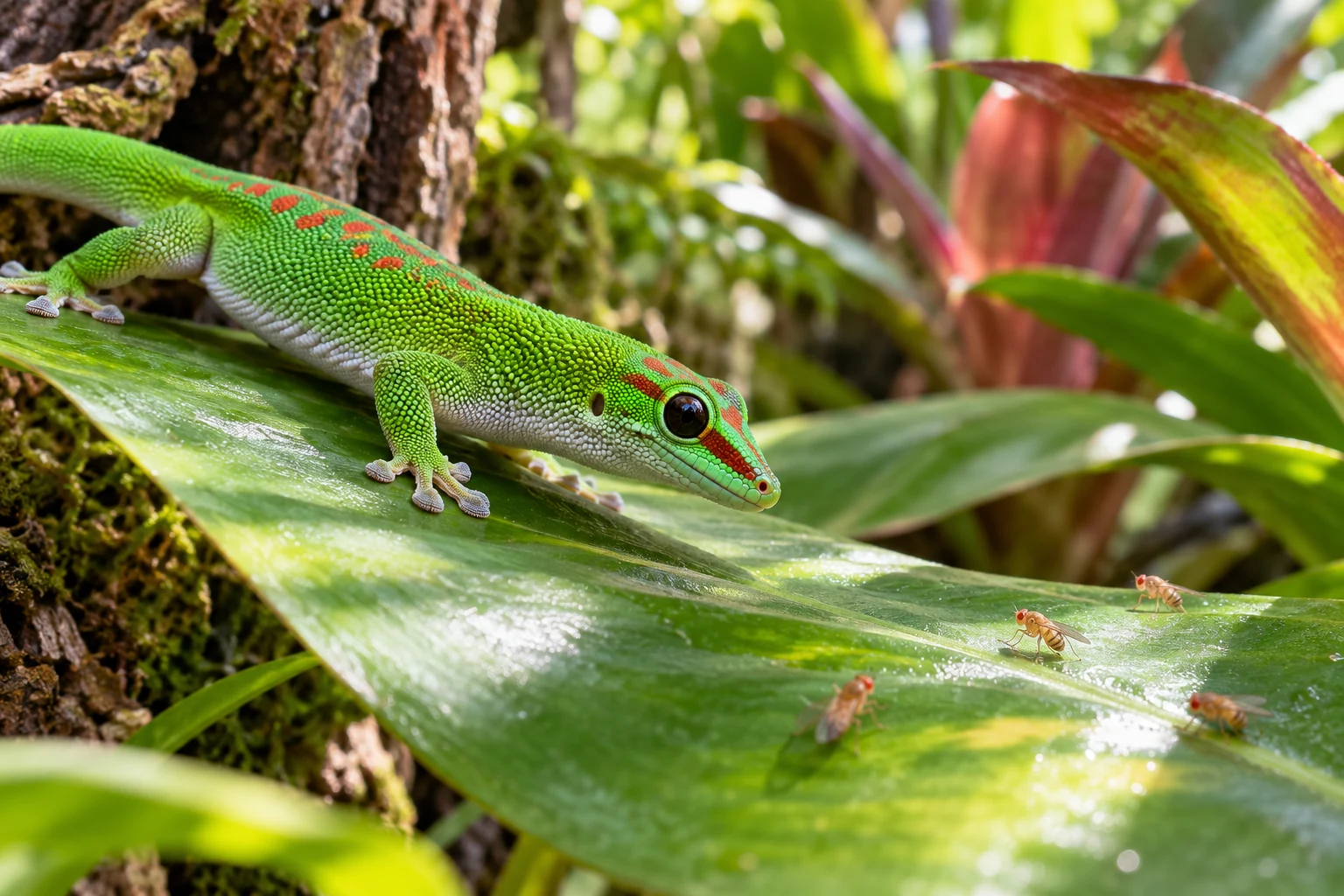
Fruit flies (commonly Drosophila melanogaster or the larger Drosophila hydei) are close to the ideal day gecko feeder: tiny, soft bodied, and easy for a small gecko to catch in numbers without any risk of an oversized prey item. A producing culture also keeps a steady supply of flies emerging over its lifespan rather than a one-time count of insects.
TC sells fruit flies, which is not something every feeder-insect retailer focused on roaches and worms can say, and it happens to be exactly the product a day gecko keeper is actually looking for. Offer flies inside the enclosure or in a small dusting cup a few times a week as the everyday staple.
Why mealworms are one to skip for this species
Mealworms turn up constantly in generic gecko-feeding content, but experienced day gecko keepers specifically flag them as one to avoid. The hard chitin shell that a larger, more robust gecko shrugs off is a genuinely bigger mechanical challenge for a small, lightly built day gecko, and impaction risk is the honest, husbandry-level reason keepers steer around them for this species in particular. For a broader look at how BSFL and mealworms compare for reptiles generally, see our BSFL vs mealworms guide.
This is not a claim that a single mealworm will hurt every day gecko that eats one, it is a risk-versus-reward call. With a feeder as well suited as the fruit fly already available, there is little reason to reach for the one keepers most often name as a species-specific one to avoid.
Calcium and the rest of the diet
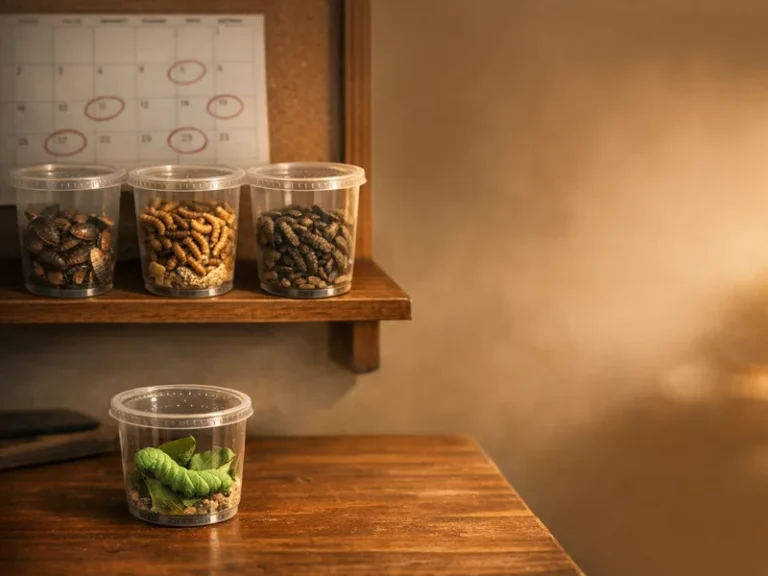
Black soldier fly larvae, sold on our site as BSFL or calcium worms, are the right calcium source to round out a fruit-fly staple. They are naturally calcium forward, soft bodied, and small enough to size appropriately, so they need only light dusting for fast-growing juveniles and gravid females rather than the heavier dusting routine a lot of other feeders require.
Beyond insects, many day gecko keepers offer a pureed fruit or fruit-and-calcium powder mix a couple of times a week, since these geckos take readily to soft, sweet food in a way most other pet geckos never touch. That is a supplement to the insect side of the diet, not a replacement for it.
Putting together a simple weekly routine
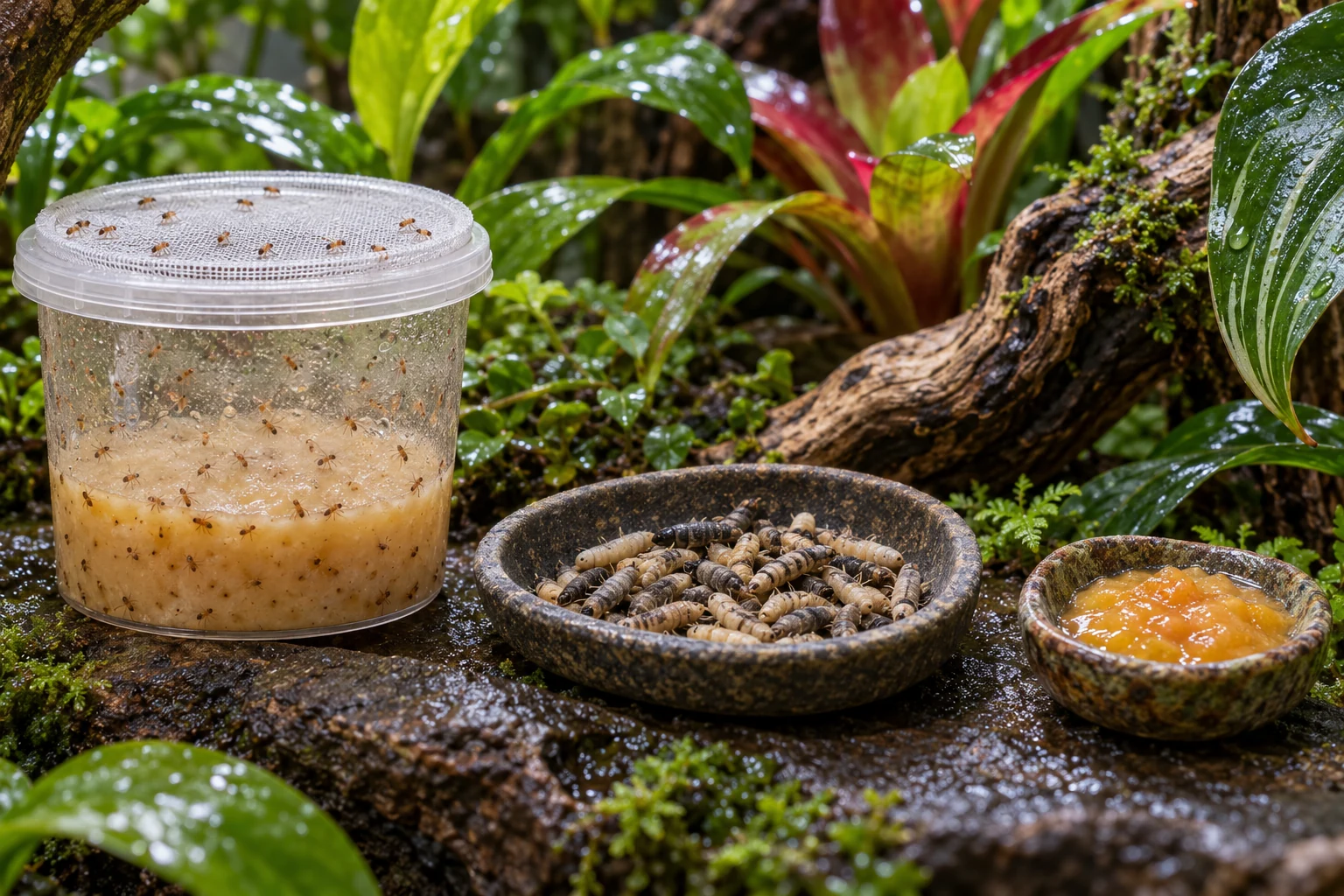
A workable routine leans on fruit flies as the daily-to-every-other-day staple, with black soldier fly larvae worked in a couple of times a week for calcium, and a small offering of pureed fruit rounding out the rest. Dust insect feedings with a reptile-safe calcium powder on the same rotation you would use for any small arboreal gecko.
Keep every feeder sized well within what a day gecko can comfortably manage, which for this species is a genuinely small bar to clear given how tiny fruit flies and young BSFL both are. When in doubt, smaller and more frequent beats larger and less often for an animal built like this one. If you keep an arboreal cousin like a crested gecko too, our crested gecko live insect guide covers a similar small-feeder question for that species.
The Right-Sized Diet for a Day Gecko
Fruit flies as the staple and calcium worms behind them, sized for a small, fast feeder.
Frequently Asked Questions
Written by the TC INSECTS breeding team · Porter, Texas · Live Arrival Guarantee on every order
Have a care question? Ask our community.
Join Reptile Keepers USA, our free Facebook group for reptile, amphibian and invert keepers. Share your setups, get care help and swap feeder tips.
Join the free group