Do Crested Geckos Need Live Insects, or Is CGD Enough?
Live insects are enrichment, not a requirement
For keepers who add live insects, 1 to 2x weekly
Small, soft bodied, no dusting drama
A complete crested gecko diet powder, often shortened to CGD, is nutritionally sufficient on its own, so live insects for a crested gecko (Correlophus ciliatus) are optional enrichment, not a requirement. Keepers who add them anyway are usually after the hunting stimulation and enrichment value, not filling a nutritional gap, and a reasonable split for those who do is roughly 70 to 80 percent powder to 20 to 30 percent live insects, offered once or twice a week. Black soldier fly larvae make a clean first live feeder for this species: small, soft bodied, no dusting drama, and unable to bite back. If you also keep the crestie's cousin the gargoyle gecko, our gargoyle gecko feeding guide covers the same live-feeder logic for that species.

The short answer: CGD covers nutrition, insects cover enrichment
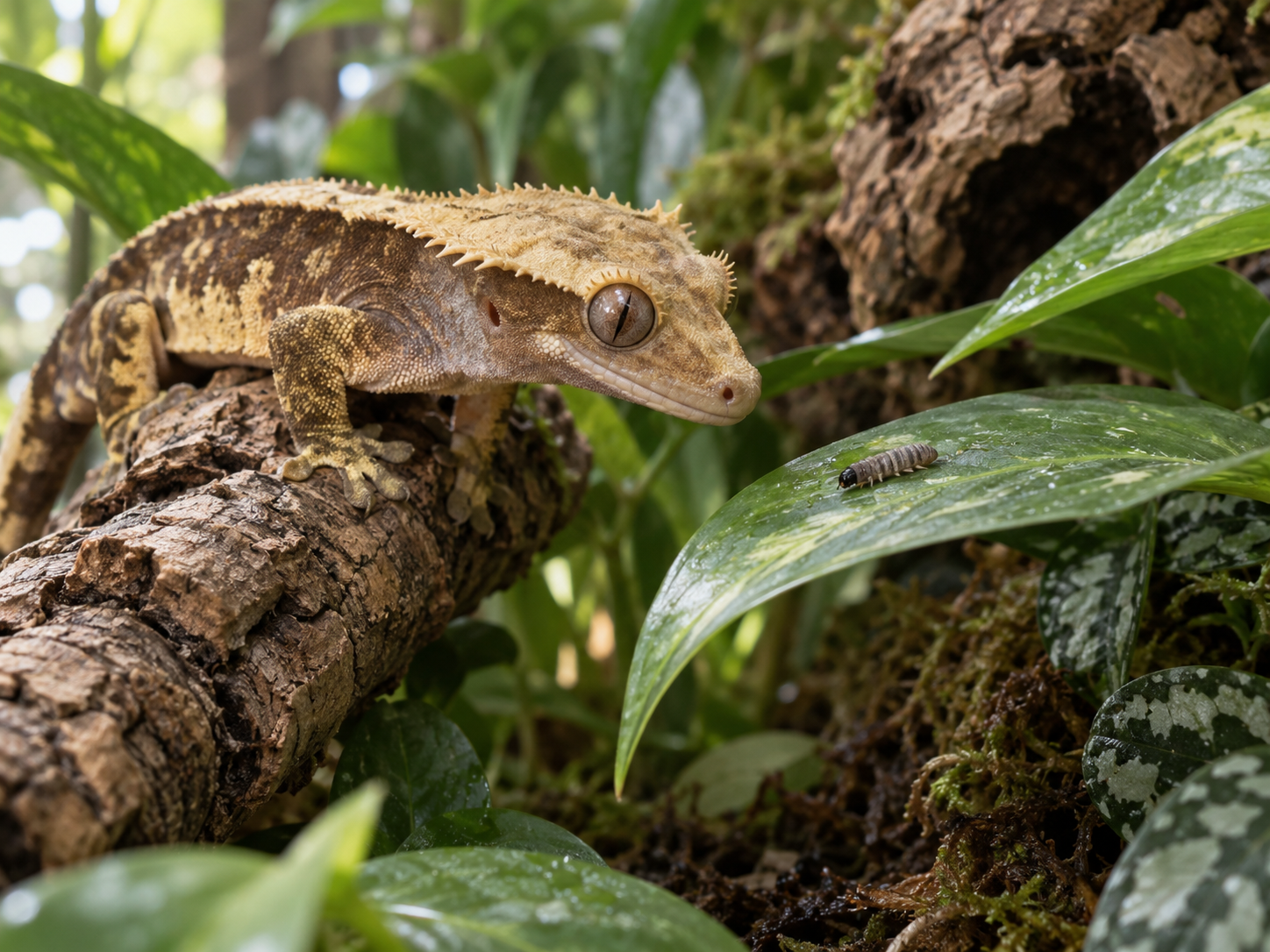
A quality complete crested gecko diet powder is formulated to be nutritionally sufficient by itself, which is exactly why so many keepers raise healthy, long-lived crested geckos on powder alone with no live insects at all. That is worth saying plainly, because it means live insects are an optional add for hunting stimulation and enrichment, not a gap you have to fill to keep the gecko healthy.
For keepers who do want to add live feeding, a reasonable split is somewhere around 70 to 80 percent powder to 20 to 30 percent live insects, offered roughly once or twice a week rather than daily. Black soldier fly larvae are the easiest first live feeder to reach for.
Crested geckos are arguably the most popular pet gecko in the US
Crested geckos (Correlophus ciliatus) are native to New Caledonia and have become one of the most widely kept pet geckos in the country, largely because they thrive on a powdered diet, tolerate a range of husbandry styles, and come in an enormous range of colors and patterns. Almost every generic crested gecko diet article online is built entirely around CGD powder, with little to say about live-insect mechanics specifically.
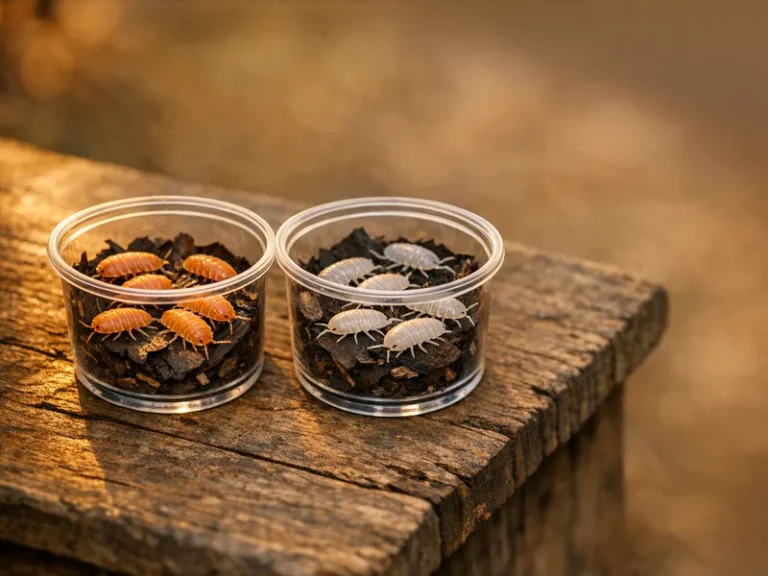
That gap is exactly what this guide fills: not whether to feed CGD, which is well covered elsewhere, but when, how much, and what size live insects to add if you want to include them. If you are also building a full bioactive setup for the same gecko, our crested gecko cleanup crew guide covers the substrate-and-isopod side of that build.
Black soldier fly larvae: the cleanest first live feeder
Black soldier fly larvae, sold on our site as BSFL or calcium worms, are a genuinely easy first live feeder for a crested gecko. They are small, soft bodied, cannot bite back, and are naturally calcium forward, so they need only light dusting, mainly for fast-growing juveniles and gravid females, rather than the heavier dusting routine a lot of feeders require.
Because they are soft and slow moving, they are also easy for a small arboreal gecko to catch without a long chase, which matters for an animal that is not built to run down fast prey. Start with the small size and step up as the gecko grows.
Mealworms, for larger adults
Mealworms are a reasonable option once a crested gecko is a larger, well-established adult, since a bigger animal can handle the firmer body and harder chitin shell more easily than a young or small gecko can. They still run fattier than a soft-bodied feeder like BSFL, so they work best as an occasional addition rather than the everyday live feeder.
For a smaller or younger crested gecko, stick with black soldier fly larvae and skip mealworms until the gecko has real size behind it. The size and softness gap between the two feeders is large enough that it is worth respecting rather than guessing.
How much, how often, and how big
If you want to add live insects at all, roughly once or twice a week is a reasonable frequency for most keepers, offered as a small handful sized to the gecko rather than a set count. The goal is hunting enrichment on top of a nutritionally complete powder diet, not a second full meal stacked on top of the first.
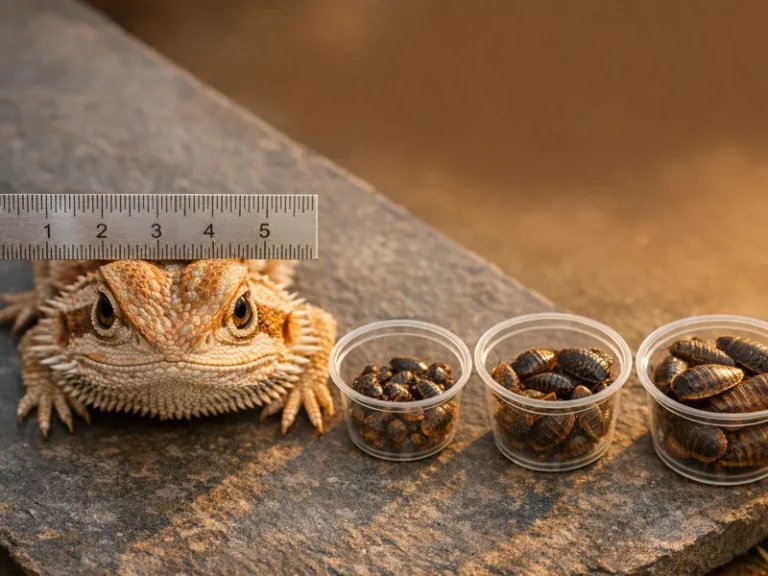
Size every live insect no larger than the widest part of the gecko's head, the same rule that applies across most gecko species we cover. A crested gecko is a light, arboreal animal, and an oversized feeder is more of a liability than a benefit no matter how enthusiastically the gecko goes after it.
If you skip live insects entirely, that is fine too
Plenty of crested geckos live their entire lives on CGD powder alone with no live insects whatsoever, and there is nothing wrong with that approach. If the idea of maintaining a small live culture does not appeal to you, or your gecko simply is not interested in hunting, a well-mixed powder diet on its own is a complete answer, not a compromise.
Add live insects because you want the enrichment and the chance to watch a natural hunting behavior, not because you are worried CGD alone falls short. Either path, powder only or powder plus an occasional BSFL feeding, is a legitimate way to keep this species.
The Enrichment Feeder for a Crested Gecko
BSFL as the clean first live feeder, plus calcium for the occasional dusting.
Frequently Asked Questions
Written by the TC INSECTS breeding team · Porter, Texas · Live Arrival Guarantee on every order
Have a care question? Ask our community.
Join Reptile Keepers USA, our free Facebook group for reptile, amphibian and invert keepers. Share your setups, get care help and swap feeder tips.
Join the free group